
Abstract:
The World Meteorological Organization released the latest Greenhouse Gas Bulletin on October 27, stating that due to the continued burning of fossil fuels, the concentration of carbon dioxide and other major greenhouse gases in the global atmosphere will rise to record highs in 2025. The global warming trend is being further locked in, and its effects may last for decades or even centuries.
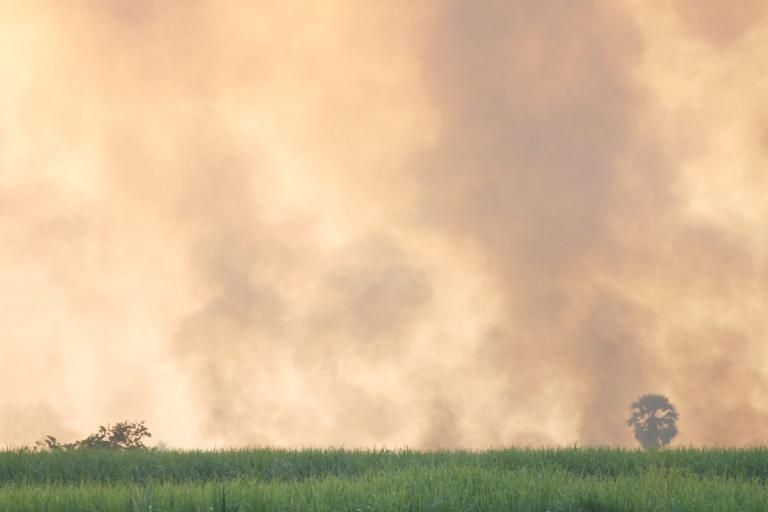
The report shows that the global average concentration of carbon dioxide will reach 426.8ppm (parts per million) in 2025, equivalent to 153% of the level in 1750 before industrialization. At the same time, concentrations of methane and nitrous oxide, two important long-lived greenhouse gases, also set new records.
Co Barrett, deputy secretary-general of the World Meteorological Organization, said that every 1 ppm increase in carbon dioxide concentration is significant because it means more heat is trapped in the atmospheric system. She pointed out that humans are actually "overloading" the oceans and atmosphere, causing extreme weather events such as heat waves, tropical cyclones and heavy rainfall to intensify faster than historical experience.
Barrett emphasized that greenhouse gases have locked unprecedented amounts of heat in the atmosphere, providing energy for more extreme weather and posing increasing risks to the global economy and society. She also pointed out that the past 11 years have been the hottest on record, and this trend will continue. Because carbon dioxide has an extremely long lifespan in the atmosphere, its effects will not only last for years to come, but also for decades and centuries to come.
Data show that since the World Meteorological Organization first released the Greenhouse Gas Bulletin in 2004, the average annual concentration of carbon dioxide recorded by global observation stations has increased from 377.5ppm to nearly 427ppm. Since the 1960s, the concentration of carbon dioxide in the atmosphere has tripled. Between 2011 and 2020, the average annual growth rate increased from 0.8ppm to 2.4ppm.
Oksana Tarasova, senior scientific officer of the World Meteorological Organization, said that the carbon dioxide concentration will abnormally increase by 3.5ppm between 2023 and 2024, which coincides with a strong El Niño phenomenon. El Niño-induced droughts, drying out vegetation and increased wildfires reduce the biosphere's ability to absorb carbon, she explained. While the annual increase of 2.8 ppm between 2024 and 2025 is relatively modest, it still reflects emissions from the burning of large amounts of fossil fuels.
Tarasova predicts that greenhouse gas concentrations will continue to rise in 2026, both due to continued fossil fuel burning and the possible impact of a new round of strong El Niño on terrestrial carbon sinks.
The report emphasizes that the Greenhouse Gas Bulletin counts the total amount of greenhouse gases accumulated in the atmosphere, not the new emissions that year. About half of the carbon dioxide currently emitted annually remains in the atmosphere, with the rest absorbed by terrestrial ecosystems and oceans.
The annual Greenhouse Gas Index released by the National Oceanic and Atmospheric Administration shows that the climate warming effect caused by greenhouse gases increased by 56% between 1990 and 2025. Among them, carbon dioxide contributed about 81% of the increase. This warming effect is called "radiative forcing."
In addition to traditional greenhouse gases, the World Meteorological Organization also warns about new risks that may arise during the energy transition. As the world accelerates the decarbonization of energy systems, two trace gases, molecular hydrogen and sulfur hexafluoride, are receiving increasing attention.
Among them, sulfur hexafluoride is widely used in arc extinguishing equipment in power transmission and distribution systems. Its use has continued to grow over the past 30 years as global electrification progresses. The report points out that sulfur hexafluoride has a lifespan in the atmosphere of more than 1,000 years, and its 100-year global warming potential is approximately 24,300 times that of carbon dioxide. In 2025, the gas concentration increased to a record high.
At the same time, the concentration of hydrogen in the atmosphere increased by 5.3% between 2010 and 2024. Hydrogen energy is being widely used in steelmaking, shipping, long-duration energy storage and renewable energy, but the World Meteorological Organization points out that hydrogen leakage into the atmosphere from production facilities, pipelines, storage tanks and fuel cells is causing growing concern. While hydrogen itself is not a greenhouse gas, it changes atmospheric chemistry and has significant indirect effects on global warming.
Hydrogen leaks and the long-term presence of sulfur hexafluoride could undermine the climate benefits of the energy transition, the World Meteorological Organization said. Therefore, continuous monitoring of the composition of the Earth's atmosphere is crucial to promptly detect, understand and prevent related risks.
The agency stated that the purpose of issuing the Greenhouse Gas Bulletin is to provide authoritative scientific basis for global climate negotiations. According to arrangements, the 31st Conference of the Parties to the United Nations Framework Convention on Climate Change will be held in Antalya, Turkey from November 9 to 20. The goal of the meeting is to promote countries to further translate existing climate commitments into concrete actions.
Comments