
Abstract:
Faced with the challenges of increasing global land desertification and the continued reduction of agricultural land, a research team from Switzerland and the United Arab Emirates proposed a creative solution: making sand "alive". The research was conducted jointly by the Swiss Federal Laboratory for Materials Science and Technology (Empa) and Khalifa University in Abu Dhabi. Researchers hope that by introducing specific microorganisms, the desert sand, which was originally barren and loose and almost unsuitable for agricultural production, can be transformed into a new matrix that can retain water, resist erosion and support plant growth. The research team calls this technology "Living Sand".
More than 90% of the UAE's land is covered by desert, and the land available for agricultural production is less than 5% of the total area. Currently, the country can only produce about 10% to 15% of its food needs, and the rest is highly dependent on imports. Researchers point out that this problem is not unique to the Middle East. With global climate change, forest degradation and overuse of land, more and more regions are facing similar challenges of land degradation and desertification.
Traditional sandy land is not suitable for agricultural cultivation. It is difficult for sand grains to form a stable structure between themselves, making the soil susceptible to wind and water erosion. At the same time, sand lacks organic nutrients and cannot sustain microbial and plant growth for a long time. What's more serious is that water will quickly seep away from the gaps between sand grains, making irrigation efficiency extremely low.
To address these issues, the research team introduced specific bacteria and fungi into the sand environment. These microorganisms are able to secrete natural long-chain molecules called biopolymers and further form large networks of microfibers. These fibers will intersperse between the sand grains like natural glue, connecting the originally independent sand grains to form a more stable overall structure.
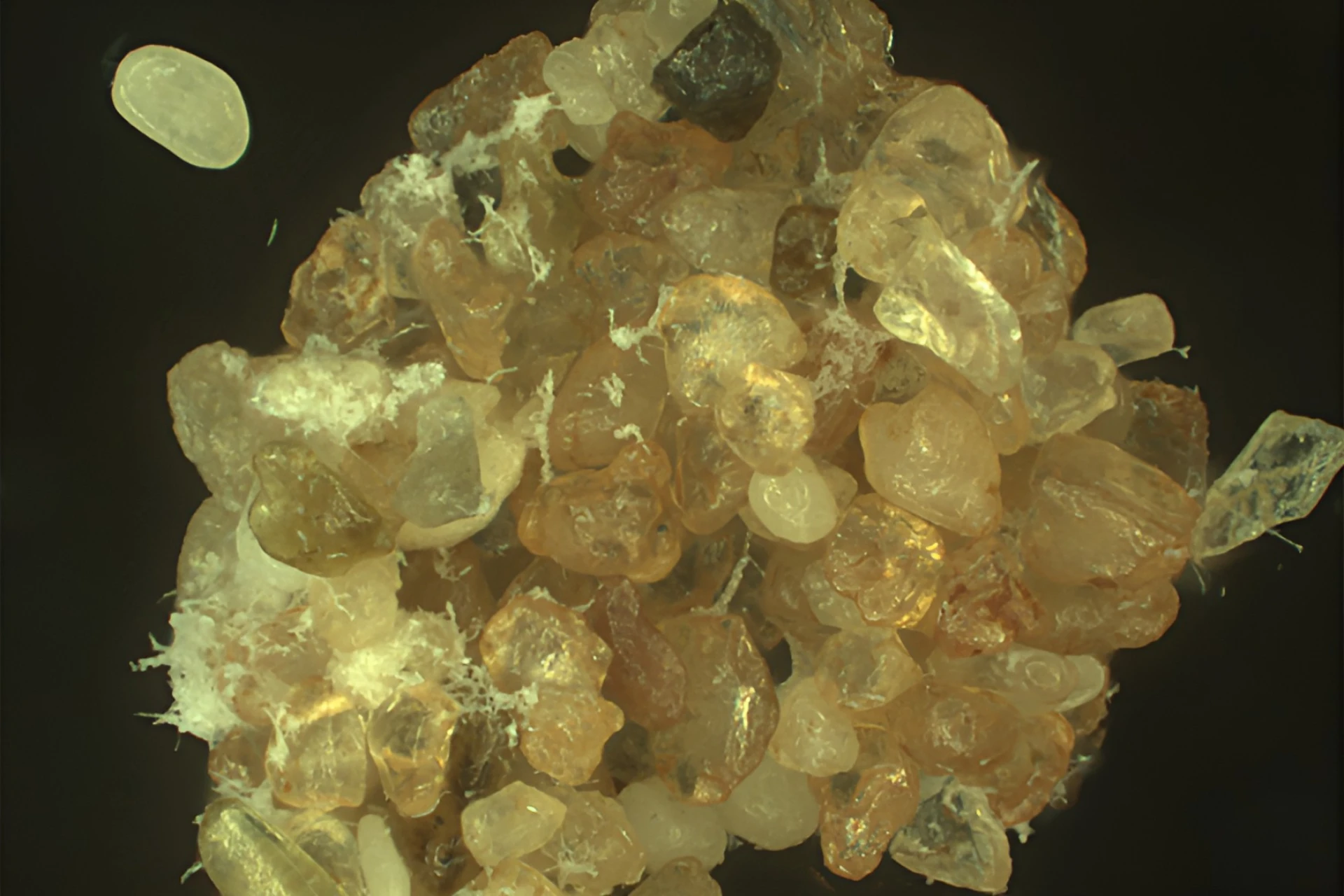
The person in charge of the research said that from a material science perspective, this is actually equivalent to creating a natural composite material composed of sand grains and biological fibers. Microscopic images show that microbially produced networks of fibers wrap and connect individual sand grains, giving the loose sand unprecedented structural strength.
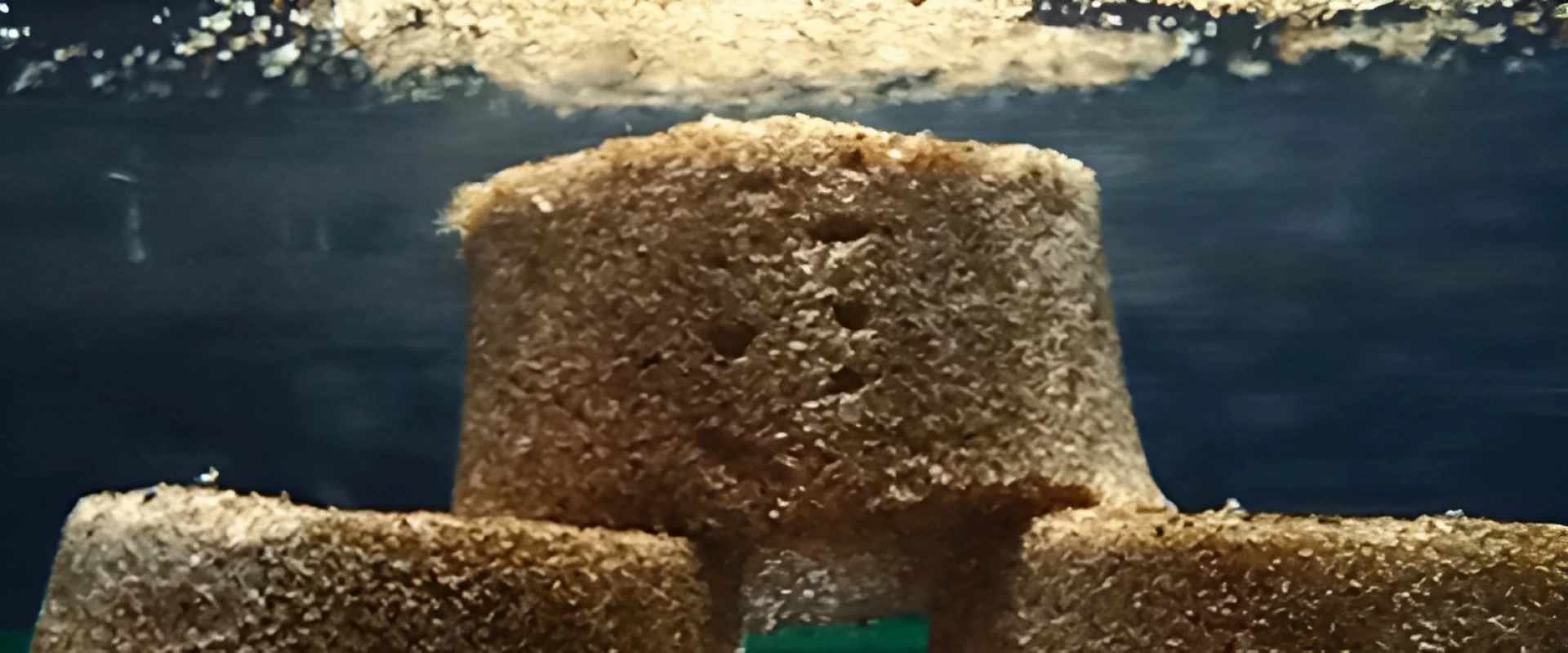
In order to verify its effect, the researchers used laboratory sand samples and sand samples collected from real sand dunes in Abu Dhabi for testing. The results showed that the mechanical strength of the samples treated with bacteria was significantly improved, and their erosion resistance was much higher than that of ordinary sand.
More importantly, the water retention performance has also been significantly improved. Experimental data showed that water penetration rate was reduced by about six times in sand treated with bacteria. This means that irrigation water that would otherwise drain off quickly is able to remain in the substrate longer, creating conditions for future plant growth.
The research team also developed a second improvement. They used bacteria that produce nanocellulose to create ultra-thin layers of biofibers and combined these materials alternately with layers of sand to create a fabric-like structure. Compared with the first option, this layered structure can further improve the stability and water retention capacity of the sand.
Test results show that after adopting the nanocellulose layered structure, the water penetration rate drops by an astonishing 28 times. Compared with ordinary sand, its water storage capacity has been greatly improved. However, the researchers also pointed out that the current manufacturing cycle of this method is long and there is still room for further improvement in efficiency.
Microbial growth itself requires a source of nutrients. In this regard, the research team believes that there are no obstacles that are difficult to solve. Because the carbon sources and sugars required by bacteria and fungi can come directly from available components in agricultural waste or organic waste, thus forming a relatively low-cost recycling model.
Researchers emphasize that "living sand" is still only the first step in transforming desert into arable land. The main goal is not to immediately create complete farmland, but to first equip the sand with the ability to retain moisture and support the growth of more microorganisms. Once a stable microbial ecosystem is formed, it is possible to further introduce plants and other organic matter to gradually improve soil quality.
As more and more areas around the world face land degradation problems, this new technology that uses natural microorganisms to transform deserts has received widespread attention. Although there is still some distance to go before large-scale agricultural applications, the research team believes that by injecting "life" into sand, desert areas may have new agricultural development possibilities in the future.
Comments