
Abstract:
There is a kind of tiny particles in the ocean that are similar to snowflakes and constantly fall to the deep sea. They are called "Marine Snow" by scientists. They are not actual ice and snow, but particles formed from the accumulation of dead plankton, excrement, slime, minerals, and other organic debris. New research finds that the viscosity of these particles may significantly affect the ocean's ability to absorb and store carbon dioxide, providing an important previously overlooked clue to understanding the Earth's climate system.
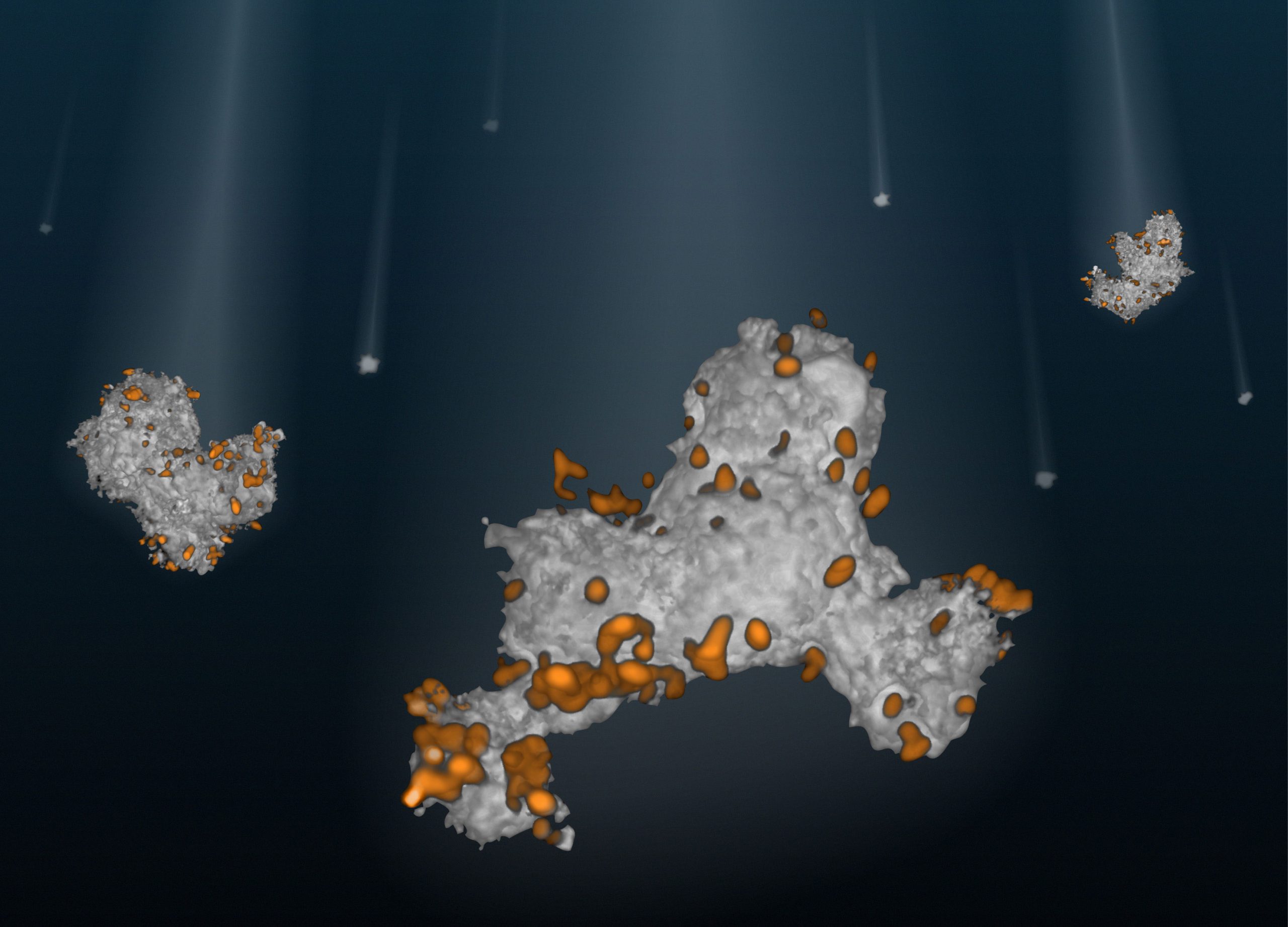
This study, conducted by researchers from the Scripps Institution of Oceanography at the University of California, San Diego, and the University of Lincoln in the United Kingdom, was published in the magazine "Science" on October 8, 2026. The study found that sticky marine snow particles are less likely to be broken down by bacteria and therefore can transport more carbon to the depths of the ocean. Such particles may transport six times more carbon to the deep ocean than less viscous particles.
Marine snow is an important part of the ocean carbon cycle. In the ocean surface where sunlight can penetrate, plankton absorb carbon dioxide through photosynthesis and convert it into organic matter. When these organisms die, or the organic debris combines with other materials to form particles, they gradually sink, carrying carbon from the surface of the ocean to the depths.
Some carbon can remain in the deep ocean for hundreds or even thousands of years, temporarily isolated from the atmosphere. The ocean has therefore become an important natural carbon sink for the Earth. However, not all the sea snow will reach the deep sea during the sinking process. A large number of particles are broken down by bacteria or re-enter the biological cycle in shallow seawater, and only a portion reaches deep enough waters to be preserved there for a long time.
Researchers estimate that more than 10 billion tons of carbon leave the surface of the ocean through marine snow every year, but only about 2 billion tons ultimately reach depths where carbon can be stored for long periods of time. What determines how much carbon marine snow can carry across the ocean water layer has always been an important question in ocean carbon cycle research.
This study focused on the physical structure of marine snow, especially its viscosity. The study found that sea snow particles are not simple agglomerates with uniform internal properties, but have complex microstructures. Some areas on the outside of the particles are relatively soft and low in viscosity, making it easier for bacteria to attach and begin to decompose; the inner parts that are more viscous and have greater resistance will form a physical barrier, making it difficult for bacteria to penetrate quickly.
The researchers likened the process to a worm eating an apple: the softer flesh of the apple is easier to penetrate, while the harder parts are more difficult to handle. Bacteria can start by exploiting easily decomposed areas of marine snow, but to get to the stickier interior, they must gradually destroy its structure. It is this difference that makes different marine snow particles show completely different carbon preservation capabilities during the sinking process.
To reveal the relationship between bacteria and the internal structure of marine snow, the research team developed a new microscopic imaging method. After years of attempts, researchers will finally establish a feasible technical solution in 2025, combining three-dimensional confocal microscopy with special fluorescent molecules to depict the complex physical structure inside marine snow and track the activities of individual living bacteria within it.
Previously, although scientists were able to observe sea snow particles and the microorganisms on their surfaces, it was difficult to directly understand how individual bacteria move, attach and decompose organic matter in the slime-like microscopic environment. The new technology allows researchers to more clearly observe the physical obstacles faced by bacteria and provides new research tools for understanding how marine microorganisms process organic matter.
Experimental results show that sticky marine snow takes longer to be broken down and broken up by bacteria. The research team further used computer simulations to find that such particles may sink to deeper waters before completely disintegrating. The stickiness of the particles therefore affects not only how quickly bacteria can utilize the organic matter within them, but also how much carbon escapes decomposition in shallow seawater and eventually reaches the deep ocean.
The discovery could have important implications for climate predictions. Existing models of the ocean carbon cycle need to estimate how much carbon the ocean can absorb and how long it can stay in the ocean. If the model fails to fully account for differences in the viscosity and microstructure of marine snow, it may not be able to accurately predict the proportion of organic carbon that is broken down during the sinking process, thus affecting the assessment of the ocean's carbon sink capacity.
However, the research results do not mean that ocean carbon storage will immediately increase, nor can it simply be inferred that global warming will slow down as a result. The ocean carbon cycle is affected by multiple factors such as plankton productivity, temperature, microbial activity, seawater flow, and particle composition. The role played by marine snow viscosity needs to be further quantified based on observations in real marine environments.
The imaging technology may also have applications beyond the ocean, researchers say. Complex microscopic environments made of mucus also exist in coral reefs, kelp forests, plant roots, and in the digestive tracts of humans and other animals. Mucus is not a simple, uniform gel-like substance. Its interior may contain bumps, fringes, and areas of varying viscosity. These structures can affect the attachment, movement, and survival of bacteria.
By directly observing the interactions between bacteria and mucus structures, scientists may in the future be able to delve deeper into issues such as coral reef restoration, plant-microbe relationships, and microbial activity in the human body.
Researchers believe that seemingly inconspicuous sticky particles in the ocean may actually be involved in regulating an important part of the global carbon cycle. As scientists gradually reveal the microstructure of marine snow and its relationship with bacteria, this "snowfall" that continues to sink from the surface of the ocean to the deep sea is expected to help researchers more accurately understand the mechanism of ocean carbon storage and the role of the ocean in the global climate system.
Comments