
Abstract:
The debate in the artificial intelligence industry over "whether the development speed should be slowed down" is heating up rapidly, and China has been pushed to the core of this discussion. Anthropic CEO Dario Amodei recently stated publicly that if the world tries to set a speed limit on the development of artificial intelligence, the biggest practical problem is not the technology itself, but how to deal with the possibility that competitors such as China will continue to accelerate.
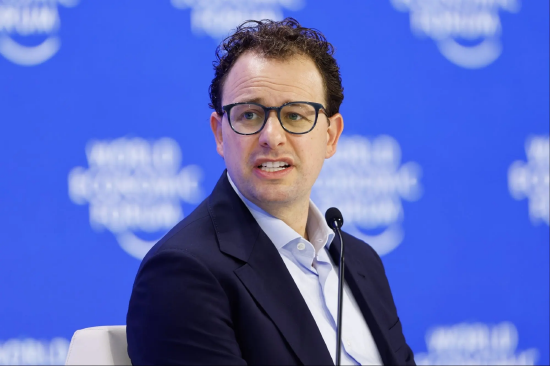
Amodei made the above statement in an interview with the media. Not long ago, he had just published a long article that attracted widespread attention, calling on the artificial intelligence industry to proactively slow down the speed of improving the capabilities of cutting-edge models to gain more time for security research, governance frameworks and risk control. He believes that the progress of large-scale models in recent years has significantly exceeded many people's expectations, especially after the emergence of the trend of artificial intelligence participating in artificial intelligence research and development, and the improvement of technical capabilities is accelerating.
However, when talking about the practical feasibility of this idea, Amodei admitted that China is the "most difficult dilemma" facing the entire plan. He said that if only some countries or companies choose to slow down while other countries continue to accelerate, then the party that actively slows down may be at a disadvantage in terms of technological competition, economic interests and even military advantages.
Amodei believes that in the long term, the international community should try to cooperate to establish some kind of "speed-limiting mechanism" for the development of artificial intelligence to avoid disorderly competition and promote technological capabilities to quickly break through the safety boundary. But he also said that such cooperation is extremely difficult because the strategic benefits of being the first to acquire advanced artificial intelligence capabilities are huge. He admits that he is not even sure whether such global coordination can actually be achieved, but he still believes that it is necessary to work towards it.
This statement comes at a time when artificial intelligence safety issues have received continued attention. Recently, a number of researchers from Anthropic and OpenAI have publicly expressed concerns that the development speed of artificial intelligence systems is outpacing the progress of security research. Some researchers have even warned that the risk of serious loss of control in the coming years may be higher than generally recognized by the public.
Before Amodei issued his slowdown call, Anthropic researcher Jacob Coxon had already announced his departure and publicly criticized the current development trajectory of the AI industry. He believes that major AI laboratories are taking too high risks, and that this risk may affect the entire human society.
At the same time, the speed of development of China's artificial intelligence industry in recent years has also attracted great attention from the U.S. technology industry. In the past few months, new models released by a number of Chinese artificial intelligence companies have continued to narrow the gap with leading American products, further intensifying discussions in Silicon Valley about changes in the global AI competitive landscape.
At the same time as Amodei spoke, Chinese leaders called for the establishment of a consensus-based global artificial intelligence governance framework at the BRICS summit and supported the construction of an open source cooperation system for artificial intelligence. This has gradually expanded the issue of artificial intelligence governance from the field of science and technology to the level of international politics and diplomacy.
Analysts pointed out that the artificial intelligence industry is currently facing an unprecedented contradiction. On the one hand, more and more companies and researchers are calling for strengthening supervision and slowing down the expansion of cutting-edge capabilities; on the other hand, countries are unwilling to lag behind their competitors in this technology race that is considered to be of strategic significance.
At the same time, two of the top artificial intelligence companies in the United States, Anthropic and OpenAI, are in the stage of preparation for listing. As attention from capital markets, government regulation, and public opinion continues to increase, the debate over whether artificial intelligence should continue to advance at full speed or proactively slow down is expected to further escalate in the coming months.
For Amodei, the core of the problem is not only whether technology can become stronger, but whether human society can establish corresponding rules at a fast enough speed when technology continues to become stronger. Among all practical challenges, he believes that how to deal with competition related to China is still the most complex and difficult to answer in this global artificial intelligence governance discussion.
Related articles:
Anthropic accuses multiple Chinese AI companies of large-scale distillation. Alibaba, Dark Side of the Moon and DeepSeek are accused of tens of millions of interactions
Comments