
Abstract:
The air leakage problem that has plagued the International Space Station for many years seems to have finally reached a final solution. According to multiple aerospace industry sources, the PrK transfer channel located at the tail of the Russian "Zvezda" service module of the International Space Station has been decided to be permanently closed. Due to long-standing cracks that cannot be completely repaired, the channel will no longer be responsible for personnel entry and cargo unloading tasks in the future, and the operation of Russian cargo spacecraft will also undergo major adjustments.
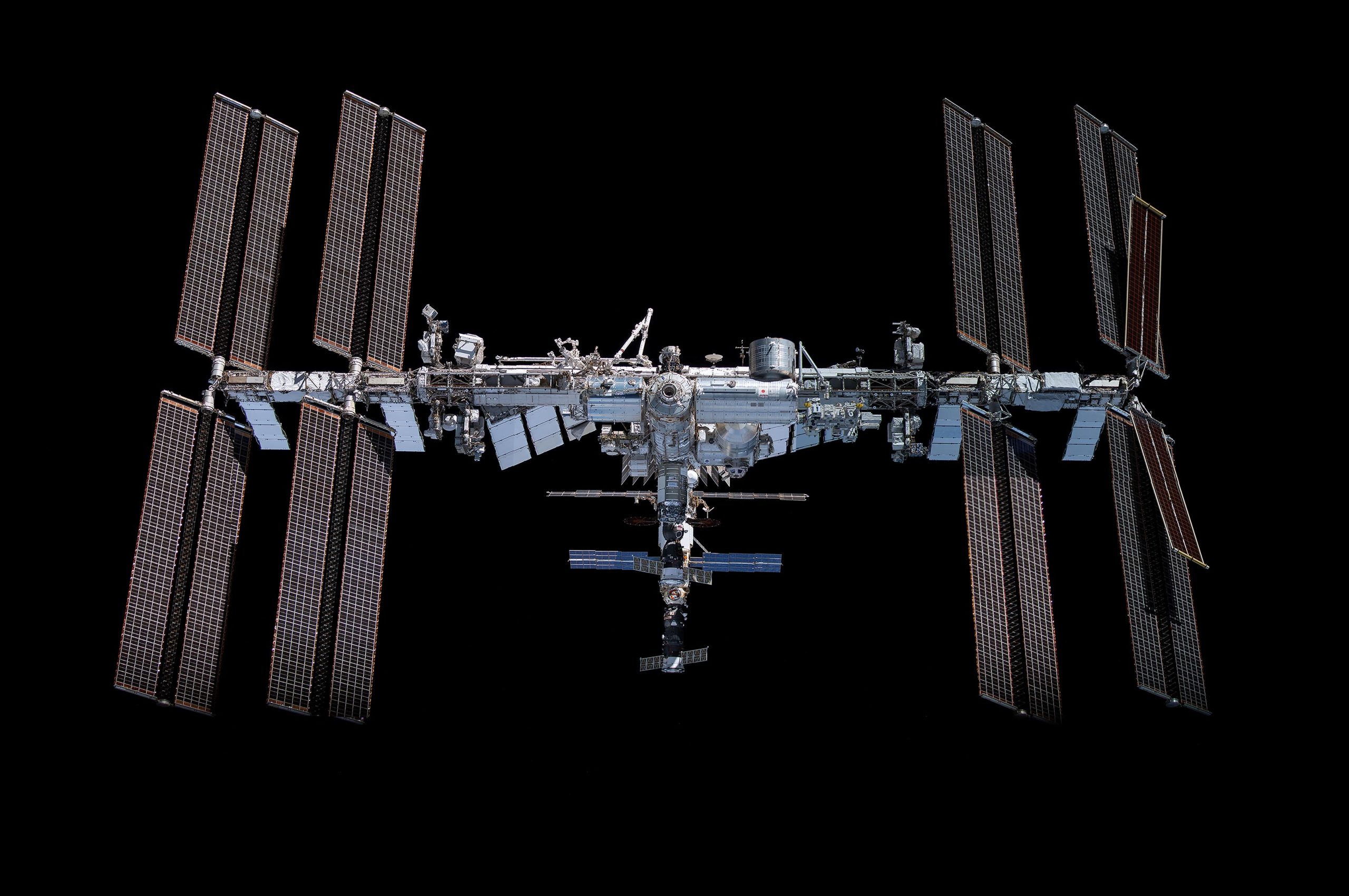
This news was first disclosed by Russianspaceweb, a professional website that has long tracked Russian space projects. However, so far, neither NASA nor Roscosmos has officially announced this decision. It is worth noting that in June this year, a NASA official revealed to the media that Russia was planning to completely withdraw the channel from use, so this report is basically consistent with the previously disclosed information.
The PrK channel is located between the Zvezda service module and its rear interface. It is an important passage for the Russian "Progress" cargo spacecraft to enter the cargo compartment of the space station. The "Progress" spacecraft is responsible for the important task of transporting food, fuel and supplies to the space station. After the mission, it will also carry garbage back into the atmosphere and burn it. Because astronauts need to pressurize the PrK channel to enter the cargo compartment of the spacecraft, and this area will continue to leak during the pressurization and depressurization process, the related risks are always difficult to completely eliminate.
In addition to transporting supplies, the Progress spacecraft also assumes the important responsibility of maintaining the orbital altitude of the space station. After the spacecraft is docked at the tail interface, it can start the engine to perform an "orbital raising" operation on the International Space Station to offset the orbital attenuation caused by the resistance of the earth's atmosphere.
According to the latest plan, the "Progress MS-36" cargo spacecraft planned to launch from the Baikonur Cosmodrome on November 24 will become the first spacecraft to operate using the new process. The spacecraft will dock with the Poisk module on November 26, and all cargo will be unloaded through this module. After completing the supply transfer, the spacecraft will move back to the tail interface of the "Star" to perform the orbit raising mission. Since the tail interface will no longer be used as a passage for personnel and cargo to enter and exit, the future Russian cargo spacecraft will in principle need to complete two docking operations, one for unloading and one for orbit maintenance. This model is expected to continue until the International Space Station is retired.
According to previous statements by NASA officials, astronauts will no longer enter the PrK channel in the future, nor will they try to pressurize it again. Although the cargo spacecraft docked at the tail interface can still perform tasks such as fuel and liquid transfer, all regular supply tasks must be completed by other interfaces. This means that the risk of rapid decompression that NASA has had to accept for many years is expected to be completely eliminated.
The problems with the PrK channel can be traced back to 2019. That's when engineers discovered cracks in the area that were causing a slow leak of air. In the years since, Russia has tried many times to repair the problem using temporary and permanent sealing materials, but it has never been able to fundamentally solve the problem.
In early June this year, during the unloading of the Progress 95 cargo spacecraft, the Russian flight control team monitored the air leakage rate rising to about 0.9 kilograms of air loss per day, and discovered new suspected leak points. The astronauts then used a two-component sealant called Germetall-1 to seal one of the cracks and prepared to repair another crack in the cone-shaped structure area.
On June 5, Russia also attempted to carry out larger-scale inspection and structural repair work, including removing part of the support structure. NASA warned at the time that the move could increase structural risks and once required station personnel, including Crew-12 members and American astronaut Chris Williams, to enter the SpaceX Dragon spacecraft on standby to deal with possible emergencies. Russia subsequently suspended relevant operations and conducted additional measurements, and station personnel eventually resumed normal work. Afterwards, Roscosmos stated that the space station system had always remained stable and the crew had never faced actual danger.
Experts believe that the main cause of these cracks is long-term corrosion. With the discovery of new cracks in June this year, the total number of related cracks has reached about 16, further increasing the difficulty of complete repairs.
At the same time, the scheduling of Russian cargo spacecraft will also become more complicated. In mid-October this year, two key interfaces planned for the new operating mode have been occupied by the spacecraft. At that time, both Progress 95 and Progress 96 were docked at the International Space Station. According to the current plan, subsequent spacecraft will need to be re-docking and positioning more frequently to adapt to the new supply process.
Despite the change in resupply patterns, the International Space Station must still perform orbital raising operations on a regular basis. In addition to the "Progress" spacecraft, the "Cygnus" cargo spacecraft of the American Northrop Grumman Company has also begun to undertake related tasks in recent years. In August and September 2026, "Cygnus" performed two orbit raising operations respectively to help the space station maintain its operating altitude.
Data show that since the latest orbital upgrade at the end of September, the average orbital height of the International Space Station has dropped by about 1.4 kilometers. As of November 2, the space station was still orbiting about 415 to 425 kilometers above the Earth's surface. With the PrK channel officially withdrawing from the stage of history, the space station air leakage crisis that has lasted for seven years is expected to come to an end. It also marks that the International Space Station has entered a more cautious and conservative operation stage.
Comments