
Abstract:
NASA's "Curiosity" Mars rover recently ushered in an important milestone. Since landing on Mars in 2012, it has spent 5,000 Martian days on the red planet. To commemorate this moment, the Mars rover took a special set of panoramic photos in Gale Crater, and combined the images taken at different times into a visually impactful "Mars postcard."
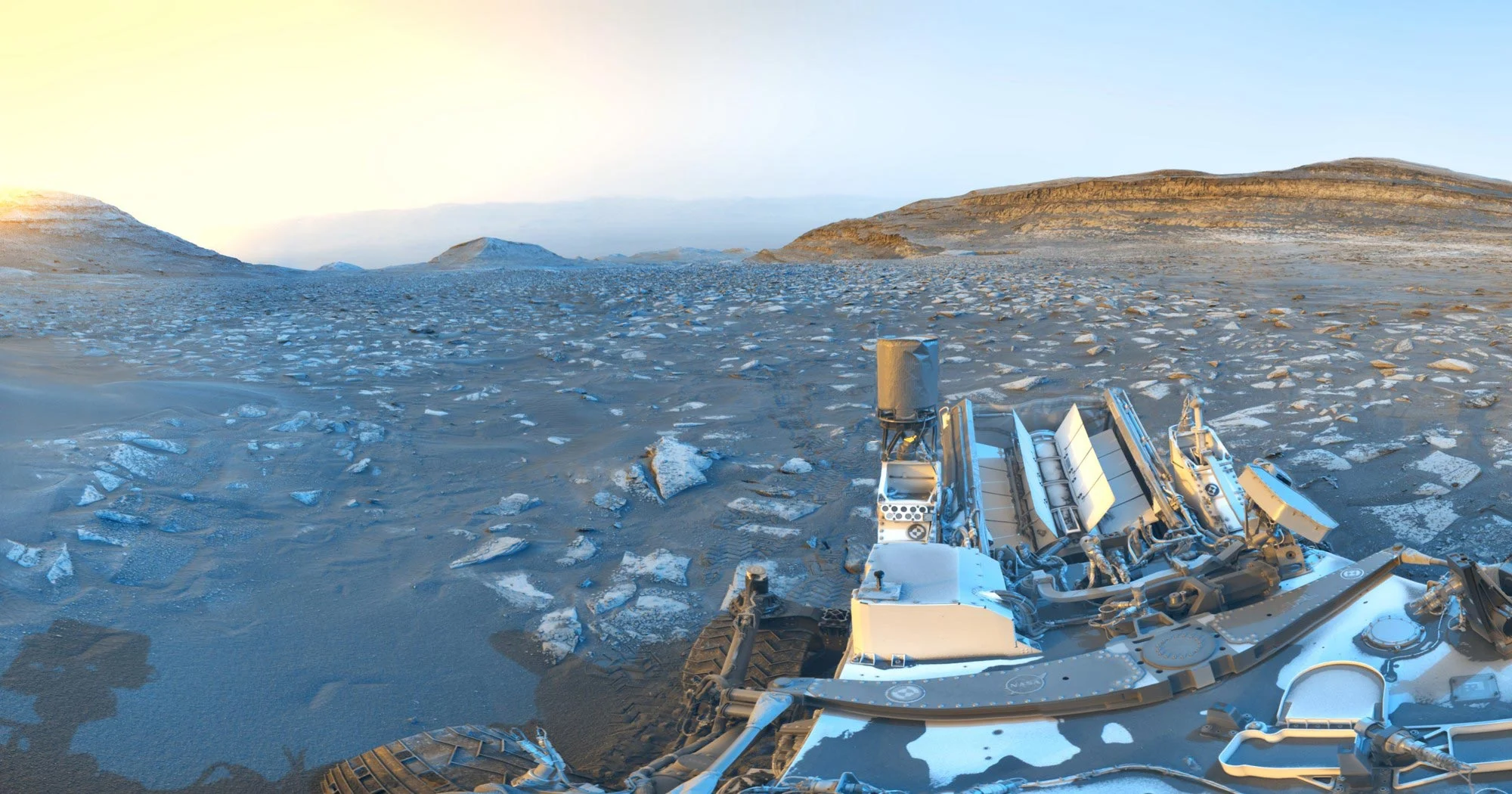
Curiosity is currently resting near a sandy ridge in the lower foothills of Mount Sharp, a site nicknamed "Chocolatal" by the mission team. At 9:56 am on August 30, 2026, Curiosity used the navigation camera to take the first set of panoramic images. This day happened to be the 5000th Martian day of the mission, which is also the 5000th Sol. Then at 5:39 pm on September 2, which is the 5003rd Martian day, Curiosity took a second set of panoramic images in the local afternoon.
Curiosity's navigation camera usually only takes black and white photos, so after the two sets of images were sent back to Earth, the mission team merged them into a complete scene and artistically added color. Among them, the area representing the morning scene uses a blue tone, while the area representing the afternoon scene uses a yellow tone, thereby showing the illumination changes of Mars at different time periods in the same photo.
This production method is not the first time NASA has used it. Curiosity has taken similar "Mars postcards" before, including a panorama produced in November 2021. By combining images taken at different times, scientists can not only display the Martian landscape, but also allow viewers to intuitively feel the changes in lighting conditions on Mars throughout the day.
In the foreground of this latest panorama, parts of the Curiosity rover itself can be seen. The cylindrical ultra-high frequency (UHF) antenna on the vehicle is clearly visible. It is responsible for relaying data through the Mars orbiter and transmitting the information collected by Curiosity back to Earth. Near the rear of the vehicle, you can see the Multi-Mission Radioisotope Thermoelectric Generator (MMRTG) with cooling fins, which is the main energy system for Curiosity's long-term work on the surface of Mars.
MMRTG uses the decay of radioactive isotopes to generate heat, and then converts the heat energy into electrical energy to continuously provide energy for the Mars rover's computers, scientific instruments, communication equipment and other systems. It is this nuclear power system that allows Curiosity to continue working in Martian dust, winter, and poor lighting conditions without relying on solar panels.
The two wheel tracks extending from the rear of Curiosity's body are also clearly visible. As the mission continues, these tracks have left a long path of exploration on the surface of Gale Crater, becoming a visual record of Curiosity's years of work.
The area shown in the panorama is located in the lower foothills of Mount Sharp. Mount Sharp is a huge mountain located near the center of Gale Crater, with a height of about 5 kilometers. Curiosity has been gradually climbing along Mount Sharp in recent years, studying rocks and sediments at different altitudes and in different geological layers, looking for evidence of the past presence of water and a suitable environment for life in this area.
Looking down from Curiosity's current location, you can see the interior topography of Gale Crater. Due to terrain and viewing angle limitations, the edge of the distant crater is very blurry on the horizon, but the vast Martian surface is still clearly visible.
5,000 Martian days is equivalent to more than 5,137 Earth days, because a Martian day is slightly longer than an Earth day, about 24.6 hours. Curiosity's original design life was actually much shorter than the operational time it has achieved today, but the rover has continued to work in the harsh Martian environment for more than 14 years.
During this period, Curiosity experienced global dust storms, extremely low temperatures, and long-term radiation environments, while continuing to climb higher on Mount Sharp. In August 2026, Curiosity also achieved another important progress in the mission. Its altitude increase relative to the initial landing position exceeded 1 kilometer for the first time.
Today, Curiosity still has not stopped scientific exploration. Near the 5,000 Martian day milestone, the mission team is studying the "Chocolatal" sandy ridge, hoping to determine whether it belongs to a special type of landform called a "transverse aeolian ridge." This type of elongated sandy landform is related to Mars' long-term wind activity. By analyzing its particle size, internal layering, and chemical composition, scientists can further understand the formation and evolution of Martian surface sediments under the influence of wind.
During the relevant detection process, Curiosity also used on-board scientific instruments to conduct close-up research on "Chocolatal", including using the Mars Handheld Lens Imager to photograph rock layers and particle structures, analyzing surface materials through an alpha particle X-ray spectrometer, and using the ChemCam laser-induced breakdown spectrometer to study the chemical composition of target rocks and sediments.
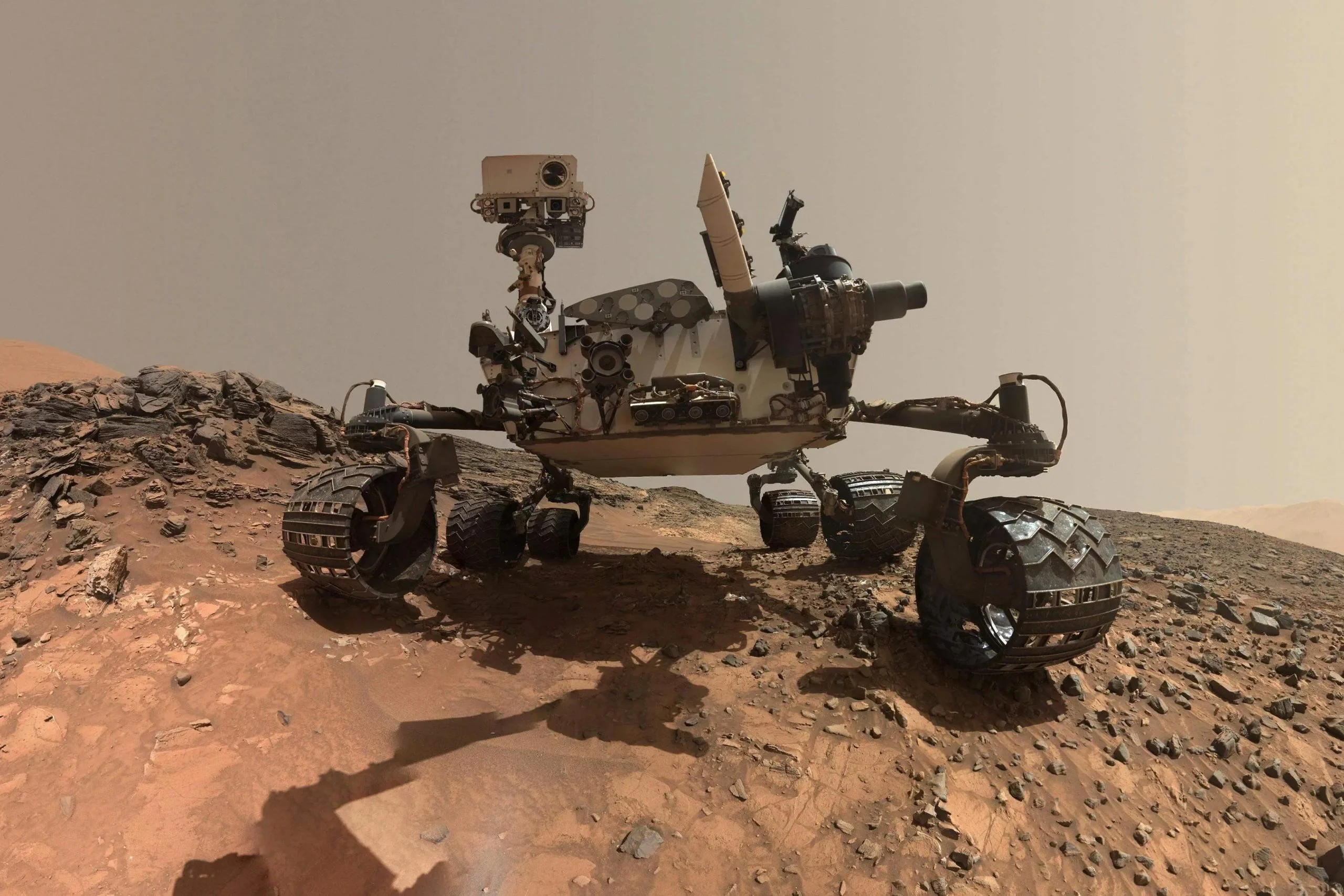
From the initial landing to the completion of 5,000 Martian days, Curiosity has far exceeded the original mission expectations. The large amount of images and scientific data it continues to send back allows scientists to study the geological environment of Mars on an unprecedented time scale and gradually piece together the history of the planet's transformation from an ancient moist environment to today's cold and dry world. As the mission continues, Curiosity will continue its journey along Mount Sharp, exploring higher geological layers and looking for new clues about Mars' past environment and potentially habitable conditions.
Comments