
Abstract:
On the road toward larger-scale space infrastructure construction for mankind, an important milestone was recently born. A robot developed by the California Institute of Technology and funded by the U.S. Defense Advanced Research Projects Agency (DARPA) successfully completed a structure assembly task in orbit. The research team called it the first time that humans have achieved autonomous structure construction in space.
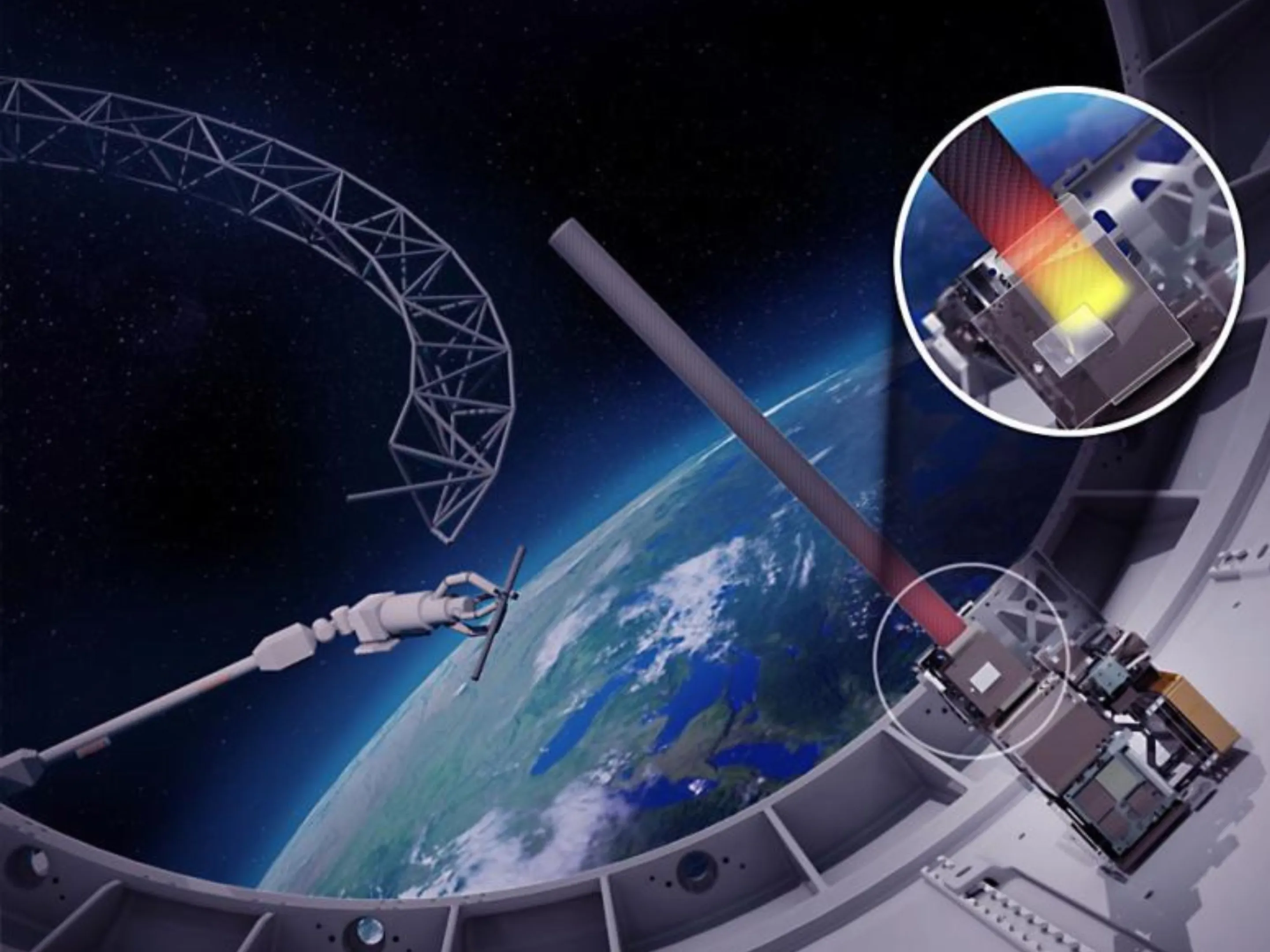
For a long time, sending large equipment into Earth orbit has faced high costs and technical limitations. In contrast, it is a more feasible solution to launch smaller components separately and then assemble them in orbit. However, traditional space assembly usually requires the participation of astronauts, and in space full of radiation and vacuum environments, the shorter the human operation time, the better for safety.
The robot performing this mission is part of the "Autonomous Space Tension Reflector Assembly Project" (ASTRA). The project goal is to use composite pipes, aluminum connectors and reflective films to build a reflective antenna system in orbit with a diameter of about 1.4 meters. Due to the limited mission time, the two sections of the truss structure have been pre-assembled before launch, while the robot is responsible for assembling the third section of the structure in orbit to complete key verification.
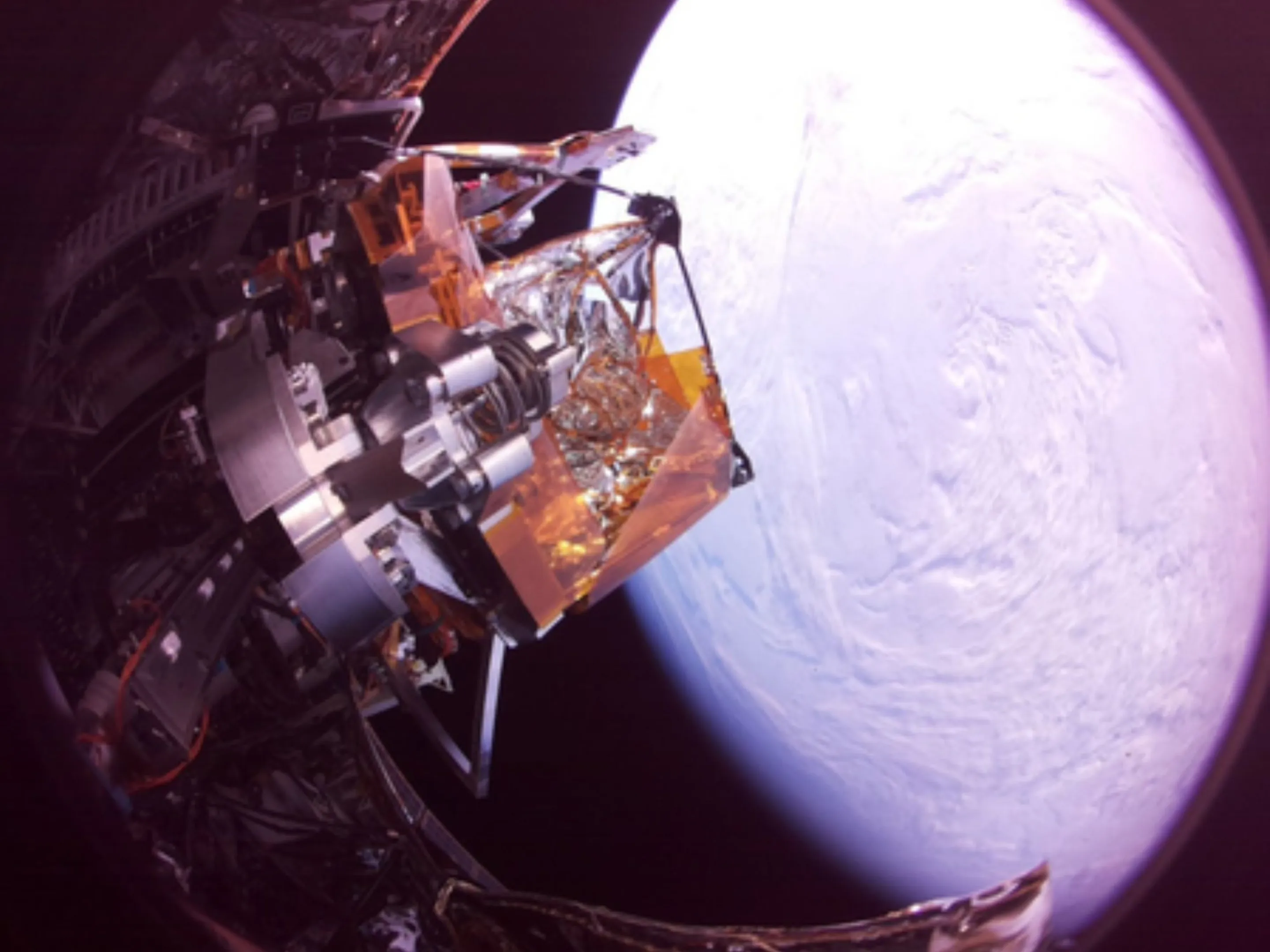
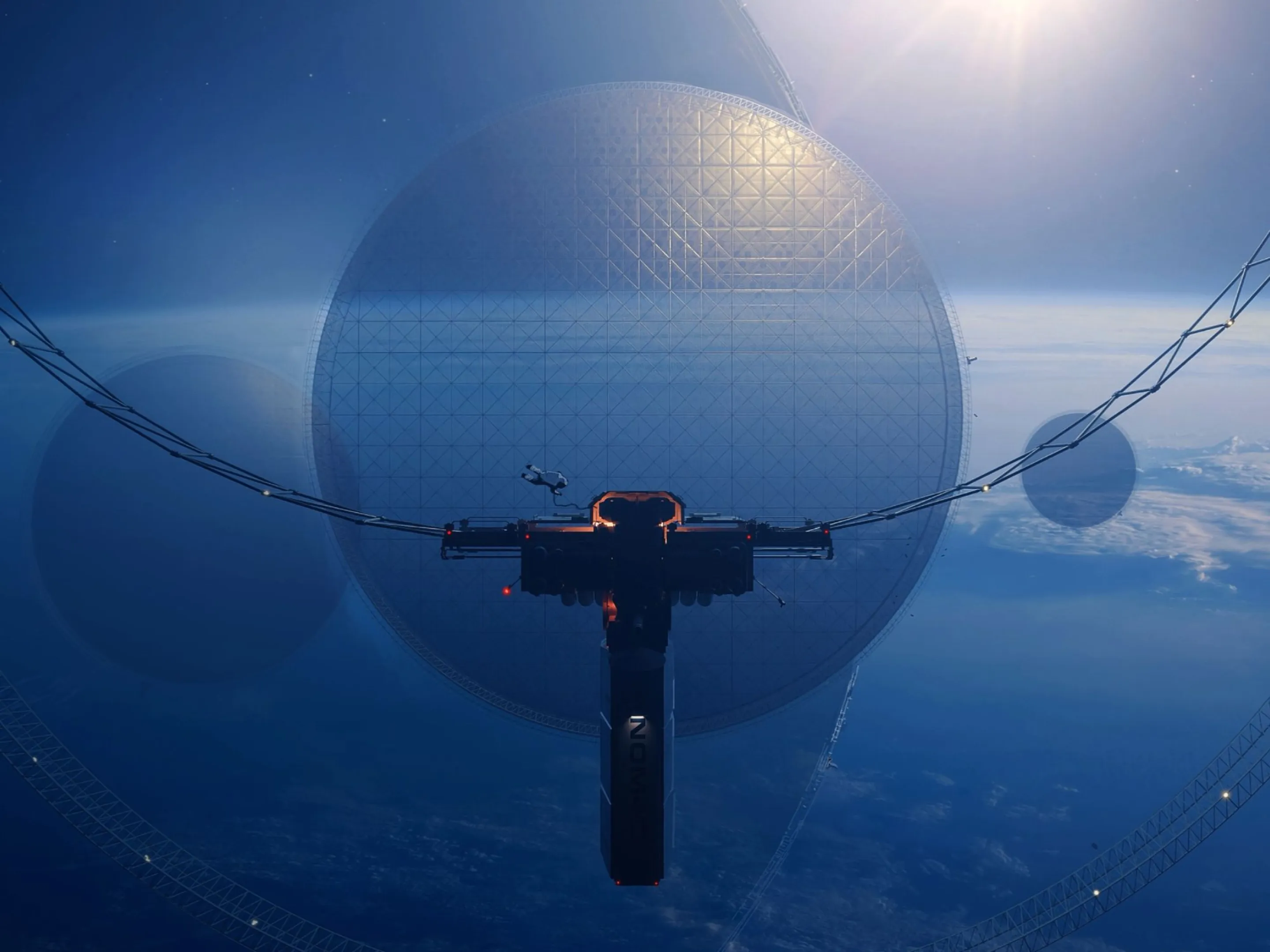
Although the final result is still far from a complete communication antenna, Andrew DeTore, director of DARPA's "Novel Orbital and Lunar Manufacturing, Materials and Efficient Design Program" (NOM4D), said that this demonstration proved the feasibility of building very large-scale facilities in space in the future. He pointed out that in the future, humans hope to build orbital structures with a length of several kilometers, but existing technology cannot yet achieve this goal.
The long-term vision of the NOM4D program is to send raw materials directly into orbit and complete manufacturing and assembly in the space environment. Future antennas, optical equipment and solar arrays will no longer need to make a lot of compromises to adapt to the rocket launch process, but can be designed and optimized specifically for the space operating environment.
DARPA compares this model to a building block toy. By repeating relatively simple assembly steps, robots can eventually build large structures that are far larger than themselves. The project team stated that within the automated assembly equipment, each section of the structure is gradually assembled from parts, and then the reflective mesh is installed and deployed after the assembly is completed. The entire process does not rely on particularly complex robotic systems or cutting-edge algorithms, but instead enables scalable automated construction capabilities through solid engineering.
However, the current "independent construction" still cannot be separated from the support of the ground team. Due to limited orbital communications, the robot can only communicate with the ground during a few windows lasting about 15 minutes each day. Engineers need to judge the on-site conditions based on the photos sent back by the robot, conduct simulation tests using the same equipment on the ground, and then send operating instructions to the orbiting robot after confirming the solution.
In fact, this is not the first time that robots have participated in space construction. During the construction of the International Space Station, the Canadian robotic arm Canadarm2 was responsible for the transportation and positioning of large cabins and equipment, assisting astronauts in completing installation. However, those tasks mainly involve piecing together large components that have been manufactured on the ground, rather than having robots autonomously build new structures from large numbers of small parts.
The field of space manufacturing has also been explored before. In 2014, a 3D printer aboard the International Space Station successfully produced panel parts needed for its own extruder assembly, demonstrating the potential for orbital manufacturing and self-maintenance of equipment. Since then, NASA has promoted the "Archinaut One" project, also known as OSAM-2, which plans to print structural beams and deploy solar arrays in orbit, combining 3D printing and robotic operation technology. However, despite certain results in ground verification, the project eventually ended in 2023.
Today, the ASTRA project provides an important proof of concept for the step-by-step assembly of track structures. Although the robot only completed the construction of a section of the truss structure this time, researchers believe that any grand project begins with the installation of the first component. This step is especially important in space, hundreds of millions of kilometers away from the nearest hardware store.
Comments