
Abstract:
The National Aeronautics and Space Administration (NASA) announced that SpaceX’s 35th commercial resupply mission to the International Space Station has successfully completed docking. The Dragon cargo spacecraft arrived at the International Space Station at 10:27 a.m. Eastern Time on October 15, and was successfully connected to the docking port on the space-facing side of the Harmony node module. This mission delivered a total of more than 6,300 pounds (approximately 2,858 kilograms) of food, equipment, and other critical supplies to the space station’s Expedition 75 crew.
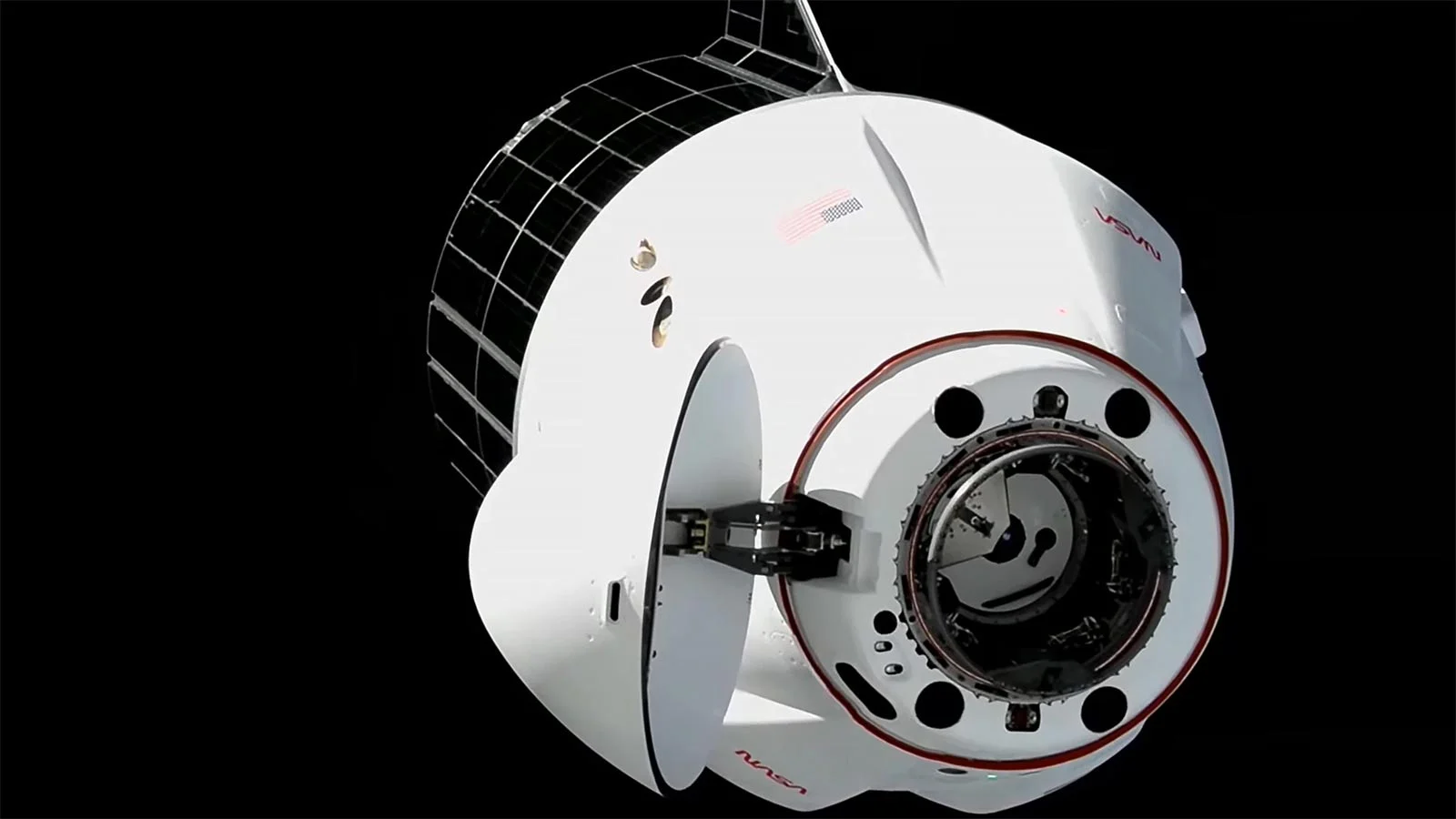
This supply mission not only undertakes regular transportation work, but also carries a series of experimental equipment and research samples with important scientific value. One of the most talked about cargoes is the final set of International Space Station Expandable Solar Arrays (IROSA). As planned, astronauts will complete the installation work later this fall. After the new array is put into use, it will further enhance the space station's ability to use solar power to generate electricity and provide more sufficient energy support for future scientific research activities.
At the same time, the Dragon spacecraft also launched a number of advanced life science experiments into orbit. One of the studies aims to explore the manufacturing process of artificial retina using microgravity environment. Researchers hope to use space conditions to improve related technologies and ultimately provide new solutions for vision restoration treatments on Earth.
Another experiment focused on a three-dimensional heart tissue model. The scientific research team plans to use these biological models to support large-scale drug testing in future deep space missions and help researchers gain a deeper understanding of the effects of drugs on human heart tissue, thereby promoting the progress of medical research and development.
In addition to biomedical research, scientists will also conduct materials science experiments to analyze the formation process of a new type of glass in a weightless environment. Researchers hope that by observing crystallization and structural changes in space, they can obtain data that is difficult to obtain under ground conditions and provide a basis for the development of advanced materials in the future.
The mission also carries a brain organoid research project. Brain organoids are miniature three-dimensional models that simulate human brain tissue and can be used to study the mechanisms of neurological diseases. Scientists plan to use the microgravity environment of the International Space Station to conduct long-term observations of these tissue models to find potential therapeutic targets for neurological diseases such as Alzheimer's disease, Parkinson's disease, and multiple sclerosis.
According to the mission schedule, the Dragon spacecraft will be docked at the International Space Station until around mid-November. At that time, it will leave the space station loaded with scientific research samples and other cargo that need to be returned to Earth for analysis as soon as possible, and will eventually complete splashdown recovery off the coast of California, USA, bringing the mission to an end.
The "Dragon" spacecraft performing this replenishment mission took off from Launch Complex 40 at the Cape Canaveral Space Force Station in Florida, USA, at 6:33 a.m. on October 13. It was put into orbit by a SpaceX "Falcon 9" launch vehicle and then flew to the International Space Station as planned. This mission not only replenished necessary supplies for the space station, but also brought new experimental platforms and valuable opportunities for medicine, neuroscience, and advanced materials research.
Comments