
Abstract:
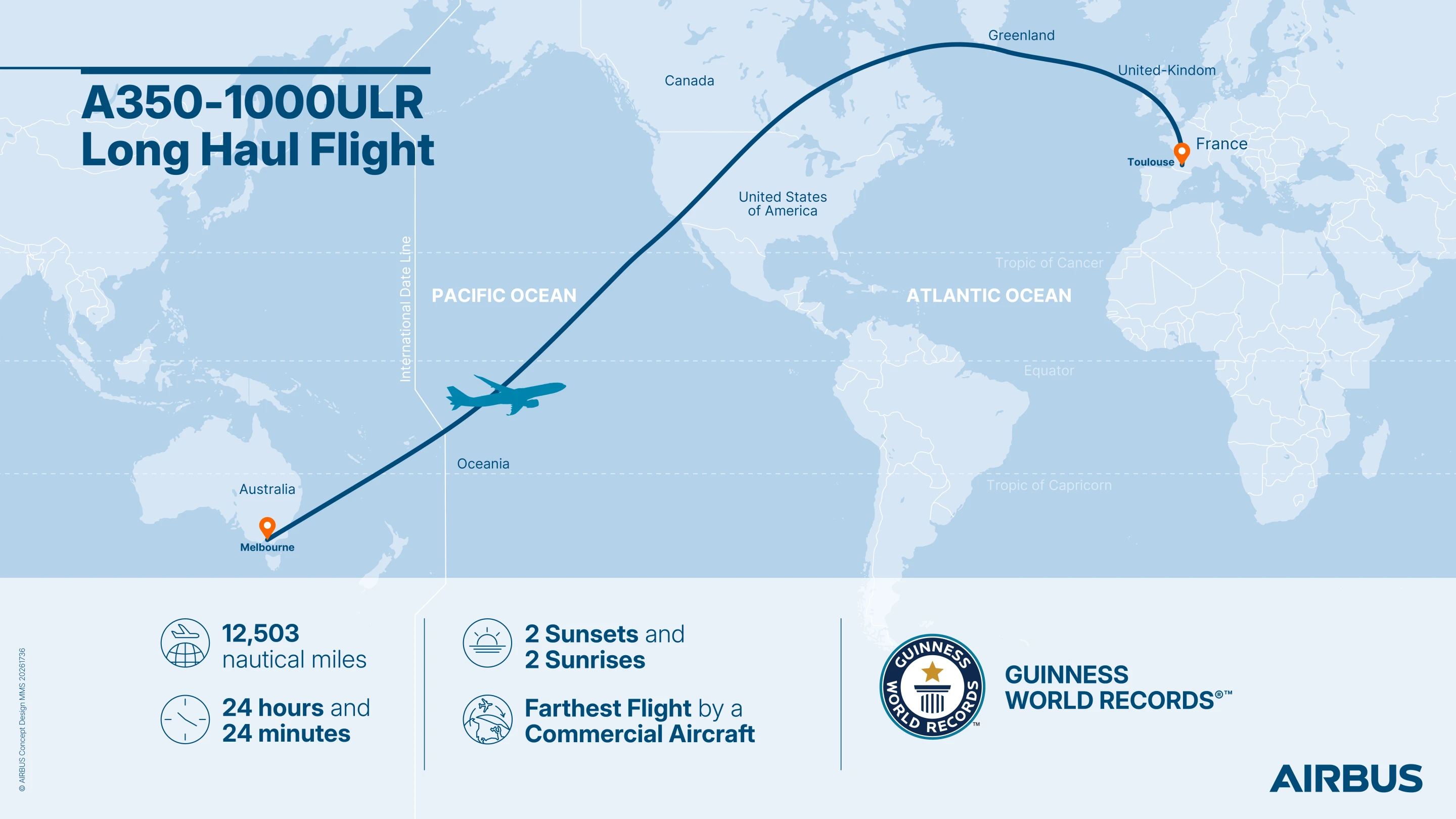
An Airbus A350-1000ULR ultra-long-range passenger aircraft of Qantas officially set a record for the longest non-stop flight distance in the history of commercial aviation. After taking off from Melbourne, Australia, the plane flew continuously for 24 hours and 24 minutes, and finally arrived in Toulouse, France, with a distance of 23,155 kilometers. This record has been verified by the Federation Aeronautica Internationale (FAI) and included in the Guinness Book of World Records.
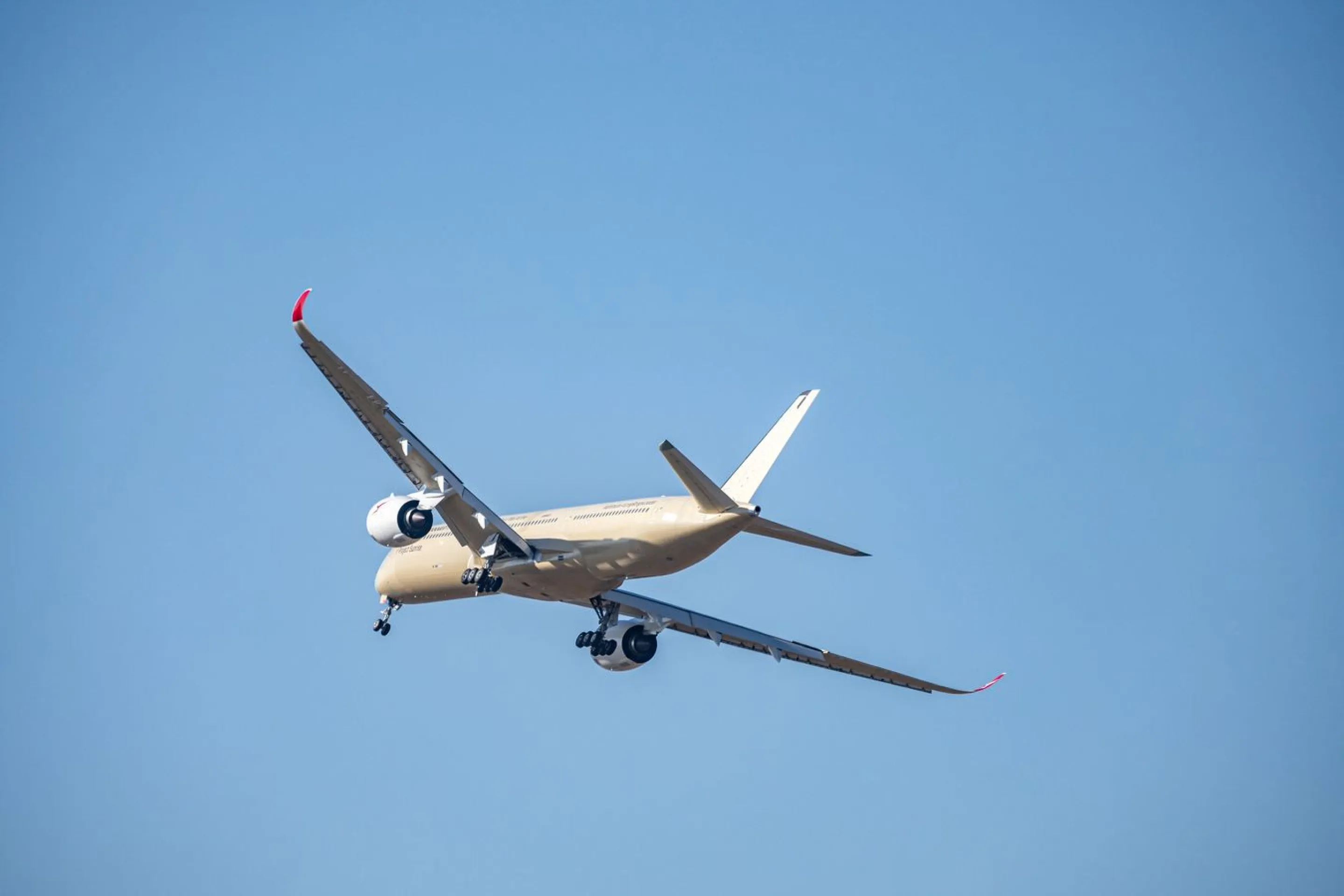
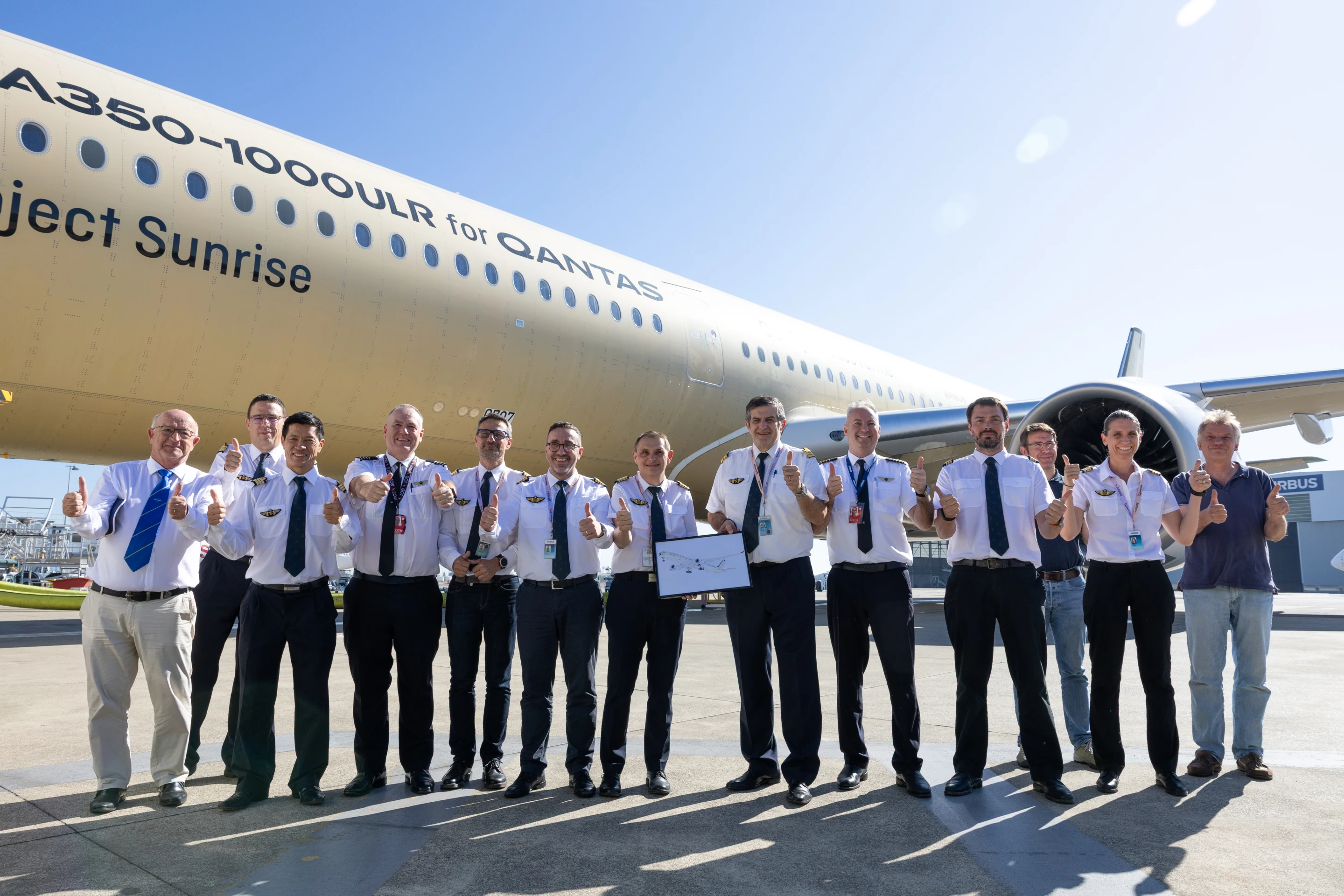
This record-breaking flight took place on July 27, 2026. The aircraft performing the mission was not an ordinary commercial airliner, but an A350-1000ULR specially modified for ultra-long-range flights. On board were three Airbus test pilots, two Qantas pilots, five Airbus flight engineers, two design engineers, and a Fédération Internationale Internationale representative responsible for overseeing and verifying flight data. The entire process is also monitored via Flightradar24.
The actual distance of this flight was 12,503 nautical miles, equivalent to 14,388 miles or 23,155 kilometers. Such an astonishing range places extremely high demands on the aircraft's fuel reserves, engine efficiency, structural strength and crew work arrangements.
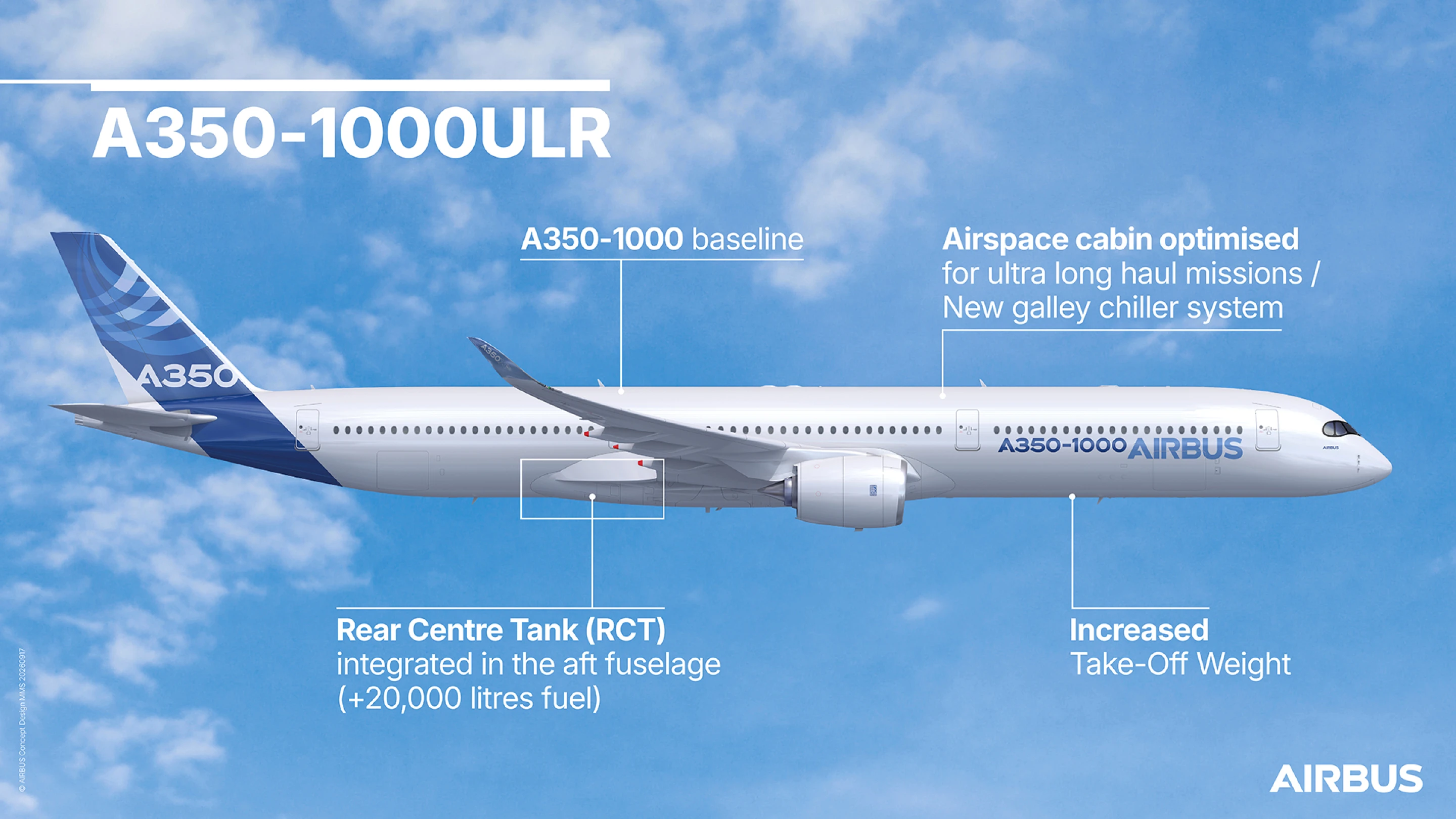
To achieve this goal, Airbus added an auxiliary fuel tank located in the center of the rear fuselage to the basic version of the A350-1000, with a maximum capacity of 20,900 liters, equivalent to approximately 5,521 US gallons. At the same time, the aircraft also upgraded fuel lines, fuel pumps and temperature monitoring equipment, and was equipped with a nitrogen inerting system to reduce the risk of fire or explosion inside the fuel tank.
After these improvements, the maximum range of the A350-1000ULR has been increased by up to 1,000 nautical miles, or approximately 1,852 kilometers, compared with the standard model.
The structure of the aircraft has also been strengthened accordingly. Key load-bearing areas near the wing's center wing box and the landing gear have been strengthened, and the maximum takeoff weight has been increased to carry more fuel while retaining sufficient payload. The power system uses Rolls-Royce Trent XWB-97 engines and is tuned for long-duration low-thrust cruise to improve operational efficiency during ultra-long-range flights.
Flying continuously for more than 24 hours is a huge test for passengers and crew. Therefore, the cabin design of this aircraft is also different from that of ordinary long-distance passenger aircraft. The cabin adopts a low-density layout of 238 seats, leaving more space for passengers to move, and a dedicated healthy activity area is set up to facilitate passengers to stand and stretch their bodies. In addition, the aircraft is equipped with drinking water stations, special lighting systems and planned meal times to minimize jet lag and physical discomfort caused by long flights.
But this record-breaking flight was not just about obtaining a Guinness World Record. It's actually an important part of Qantas' long-term business plan called Project Sunrise.
Project Sunrise aims to launch direct ultra-long-haul routes from Australia's east coast to London and New York, eliminating the need for passengers to stop in traditional hubs such as Singapore, Dubai or Doha. According to Qantas's estimates, a traditional one-stop route usually adds at least four hours of additional travel time. However, with direct flights, passengers can significantly shorten their overall itinerary.
For airlines, ultra-long-distance direct flights also have commercial value. Qantas hopes to attract business and high-end leisure travelers by shortening travel times and offering a more attractive product to premium economy passengers. As there are currently a limited number of aircraft capable of performing such long-distance direct flights, Qantas may also gain a staged competitive advantage in the eastern Australian market.
Lars Wagner, CEO of Airbus Commercial Aircraft Business, said that this flight proved that Airbus can further expand the range of the A350-1000 while maintaining economic viability. He believes that the aircraft continuously flew 12,503 nautical miles and successfully completed the mission, which fully verified its ability to execute the world's longest commercial route.
From an aviation technology perspective, the significance of this record is not only that the flight time exceeded 24 hours, but also that the aircraft was able to take into account fuel efficiency, payload, structural safety and passenger comfort during such a long journey. As ultra-long-range passenger aircraft technology gradually matures, in the past we had to rely on intercontinental routes with stopovers. In the future, more true point-to-point direct flights are expected to appear.
Comments