
Abstract:
In the past few days, several photos purported to be the COMAC CE-25A electric demonstrator have been circulated on the Internet, bringing pure electric passenger aircraft back to the public eye.
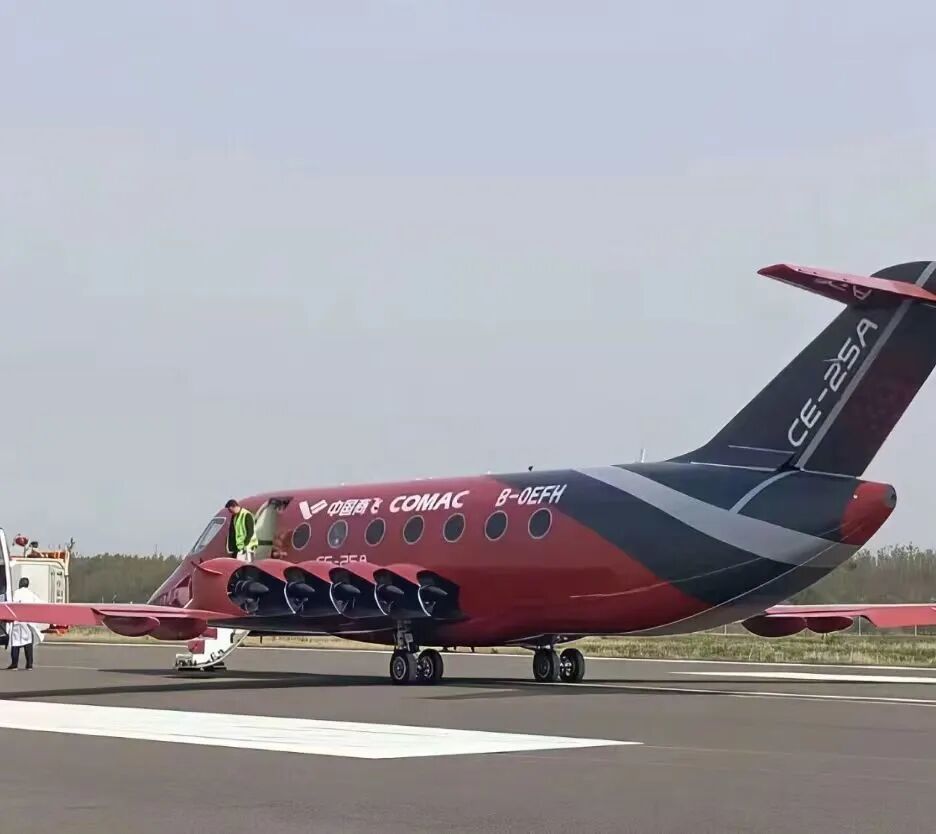
Caption: Photos of the COMAC CE-25A verification aircraft that have been circulated recently. The actual test flight status of the aircraft in the photo has yet to be officially disclosed.
This question has a surprising answer - pure electric aircraft have already been flying, and some have obtained airworthiness approval.
What is really still far away from us is getting into a pure electric passenger plane carrying hundreds of passengers and traveling to and from major cities according to schedule. Going from the previous scene to the next is much more complicated than imagining making the plane bigger.
(The pure electric aircraft discussed here refer to aircraft that rely on onboard battery energy storage and electric motors to provide propulsion power, hybrid aircraft that burn oil to generate electricity, and aircraft that use hydrogen fuel cells to generate electricity. These need to be calculated separately. They can share some electric propulsion technology, but they face different energy storage issues)
The origins of electric flight can be traced back at least to the Frenchman Gaston Tissandier.
In "La Navigation Aérienne" published in 1886, he personally described: In early 1881, the electric boat experiment gave him the idea of using electric motors for air navigation, and he displayed an electric airship model at the Paris Electrical Show that year.
On October 8, 1883, he and his brother Albert took off in an electric airship. This was an early idea and practice supported by the writings of the parties involved, and occurred before the Wright brothers' successful flight.
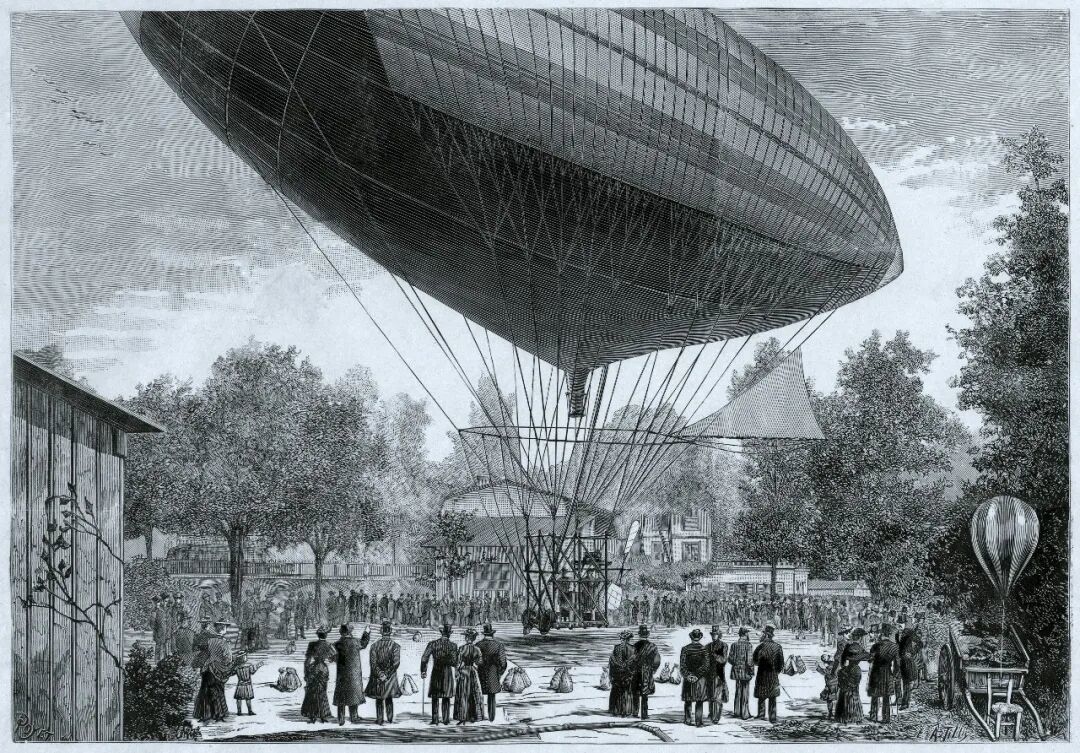
Caption: A woodcut from the same period depicting the departure of the Tisandie brothers' electric airship from Auteuil, Paris, on October 8, 1883.
However, airships rely on buoyancy to lift into the air, which is very different from aircraft that rely on wings to generate lift.
When it comes to manned battery-powered fixed-wing aircraft, the recognized important starting point is October 21, 1973: the MB-E1, developed by engineer Fred Militky in collaboration with Burdichka, completed its first flight in Austria, using nickel-cadmium batteries, and flew for about 9 minutes. According to the International Aviation Federation, the flight lasted about 15 minutes.
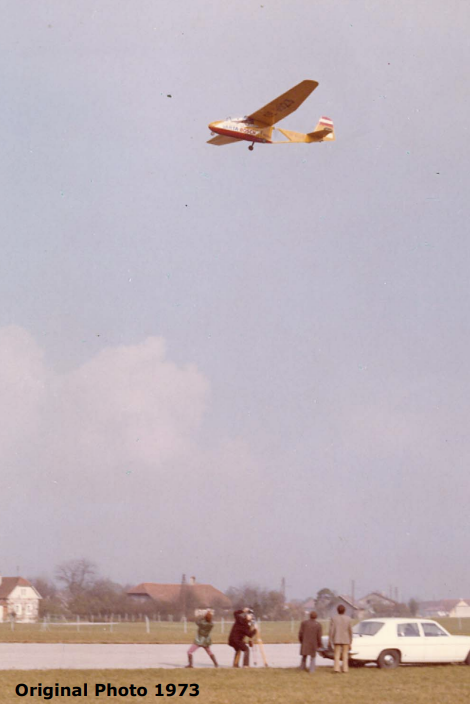
Caption: MB-E1 electric aircraft in 1973. It uses nickel-cadmium batteries and its first flight takes about nine minutes.
So, humans have proven that batteries can carry people flying more than half a century ago. The long period since then, up until now, has been spent mainly on making it more practical to fly.
Europe took the lead in blazing a trail on small planes. In 2015, Airbus's pure electric demonstrator E-Fan flew across the English Channel;
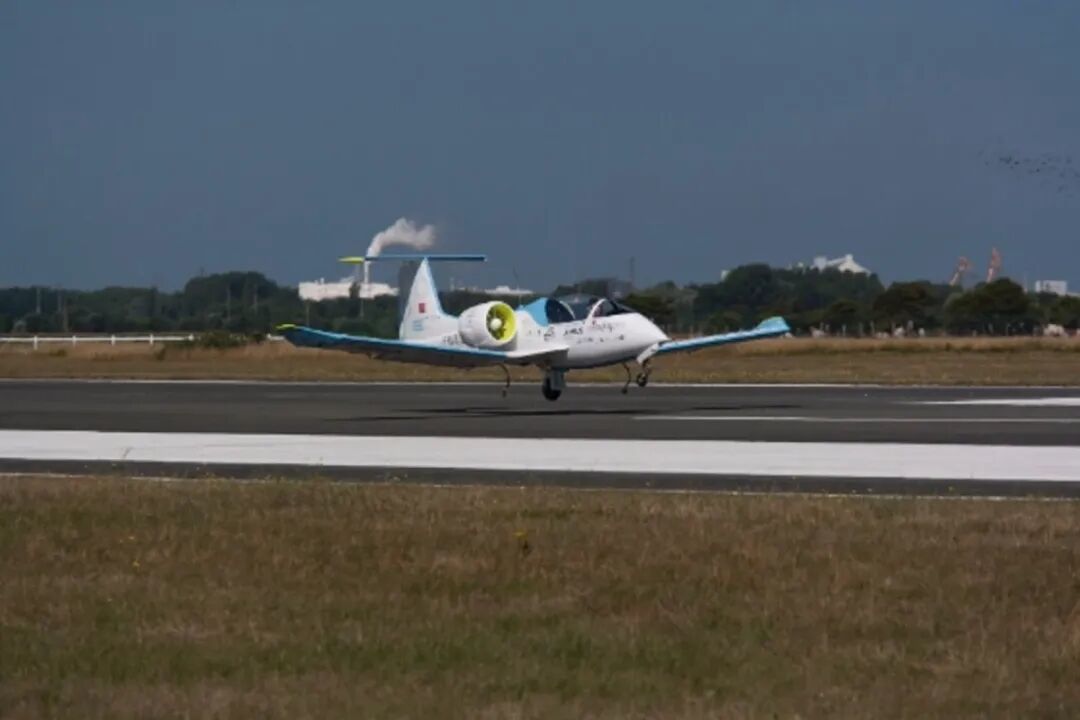
Caption: On July 10, 2015, the pure electric verification aircraft E-Fan flew across the English Channel and landed in Calais, France.
In June 2020, Slovenia’s Pipistrel’s two-seat Velis Electro received type certification from the European Aviation Safety Agency and is mainly used for flight training.
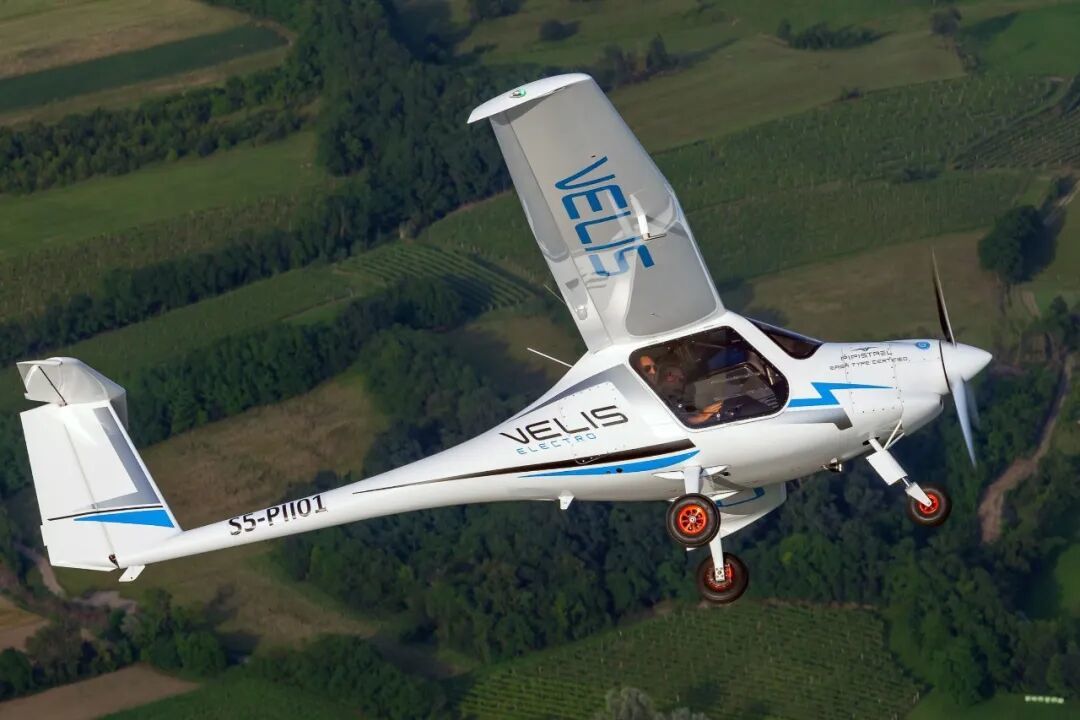
Caption: Two-seater pure electric aircraft Velis Electro. This model obtained EASA type certification in June 2020 and is mainly used for flight training.
The battery life indicator published by the manufacturer is a maximum of about 50 minutes, with a reserve required for visual flight rules.
For a small plane training around the airport, this is already useful - but it is obviously still far from being able to replace ordinary commercial airliners.
North America is trying to bring electric aircraft into short-distance transportation. Canada's Harbor Air and magniX converted a DHC-2 "Beaver" seaplane into an electric one and completed its first flight in 2019. Eviation's Alice aims at the nine-seat commuter market and completed its first flight in 8 minutes in September 2022. One uses existing aircraft to modify, and the other starts from a new model. However, the first flight proves that the technology has taken a step forward and cannot be directly regarded as the realization of regular passenger operations.
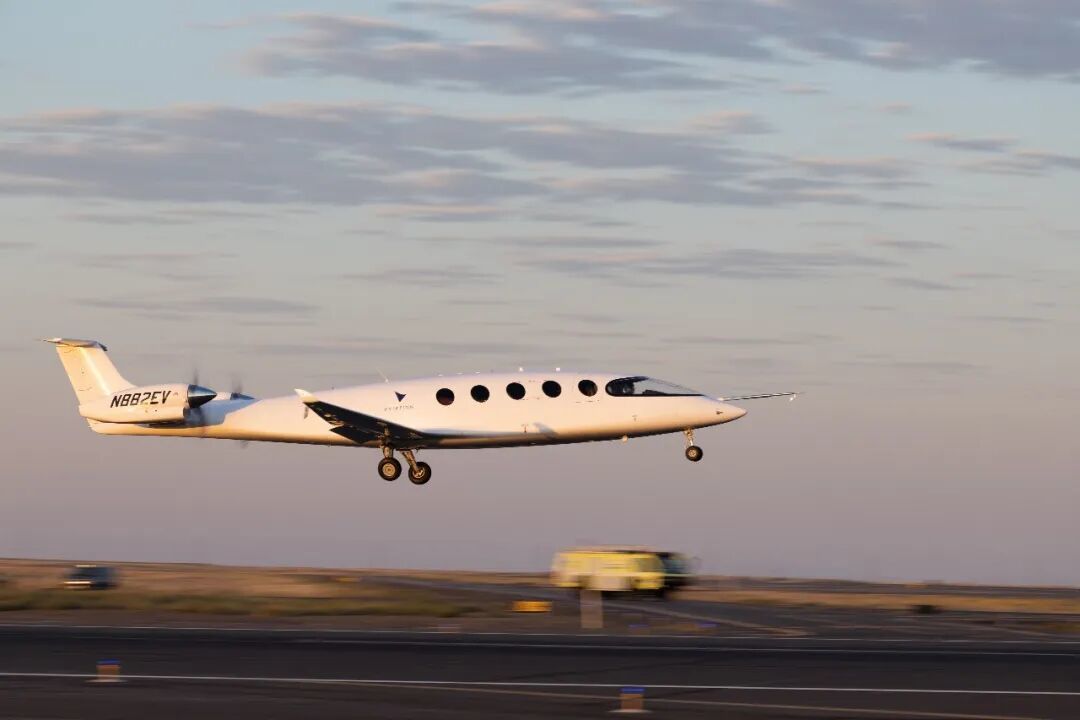
Illustration: On September 27, 2022, Eviation’s Alice electric demonstrator completed its first flight in Moses Lake, the United States, with a flight time of about 8 minutes.
Bigger attempts also appeared.
Heart Aerospace will display the X1 with a wingspan of 32 meters in 2024 as a full-scale demonstrator for the ES-30 project. The 30 seats, pure electric range of 200 kilometers and hybrid range of 400 kilometers announced at that time were program indicators for mass production of the ES-30 and cannot be directly counted as the X1's proven passenger capacity.
According to Heart Aerospace’s announcement in August 2026, its X1 demonstrator aircraft took off with a weight of more than 25,000 pounds, or approximately 11.3 tons, and flew for 27 minutes on batteries.
In September, the company announced a mass production plan for the 36-seat ES-36. The target pure electric range is about 200 kilometers. The longer range is supported by gas turbine power generation and is planned to be put into use in 2031.
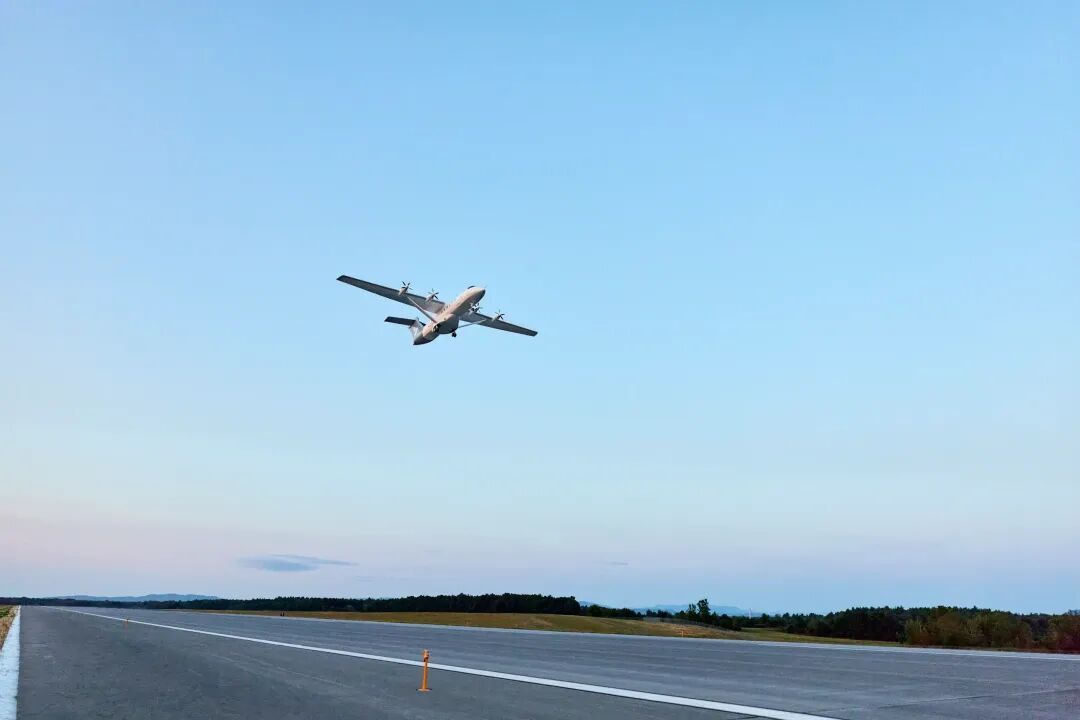
Caption: The Heart X1 demonstrator takes off and climbs during its first flight in August 2026. This is a technical verification machine, and the mass production plan parameters of ES-30 or ES-36 cannot be directly applied to it.
There are also projects that stop along the way.
NASA’s X-57 originally wanted to verify distributed electric propulsion, but the project was finally completed in 2024 and failed to achieve its first flight.
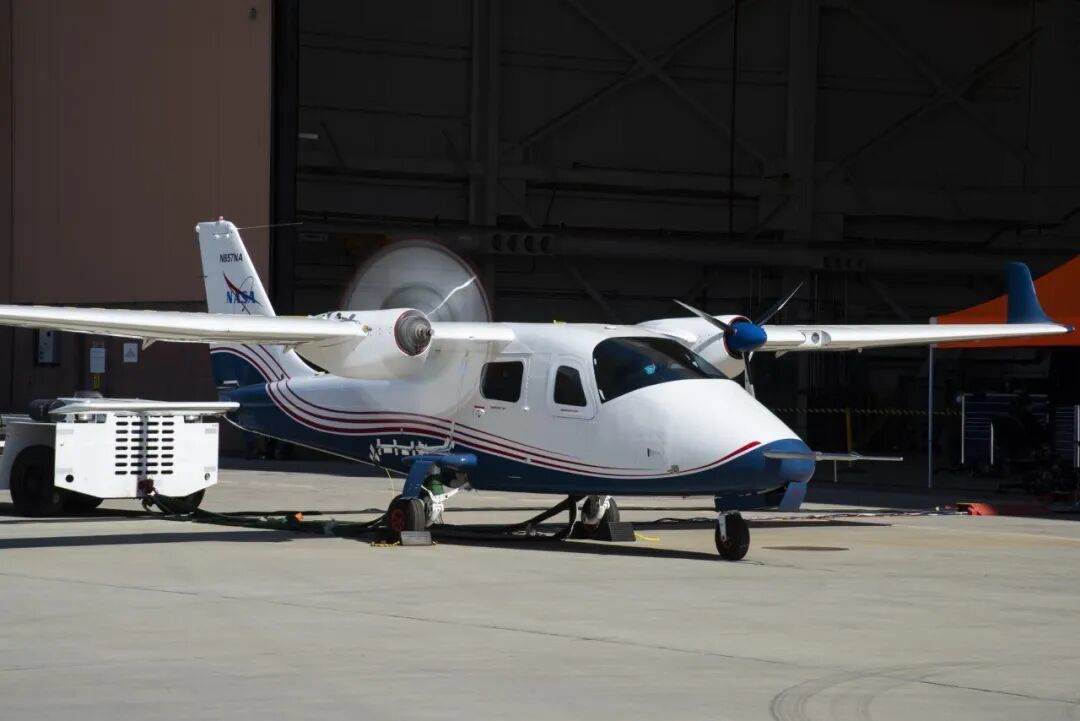
Illustration:
On April 15, 2021, NASA’s pure electric experimental aircraft X-57 Maxwell underwent high-voltage ground testing at the Armstrong Flight Research Center in California.
NASA attributed the cause to experimental hardware issues, key component supply, and remaining project time constraints. It left behind research results on batteries and electrical systems, and also reminded us that there is still a lot of engineering work in between for the electric motor to turn and for the entire aircraft to reach safe flight conditions.
China’s progress also needs to be viewed in terms of specific models.
Ruixiang RX1E, developed by Yang Fengtian’s team at Shenyang University of Aeronautics and Astronautics, first flew in 2013 and obtained the model design approval and production license in 2015. It is a two-seater electric light sport aircraft.
On December 29, 2024, the four-seat RX4E obtained the type certificate from the Civil Aviation Administration of China and completed the certification in accordance with the airworthiness requirements of CCAR-23 normal category aircraft.
AVIC General Aviation also completed the first flight of the two-seat AG60E electric demonstrator in early 2024.
The RX4E has a maximum take-off weight of 1,260 kg, a total battery capacity of 70 kWh, and a maximum public battery life of 1.5 hours.
In September 2025, Yanqing, Beijing, completed the local assembly of the first RX4E. These developments mean that small electric aircraft have reached the stage of product manufacturing and practical application, mainly for training, sightseeing and other scenarios; the maximum flight time advertised cannot be directly understood as the flight time that can be sold with sufficient load and reserve margin.
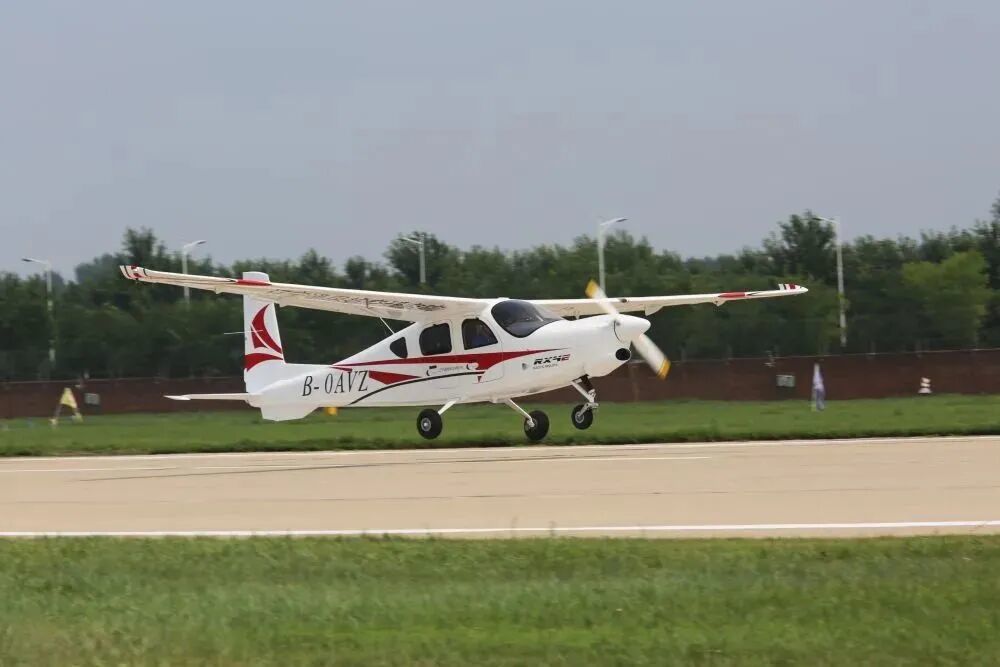
Caption: RX4E four-seater pure electric aircraft developed by Shenyang University of Aeronautics and Astronautics. This model obtained the type certificate from the Civil Aviation Administration of China on December 29, 2024. (Picture source: Shenyang University of Aeronautics and Astronautics official website.)
COMAC is also exploring larger pure electric aircraft.
CE-25A has already been unveiled at the CIIE in 2023. The public plan is for 19 seats, with a designed range of 400-500 kilometers, a maximum cruising speed of about 400 kilometers per hour, and distributed electric propulsion with ducted fans integrated with the wings.
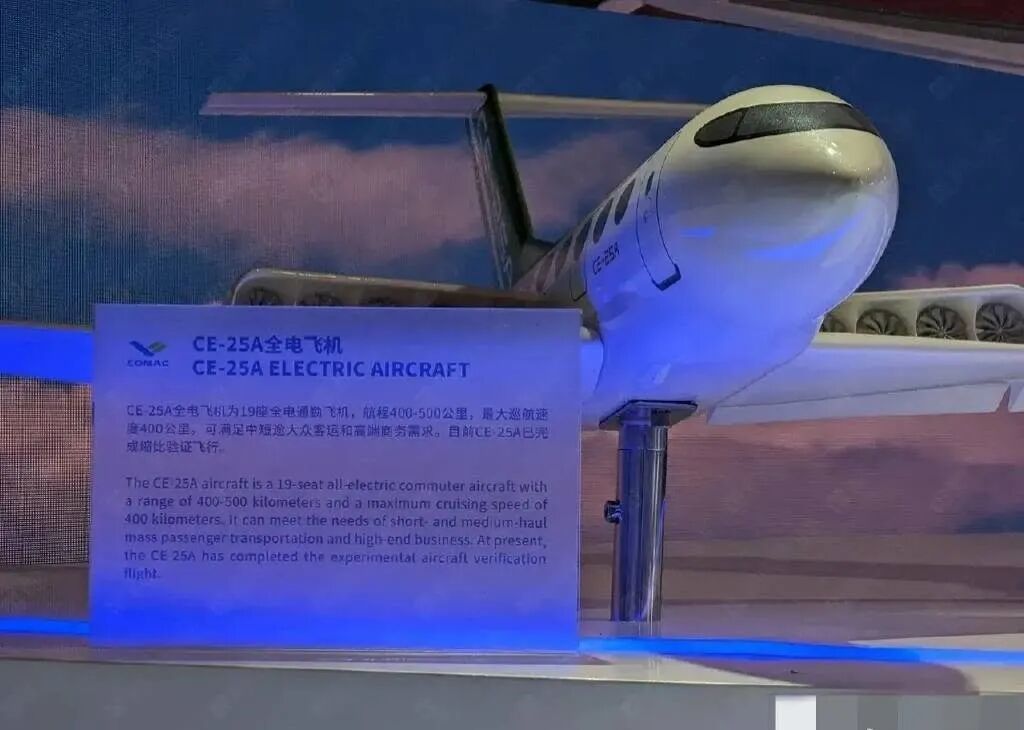
A paper published in "China Engineering Science" in 2025 clearly records that it has completed a "scaled verification flight."
In the same year, the COMAC North Research Center issued a bidding announcement for the structural test analysis of the No. 0 unit of the CE-25A project. This information can confirm the existence of the project and related verification work. Whether the aircraft in the recent photos has made its first flight still requires further formal disclosure.
The scale of 19 seats deserves attention, as it corresponds to the actual demand for small commuter transportation. However, 400-500 kilometers is still the design indicator. How many passengers it can carry, how much spare power it can keep, and how far it can fly after the battery is used for a long time all need to continue to be verified.
The most difficult aspect of pure electric aircraft is still the weight.
The same weight of aviation kerosene stores far more energy than batteries. Even taking into account the higher efficiency of electric propulsion, the gap is still obvious. After the fuel is burned, the aircraft will become lighter and lighter. The battery power is used up, but the weight is basically still there.
Thus, although installing more batteries can increase the power, it will also take up space for passengers and luggage, and the aircraft will have to carry this weight all the way.
The battery technology and aviation verification progress announced by CATL and other companies do give people hope, but the energy density in the news often only counts battery cells. When installed on an aircraft, protection, cooling and management systems must be added. How much weight can be saved in the end depends on the entire set of equipment.
Airplanes cannot arrange power according to "just enough to reach the destination".
When the weather deteriorates, it may be necessary to wait, make an alternate landing, or even go around after approach. Even if most of the battery has been used up, the battery must still provide sufficient power. At the same time, it must prevent thermal runaway and ensure the reliability of the electrical system. These requirements will not be relaxed just because the endurance is increased.
After passing the technical level, airlines still have to settle accounts. How often the battery is replaced and how long it takes to charge upon landing will affect the cost of a flight. The money saved on electricity bills may be spent on replacing batteries and waiting.
So, it is difficult to get a unified answer when asking how many watt-hours per kilogram the battery can reach before pure electric passenger aircraft can be popularized. Two-seat training aircraft are already available, but a 100-seat passenger aircraft requires much higher capabilities.
What really needs to be broken through is to make an aviation battery system light enough that it can still complete the task safely and reliably after repeated use. Solid-state batteries, lithium-sulfur and other routes are worth looking forward to. Laboratory indicators will eventually have to be tested on aircraft.
I prefer that pure electric aircraft will first do training and short-distance flights, and then gradually strive for commuting and regional markets. It may be more suitable for islands, or places where ground transportation detours far away and the passenger flow cannot support large aircraft.
As for the short-distance lines that already have convenient high-speed rail, simply replacing them with batteries may not be able to attract passengers back to the airport.
No one can give a reliable date for when 100-seat pure electric passenger aircraft will be widely used, but every step of progress in small aircraft is helping us see this path clearly.
I continue to look forward to electric flight. The pure electric aircraft has already left the ground. What we are waiting for is for it to carry enough passengers and luggage, leaving a margin for accidents. It will arrive safely today and depart as usual tomorrow.
Comments