
Abstract:
Researchers at the Swiss Federal Institute of Technology in Zurich have developed a new construction material manufacturing technology that uses living bacteria to combine loose sand grains into strong building components. Unlike traditional cement production, which consumes a lot of energy and is fired at high temperatures, this technology, called biocementation, can complete mineral solidification at room temperature and is expected to provide a more environmentally friendly material manufacturing solution for the construction industry.
Cement is one of the most important basic materials in the modern construction industry, but the production of traditional Portland cement requires heating raw materials to high temperatures, consuming a lot of energy and producing considerable carbon dioxide emissions. Therefore, finding alternative materials that can reduce energy consumption and carbon emissions has always been an important direction in the field of building materials research. The core idea of this research is not to redesign the traditional cement firing process, but to use the metabolic activities of microorganisms themselves to form natural minerals between sand grains and combine the originally loose particles into a whole with a certain strength.
The bacterium used by the research team is called Sporosarcina pasteurii. Under the right conditions, this bacterium can promote the formation of calcium carbonate. Calcium carbonate is widely found in natural materials such as limestone, chalk, and shells. When it precipitates and forms tiny crystals between the sand grains, it acts as a mineral binder, connecting the sand grains together to form a solid material with a certain strength.
This process is called microbially induced calcium carbonate precipitation, or MICP, and is also known as biocementation technology. Previously, researchers have tried to use it in areas such as soil reinforcement, foundation stabilization and concrete crack repair. What is different about this ETH Zurich research is that it attempts to directly process sand into independent building materials, rather than just using bacteria to improve the properties of existing materials.
The research team, led by Karen Antorveza Paez, proposed two manufacturing methods. The first method combines biocementation technology with 3D printing. The researchers developed a special bioink that contains water, sand, living bacteria and related chemical ingredients. The mixture has a gel-like consistency and can be molded into predetermined shapes using 3D printing equipment to create structurally complex building components.
After printing, the components need to be immersed in a solution containing urea and calcium chloride for about three days. During this process, bacteria promote the formation of mineral crystals, which gradually coalesce the sand grains. Subsequently, the building blocks are dried at room temperature for about two days, the bacteria no longer remain active, and a solid structure finally forms. The entire process, from printing to complete curing, takes up to about five days and does not require the use of traditional high-temperature firing equipment.
The researchers likened the process to baking a cake: the initially formed material remains soft and easily deformable, requiring subsequent processing to achieve a strong structure. The difference is that traditional baking relies on heat to complete curing, while this technology relies on bacteria to promote mineral production and complete a similar transformation at room temperature.
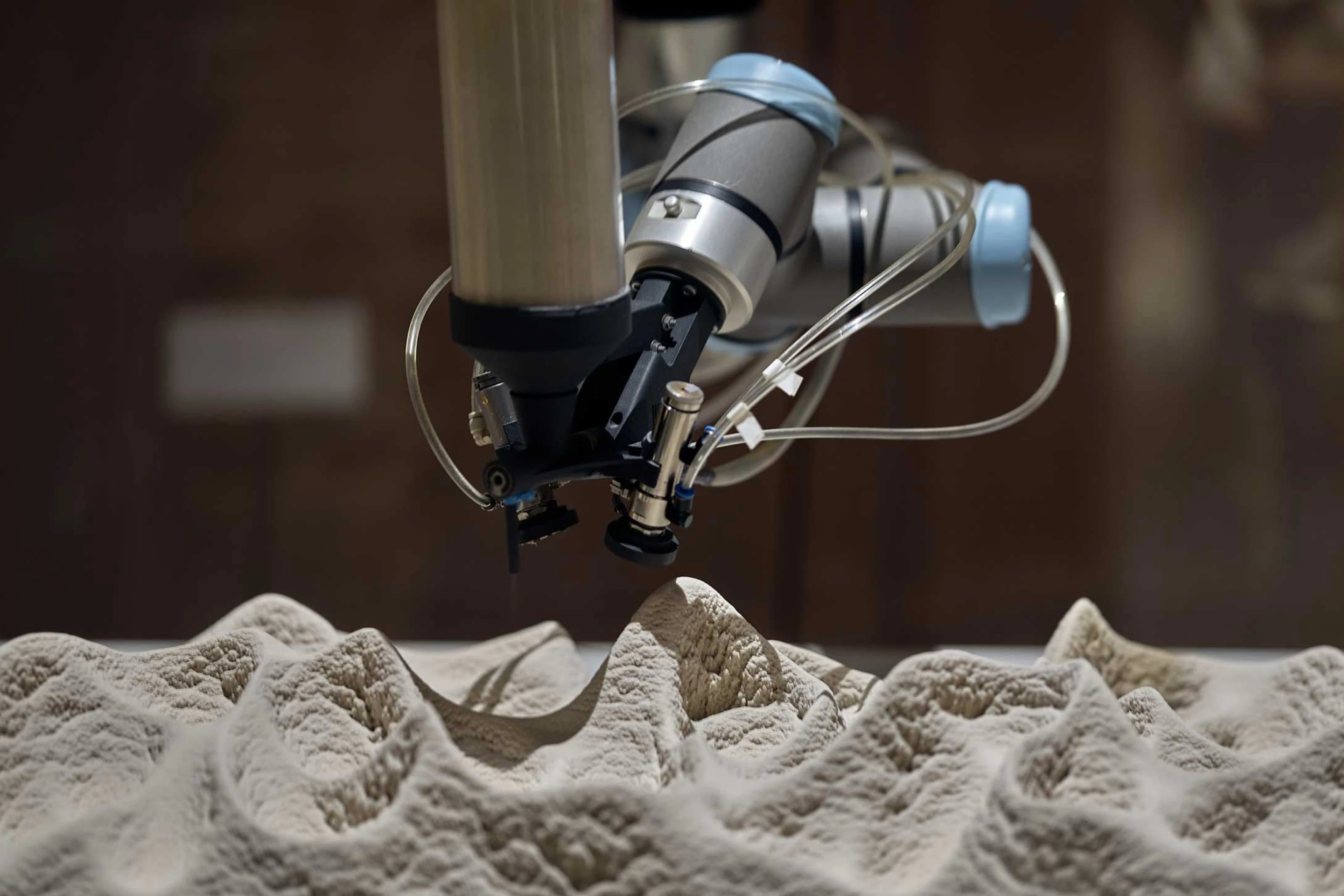
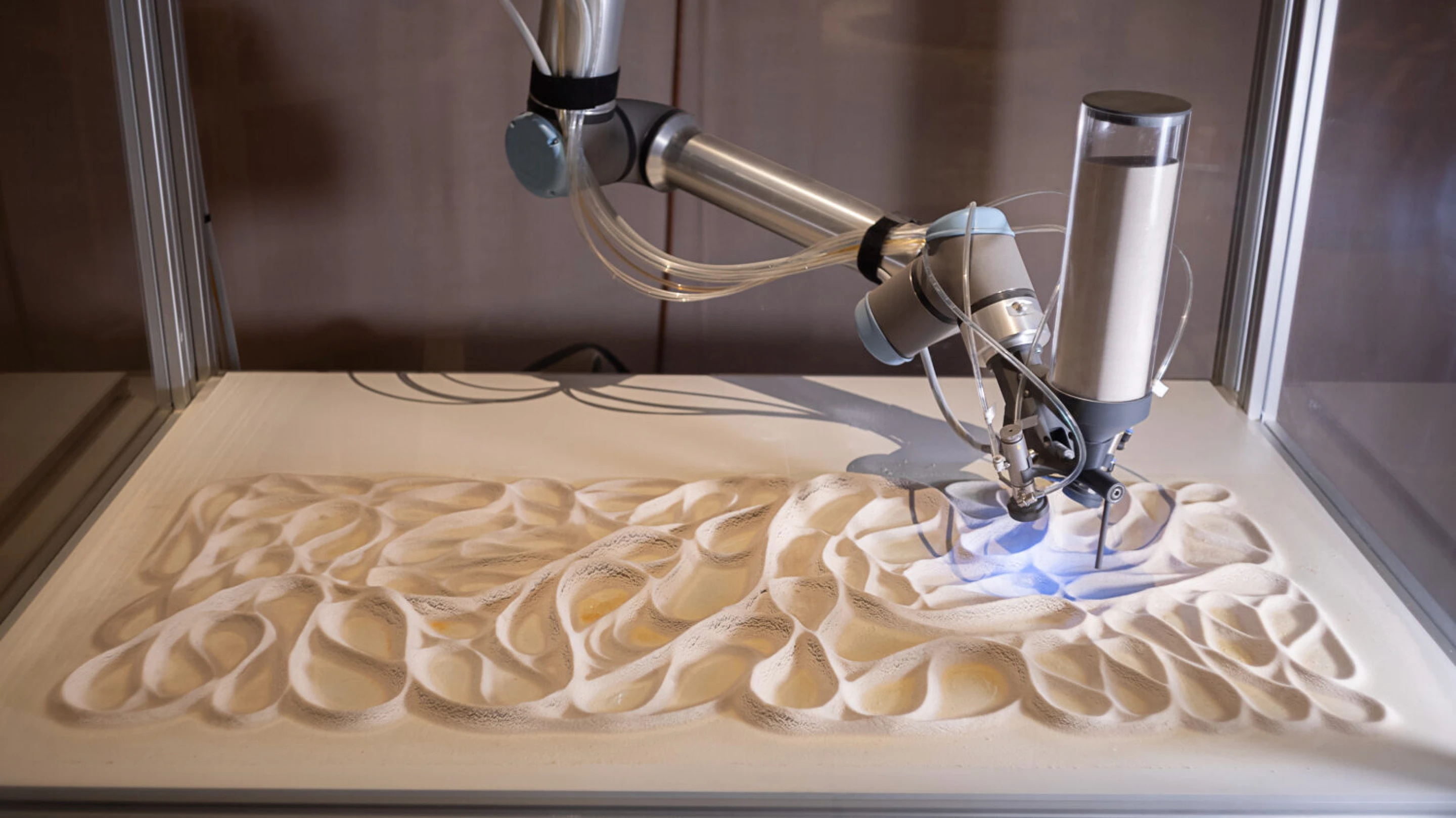
The second method uses robotic spraying technology. The robotic arm sprays sand, bacteria and materials required for mineralization onto the target surface in sequence, forming a multi-layer structure through repeated superposition. As the calcium carbonate builds, the layers of sand combine to form a solid surface or building component. The research team has had the system running continuously for six months, demonstrating its potential to automate work and reduce reliance on ongoing human intervention.
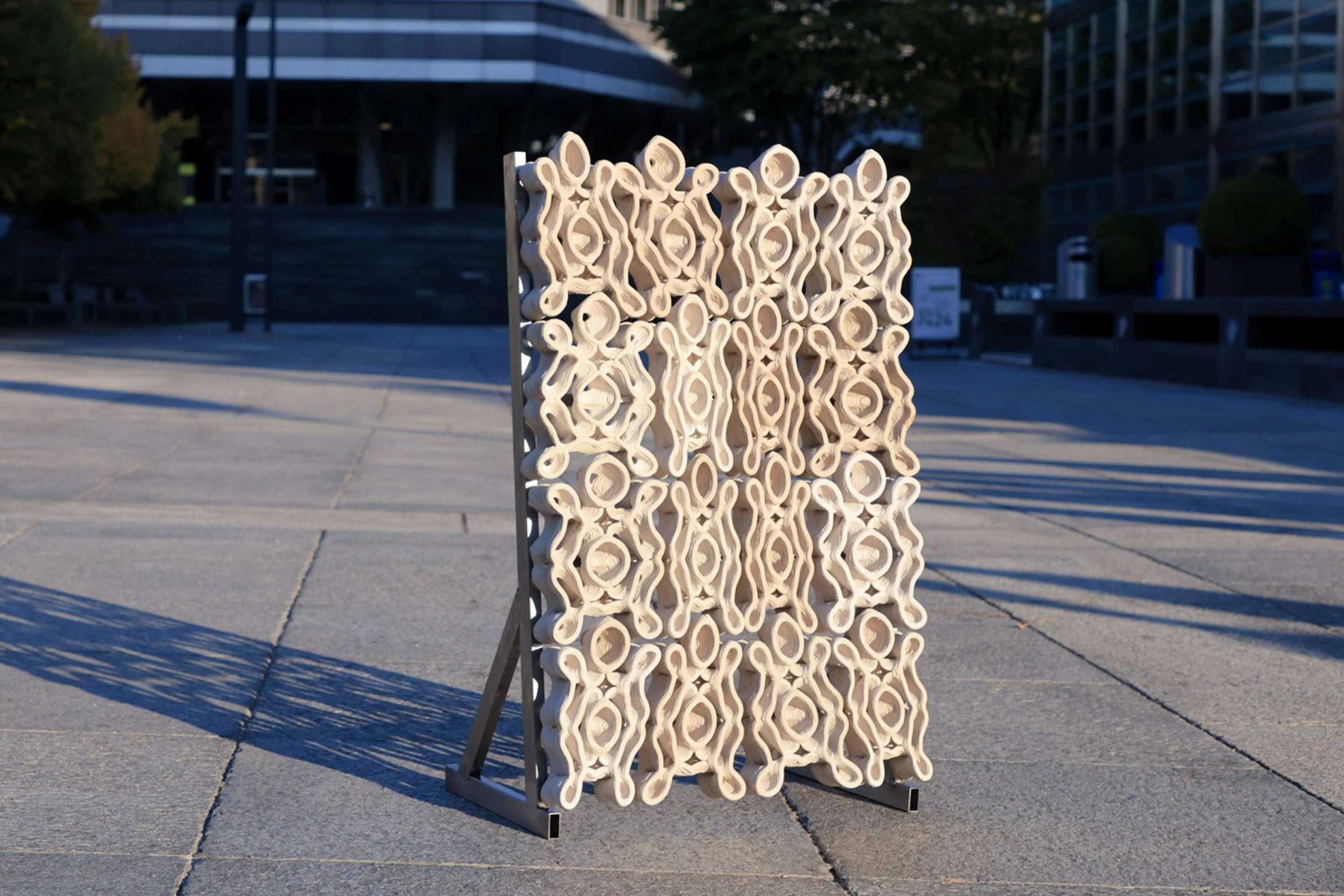
Both methods have their own applicable scenarios. 3D printing is more suitable for manufacturing building parts with complex shapes and specific geometries, while robotic spraying is more suitable for building materials layer by layer on the surface. The research team has used this technology to create building facade components, which are expected to be used in building components such as shading facilities and partition walls in the future.
However, this technology is still far from large-scale commercial application. One important issue is by-products from the manufacturing process. Mineralized solutions used in 3D printing methods produce ammonium-based substances that can be harmful to the environment if not handled properly. Researchers need to find effective recycling or neutralization methods to further scale up production, otherwise the environmental benefits of this material may be limited.
Material strength is also a key issue that needs to be solved. At present, the research team believes that this kind of biocement is closer to mortar than a structural material that can directly replace load-bearing concrete. Mortar is mainly used to bond bricks and fill joints, while concrete is widely used in load-bearing structures such as floors, columns and foundations. To use biocement in a wider range of construction projects, further verification of its mechanical properties, long-term durability and stability under different environmental conditions is needed.
Additionally, the size of the sand grains and the way the grains are arranged affect the properties of the final material. Researchers are still exploring how to achieve more stable strength and structural properties by adjusting raw materials and manufacturing parameters. This means that future research will not only need to improve the process of bacterially induced mineralization, but also establish material design and quality control standards suitable for different construction uses.
Despite these limitations, this research demonstrates a new direction in building materials manufacturing: converting natural granular materials into building components with specific shapes and properties by using microorganisms to guide the growth of minerals between particles. If issues such as by-product treatment, material strength and large-scale production can be solved in the future, biocementation technology is expected to be applied to the production of some traditional mortars and building components, reducing reliance on high-energy-consuming manufacturing processes.
Compared with directly replacing traditional concrete, a more realistic short-term goal of this technology is to first enter application fields such as non-main load-bearing components and building surface materials. The results of the research team show that bacteria can not only participate in soil reinforcement and building repair, but may also become a tool for manufacturing new building materials, providing another technical path to reduce energy consumption and carbon emissions in the construction industry.
Comments