
Abstract:
A research team at the Massachusetts Institute of Technology (MIT) recently developed a "living circuit board" made of bacteria, combining synthetic biology with electronic engineering to open up a new path for future self-healing and programmable bioelectronic systems. This achievement not only demonstrates the functional role of living organisms in circuits, but also means that traditional silicon-based electronic devices may usher in a paradigm change from the biological world.
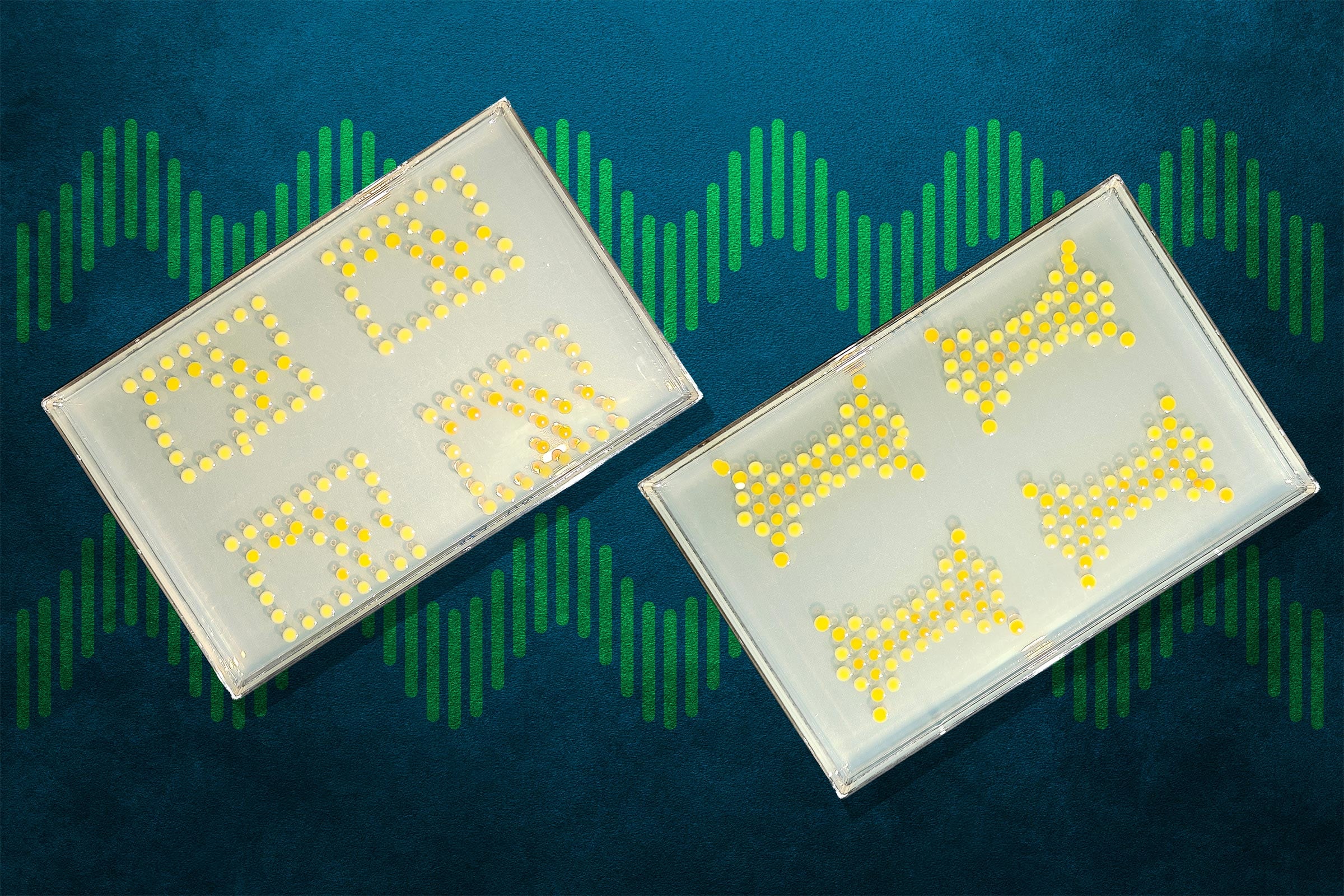
The research team used genetically engineered Escherichia coli (E. coli) as the basic material to precisely regulate its internal gene expression network, enabling the bacteria to respond to external electrical signals and perform logical operations. The bacteria are fixed on a special biocompatible substrate to form a structure similar to a traditional circuit board, but its "wires" and "switches" are made of living cells. When a specific voltage or chemical signal is applied, the genetic circuit inside the bacteria is activated, producing fluorescent proteins or other detectable output signals, thereby realizing the transmission and processing of information.
Unlike traditional electronic components, this biological circuit has the ability to self-replicate, self-repair and adapt to the environment. The researchers pointed out that bacteria can restore their functions through division and regeneration after being damaged, while silicon-based chips need to be replaced manually once damaged. In addition, because the bacteria can operate at normal temperatures and pressures, the entire system consumes very little energy and is expected to be used in implantable medical equipment, environmental monitoring sensors and even distributed biocomputing networks.

Experiments show that the living circuit board has successfully implemented basic logic gate functions (such as "AND", "OR" and "NOT") and can perform simple arithmetic operations. The team also demonstrated signaling cascades between multiple bacterial modules, demonstrating its potential to build more complex biological computing systems. Although the current computing speed is far less than that of traditional chips, its advantages in biocompatibility, sustainability and functional diversity cannot be ignored.
The project leader said that the next step will focus on improving the stability of the circuit, extending the survival time of bacteria, and exploring the possibility of integration with other biological materials (such as neurons or tissue engineering scaffolds). In the long run, this type of "living electronics" may become a core component of human-computer interfaces, smart drug delivery systems, and even artificial life forms.
This research has been published in the latest issue of the journal "Nature Biotechnology", triggering extensive discussion in the academic community on the concept of "biology is hardware". With the further integration of synthetic biology and microelectronics, there may be computers made of cells, organizations that can think, and even robots with metabolic capabilities in the future.
Comments