
Abstract:
The U.S. Department of the Treasury proposed a new regulatory rule on October 22, which plans to further restrict U.S. companies and individuals from making specific high-tech investments in China, Russia, Iran, North Korea, Cuba and other objects listed as "countries of concern" by the United States. The new regulations are designed to prevent U.S. capital from helping relevant countries improve their military capabilities, develop advanced technologies, and expand intelligence and surveillance capabilities. They are also part of the U.S.'s continued strengthening of national security reviews of foreign investments.
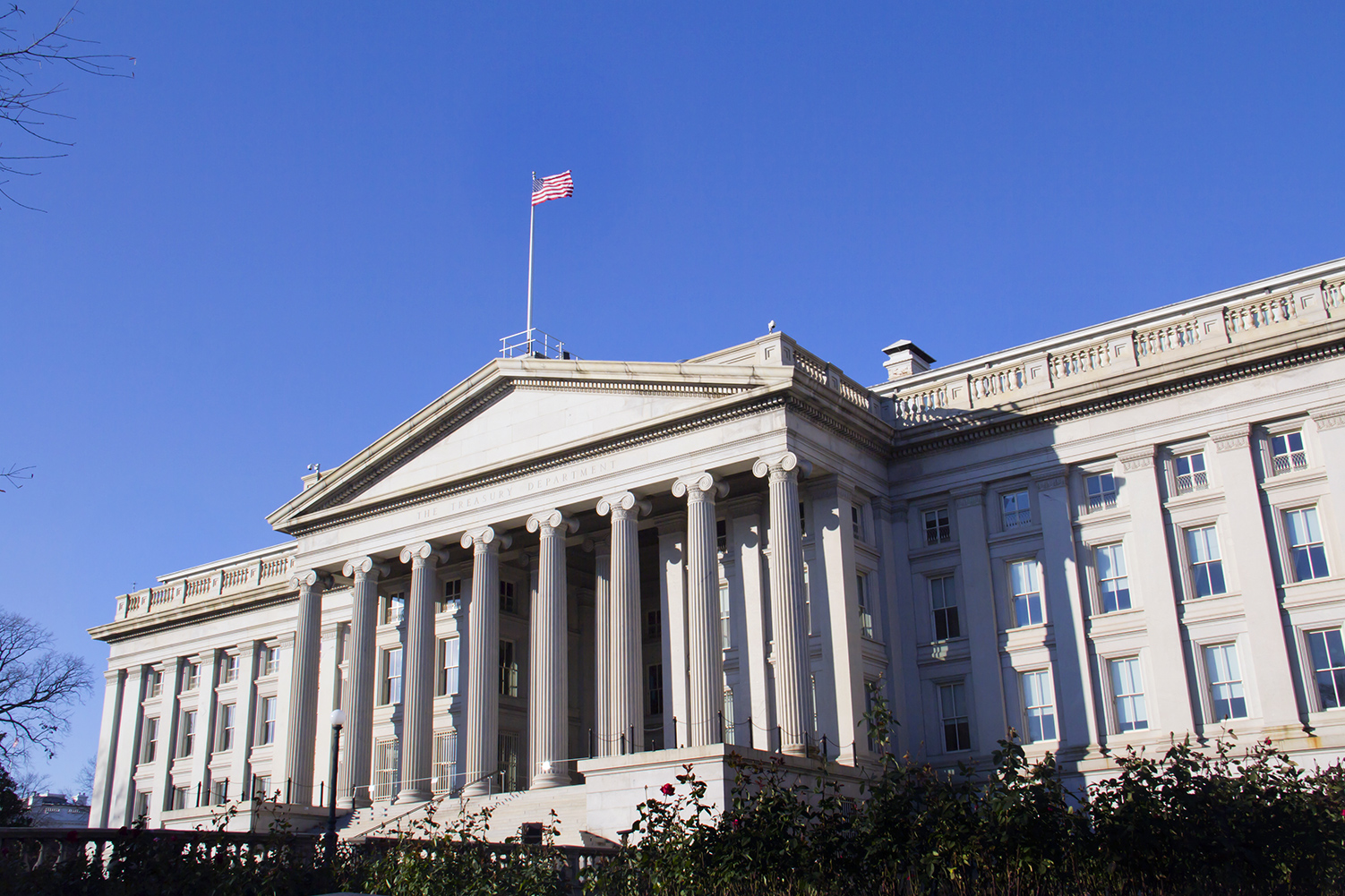
This proposal expands on the existing U.S. foreign investment security program. In 2023, then-U.S. President Biden signed an executive order to impose restrictions on U.S. capital investment in China's semiconductor, quantum computing, artificial intelligence and other fields. Subsequently, the U.S. Department of the Treasury established a foreign investment security plan. In December 2025, the U.S. Congress passed the Comprehensive Foreign Investment National Security Act, writing relevant mechanisms into law and expanding the scope of restricted countries and technologies.
The rules proposed by the Ministry of Finance this time further clarify how to implement the requirements of Congress and implement a prohibition or declaration system for some investment activities. According to the U.S. government’s explanation, the relevant measures are intended to prevent U.S. funds from helping countries identified as potential adversaries to develop technologies that may be used for military modernization, intelligence activities, surveillance systems, and cyber attacks.
In terms of technology scope, the new regulations cover advanced semiconductors and microelectronics, artificial intelligence systems, quantum information technology, high-performance computing and supercomputing, hypersonic systems and other fields, and include biotechnology within the scope of supervision. The U.S. Treasury Department believes that certain advanced biotechnologies may be used to develop biological weapons, brain-computer interfaces and other sensitive purposes, and may also affect the security of key U.S. supply chains, so it is necessary to expand the scope of review.
Artificial intelligence is one of the focuses of this proposal. The U.S. Department of the Treasury used the term "superintelligence" in the rules to describe related artificial intelligence systems, and proposed prohibitions or declaration requirements on investment in specific artificial intelligence technologies in target countries. The Ministry of Finance believes that artificial intelligence technology has developed rapidly in the past two years, and the capabilities and potential uses of some advanced models are constantly changing. Regulators are facing new challenges in defining technology boundaries and judging risks.
According to the proposal, U.S. investors will be required to report to the Treasury Department some transactions involving relevant countries and technology fields; other transactions deemed to be higher risk may be directly prohibited. The specific scope of application depends on the investment objects, transaction forms, technology categories and technical parameters specified in the rules. Not all investments involving Chinese technology companies will automatically be restricted.
The proposal also stipulates possible obligations for U.S. individuals and foreign entities controlled by them, including conducting reasonable and prudent investigations before conducting transactions to confirm whether the transaction object falls within the scope of regulation. Through these requirements, the Treasury Department hopes to prevent U.S. investors from circumventing regulations on the grounds that they do not understand the transaction objects or related technologies.
However, the rules do not cover all financial investments. The framework proposed by the U.S. Treasury Department creates exceptions for certain transactions, including many investments in ordinary securities. The proposal also stipulates that investment transactions that fall within the scope of specific regulations need to meet corresponding conditions; the Associated Press report pointed out that the relevant rules involve an investment threshold exceeding US$50,000, but this threshold does not mean that all transactions exceeding this amount will be prohibited. Whether it is applicable still depends on the specific transaction category and rule requirements.
The U.S. Treasury Department will seek public comment on the proposal before issuing a final implementing rule. The final rule will clarify the effective date and specific enforcement requirements. Therefore, what is currently announced is still a proposed regulatory framework and not all provisions have officially entered into force.
The U.S. government has continued to restrict China’s access to some advanced technologies through export controls, investment reviews, and supply chain policies in recent years. Previously, the United States has implemented multiple rounds of restrictions on the export of advanced artificial intelligence chips and related manufacturing equipment. Unlike export controls, which focus on the cross-border flow of technology and products, foreign investment reviews focus on the support that U.S. capital, expertise, and business relationships may provide for the development of relevant technologies.
The U.S. Treasury Department believes that capital investment will not only help companies purchase equipment and expand research and development, but may also accelerate the development of military-related technologies. Craig Singleton, a senior fellow at the Endowment for American Democracy, said the proposal sends a signal to the market that Washington is paying close attention to the flow of U.S. capital and what technological capabilities these funds are helping to build.
Jason Chipman, a former lawyer at the U.S. Department of Justice and now a partner at WilmerHale, pointed out that the new regulations may require companies to establish better compliance mechanisms to identify potential risks and ensure that transactions comply with regulatory requirements.
Former U.S. trade official Ryan Majerus believes that this is just the beginning of a relatively long regulatory improvement process, and subsequent measures may further strengthen enforcement. When companies invest in related technology fields in China and other countries of concern, they may need to invest more resources in legal review, transaction screening and internal risk management.
It is worth noting that the new regulations come as China and the United States have previously tried to ease trade and technology frictions. U.S. President Trump and Chinese President Xi Jinping have previously reached an arrangement to temporarily ease tensions and recently extended the relevant truce until January 2027. However, competition between the two sides around advanced chips, rare earths and key technologies continues.
The U.S. government’s recent law enforcement actions also show that foreign investment supervision has begun to have a real impact. In July this year, the U.S. Treasury Department fined a U.S.-based company $200,000 for failing to report a $92,500 investment made by one of its subsidiaries in a Chinese artificial intelligence and robotics company as required.
Overall, the proposed U.S. rules further expand the technical coverage of foreign investment security reviews and provide a clearer legal framework for prohibiting high-risk transactions and requiring declarations of specific transactions. For Chinese technology companies, some investments from U.S. capital may face greater scrutiny, especially projects involving advanced artificial intelligence, semiconductors, quantum technology, supercomputing and certain biotechnologies. However, the specific impact still needs to wait for the final rules to be announced, and it cannot be simply understood that U.S. funds will completely withdraw from China’s technology industry.
Comments