
Abstract:
From July to August this year, the U.S. government further restricted foreign-made advanced robotic systems and imposed high tariffs on imported drones and their parts on the grounds of national security. Tariffs on drones will take effect in September, and tariffs on some parts are planned to be implemented in 2027.
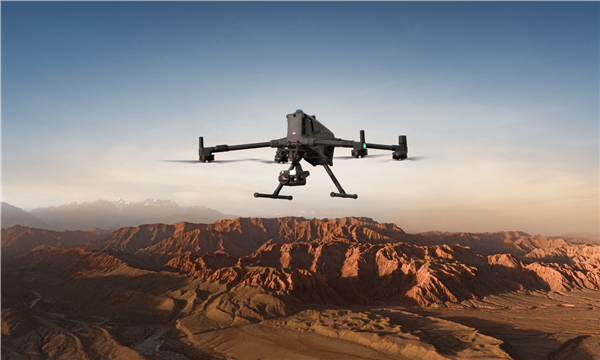
These measures are part of a larger U.S. campaign to restrict foreign technology in key strategic industries. The U.S. Federal Communications Commission has established a "coverage list" since 2021, initially targeting communications and surveillance equipment from companies such as Huawei, ZTE, and Hikvision, and then gradually expanding to foreign-made drones, and recently including advanced robotic equipment.
As the United States tightens restrictions, Chinese companies have developed clear advantages in the fields of drones and humanoid robots. With complete supply chains, large-scale production and lower costs, Chinese manufacturers often find it difficult to match American and European competitors on price. It also raises a broader question: If Chinese drones and humanoid robots are increasingly excluded from the U.S. market, where will competition turn?
Industry insiders believe that restrictive measures may be able to protect parts of the U.S. market, but it will be difficult to directly change China’s advantages in global manufacturing scale and cost. The future result may not be a complete separation of the two systems between the United States and China, but a further regionalization of the global robotics industry: Chinese companies will expand to other markets, while the United States and its allies will compete more for areas that require higher safety standards.
At present, the Chinese and American robot industries are still interrelated, but the advantages of both sides are different. Ankur Saxena, investment director of investment institution TDK Ventures, said that the robotics industry does not rely on a core technology that can be controlled individually like semiconductors. The United States leads in cutting-edge artificial intelligence, software and semiconductor innovation, while China dominates in manufacturing scale, supply chain depth and cost control.
Market data further illustrates this gap. A report from research firm Counterpoint shows that global shipments of humanoid robots reached approximately 22,000 units in the first half of this year, the vast majority of which came from Chinese manufacturers. In terms of shipments, the world's top five humanoid robot companies - Agibot, Yushu Technology, Galbot, UBTECH and Leju Robots - are all from China, accounting for 86% of global shipments in the first half of the year.
Scale advantages may also create a sustained cumulative effect. Lower prices can push more robots into actual use, thereby generating a large amount of real-life scene data to help companies improve products and technologies. Increased production will further dilute costs, forming a cycle of “more production – lower prices – more applications”.
Chinese companies are also reducing costs by expanding the scope of self-research and utilizing mature manufacturing systems. For example, Yushu Technology is developing more internal components; automobile companies such as Xiaopeng can enter the robotics industry with the help of their accumulated experience in chips, vehicle manufacturing and autonomous driving. Analysts point out that Chinese companies’ advantages in manufacturing capabilities and supply chain integration allow them to lower the price of humanoid robots at a rate that most U.S. competitors have difficulty keeping up with.
As market barriers increase in the United States, Chinese companies may turn more attention overseas. China has a huge local market. At the same time, there are also labor shortages in Europe, Southeast Asia, Latin America and the Middle East, and there is a strong demand for relatively low-priced automation equipment.
The industry predicts that Chinese humanoid robot companies may follow the development path of new energy vehicle companies: first expand production capacity and applications domestically, then enter overseas markets, and finally build local production capabilities. Countries facing an aging population, shrinking labor force, and labor shortages in the manufacturing industry may become markets where humanoid robots will be introduced earlier.
The drone industry is already showing a similar trend. Benzion Levinson, CEO of US drone manufacturer Heven AeroTech, believes that the global drone market is gradually divided into two ecosystems: one is based on systems made in the United States and meets the requirements of the US National Defense Authorization Act, and the other is dominated by Chinese companies, emphasizing low cost and mass production.
In the low-end consumer drone market, it is difficult for Western companies to defeat Chinese manufacturers based on price alone. Therefore, the United States and its allies may instead focus on developing long-range autonomous systems for use in areas with higher security requirements, such as national defense and critical infrastructure. The focus of future competition may also shift from the complete drone to the energy system and mission load, especially battery technology. As drone performance improves, battery life and power supply capabilities will become more critical competitive factors.
Agility Robotics, an American humanoid robot company, welcomed the U.S. Federal Communications Commission’s decision in July, believing that it will help deal with potential safety risks before foreign advanced robots deeply enter the U.S. market. The company emphasized that its humanoid robot Digit is designed and assembled in the United States, but also called for continued access to the tools and technology needed for robot development.
However, if the United States wants to reduce its dependence on China's supply chain, the alternative is not necessarily to establish a completely closed local supply chain, but more likely to build a diversified supply system composed of multiple allies. Japan has decades of experience in industrial robots and precision manufacturing, South Korea has outstanding strengths in electronics, automobiles and batteries, and Taiwan occupies an important position in the semiconductor industry.
These economies could become an intermediate force between low-priced Chinese robots and high-priced American products. South Korea's Hyundai Motor owns Boston Dynamics, and Japan's Toyota also continues to invest in the field of robotics. Both companies are using their accumulated technology in vehicle manufacturing, automation and autonomous systems to develop humanoid robots.
Yang Fang, head of Beagle Technology, a California agricultural technology company, said that the robot industry may become more regionalized in the future. Companies design equipment based on local workforce needs, work environments and customer characteristics. Chinese companies may focus on developing products suitable for China and surrounding markets, while American companies are more likely to conduct research and development for various industries in North America.
Therefore, U.S. restrictive measures may not necessarily spawn two isolated robotics industries, but may accelerate the formation of multiple regional markets: Chinese companies rely on cost and scale to compete in many parts of the world, the United States and its allies are strengthening their advantages in markets with higher security requirements, and manufacturers in Japan, South Korea, and Taiwan are trying to find their own development space between the two.
Comments