
Abstract:
A new study suggests that whether complex life can evolve on exoplanets depends not only on how long the planet has existed, but also on how much photosynthetic energy it has accumulated over its long history. The research team analyzed 29 exoplanets near the solar system that may have liquid water, and believed that only two of them may have developed beyond the current evolutionary stage of the Earth, and the other three may have reached a period similar to the Mesozoic Era and the life of dinosaurs on the Earth. Based on this, researchers believe that the possibility of highly developed alien civilizations appearing near the Earth is low, but they have not ruled out their existence.
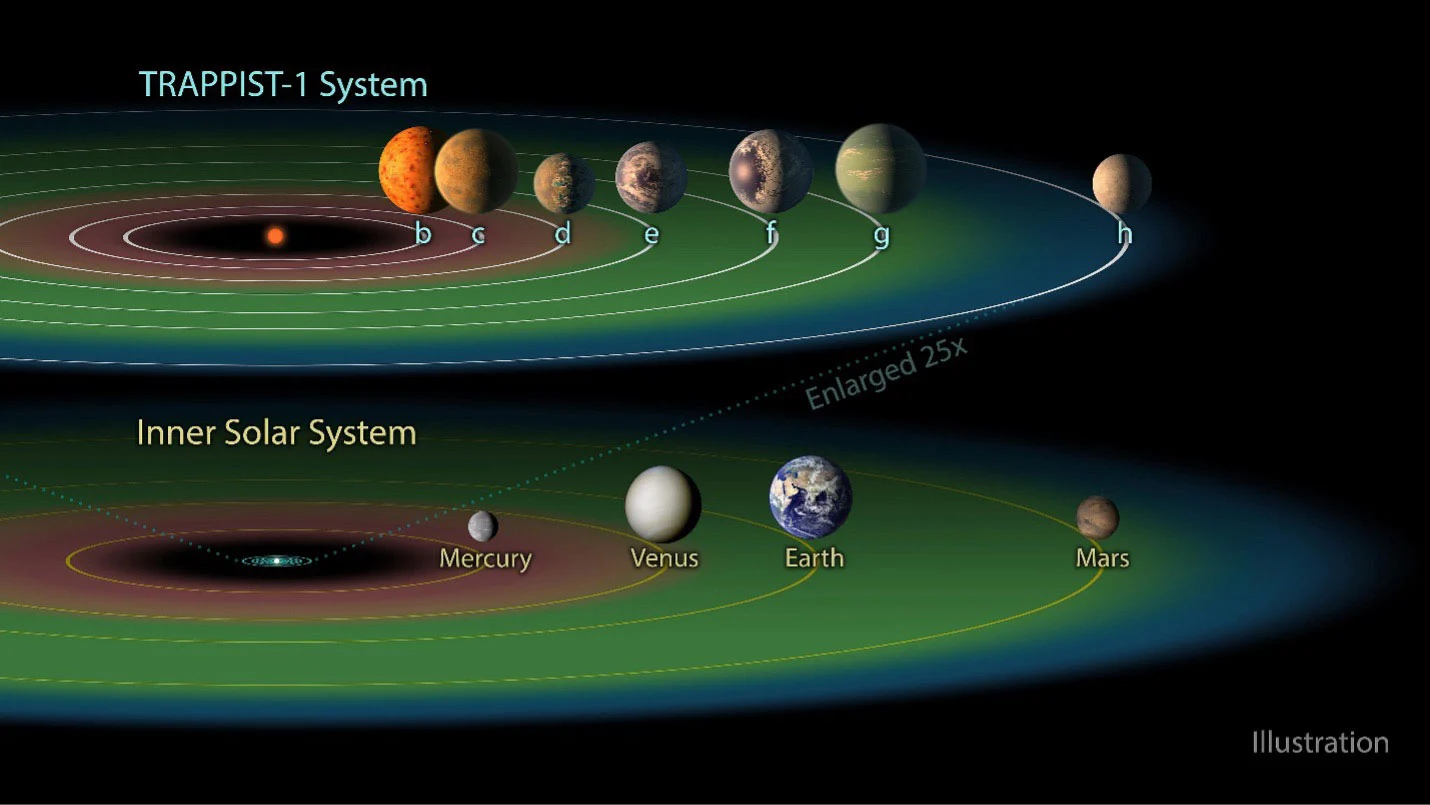
The research was led by Chris Doughty, professor of ecological informatics at Northern Arizona University, and was published in the International Journal of Astrobiology. The team views photosynthesis as a "clock" that measures the evolution of life on the planet: photosynthesis converts light into chemical energy. The more vigorous the plant growth, the more energy and ecological space it may provide for animals. Therefore, a younger but warmer and wetter planet may have evolved more life than an older but colder and drier planet.
The researchers used the Earth's carbon fixation as a reference. In the 3.2 billion years before the emergence of efficient vascular plants, Earth's photosynthesis fixed a cumulative total of approximately 2.4×10²⁵g of carbon. After the emergence of vascular plants and before human evolution, an additional 7×10²⁵g of carbon was fixed. Vascular plants have specialized tissues for transporting water and nutrients. The research team used this to compare Earth's historical levels of photosynthesis with those possible on other planets.
Red dwarfs are the most common stars in the Milky Way, and the planets around them are regarded as one of the potential targets for the search for life. However, many planets are in a tidally locked state, always with the same side facing the star and the other side facing away from the star. Research co-author Michael Govanlock, associate professor at Northern Arizona University, pointed out that if photosynthetic life appears on these planets, their photosynthetic duration may last billions of years longer than on Earth; however, because less light is available and the surface area of the planets that can perform photosynthesis may be only half, the total annual photosynthesis may be lower. The team is trying to quantitatively determine which type of planet is more advanced in the evolution of life.
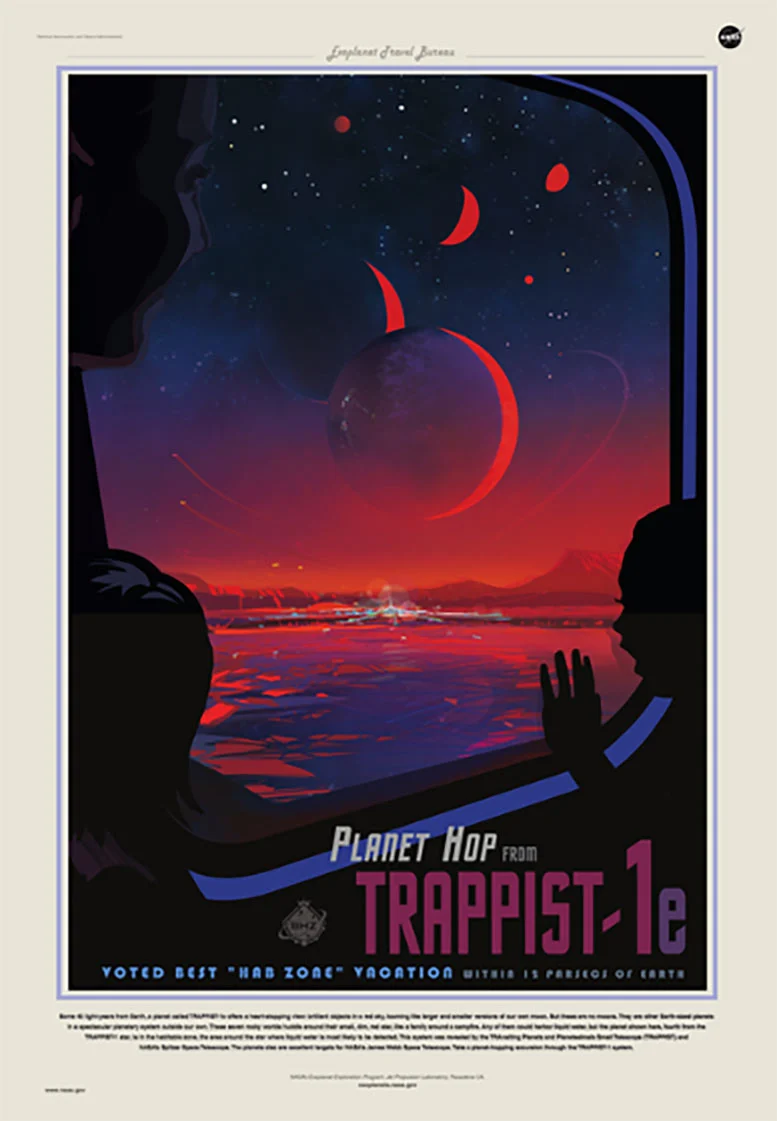
Based on the exoplanet climate map simulated by Denis Sergeyev, a lecturer at the University of Bristol, and combining variables such as temperature, light and precipitation that affect the growth of plants on Earth, the researchers estimated the amount of plant growth that different planets may have produced in their history and speculated on the evolutionary stages of life. TRAPPIST-1e, which is about 40 light-years away from Earth, is one such case. Although it is billions of years older than Earth, models estimate that it sequestered only 21% of Earth's total carbon over its lifetime.
Research co-author and Northern Arizona University alumnus Cameron Hrabak said that this level is even lower than the amount of carbon fixed on Earth before the evolution of efficient vascular plants, so the research team speculates that life on TRAPPIST-1e may still be in the microbial stage, lagging behind Earth. However, planetary atmospheres can significantly alter climate and photosynthetic capabilities, affecting model estimates of evolutionary stages. Future observations from the James Webb Space Telescope may provide atmospheric data to help revise the projections. Current calculations also assume that life exists and develops roughly as it does on Earth.
In planets that the research team predicts may be beyond Earth's carbon fixation and evolutionary stages, rainfall is often the main factor limiting plant growth. The growth of plants on Earth may be limited by light, temperature or precipitation. For example, although deserts have plenty of sunshine, they are unable to support dense vegetation due to lack of water. Such environmental differences will also affect which organisms can thrive. Researchers speculate that if intelligent life appears on these exoplanets, their ecological environment may be more like desert or temperate areas. Humans may also have evolved in savanna woodlands where rainfall limited plant growth. Doughty borrowed a metaphor from pop culture works to say that the ecological environment where such alien life exists may be more like "Dune" than "Avatar."
Comments