
Abstract:
A new study conducted by a research team from the University of Portsmouth in the UK and Hassan II University in Casablanca, Morocco, shows that an ancient crocodile relative that lived about 170 million years ago had extremely rare slender needle-shaped teeth. Its unique way of eating is helping scientists re-understand the ecological diversity of crocodile relatives in the Middle Jurassic.
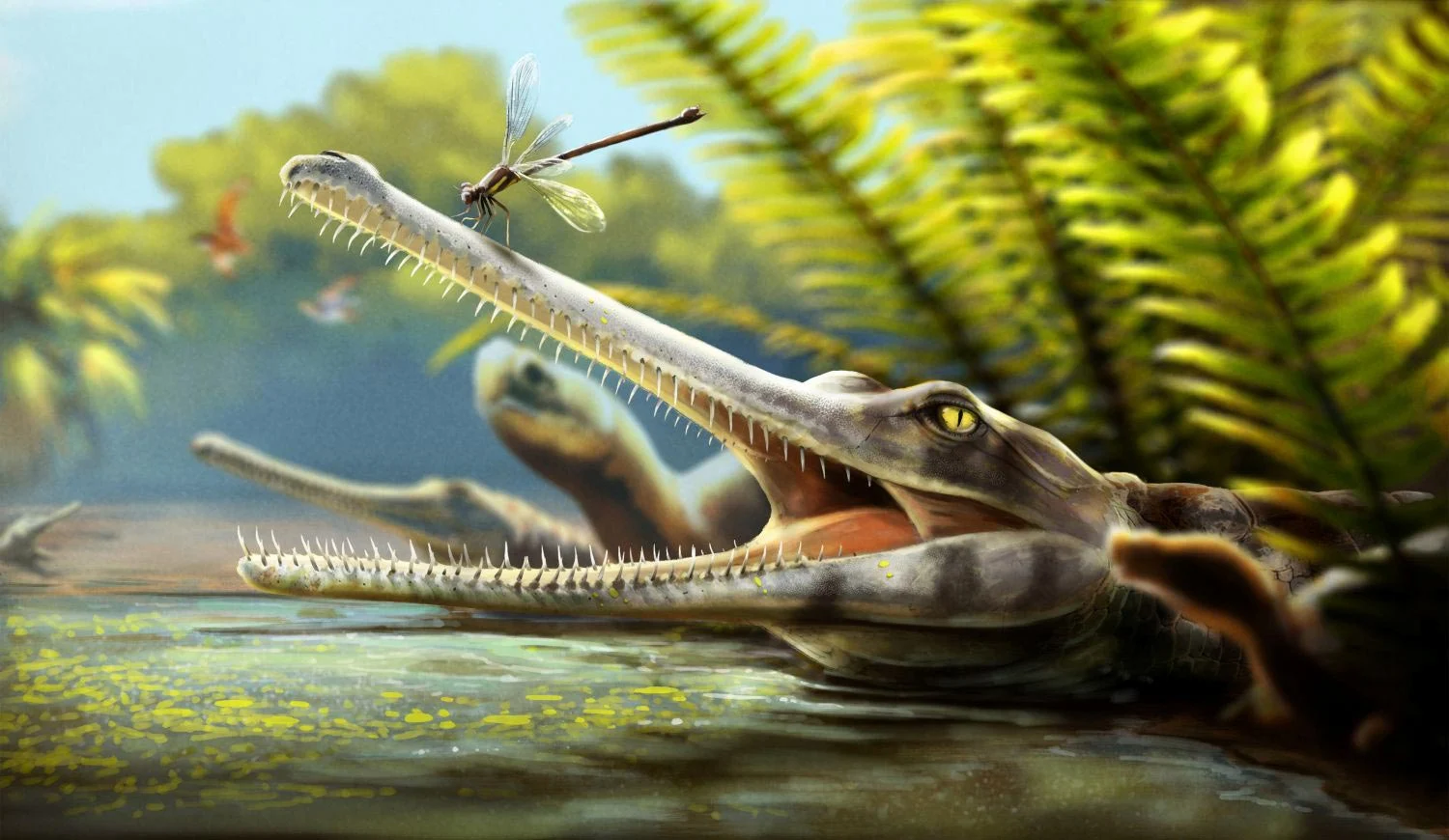
The research team confirmed that this previously unknown new species was named Ctenosuchus tenuidens and is a member of Thalattosuchia. This type of reptile lived during the age of dinosaurs and inhabited oceans, rivers, and lakes. Its fossils were found in rock formations formed in ancient river and lake environments in the Atlas Mountains region of southeastern Morocco.
Researchers found that the animal had an elongated, narrow snout lined with extremely thin, needle-like teeth. Compared with known closely related species, its tooth shape is very unique. Scientists believe that these fragile teeth are not suitable for catching larger prey, but are more suitable for catching small fish, crustaceans such as fairy shrimp, and other tiny aquatic animals.
The research team used high-power microscopes to observe the fossil teeth in detail and study their internal structures. The results showed that these teeth had a special ridge-like structure and were arranged very closely. Hamzah Imran, first author of the paper and a researcher at the School of Environmental and Life Sciences at the University of Portsmouth, said that the fragile characteristics of the teeth provide important clues to infer their feeding habits.
If the animal tried to catch larger fish, he noted, these slender teeth would likely be broken if the prey struggled violently. Therefore, researchers speculate that it mainly preyed on small, soft prey, such as shrimps, worms, and very small fish, rather than large prey that could damage its teeth. This feeding strategy sets it apart from other avocetids, making the discovery significant.
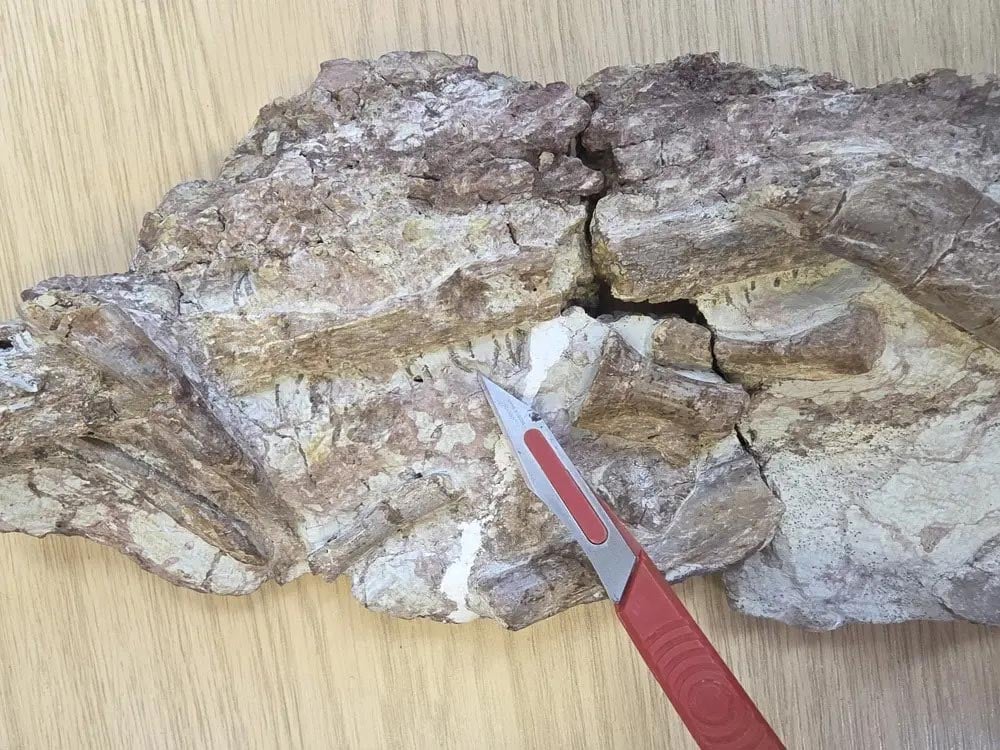
In fact, the process by which researchers first discovered these special teeth was quite dramatic. They observed tiny black dots on either side of a central long bone in one fossil specimen and used a microscope to examine them further. The researchers then used a scalpel to carefully peel away the surrounding rock. As the exposed portion continued to lengthen, they realized that the black dots were actually unusually slender teeth.
This comb-like tooth structure eventually became the inspiration for the naming of the new species. Among them, "cteno" means "comb", "suchus" means "crocodile", and "tenuidens" means "fine teeth". Together they refer to crocodiles with comb-like fine teeth.
Although rare among its close relatives, Ctenosuchus' teeth bear a striking resemblance to those of some other prehistoric animals. Similar structures appeared in the earlier aquatic reptile Mesosaur and in some long-snouted pterosaurs that appeared tens of millions of years later. The researchers pointed out that its jaw and tooth features are quite similar to those of the Jurassic pterosaurs Gnathosaurus and Ctenochasma, which are generally thought to have been filter feeders, using their teeth to filter small foods from the water.
Scientists believe that this phenomenon shows that reptiles from different evolutionary lineages have independently evolved predatory tools with similar functions when facing similar ecological needs, which is a typical case of convergent evolution.
The research team stated that the new discovery expands people's understanding of the ecological role and habitat of Jurassic crocodile relatives during the Gondwana period. Gondwana once covered areas of the Southern Hemisphere such as what is now Africa. This discovery also further enriches the scientific community’s understanding of the diversity of ancient Moroccan ecosystems.
Researchers believe that Morocco has extremely rich paleontological fossil resources, and there are still a large number of unexplored and unstudied species waiting to be discovered. The discovery of Ctenosuchus tenuidens is just a new step in uncovering the mystery of the local ancient ecosystem.
Relevant research results were published in the "Journal of Vertebrate Paleontology" on October 8, 2026. The paper is titled "A new teleosauroid (Crocodylomorpha, Thalattosuchia) with a unique dentition from the Middle Jurassic of eastern Morocco".
Comments