
Abstract:
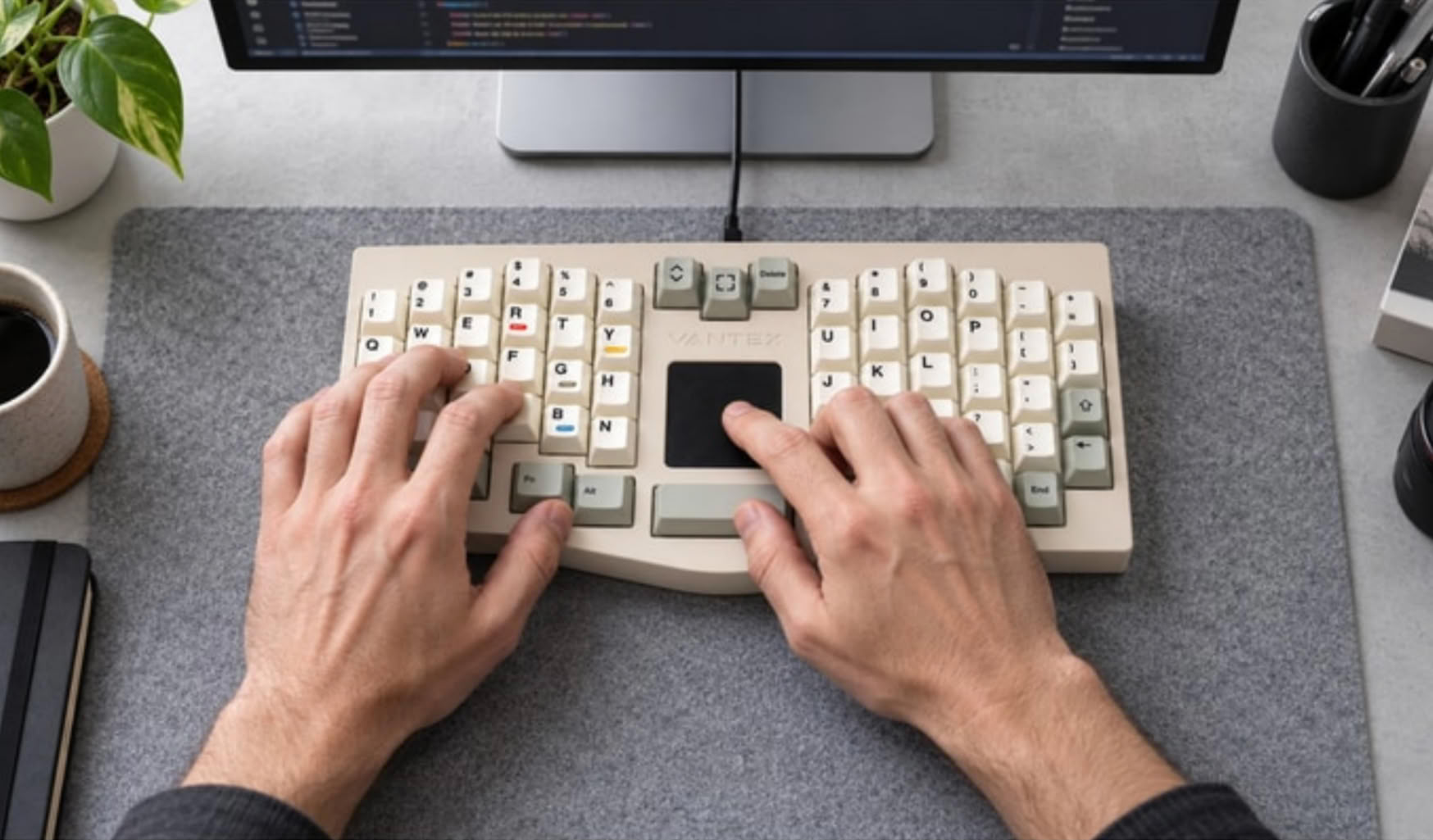
Vantex launches V1 mechanical keyboard and launches crowdfunding on Kickstarter. It integrates the common misaligned column layout of split ergonomic keyboards into an integrated aluminum alloy body, and adds a touchpad in the middle, trying to save users from having to reach for the mouse frequently. The keyboard adopts a compact 60% layout, with left and right keys arranged separately, but the main body is still a single piece of body.
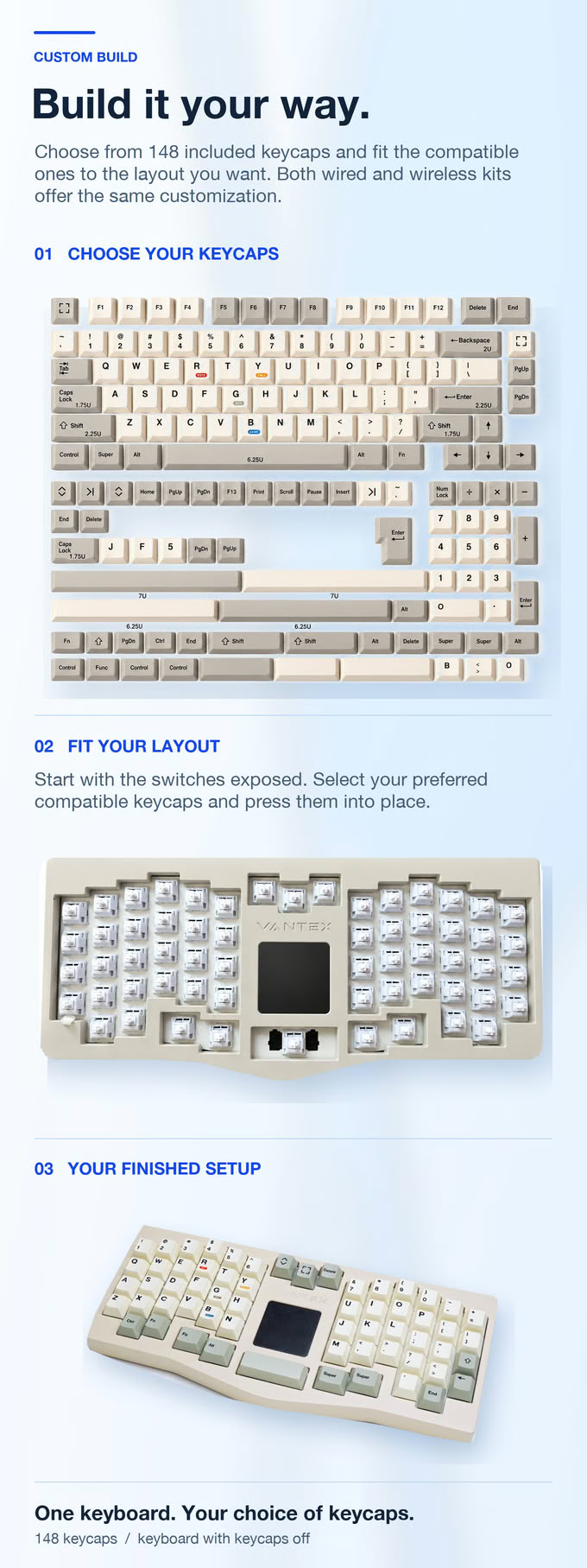
The trackpad measures 45 x 45 mm and supports multi-touch gestures; there are three shortcut keys above it, which can be customized as mouse buttons, navigation, macro commands or other functions. The keyboard supports four programmable layers, one of which can be set as a mouse operation layer. However, the manufacturer has not yet announced the details of the firmware, so how the shortcut keys and layer functions are ultimately configured remains to be explained later.
V1 is available in wired and three-mode wireless versions. The wireless version supports 2.4GHz, Bluetooth and USB-C wired connections. The Kickstarter crowdfunding starts at $159, and the listed suggested retail price is the same $159; the wired version starts at $129, and the listed suggested retail price is $259. Since it is still in the crowdfunding stage, these prices belong to the grades and recommended retail prices published on the project page, and are not equal to the retail prices that have been officially mass-produced and launched.
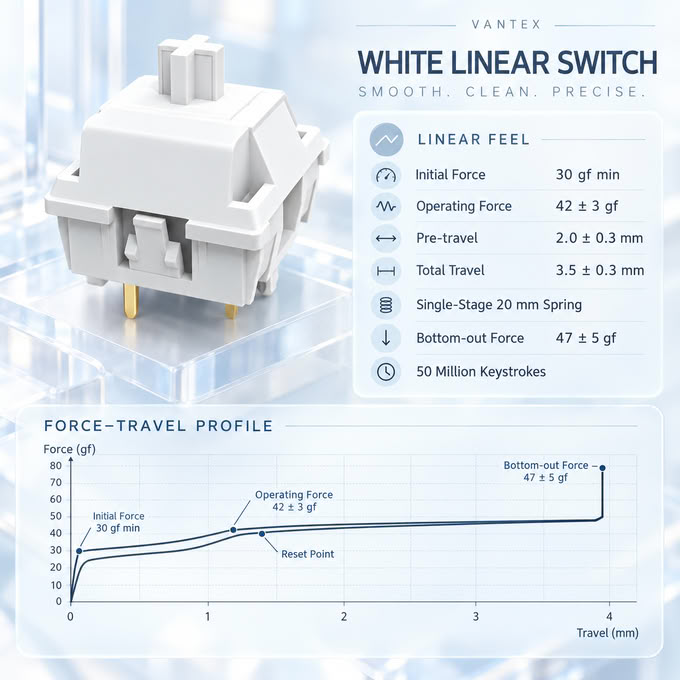
The keyboard uses standard height MX specification mechanical switches, and comes with Vantex White linear switches, with a nominal trigger pressure of 30 to 47 grams of force, a trigger stroke of 2 mm, and a total stroke of 3.5 mm. Both the PCB and the positioning plate support hot swapping, and users can replace the compatible shafts by themselves; it comes with retro-style dye-sublimated PBT keycaps with Cherry height.
The V1 casing is made of electrophoretic-coated aluminum alloy. It is currently only available in retro beige and does not have RGB or monochrome backlighting. It uses the central touchpad and ergonomic layout as its main selling points. The trade-offs are a 60% key layout, a smaller touchpad, and firmware support that has yet to be announced. Final specifications and delivery arrangements for Kickstarter projects are still subject to change.
Comments