
Abstract:
For wireless headphones, lightweight has always been an important factor affecting wearing comfort. Japanese audio equipment manufacturer Final recently launched a wireless headset called Porta, which weighs only 40 grams. It attempts to reduce the weight to an extremely low level while retaining the traditional wearing method of headphones. This product adopts a minimalist design, with a metal wire forming the main headband structure and lightweight ear pads. The appearance is reminiscent of the classic lightweight headphones from the Sony Walkman era.
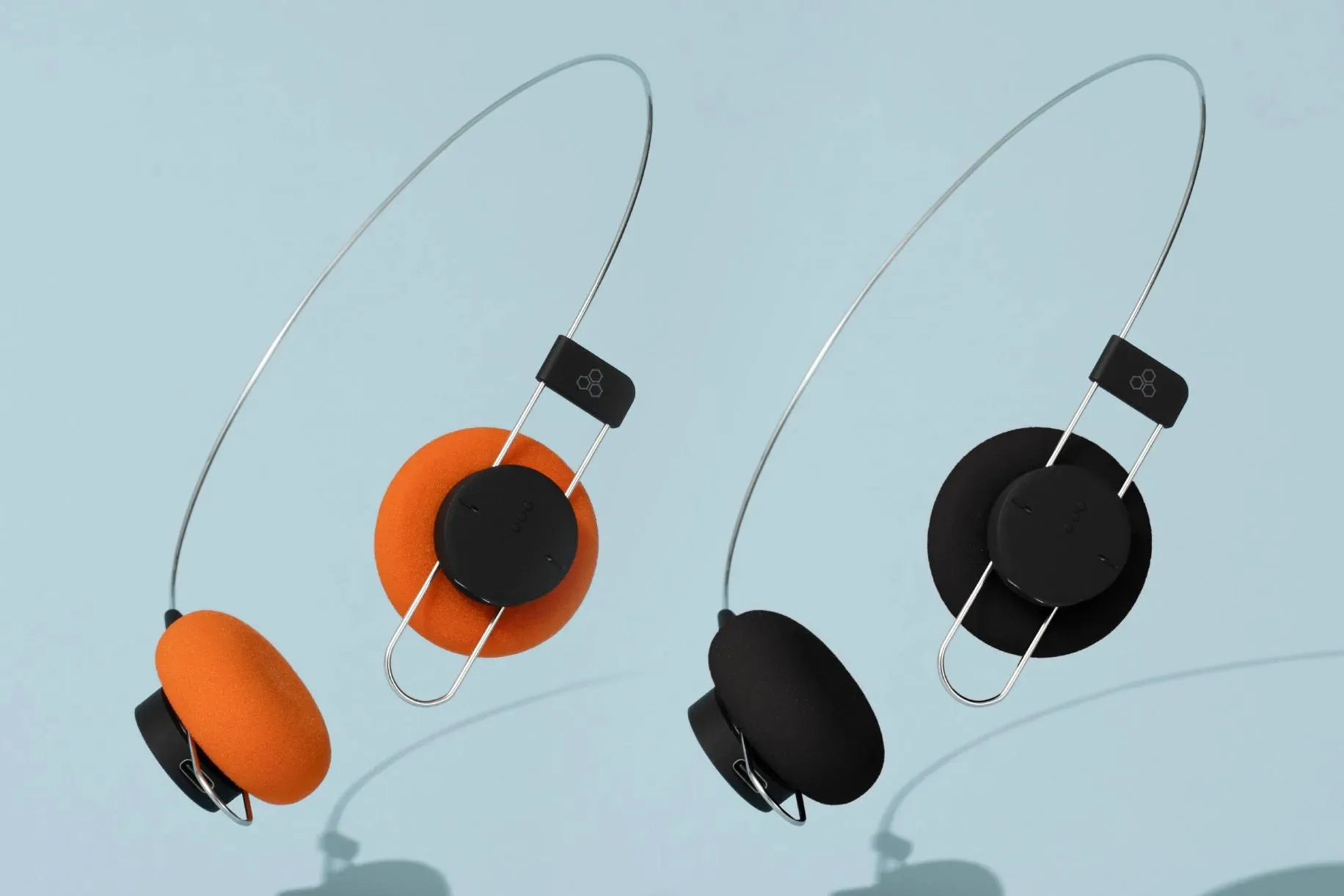
According to product information, Final Porta is currently available for pre-sale on the manufacturer’s official online store. The price is 12,800 yen, approximately US$80, and shipments are expected to begin on October 23. The earpads are available in black and orange colors. Although Final is not as well-known as Sony, Sennheiser and other large brands in the international consumer electronics market, it has a certain professional user base in the Japanese headphone market.
The most outstanding feature of Porta is its weight. As a wireless headset with a headband structure that is worn directly on the ears, it weighs only 40 grams. In comparison, Marshall's recently launched Milton A.N.C. is also a relatively compact on-ear headphone, but weighs 200 grams, which is five times that of the Porta.
This weight difference may have a significant impact on the long-term wearing experience. For users who don't like in-ear headphones, feel that ear clip-on headphones are not stable enough, or are not comfortable with heavier headphones, Porta provides a different option. Traditional headphones usually require structures such as headbands, shells, and ear cups. Although these components help improve sound isolation and wearing stability, they also increase the overall weight. Final chose to simplify the structure as much as possible to reduce the burden on materials and mechanical components.
From the appearance, Porta adopts a rather simple design. The headband is mainly composed of a metal wire, and does not use the wide headband commonly seen in traditional headphones, nor does it use ear cups that cover the entire ear. The design is reminiscent of the lightweight headphones that Sony shipped with its Walkman players decades ago. The products at that time also emphasized being lightweight and easy to carry, making them suitable for users to use when commuting, walking and exercising.
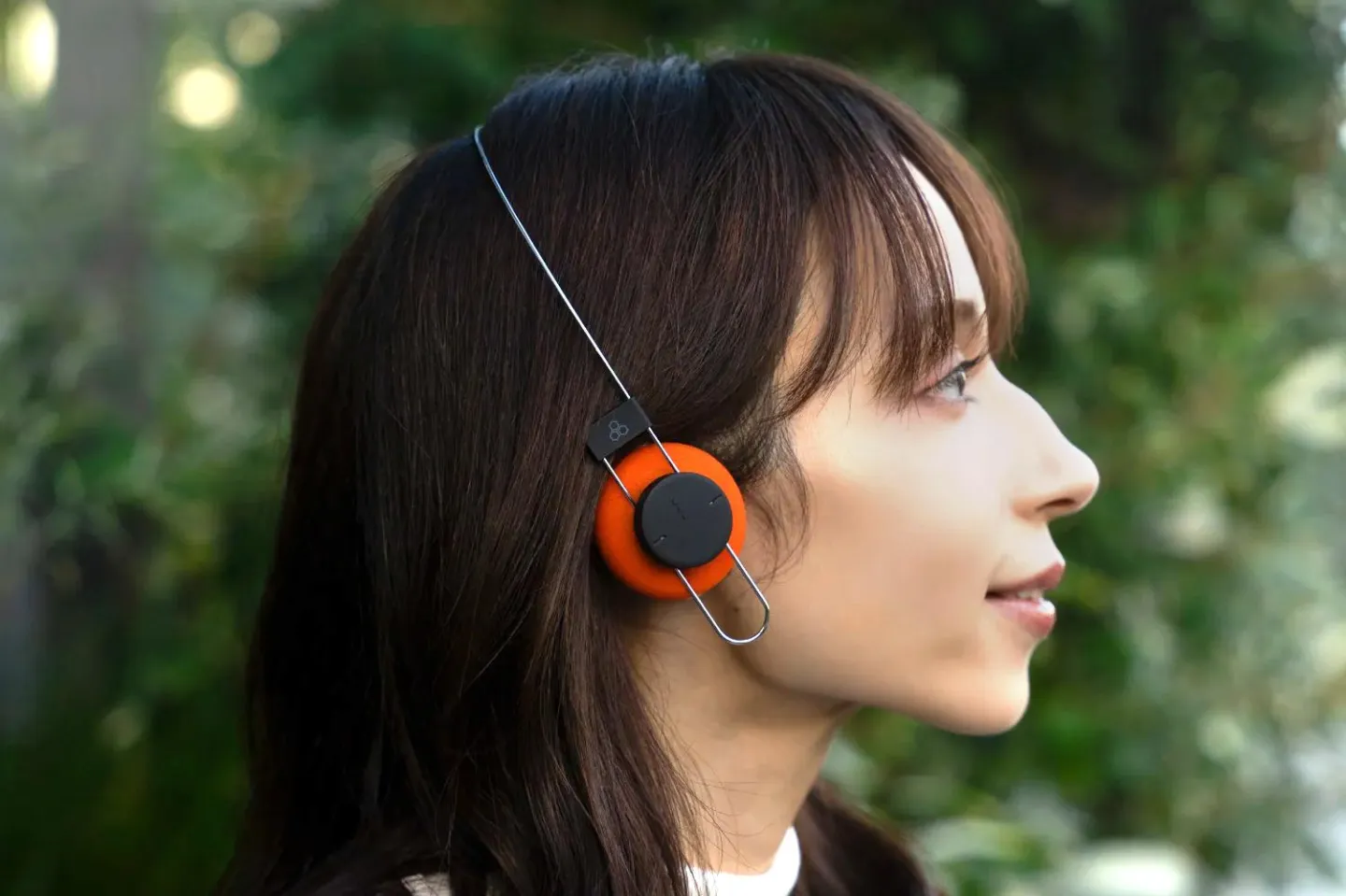
However, the minimalist design also means that Porta does not pursue complex functional configurations. It does not have an active noise reduction function and is mainly aimed at users who want a lightweight wireless listening experience, rather than consumers who seek to completely isolate external noise.
In terms of wireless connection, Porta supports Bluetooth 5.4, can be paired with smartphones, tablets and other devices, and transmits sound through SBC and AAC audio encoding. Both encodings are common Bluetooth audio encoding formats and can meet basic needs such as daily music playback, video viewing, and phone calls. However, the product does not provide higher-standard Bluetooth audio encoding support information.
In terms of battery life, Porta has a built-in battery with a capacity of 57 mAh. It is charged through the USB-C interface and can be used for up to 8 hours on a single charge. For a wireless headset that weighs only 40 grams, this kind of battery life helps meet the needs of daily commuting and work. However, actual battery life will still be affected by factors such as volume, connection status, and usage environment.
Porta is also IPX4 waterproof. This means that the earphones can handle a certain amount of water spray and sweat, so when used in light rain or when you sweat during exercise, you usually don't have to worry too much about moisture damage. However, IPX4 does not mean that the headset can be immersed in water, nor does it mean that it is suitable for underwater activities such as swimming.
Because the Porta uses an on-ear design rather than a closed-type earmuff that tightly wraps the ears, its passive sound isolation capability is expected to be limited. Coupled with the lack of active noise reduction, it may not provide the same quiet experience as closed-back noise-cancelling headphones in noisier environments such as subways and airplanes. For users who need to isolate external noise, this will be a factor to consider when purchasing.
On the other hand, the on-ear design also has its own characteristics. Compared with in-ear headphones, it does not require the earplugs to be inserted into the ear canal; compared with over-ear headphones, it does not require the use of larger ear cups. Therefore, Porta tries to find a balance between wearing style, volume and weight. However, lightweight doesn't necessarily mean it's suitable for everyone, and earpad pressure, headband elasticity and ear shape can still affect actual comfort.
Currently, Final has accepted pre-orders for Porta on its official online store. The price is 12,800 yen, approximately US$80, and shipments are expected to begin on October 23. The company also operates an Amazon store for U.S. consumers, but as of the time of this report, Porta had not yet appeared in the product listings in its U.S. Amazon store.
From the perspective of product positioning, Final Porta is not a product that tries to compete with high-end wireless headsets through stacking functions, but uses extreme lightweight as its core selling point. It does not have active noise reduction, nor does it use a complex headband and earmuff structure. Instead, it uses a minimalist mechanical design to compress the weight of the wireless headset to 40 grams.
As true wireless headphones and ear-clip headphones become increasingly popular, traditional over-the-ear headphones still have unique wearing advantages, especially for users who don’t want to put earplugs into their ear canals and don’t like the ear-clip design. Porta is trying to prove that headphones don't have to be bulky. For consumers who value portability, daily comfort and simple functions, this product provides a rather special choice; as for the sound quality performance, long-term wearing stability and actual battery life, whether it can meet expectations still needs to be further verified by more actual use experiences.
Comments