
Abstract:
An international research team composed of the American Museum of Natural History, the University of Oxford in the United Kingdom, and the European Synchrotron Radiation Facility (ESRF) in France recently announced the latest research results. A famous 345-million-year-old fossil from Scotland has finally revealed its true identity after being misunderstood by the scientific community for decades. The study, published in the journal Nature, shows that the fossil is not an early reptile as long thought, but rather belongs to an even older branch of tetrapods.
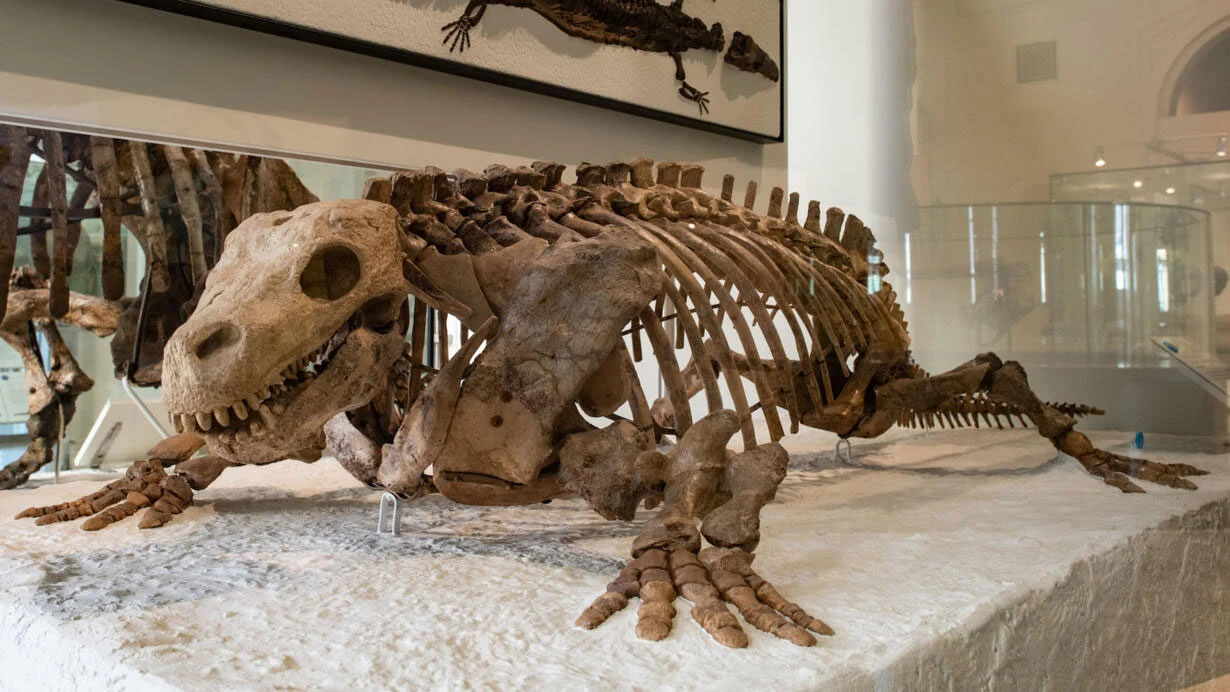
The scientific name of this fossil is Westlothiana lizziae, nicknamed "Lizzie". It was discovered in Scotland in 1984 and officially scientifically described in 1990. Because of its well-developed limbs, five-toed structure, and claw-like features at the ends of its hands and feet, it has long been regarded as one of the first amniotes to adapt to life on land. Amniotes later evolved into reptiles, birds and mammals, so "Lizzie" has always been considered an important landmark fossil for studying the landing process of vertebrates.
However, there has always been a problem with this fossil during decades of research. The fossil was severely crushed and encased within the rock, and researchers could only observe the bone structure exposed on the surface. Many key anatomical features were always hidden in the rock. Therefore, judgments about its true evolutionary status are largely based on limited evidence.
To solve the mystery, the research team used the European Synchrotron Radiation Facility in Grenoble, France, to conduct high-resolution synchrotron radiation X-ray tomography of the fossils. Co-first author Xavier Jenkins, a paleontologist at the American Museum of Natural History, said that when the researchers were finally able to "see" the inner structure of the rock, the animals they found were completely different from what they had long imagined.
Scan results show that "Lizzie" has a fairly primitive skull structure, ossified internal gill bones, and a fish-like mouth filled with thousands of tiny teeth. These characteristics are clearly inconsistent with true early reptiles, but are closer to primitive tetrapods that lived in water or in amphibious environments.
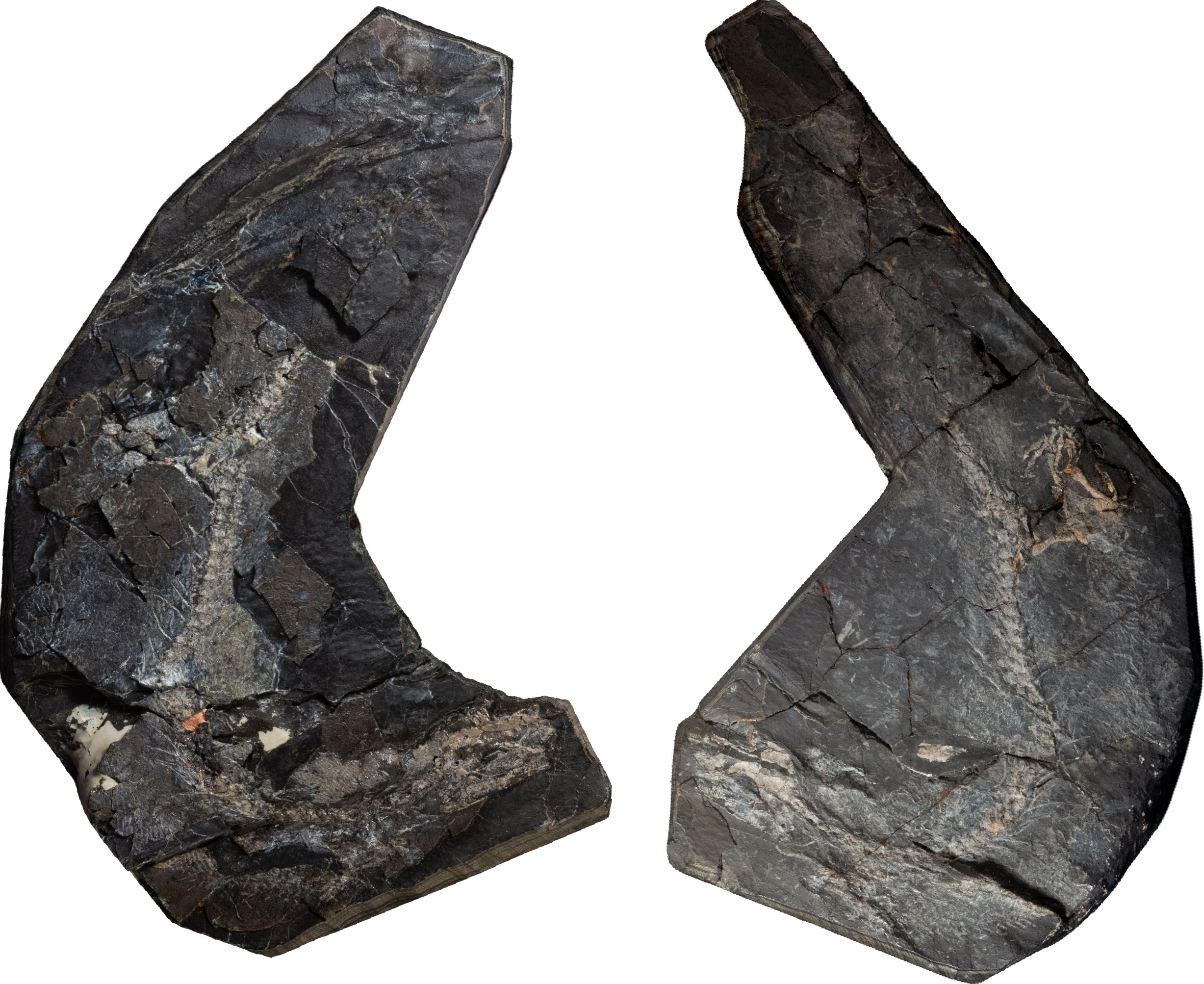
Ben Igielman, another co-first author of the paper and a researcher at the University of Oxford, pointed out that this discovery means that "Lizzie" does not belong to the ancestor of amniotes, but an older member of a class called "stem group tetrapods". These creatures evolved independently before amphibians and amniotes finally separated.
The research also led to another important discovery. In the past, the scientific community generally believed that the five-toed structure and claw-like ends were important signs of complete adaptation to land life. But new scans show that these features appeared as early as in some ancient tetrapods that still frequently relied on water environments.
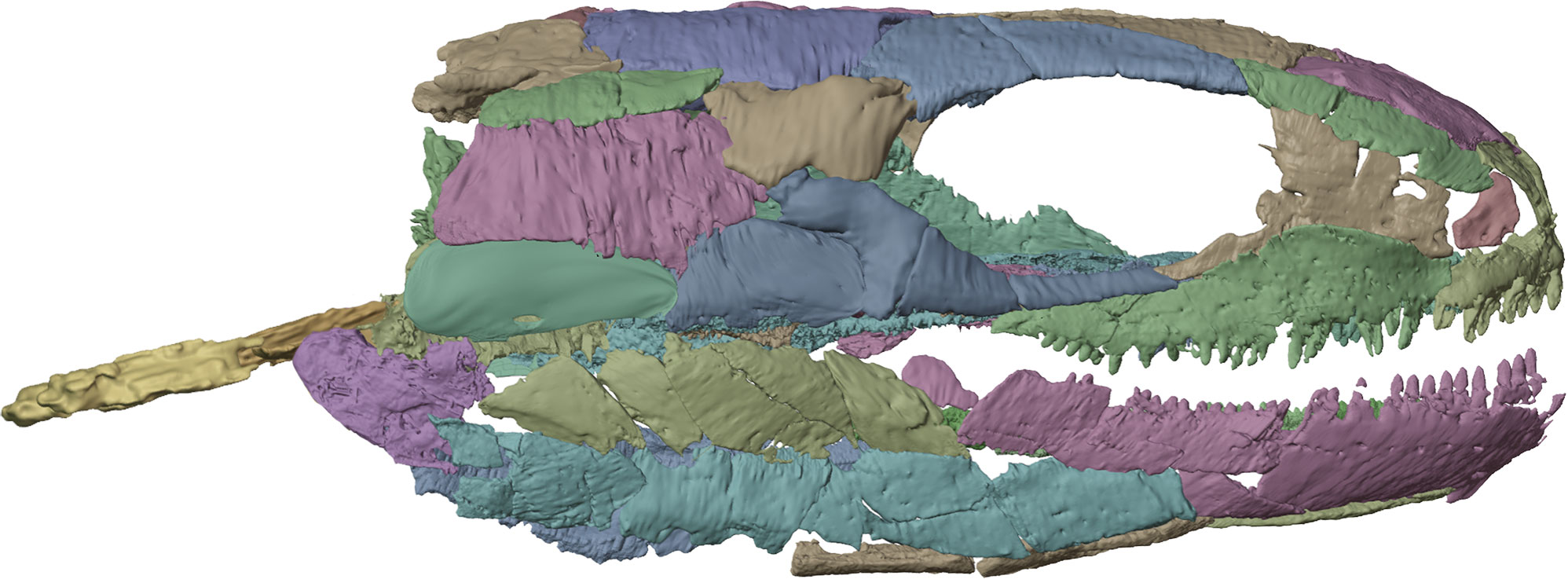
This means that many characteristics thought to be exclusive to land animals actually evolved step by step, Jenkins said. When they first appear, it does not necessarily mean that animals have completely escaped the water environment, but they have accumulated bit by bit during the long process of evolution.
Scientists believe that this research not only redefines the identity of "Lizzie", but also changes people's understanding of the landing process of vertebrates. Fossils that were once regarded as representatives of early terrestrial amniotes have now been shown to belong to a more primitive lineage, meaning that the time and evolutionary path of the true emergence of reptilian ancestors and their close relatives may need to be re-evaluated. The research team said that this result also fully demonstrates the important value of modern imaging technology. Many classic fossil specimens that have been studied for decades may still hide key information that can change scientific understanding. As more and more museum collections undergo advanced scanning analysis, more important discoveries about the evolution of ancient life may be revealed in the future.
Comments