
Abstract:
The relationship between dogs and humans is considered one of the most successful and longest-lasting cross-species collaborations in human history. Archaeological evidence shows that humans began living with dogs at least 14,000 years ago and even buried them in the same cemeteries. However, the scientific community is still debating how wolves evolved into modern domestic dogs, and new research shows that this evolutionary history may be far more bizarre and complex than previously thought.
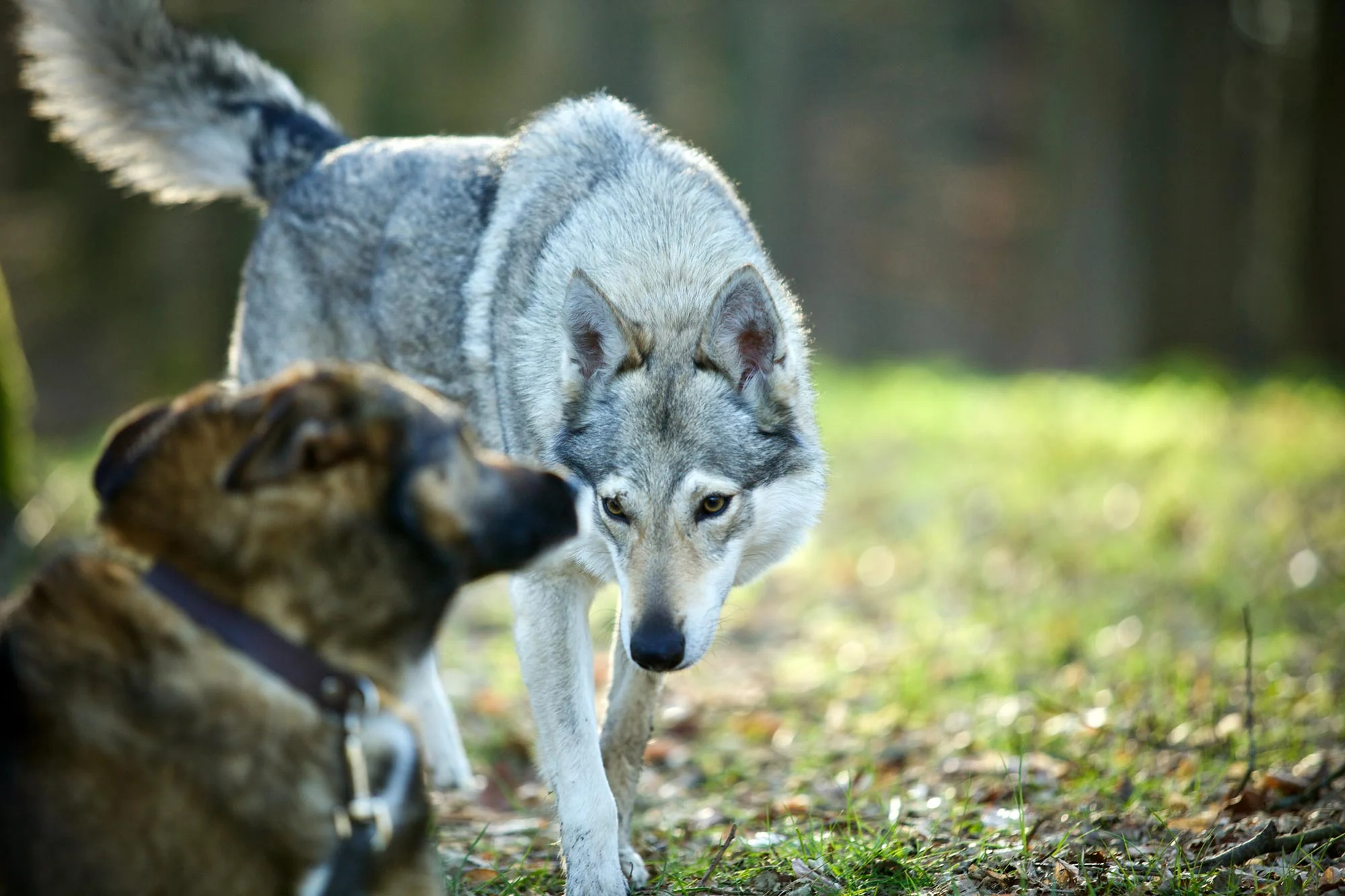
A widely circulated theory has long been that some wolves approached human camps in ancient times to obtain food scraps. Those wolves with a gentler personality and less fear of humans gradually adapted to this lifestyle and evolved into dogs over the years. This process is often called "self-domestication."
But as ancient DNA research and archaeological discoveries continue to increase, scientists are beginning to realize that the birth of dogs may not be a simple event, but may have gone through multiple stages, and even involved complex genetic exchanges between different regions and different wolf groups.
Genetic research in recent years has found that all modern dogs do share a common ancestor, but this ancestor is extinct and is not exactly the same as the gray wolves that still exist today. In other words, modern dogs did not descend directly from today's wolves, but from an ancient wolf population that has disappeared from the face of the earth.
What is even more surprising is that researchers are increasingly discovering that before the official birth of dogs, humans and wolves may have established a far closer relationship than imagined.
For example, scientists recently discovered wolf remains dating back about 3,000 to 5,000 years ago on a remote island in the Baltic Sea in Sweden. Since the island has no native large land mammals, it would be nearly impossible for wolves to cross the ocean on their own, so researchers believe the wolves could only have been brought to the island by humans.
Genetic analysis revealed that these animals were not dogs, but actual wolves. But their lifestyle shows clear signs of human care. Researchers believe this indicates that ancient humans may have raised, managed or even selectively bred wolves for a long time, and this process may have occurred long before the emergence of domestic dogs in the modern sense.
Scientists say such discoveries are forcing the research community to reexamine the boundaries between "wolves" and "dogs." In the past, people used to think that wolves first transformed into dogs and then established close relationships with humans. But there is growing evidence that humans may have cared for, domesticated and exploited wolves while they were still wolves.
At the same time, ancient fossil research has also uncovered the remains of some canids that are difficult to classify. These animals resembled neither modern wolves nor modern dogs, but closer to a "transitional state" between the two. Some researchers refer to them as "primitive dogs" or "quasi-dogs" and believe that they may represent an intermediate stage in the evolution of domestic dogs.
This phenomenon means that the formation of dogs may not be a sudden event, but a gradual process that lasts for thousands or even tens of thousands of years. In this process, the relationship between wolves and humans continues to change, with some wolves gradually adapting to human society, and humans increasingly rely on these animals to provide assistance in hunting, warning, and transportation.
Researchers point out that it is in this long-term symbiotic relationship that humans and dogs actually jointly influence each other's development. The transformation of wolves into dogs not only changed the fate of an animal, but also profoundly affected the evolution of human society.
Today's dogs come in countless shapes and sizes, from Chihuahuas to St. Bernards, but no matter how vast their differences, they ultimately trace their roots to those ancient wolf packs that bonded with humans during the Ice Age. The latest research shows that this journey is far from being as simple as described in textbooks, but more like a co-evolutionary experiment that lasted tens of thousands of years.
Scientists say that as more ancient DNA samples and archaeological sites are discovered in the future, there may be new twists on the true origin of this special friendship between humans and dogs. What is certain is that the story of the wolf turning into a dog is far more complex and fascinating than the version people have long believed.
Comments