
Abstract:
Climate changes in the Indian and Pacific Oceans have been closely linked over the past few centuries, but this centuries-old relationship is changing significantly, a new study finds. The researchers found that the long-standing climate connection between the two oceans has weakened significantly since the 1980s, and the magnitude of the change is unusually pronounced. The study believes that global warming and greenhouse gas emissions caused by human activities are weakening the Pacific's traditional influence on climate change in the Indian Ocean.
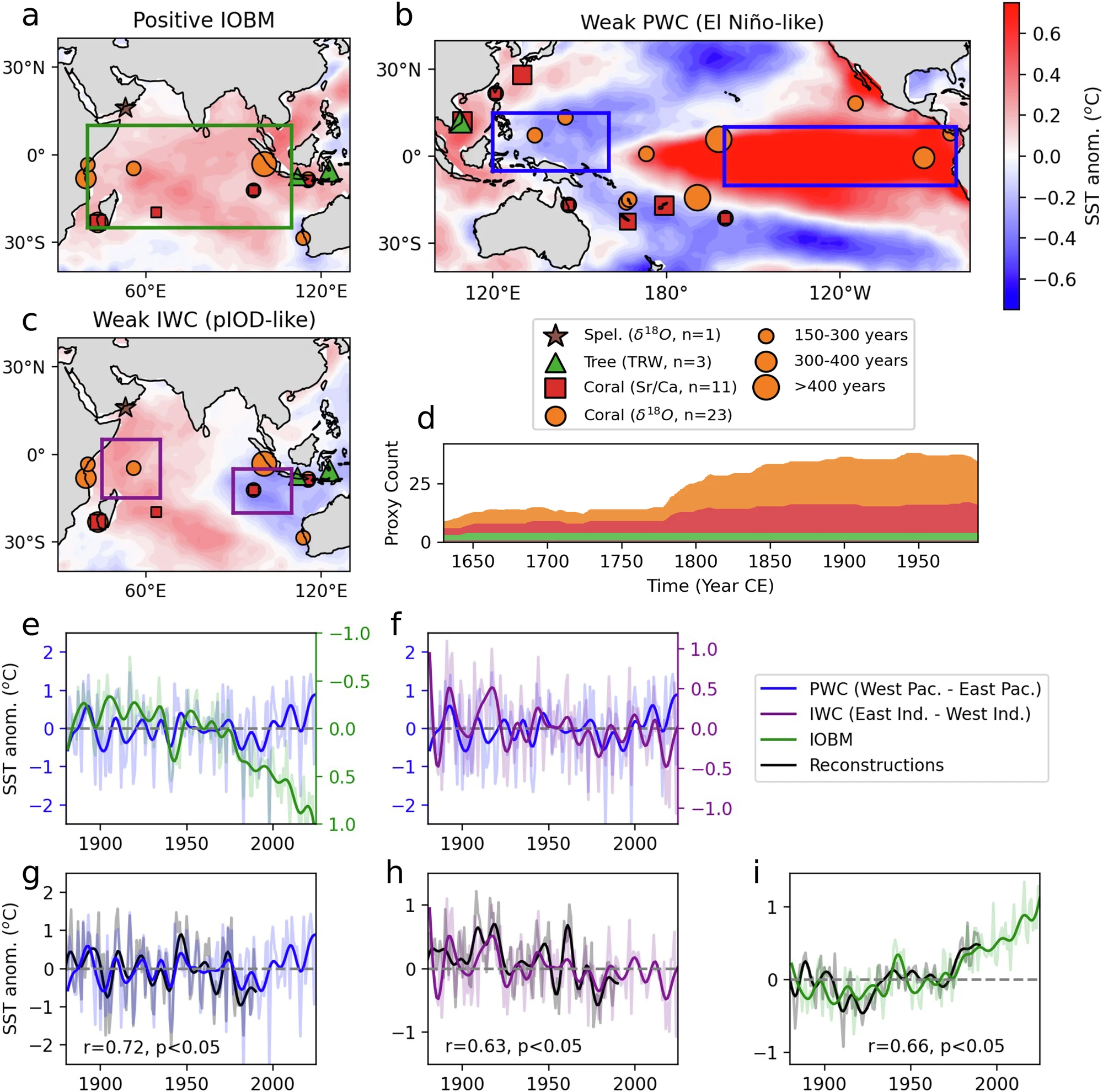
Over the past 400 years, climate change in the tropical Indian Ocean has generally maintained a strong synchrony with the Pacific Ocean. In other words, when large-scale climate changes occur in the Pacific, corresponding changes often occur in the Indian Ocean. This connection is important for understanding the global climate system because interactions between the two oceans influence rainfall, monsoons, and other regional climate phenomena.
However, starting in the 1980s, this long-standing and stable relationship weakened significantly. Caroline Ummenhofer, a senior scientist at the Woods Hole Oceanographic Institution, said the study found that global warming and human emissions are overwhelming the Pacific's natural influence on the Indian Ocean, allowing climate change in the Indian Ocean to increasingly operate independently of the Pacific.
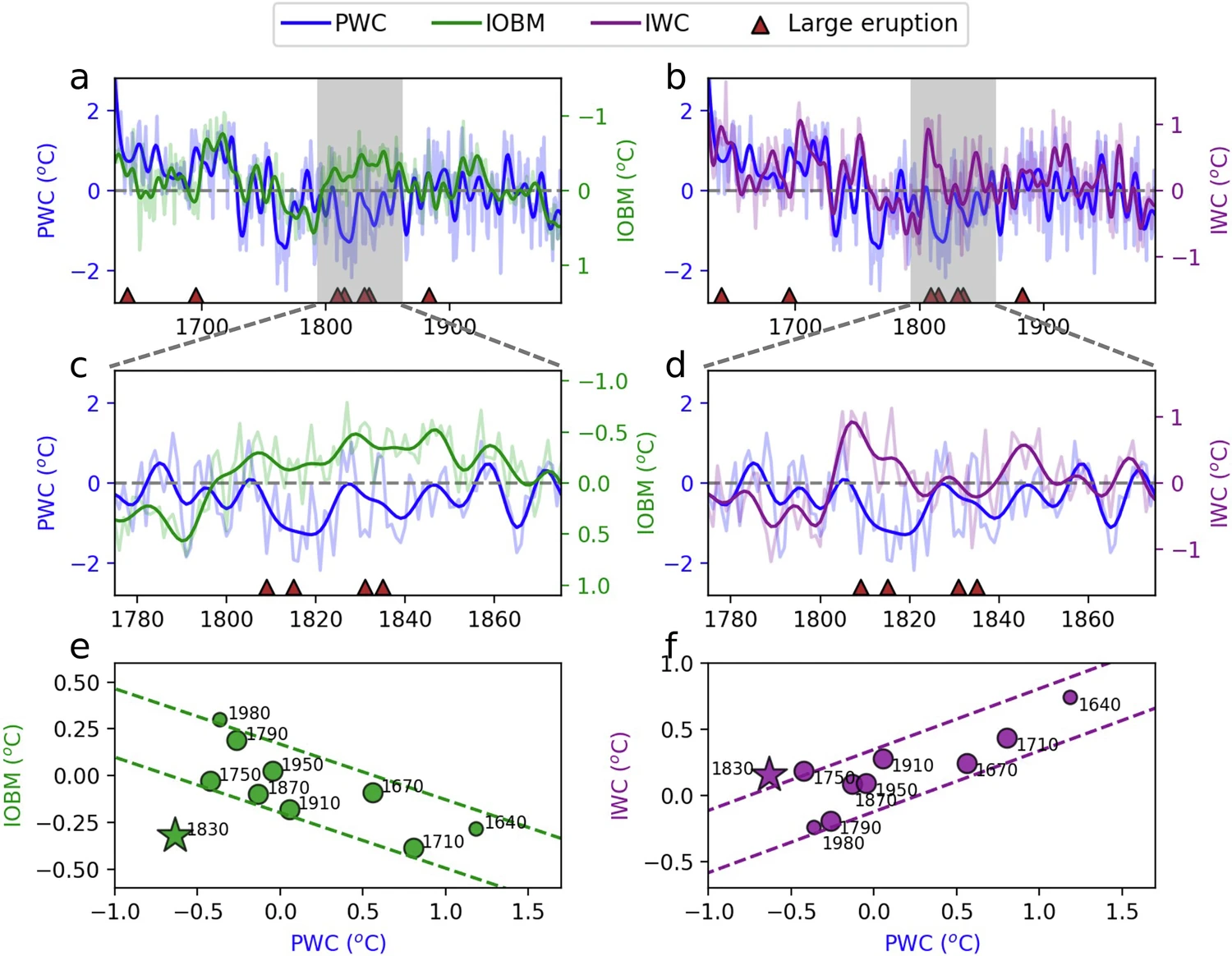
The reason why researchers have difficulty determining just how unusual this change is is because the modern record of reliable meteorological and oceanographic observations is less than a century old. Such observation times are still too short for ocean-climate relationships that may change on scales of hundreds of years. Therefore, the research team combined modern observational data with climate models and paleoclimate records to get a longer-term perspective.
The first author of the study, Shawn Wang, who studied and did postdoctoral research at Woods Hole Oceanographic Institution and is currently at the University of Colorado Boulder, and his colleagues used natural climate records preserved in corals, tree rings and stalagmites in the tropics to trace the history of climate change in the two oceans back to the early 17th century, about 400 years ago.
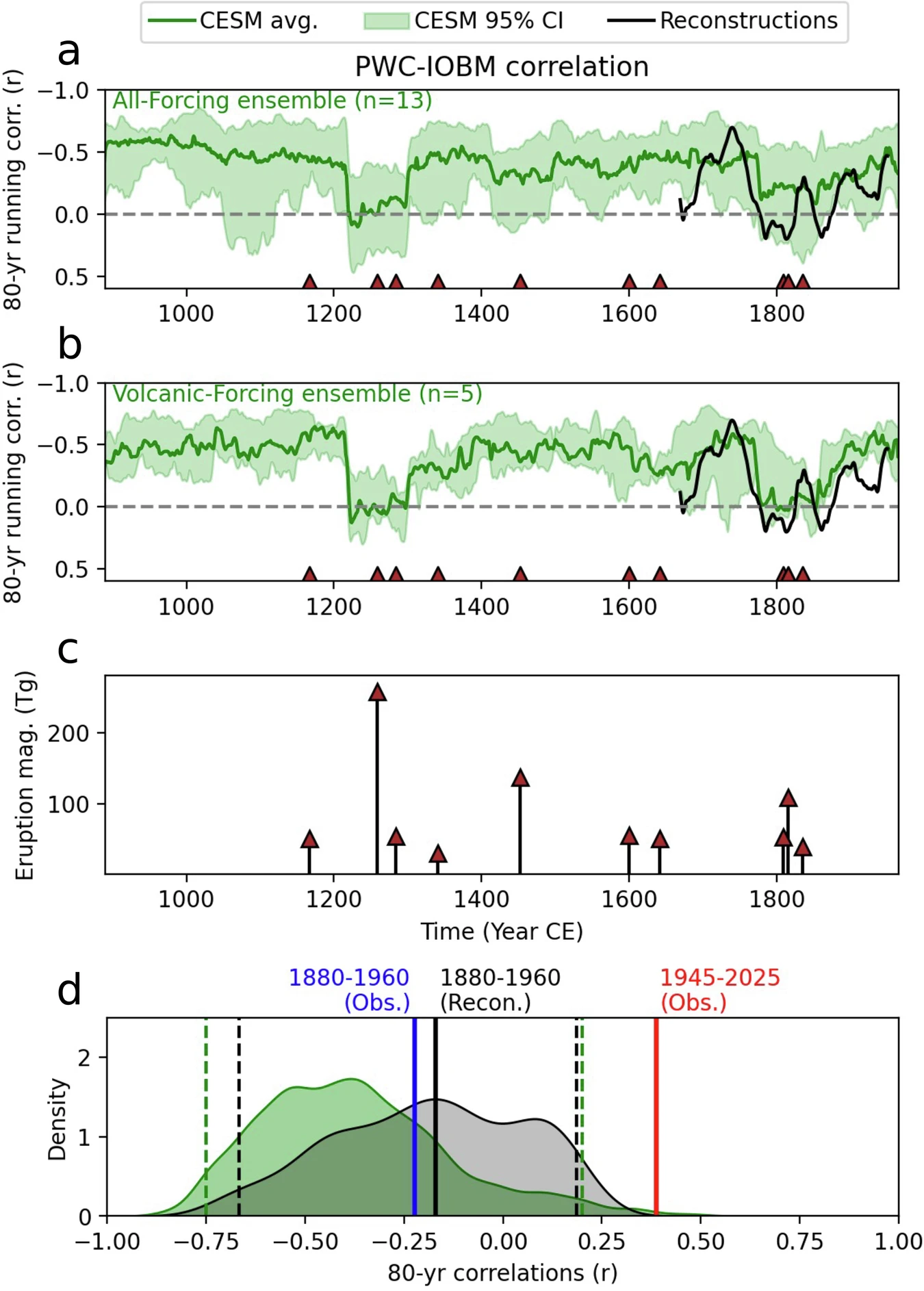
These paleoclimate records show that for most of the time, the Indian Ocean and the Pacific Ocean maintained a relatively close connection, and climate changes in the Indian Ocean generally followed changes in the Pacific Ocean. By establishing such a centuries-long baseline, the researchers were able to identify special periods when the relationship between the two oceans significantly weakened.
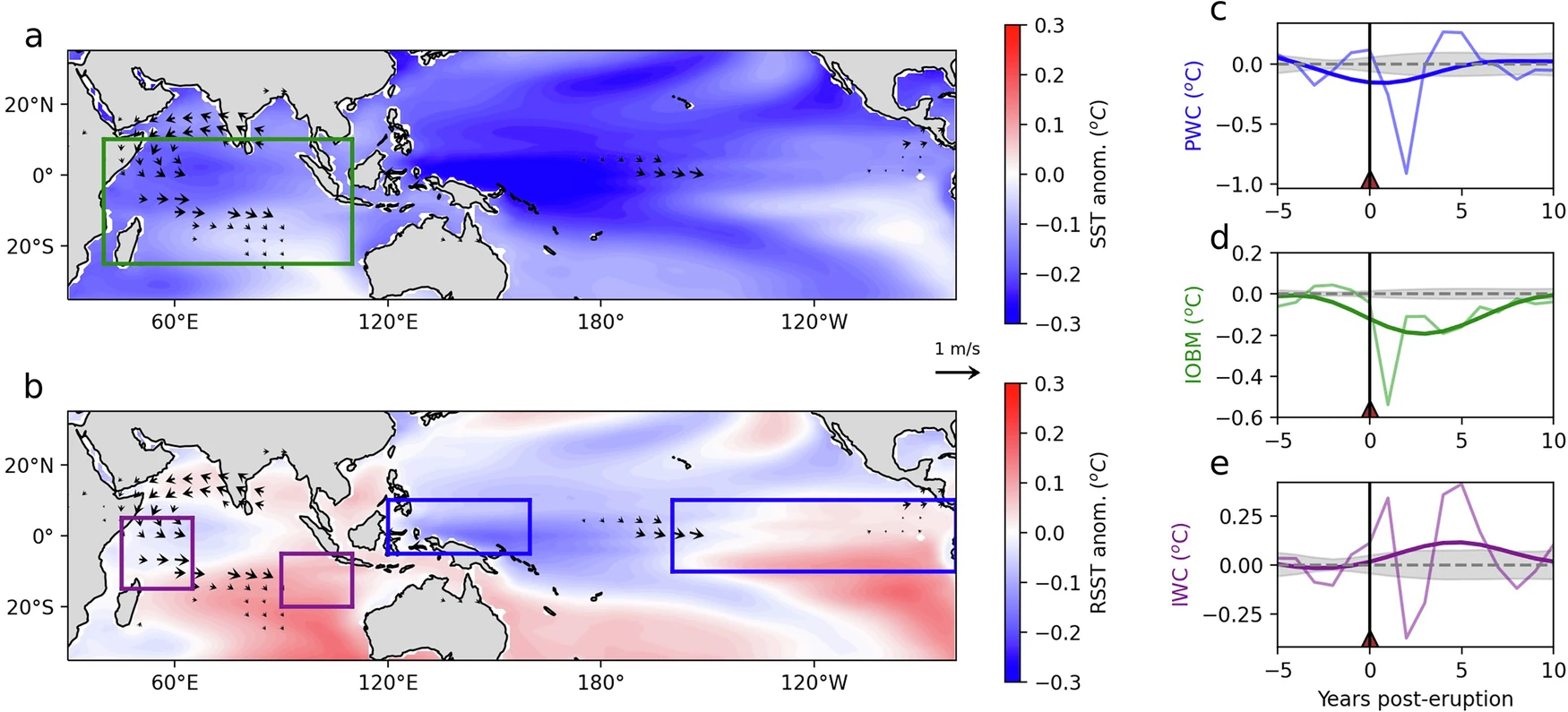
Researchers found that a similar phenomenon occurred in the 19th century. Between about 1810 and 1850, the previously stable climate connection between the Indian and Pacific Oceans weakened significantly. The research team believes that the anomalies during this period are mainly related to a series of large-scale tropical volcanic eruptions.
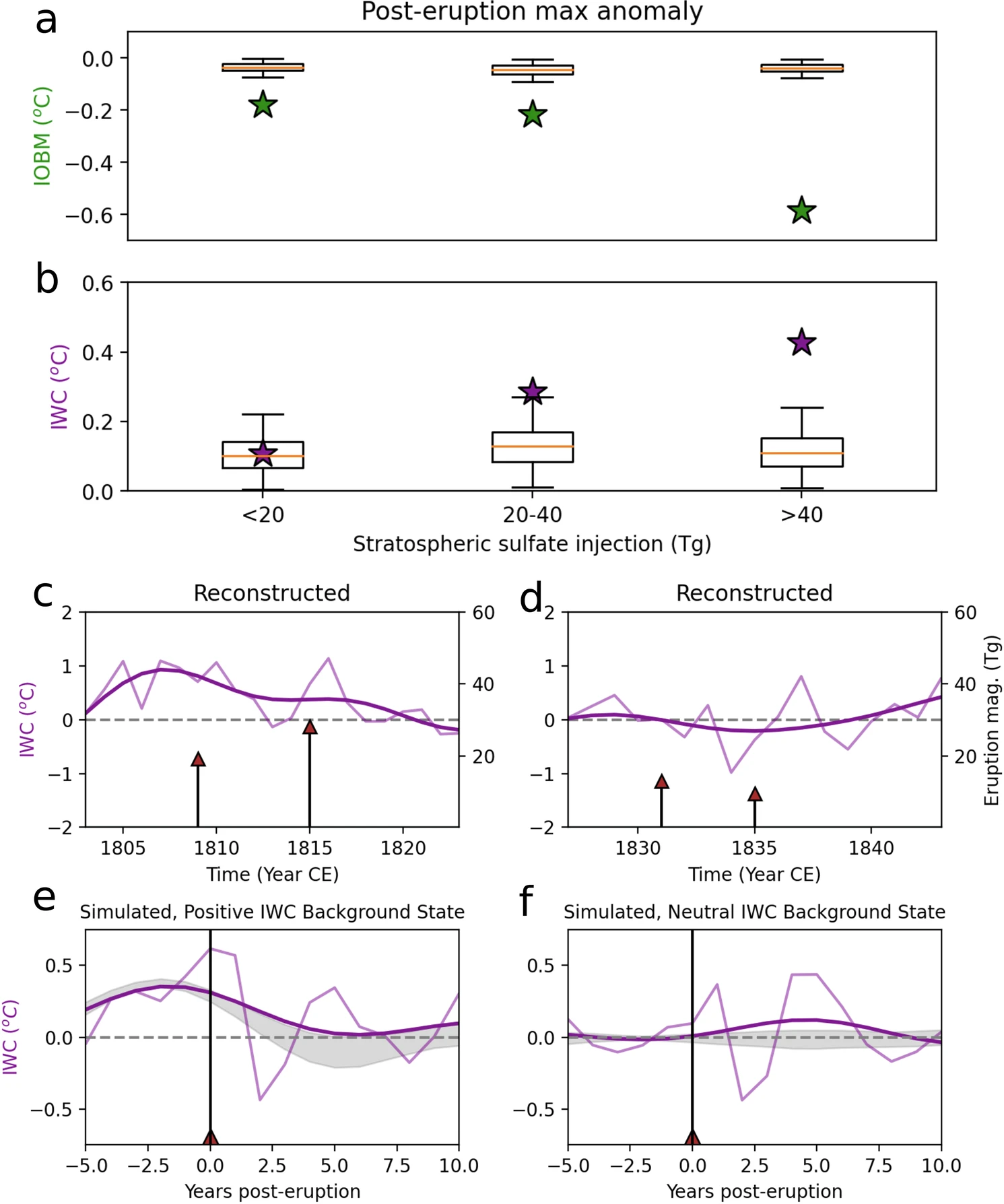
Climate simulations covering the past 1,000 years further support this conclusion. Simulation results show that large-scale volcanic eruptions can temporarily weaken the influence of the Pacific Ocean on the Indian Ocean climate, and the strength of this impact depends on the scale of the volcanic eruption and the background climate conditions when the eruption occurs.
This period of history in the 19th century therefore provides researchers with an important reference: natural factors can also temporarily "out of sync" between the Indian and Pacific Oceans. But the researchers believe that the current changes have different characteristics, because the continued weakening of the connection between the two oceans in modern times is closely related to greenhouse gas emissions and global warming caused by human activities.
After combining ancient climate records, modern observational data and climate models, the research team believes that the current weakening of the connection is not an ordinary natural fluctuation, but a rather special change. The research paper was published in Nature Communications, titled "The coupling relationship between volcanic activity disrupting changes in the Pacific and Indian Oceans in the 19th century."
This connection between the Indian and Pacific oceans is important because scientists have been able to use changes in one ocean in the past to help predict climate changes in the other ocean and surrounding areas. If this connection continues to weaken, it may become more difficult to predict future rainfall and climate change in the Indian Ocean region based solely on the state of the Pacific Ocean.
Researchers pointed out that the Indian Ocean itself is a huge global heat reservoir and does not respond completely passively to changes in the Pacific Ocean. As the coupling between the two oceans weakens, the independent climate behavior of the Indian Ocean itself may become more important.
This study also shows that it is difficult to judge whether current ocean changes are normal fluctuations or anomalies based solely on climate observation data in recent decades. Establishing longer time-scale climate records through natural archives such as corals, tree rings and stalagmites allows scientists to compare modern changes in a historical context of hundreds of years or even longer, thereby more accurately determining how special the climate changes occurring are.
Comments