
Abstract:
Daimler Trucks is accelerating the upgrade of heavy commercial vehicle safety technology, hoping to use radar, cameras and more advanced software systems to help drivers detect dangers earlier, avoid collisions, and proactively intervene in emergencies to minimize the consequences of accidents. Recently, the company demonstrated a new generation of safety assistance systems launched for the European and American markets, with the goal of further reducing major traffic accidents in the heavy truck industry.
In the global market, Daimler announced the launch of new technologies including Active Cross Traffic Assist, Active Sideguard Assist 3 and an upgraded version of Active Drive Assist, which will be applied to Mercedes-Benz Actros, Arocs trucks, and Mercedes-Benz and Setra long-distance buses in the future, and is planned to be launched in April 2027.
At the same time, Daimler North America is also preparing a new round of safety upgrades for the 2027 Freightliner Cascadia and Western Star X series models. The core of which is the enhanced version of the Detroit Assurance Suite, which focuses on upgrading the Active Brake Assist 6 (ABA6).
Although there are differences in the names and specific functions of the systems adopted in the European market and the North American market, the overall goal is the same, which is to use more powerful perception capabilities and automatic intervention capabilities to help professional drivers respond before dangers turn into accidents.
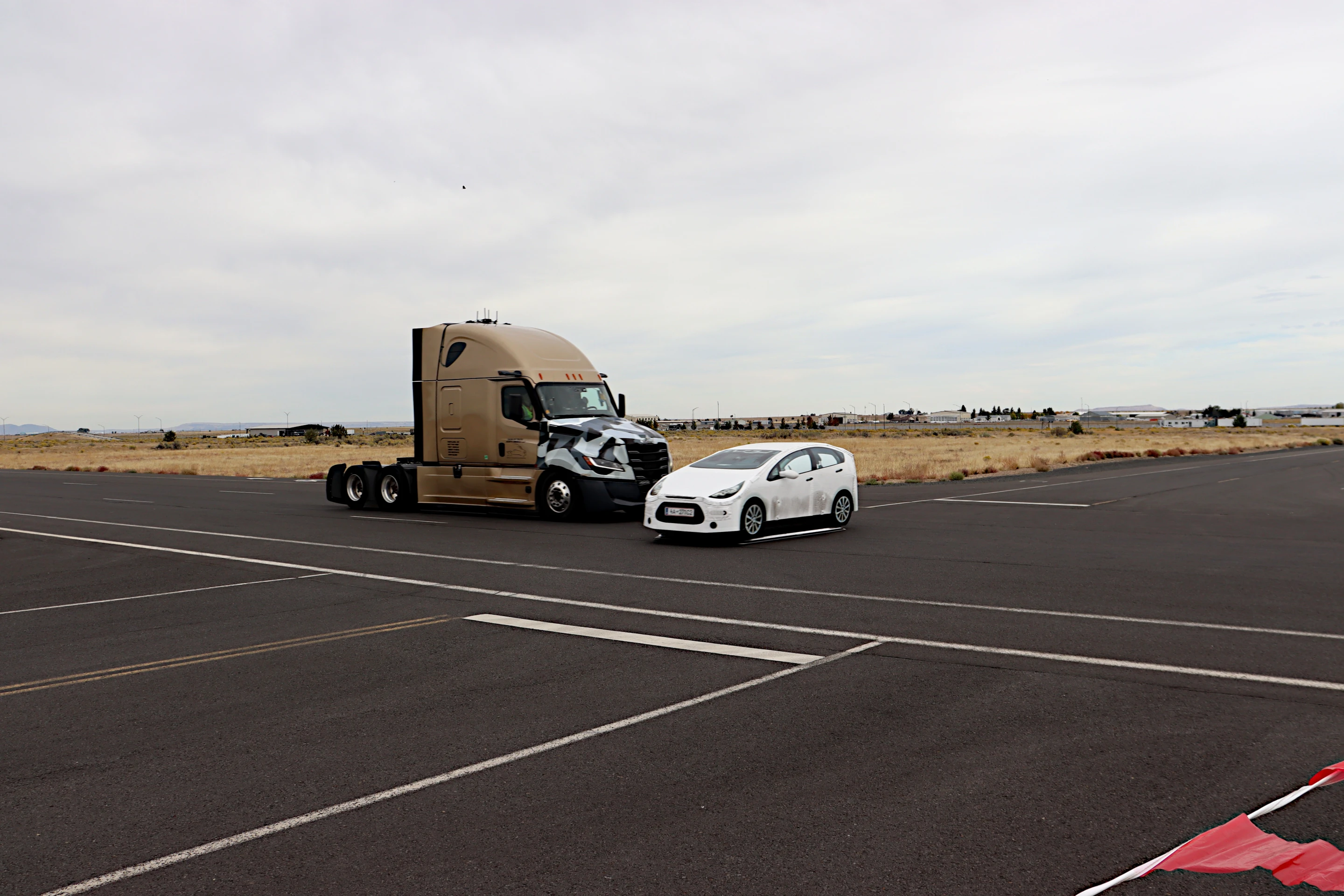
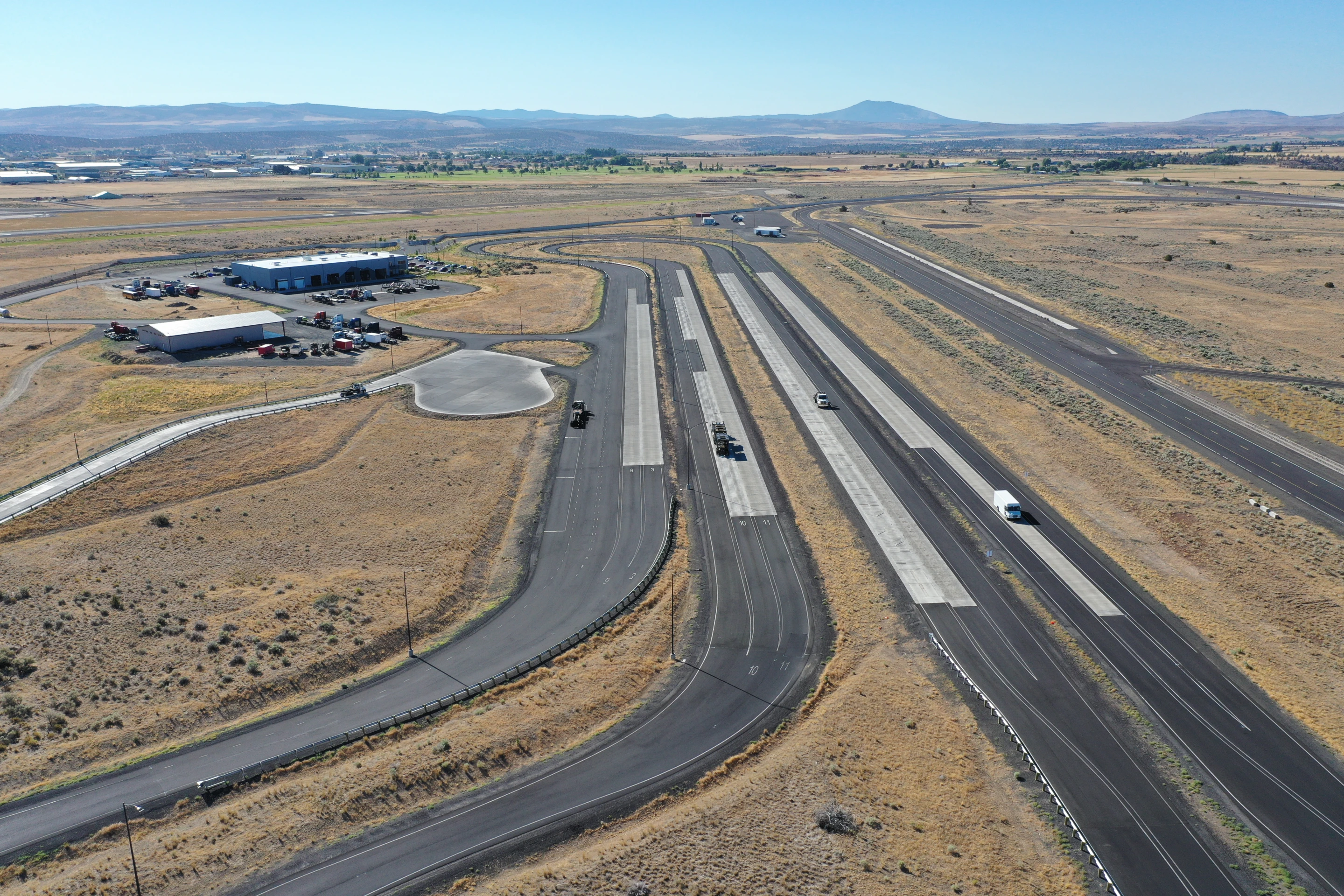
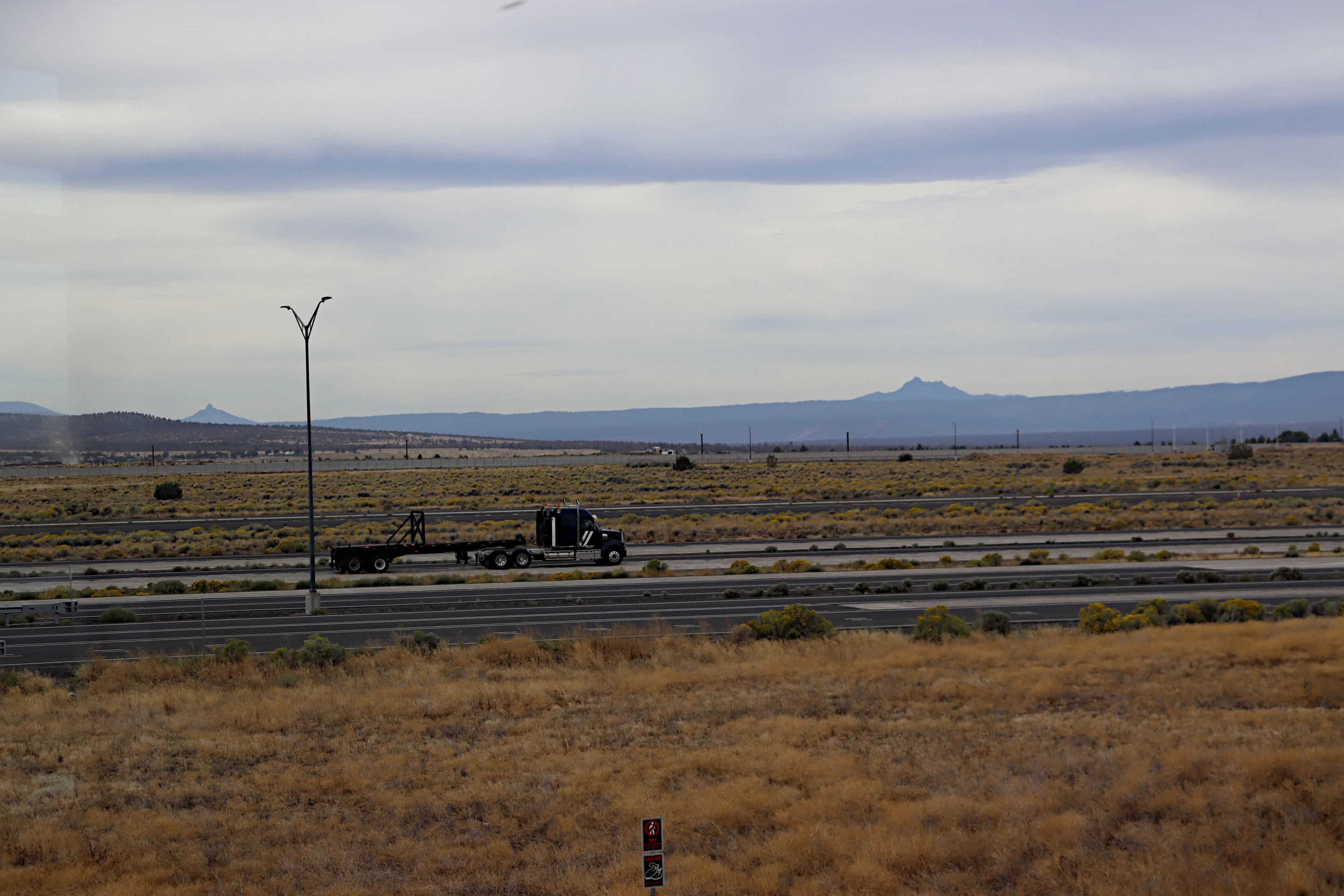
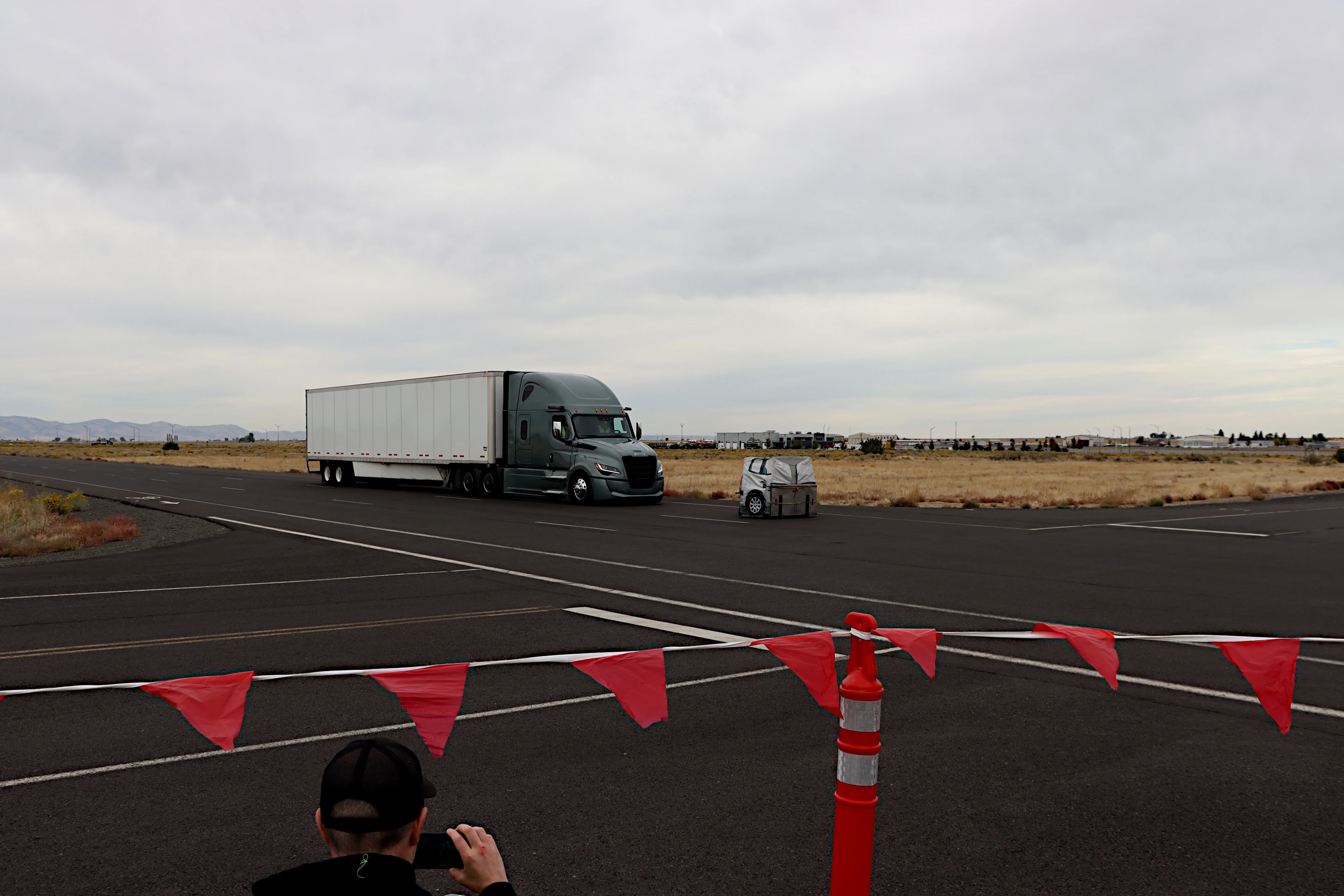
At Daimler's testing ground in Oregon, the United States, the media experienced the Cascadia heavy truck equipped with the latest safety system. During the demonstration, multiple fake car targets suddenly appeared in front of the vehicle or drove into the driving route through the remote control device. The system was able to identify risks in time and avoid collisions or mitigate the consequences of collisions through warnings and even automatic braking.
For the North American market, Daimler announced new safety configurations for the fifth-generation Freightliner Cascadia in April 2026, including ABA6, cross-traffic assist system and active side protection assist system 2 with left-turn protection function. Relevant models are expected to be available for ordering in the third quarter of 2026 and will be put into production in January 2027.
Due to the significant differences in the use environments of heavy trucks in Europe and the United States, such as vehicle weight, driving speed, road conditions and regulatory requirements, although the systems in the two places have similar concepts, they are not simply copied. The European market uses Active Side Protection Assist System 3, while the North American market uses the Detroit Assurance solution customized for local needs.
In terms of practical functionality, the new Cross Traffic Assist system monitors cross-travel vehicles at intersections. When the system determines that there is a potential risk of collision, it will issue visual and audible warnings; if the danger further escalates, it can implement partial braking or even full automatic braking.
Active side protection assist system 2 focuses on turning scenes. While monitoring the risk of the blind spot on the right side of the vehicle, it can also identify oncoming vehicles that may conflict with the truck's trajectory when the driver turns on the left turn signal, thereby reducing the probability of turning accidents.
For logistics companies, the significance of related technologies is very direct. Reducing collisions not only protects people’s lives, but also avoids equipment damage, transportation disruptions and costly legal compensation.
Daimler said that the cross-traffic assist system focuses on dealing with the complex environment faced by large commercial vehicles at intersections. Drivers often need to observe vehicles, pedestrians and other traffic participants from multiple directions at the same time, and the large body size also makes judgment significantly more difficult.
Using sensor fusion technology, the new system is able to identify cars and motorcycles that are rapidly approaching and crossing the vehicle's path. When the risk of collision arises, the system will issue a warning; once the situation becomes critical, it will initiate a graduated braking program and eventually implement automatic emergency braking.
Daimler believes that driver warnings alone are not enough to avoid all accidents. Even experienced drivers can misjudge a rapidly approaching vehicle in a very short period of time. The automatic braking system therefore becomes an additional safety net, taking over part of the operation when human reaction times are insufficient.
According to the introduction, the system is not only capable of identifying cars, but is also optimized for motorcycles approaching at high speeds. The North American team is also currently developing solutions to further enhance bicycle and pedestrian recognition capabilities.
During the test, a simulated car suddenly crossed in front of the heavy truck. In the first demonstration, the vehicle successfully avoided the collision completely; in the second demonstration, a slight contact occurred, but the impact consequences were greatly reduced. At the speed of the live demonstration, without any active intervention, the car would most likely suffer a catastrophic impact. In another set of tests, the simulated vehicle suddenly turned left and cut in front of the truck, and the system also successfully avoided the accident.
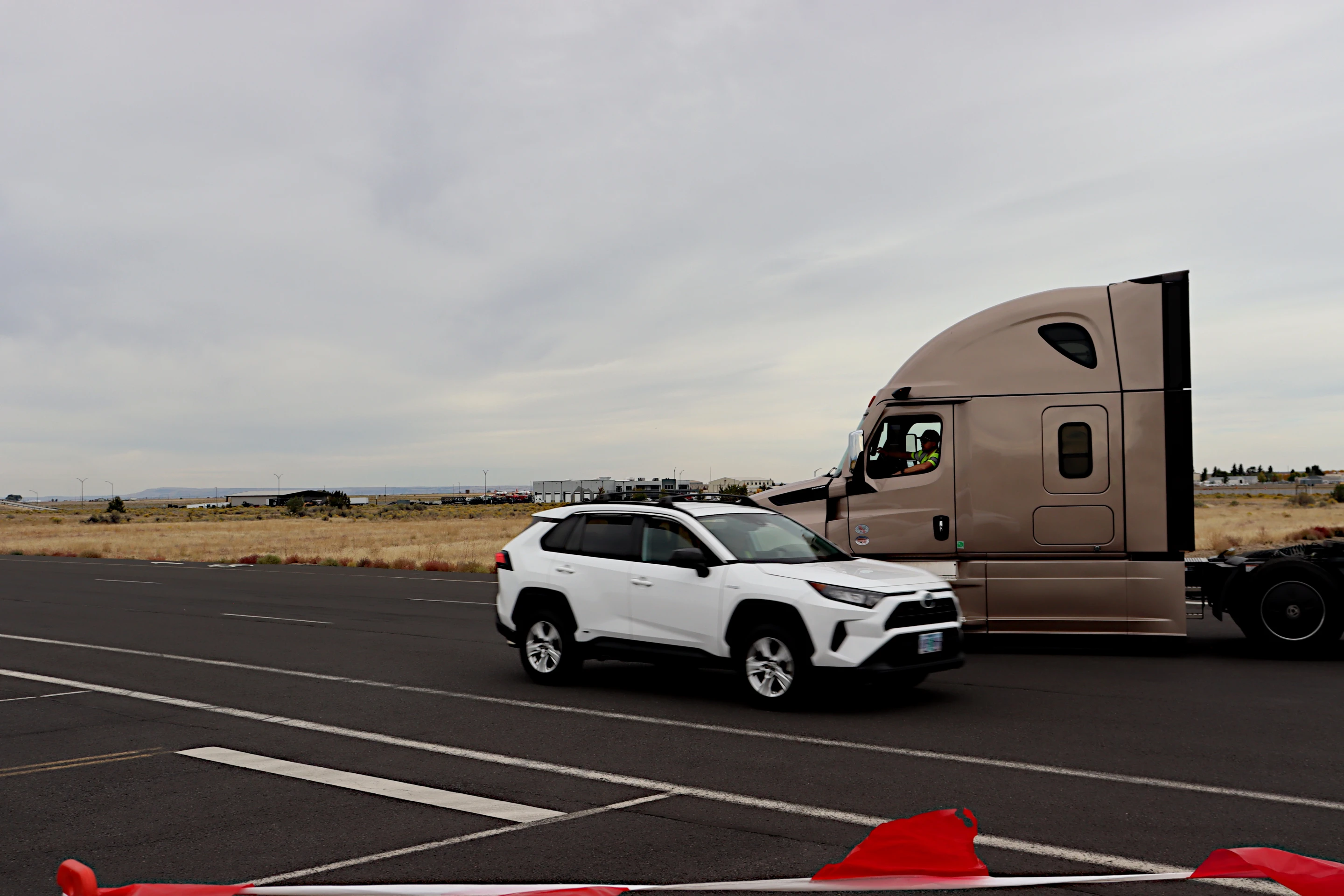
Daimler revealed that the trailer towed by the test vehicle weighed approximately 30,000 pounds (approximately 13,608 kilograms). Most demonstration speeds range from 40 to 55 miles per hour. The company emphasizes that these systems do not guarantee that heavy trucks can come to a complete stop in all situations. Their core goal is to provide early warning as much as possible and reduce the impact energy and damage when a collision cannot be completely avoided, thereby saving lives.
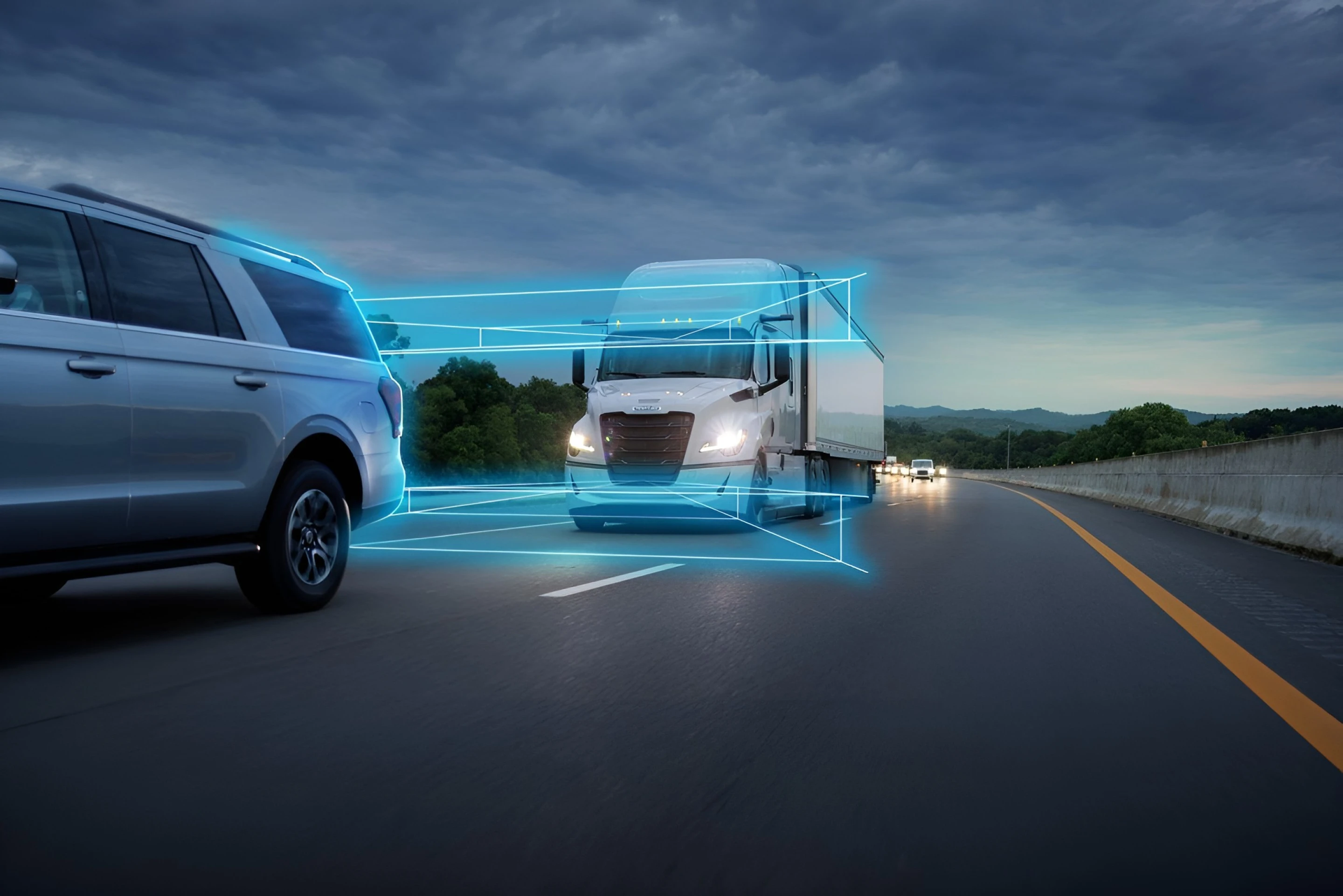
In addition to intersection and turning scenes, ABA6 has further improved the overall collision mitigation capabilities. The system uses 4 short-range radars, 1 long-range radar and multi-function cameras to form a perception network, which can achieve approximately 270-degree range monitoring and cover the area around a standard 53-foot (approximately 16.15 meters) trailer.
The system can identify moving and stationary vehicles, pedestrians and cyclists, and expands the applicable scenarios for automatic braking. For example, the vehicle can identify complex targets such as a stationary vehicle behind a curve, a vehicle parked across multiple lanes, and a disabled vehicle parked at an abnormal angle at an accident scene.
Daimler pointed out that this type of scenario is often the most likely to lead to serious accidents. When drivers approach curves or accident scenes, they have very limited time to react, so a higher level of target recognition is particularly important. ABA6 is designed to improve the recognition of these special situations and issue warnings and apply brakes when necessary.
In addition to collision avoidance functions, Daimler also continues to enhance driver assistance and driver monitoring technologies.
Among them, Active Lane Assist 2 (Active Lane Assist 2) can help the vehicle keep driving in the center of the lane and make corrections when involuntary lane deviation occurs. Its steering assist function also provides additional support in situations such as crosswinds or low-speed maneuvers.
Another feature that attracts attention is the Attentive Driver Protection system. Once the system determines that the driver has lost the ability to respond, the vehicle can automatically slow down and stop while keeping the lane centered as much as possible and turning on the hazard warning lights, thereby reducing the risk of losing control.
However, Daimler emphasized that these technologies cannot replace driver rest, health management and reasonable operation scheduling. System performance will still be affected by factors such as weather conditions, sensor status, vehicle configuration, and driver attention.
In the actual test ride, the experience of the lane keeping function was similar to that of many modern passenger cars. Although the system cannot achieve 100% accurate centering, it can significantly reduce the driver's fatigue when controlling a heavy truck for a long time. At the same time, the system will continuously monitor whether the driver is holding the steering wheel with both hands and issue a reminder when necessary.
Daimler believes that the heavy-duty truck industry is undergoing an important stage of transition from passive safety to active safety. Compared with the past, which mainly relied on driver experience and post-accident protection measures, today's new generation of systems can proactively sense dangers, predict risks and intervene at critical moments.
This capability not only protects truck drivers but also reduces threats to passenger vehicles, cyclists and pedestrians. At the same time, fewer accidents mean shorter vehicle downtime, which is of positive significance to logistics companies and the entire transportation network.
Of course, sensors will still be affected by weather and environmental factors, and electronic systems also have working boundaries. No technology can guarantee the complete avoidance of all accidents. Therefore, drivers still need to maintain a reasonable distance between vehicles, control the vehicle speed, observe the rearview mirror, and fully consider the large size and large turning radius of heavy vehicles.
Nevertheless, heavy-duty trucks’ ability to identify hazards and respond to them is continuing to improve as perception technology and autonomous intervention capabilities continue to advance. For Daimler, the most ideal safety technology is not that the driver is aware of its presence at all times, but that it successfully avoids accidents without anyone noticing. If this goal can be continuously achieved, the level of road safety will also be further improved.
Comments