
Abstract:
Waymo, a self-driving company owned by Google parent company Alphabet, announced that it will further deepen its cooperation with Toyota Motor and launch a new generation of self-driving taxis based on Toyota's pure electric SUV bZ4X. This model will be designed and modified specifically for Waymo's autonomous driving system. It is planned to be tested first in Japan in 2027, and then gradually enter the UK and other international markets.
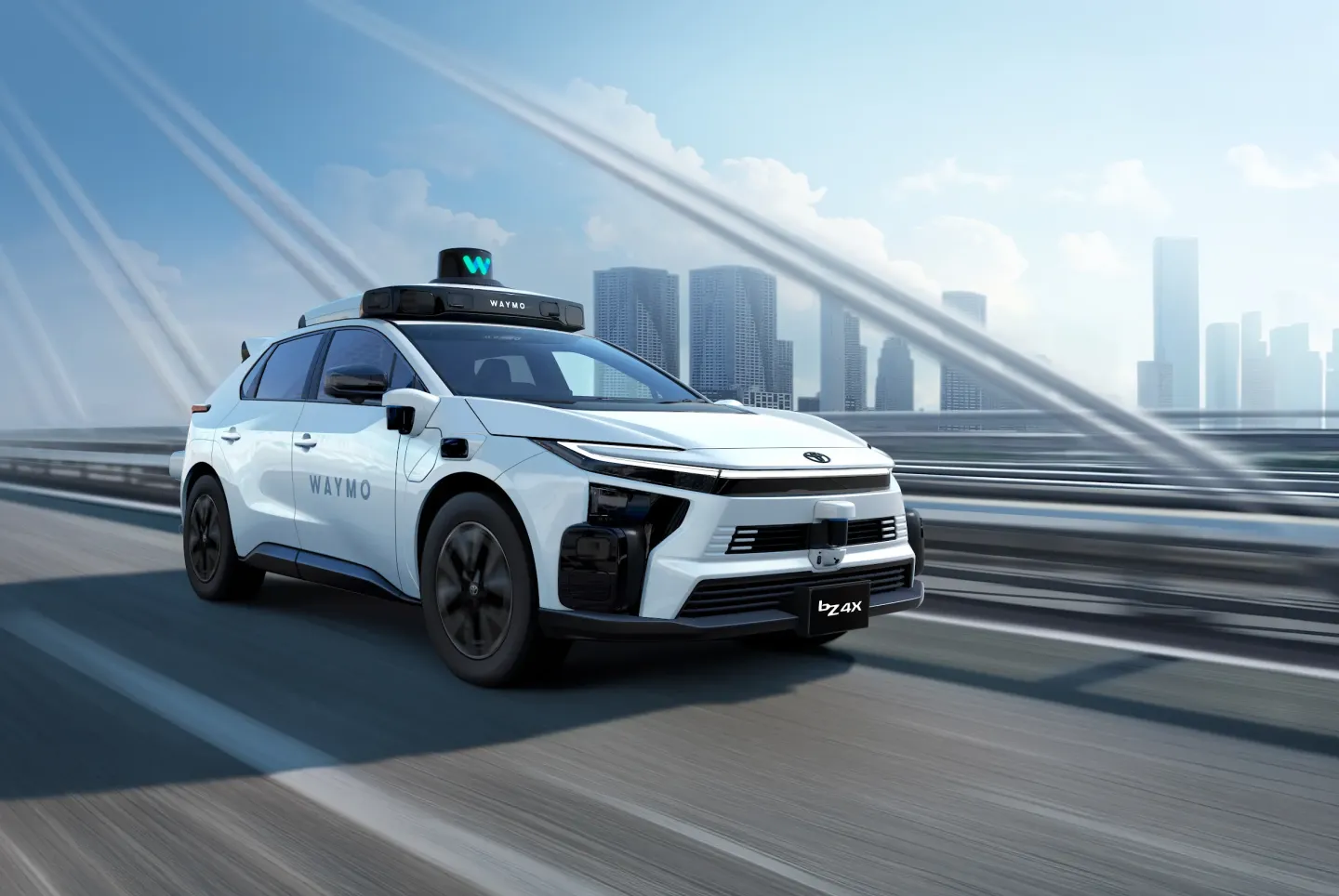
This cooperation marks that Waymo is expanding the model selection of self-driving taxis, and is no longer limited to the Jaguar I-Pace and other models that were previously mainly used. Toyota will use Waymo's mature autonomous driving technology to explore the commercialization of autonomous driving travel services and further accumulate relevant technical experience.
Different from the past methods of converting ordinary mass-produced cars into self-driving taxis, a major feature of this cooperation is the direct integration of self-driving equipment into the car production line.
According to the plan announced by both parties, Toyota will produce these vehicles at the Takaoka Plant in Toyota City, Aichi Prefecture, Japan, and complete the installation of Waymo's autonomous driving hardware in the same plant. From basic vehicle manufacturing to autonomous driving system integration, the entire process will be completed within the same production facility.
This production method is expected to reduce the workload of dismantling, modifying and reassembling the vehicle after it comes off the production line, while also reducing labor costs, logistics costs and the complexity of post-maintenance. Standardization of manufacturing processes is especially important for autonomous taxi operations that require large-scale deployment.
The vehicle will be equipped with the Waymo Driver autonomous driving system, including cameras, lidar, millimeter-wave radar and on-board computing equipment. Waymo did not announce the specific generation of autonomous driving hardware used in this Toyota bZ4X, nor did it disclose the number of sensors and complete technical parameters.
In terms of passenger experience, the specially modified bZ4X will be adjusted for the use scenarios of driverless taxis. The vehicle will provide more spacious rear legroom and be equipped with automatic doors, electric tailgate, ambient lighting and other facilities to make it easier for passengers to get in and out of the car.
These designs have practical implications for the elderly, people with reduced mobility and passengers who need to carry luggage. Self-driving taxis will not only need to solve the problem of how the vehicle can drive safely, but also need to rethink how passengers enter the vehicle, how to place luggage and how to complete the entire ride without driver assistance.
According to the timetable announced by both parties, small-scale testing and verification work will first be carried out in Japan in 2027. Waymo hopes to use Japan's actual road environment to verify the adaptability of vehicles and autonomous driving systems under local traffic rules, road signs and driving habits.
The UK is another important market that both parties plan to expand. Since both Japan and the UK adopt left-hand drive and right-hand drive systems, Waymo can accumulate some common technologies and operational experience between the two markets. However, entry into the UK market still requires corresponding verification for local road conditions and regulatory requirements.
Toyota and Waymo also plan to continue studying the possibility of applying Waymo's self-driving technology to private passenger vehicles. This means that the scope of cooperation between the two parties is not necessarily limited to driverless taxis, and may also involve Toyota cars purchased by ordinary consumers in the future.
In addition, Toyota's software and mobility subsidiary Woven by Toyota will also participate in related cooperation. The two parties hope to use the data accumulated by Waymo in real road operations to study how to improve the overall safety of vehicles and road infrastructure.
This cooperation is based on the preliminary cooperation agreement announced by the two parties in April 2025. At the time, the two companies said they would explore the possibility of jointly developing autonomous vehicle platforms. After further consultations, the direction of cooperation has gradually become clear, and Toyota will become one of Waymo’s important vehicle suppliers for its international market expansion.
It is worth noting that Waymo currently has a variety of self-driving vehicles from different sources. In addition to the Jaguar I-Pace, it also includes the Ojai self-driving small bus developed in cooperation with China's Geely's Jikrypton, as well as models planned to adopt Hyundai's Ioniq 5.
Among them, Ojai adopts the SEA-M architecture and is specially developed to meet the needs of driverless taxis. It has already begun to provide ride services to some users. Waymo hopes to reduce dependence on a single automaker by equipping different models with a unified sixth-generation autonomous driving system.
This also reflects that Waymo is moving from the technology research and development stage to the large-scale commercial operation stage. For self-driving taxi companies, the real challenge is not just to enable cars to drive autonomously, but also to reduce vehicle procurement and modification costs, improve fleet utilization, and establish a manufacturing and maintenance system that can support the operation of tens of thousands of cars.
Toyota has a mature automobile manufacturing system, global supply chain, and long-term accumulated vehicle reliability experience, while Waymo has mastered L4 autonomous driving technology that has been put into commercial operation. The core of the cooperation between the two parties is to combine the large-scale manufacturing capabilities of automobiles with autonomous driving systems.
At present, the two parties have not announced the specific number of the first batch of bZ4X self-driving taxis, nor have they disclosed the exact launch date of commercial operations in Japan. The focus in 2027 will still be on testing and validation, rather than immediately making driverless taxi services available nationwide.
From a longer-term perspective, this cooperation may become an important basis for Waymo to enter the Japanese and British markets. At the same time, Toyota also has the opportunity to explore the application of autonomous driving technology in private passenger cars and public travel services through actual operational data.
Waymo正在寻找能够支持全球扩张的汽车制造伙伴,而丰田则希望通过合作加快自动驾驶技术的商业化。此次以bZ4X为基础的新车型,正是双方将自动驾驶研发与传统汽车工业制造体系进一步结合的一次尝试。
Comments