
Abstract:
An international study led by Lund University in Sweden found that the disappearance of Aurochs in Northern Europe, which was once widely distributed in Europe, Asia and North Africa, was not caused by a single cause, but was the result of the long-term superposition of multiple environmental and human factors. Researchers say this case not only explains the process of ancient large animal extinctions, but also provides an important reference for understanding the ecological risks faced by modern species.

The aurochs is the wild ancestor of modern domestic cattle and is now completely extinct. The last known individual disappeared in Poland in the 17th century, but the decline of the entire population actually lasted about 8,000 years. There has been a lack of clear answers to why the aurochs disappeared from Scandinavia thousands of years ago, although human activities have long been considered the main cause of their global extinction.
Research shows that aurochs entered Scandinavia after the ice age ended about 11,700 years ago. However, during their migration, they experienced a severe "population bottleneck" event, a sharp decline in population numbers. This has resulted in a significant reduction in the genetic diversity of local aurochs, making them more susceptible to external environmental changes and other stressors.
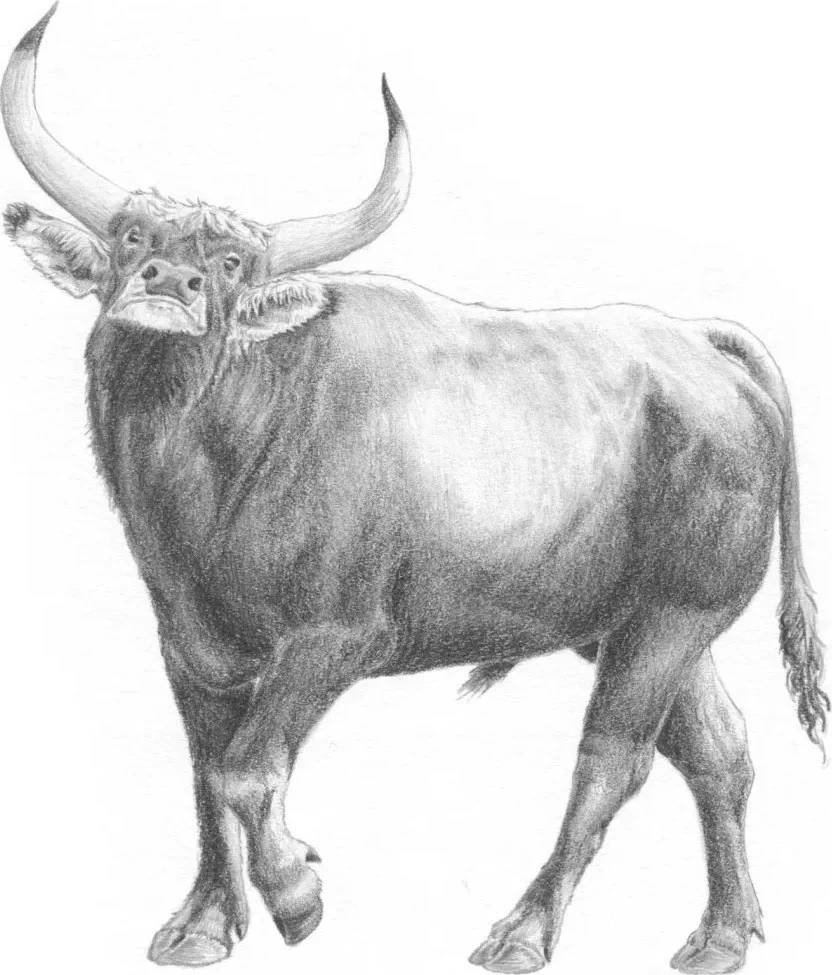
The research team pointed out that this geographical isolation event coincided with a period when human hunting activities increased significantly. Archaeological evidence shows that humans hunted aurochs frequently at that time. Population model analysis shows that aurochs numbers briefly grew but then collapsed rapidly. The population of aurochs in Sweden has dropped significantly, while the aurochs living on the Danish island of Zealand have completely disappeared.


The researchers ultimately concluded that the extinction of the Scandinavian aurochs was not triggered by a single factor, but was the result of a combination of reduced genetic diversity, geographic isolation, continued human hunting, and habitat changes. In other words, no one factor alone caused the extinction, but the combination of multiple pressures led to the eventual demise of this large animal population that once spread across Eurasia.
The research team stated that this discovery has practical significance for understanding the modern biodiversity crisis. Many endangered species today also face multiple challenges such as habitat fragmentation, reduced genetic diversity, and disturbance from human activities. The extinction history of the aurochs is a reminder that species decline is often not caused by a single event, but occurs gradually under long-term accumulated pressure.
Comments