
Abstract:
A woman who lived about 30,000 years ago is helping scientists rediscover the connections between peoples in Ice Age Europe. By analyzing her ancient DNA, researchers found that although this woman lived in southwest France today, her genetic background not only came from Western European populations, but also contained genetic components related to ancient populations in Central and Eastern Europe. This shows that the populations in eastern and western Europe during the Ice Age were not as isolated from each other as previously thought. As early as 30,000 years ago, human groups in different regions had already exchanged genes across thousands of kilometers.
这项研究由奥地利维也纳大学领导的国际团队完成,成果于2026年10月23日发表在《Science Advances》期刊上。研究人员将新获得的古人类基因组数据与此前公布的基因组,以及从洞穴沉积物中提取的古代人类DNA结合起来,试图还原末次冰期欧洲人口迁徙和遗传交流的真实情况。
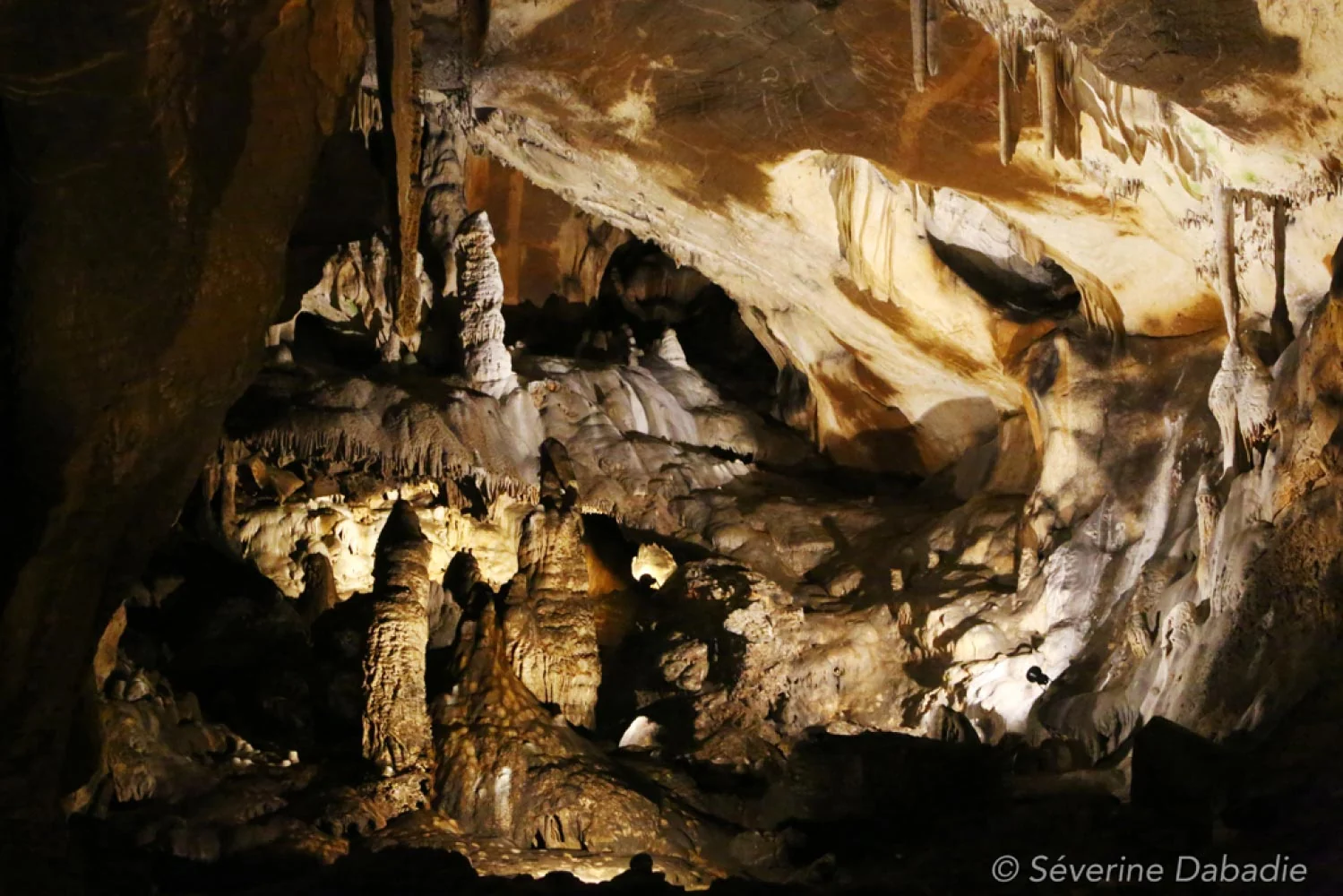
The key clue to the research comes from the Isturitz Cave in southwestern France. Archaeologists discovered the remains of a Gravetian woman who lived about 30,000 years ago. Her genome is the oldest complete genome data available for modern humans from southwestern Europe.
Genetic analysis showed that most of the woman's ancestry came from Western Europe, but there were also genetic components in her genes related to people from Central and Eastern Europe. According to genetic modeling, this genetic exchange between Eastern and Western European populations occurred approximately 32,500 to 31,500 years ago, before this woman was born.
这一发现挑战了过去对冰河时代欧洲人口分布的传统认识。
The Gravettian culture existed approximately 34,000 to 25,000 years ago and was distributed across many regions in Europe. Archaeologists have previously found similar tools, artifacts and other cultural features between Gravettian people in different regions, suggesting they may have maintained extensive contact.
However, ancient DNA evidence obtained in the past presents a different picture: populations in eastern and western Europe seem to have maintained relatively stable genetic differences for a long time, and exchanges between the two were not as frequent as archaeological evidence suggests.
The genome of the women from the Isturitz Cave offers a new explanation for these two seemingly contradictory pieces of evidence. The researchers found that genetic exchange did occur between Eastern and Western European populations, and that this exchange may have occurred earlier than many previous genetic studies could observe.
法国奥尔梅松(Ormesson)遗址此前发现的一名古人类也呈现出类似的遗传特征。结合这些证据,研究人员认为,伊斯图里茨洞穴可能曾经是不同地区人群相互接触的场所。不过,仅凭DNA还无法确定这些人究竟是通过迁徙、婚姻还是其他社会交往方式建立联系的。
研究的另一项重要发现来自今天的西班牙北部。研究人员发现,西欧古代人群的遗传特征并没有因为冰河时代的极端气候而消失,而是在当地持续存在了数千年。
Among them, the Chufín Cave and El Mirón Cave in Spain provide important evidence. The research team not only analyzed the DNA in the remains, but also extracted human genetic material directly from the cave sediments.
In a layer of sediment in the Elmiron Cave dating back about 22,000 years, researchers have discovered human nuclear DNA that is sufficient to identify the genetic ancestry of ancient populations. What’s special is that no human bones or teeth have been found in this sedimentary layer. Scientists can still judge the genetic background of the people who once lived here through the genetic material preserved in the soil.
This technique is called sediment ancient DNA analysis. Unlike traditional ancient DNA research, which must rely on bones and teeth, genetic material in sediments can provide researchers with clues to ancient human activities in the absence of obvious human remains.
Research results show that the genetic ancestry of Western European populations continued to exist during the Last Glacial Maximum. The Last Glacial Maximum occurred approximately 26,000 to 19,000 years ago and was one of the coldest stages of the last glacial period. At that time, most of Europe was affected by severe cold and glacial expansion, and the area suitable for human survival was greatly reduced.
Researchers believe that the Iberian Peninsula, where Spain and Portugal are today, may have played an important role as a refuge. Some Western European populations were able to persist here, escaping the harshest ice age environments, and continued to participate in the re-dispersion of European populations after climate conditions improved.
In addition to genetic exchange between Eastern and Western Europe, the research team also studied the remains of a group of ancient families in southern Italy to understand how Ice Age people mated.
The study subjects included a male fetus known as Ostuni1b. Genetic analysis showed that he was likely the son of a previously discovered female, Ostuni1. Researchers speculate that the father of the fetus may come from the same population as the mother, but the parents are not closely related.
This discovery may indicate that even in small prehistoric groups whose members shared a common genetic background, people had mating habits to avoid inbreeding. This behavior may have had important genetic implications for a society with a limited population and where contact between different groups was limited by geographical and climatic conditions.
Study leaders believe the findings together paint a more complex picture of Ice Age Europe than previously thought. People in different regions can continue to reproduce in their original living areas for thousands of years, and they can also have genetic exchanges with distant people. Population continuity and interregional migration are not mutually exclusive phenomena, but can occur simultaneously.
The research team next plans to combine sediment ancient DNA with advanced proteomics technology to further investigate the process of modern humans first entering Europe and spreading to different regions, while also studying the relationship between ancient humans and the carnivores living around the caves at that time.
这项研究的重要意义在于,它打破了将冰河时代欧洲简单划分为相互隔离的东西两个人群体系的传统认识。古代欧洲人并不是生活在彼此封闭的孤立区域中,他们既能够在严酷气候下维持区域性人口连续性,也能够跨越遥远距离建立联系。
而一名生活在3万年前的法国女性,正是这种远古人口交流的直接遗传证据。
Comments