
Abstract:
New research finds that penguin excrement is changing the ecological environment of Antarctic coastal areas in an unexpected way. Researchers pointed out that the nutrients rich in penguin feces will promote the bloom of snow algae, causing large green areas to appear in the originally white snow, and this change may further accelerate the melting of snow in parts of Antarctica.
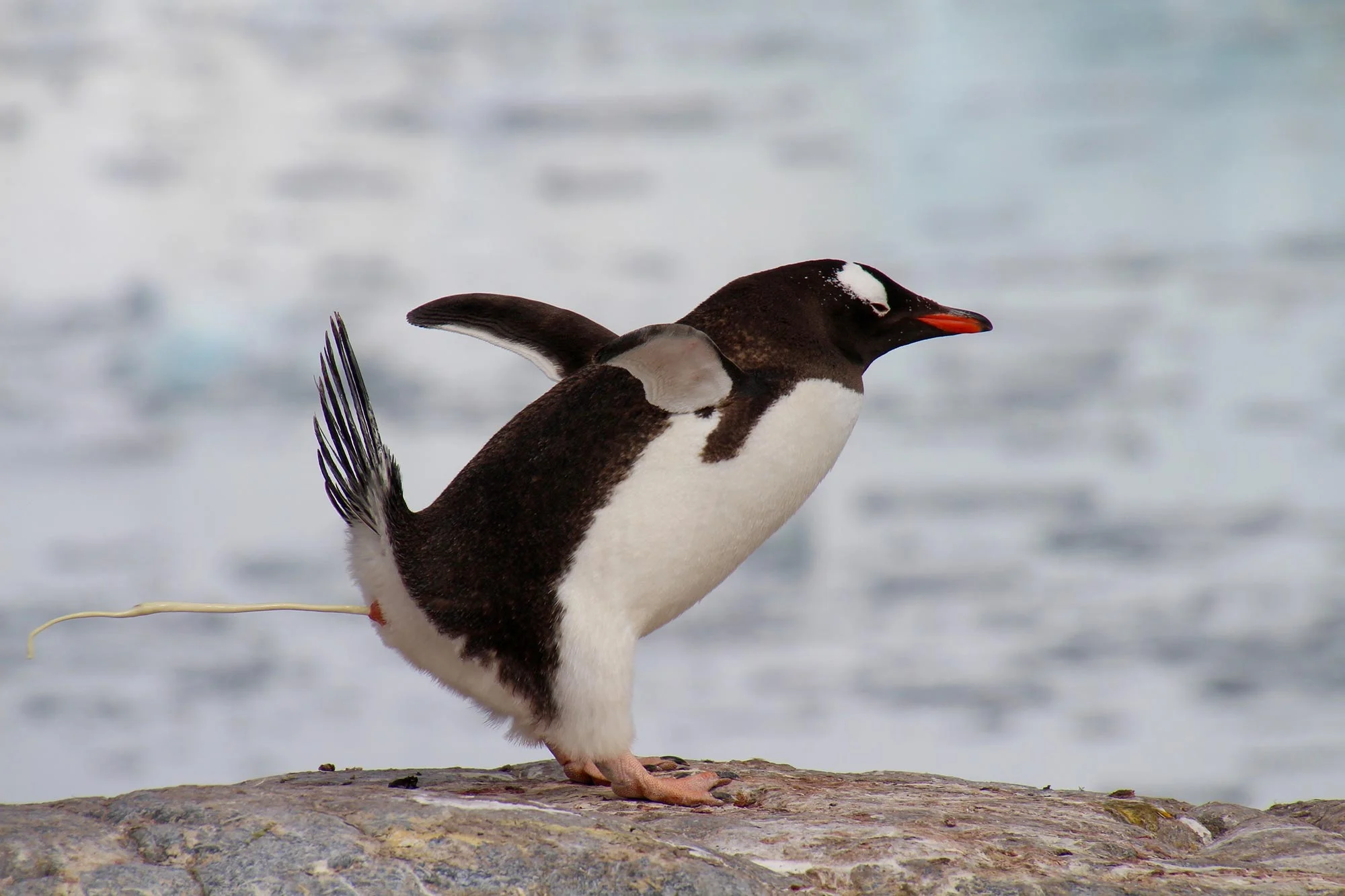
Research shows that penguin droppings provide sufficient nutrients for microscopic snow algae, causing them to form dense algal blooms along the coast of the Antarctic Peninsula. These algae will reduce the snow's ability to reflect sunlight, allowing more solar energy to be absorbed by the surface, thereby promoting the expansion of ice-free areas. As temperatures along the Antarctic coast continue to rise and suitable growing environments become more suitable, this biological process may further intensify localized snowmelt.
Snow algae of different colors have a significant impact on the heat absorption capacity of snow. Researchers found that snow covered by red snow algae absorbs about 20% more solar radiation energy than pure white snow, while areas covered by green snow algae absorb about 40% more energy, an increase that is twice that of red snow algae areas. Green snow also melts faster because it absorbs more heat.
Snow algae are tiny organisms that live in polar and alpine snow environments and display different colors depending on environmental conditions. When nutrients are sufficient, snow algae produce green pigments such as chlorophyll, greatly increasing photosynthetic efficiency and growing rapidly during the short Antarctic summer. When nutrients are insufficient or the environment is harsh, they will enter a relatively dormant state and produce red pigments with sunscreen effects to resist strong sunlight and slow down their growth.
The research team found that the large amount of phosphates in penguin feces is a key factor affecting the color change of snow algae. This nutrient helps snow algae maintain its green growth state instead of transitioning into a red, protective state. In other words, penguin poop actually acts as a natural fertilizer, providing conditions for large-scale reproduction of green snow algae.
To test this link, the researchers conducted field surveys along the western Antarctic Peninsula, spanning about five latitudes. They sailed across the Drake Passage to collect red and green snow samples in coastal areas with and without penguin colonies, and brought the samples back to the lab to analyze algae cells, pigments and nutrients. The results showed that phosphate concentrations were significantly higher in green snow algae areas than in red snow algae areas.
Aliyah Khan, senior author of the study and a cryosphere biogeochemist at the University of Colorado Boulder, said penguin poop and red snow algae are sometimes very similar in appearance, so researchers must rely on laboratory testing to distinguish them. She also quipped that working near penguin colonies can be very smelly because the birds often move among their own droppings, bringing them to the surface of the surrounding snow.
Scientists believe the discovery reveals previously overlooked connections between marine ecosystems and the Antarctic terrestrial environment. Penguins forage in the ocean and then return to land, bringing nutrients to the surface of the snow through their excrement, thereby changing the growth of snow algae. As the climate warms and penguin range changes, this feedback mechanism composed of wildlife, nutrient cycles and snow algae may have an increasingly obvious impact on the expansion of Antarctic ice-free areas in the future.
The research team pointed out that many current prediction models of Antarctic snow melt and ice-free area expansion have not fully incorporated this "biological dimming effect." By ignoring the interactions between wildlife and snow algae, the scientific community may be underestimating the rate at which Antarctic coastal snow is melting and the true extent of ice-free surface expansion. The researchers said that more observational data needs to be collected before the relevant mechanisms can be formally incorporated into climate models.
Comments