
Abstract:
Ladakh, which was once almost insulated from mosquito-borne diseases due to severe cold, is facing public health risks caused by climate change, public system failure, shrinking livelihoods and disordered tourism. Local residents, doctors and researchers warn that the emergence of dengue fever and malaria may be just the beginning of environmental upheaval in this cold, high-altitude desert region.
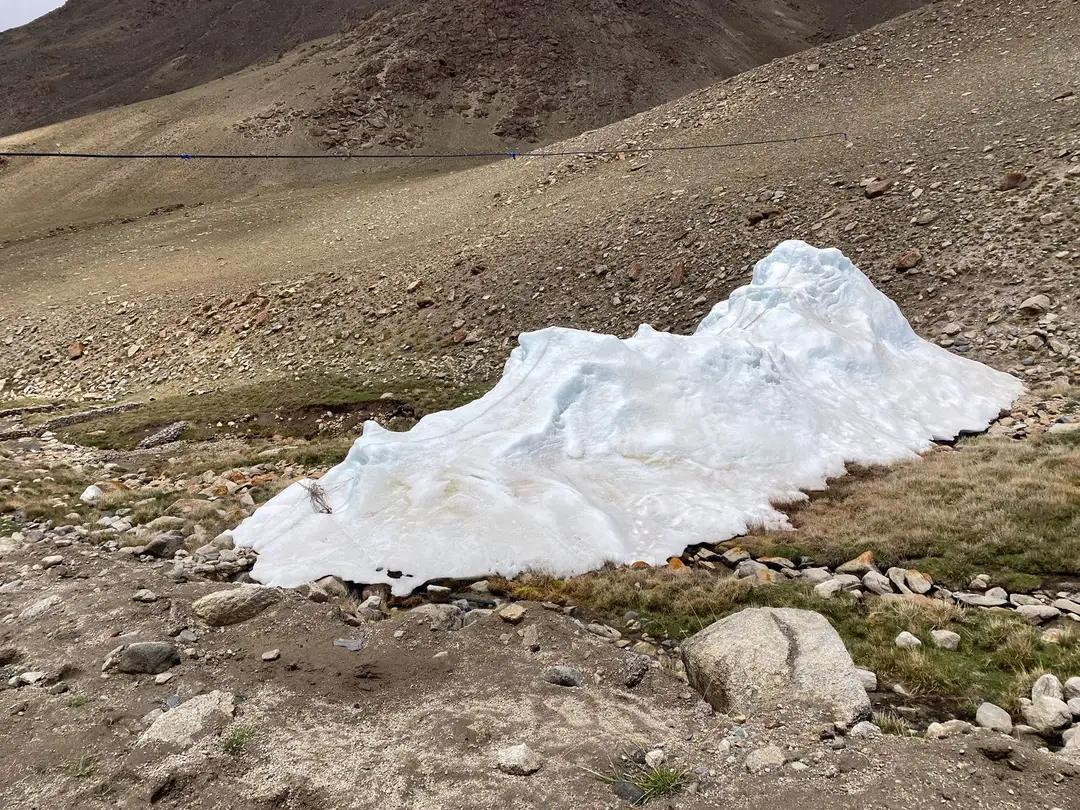
In Leh Sati Village, 65-year-old Gerak Gulmet inspected an artificial glacier in the early morning. He knocked on the pipe to confirm whether the water was frozen, then walked to a stream formed by melted ice and snow to measure the rapidly shrinking "glacier." This artificial glacier, called "Kangri" by the villagers, was built to slowly release the ice water stored in winter during the water shortage season, so that farmers can irrigate crops when the natural glacier runoff is insufficient.
Gulmet was a herdsman. He said that in the past, there were more pastures in Sati Village, and the traditional livelihood of grazing yaks, goats, highland cattle and sheep could still be maintained. Now, what he is most worried about is the future of his children and grandchildren. “We have nothing to leave to the next generation,” he said, pointing to a clearing between two mountains that was once covered with ice and is now grassland.
Sati Village is located at an altitude of about 3,900 meters and has about 400 households. Most of them belong to the "Boto", the largest scheduled tribe in Ladakh. Villagers said that in the past, snow accumulation in winter often took several days to clear, but this has rarely happened in the past 20 to 30 years; winter has also become significantly warmer. The natural glacier in the village disappeared five years ago. Gulmet said that watching it melt with his own eyes was the deepest sadness in his life.
Ladakh is located in the "rain shadow area" of the Himalayas, and residents have long relied on glacier meltwater to obtain drinking water and engage in agriculture. The poplars, willows and almond trees growing along the riverbanks also rely on these meltwaters for their survival. However, as temperatures rise, winters get warmer, and frost-free periods extend, visible changes are taking place in this once-cold land.
In 2022, the first two cases of dengue fever were reported in Ladakh. This means the mosquito-borne disease has entered the last region in India where no cases have been reported before. In 2001, dengue fever was present in only 8 states; by 2022, it had spread to all states and union territories in India. Thereafter, two more cases of malaria were reported in Ladakh in 2024 and three more cases in 2025. As of 2026, no dengue cases have been reported in Ladakh, but 17 cases have been reported in neighboring Kashmir.
Local governments and experts believe that most of these cases are "imported cases", that is, tourists were diagnosed in Ladakh after being infected elsewhere. But there are some signs that risks are becoming localized. An abundance of mosquito repellent products has begun to appear on local markets, ceiling fans have been installed in some houses for the first time, and mosquitoes have appeared in villages at lower altitudes. Mosquitoes have not yet been found in Sati village, but villagers say they can already be seen in lower-altitude villages around Leh.
Tshering Norbu, a retired general practitioner in Ladakh and recipient of the Padma Shri Award, said that unorganized development, water shortages and climate warming are collectively changing the environment. He recalled that no one in the area used ceiling fans three years ago; now, the soil has difficulty absorbing water after rainfall, and a rainfall that lasts only one hour may turn into a flood like the one in 2010.
Research shows that Aedes aegypti, which transmits dengue fever, may spread to arid areas such as the Thar Desert in the future; Aedes albopictus is already distributed in the east and west coasts of India, northeastern states and low-altitude areas in the Himalayas. Research predicts that the distribution ranges of both mosquito species are likely to continue to expand. The incidence of dengue fever in India has increased about five-fold in the past decade and may face greater pressure in the future.
Dengue fever is usually spread by the bite of an infected Aedes aegypti or Aedes albopictus mosquito. The virus first multiplies in the mosquito's body and is then passed on to others through the next bite. These mosquitoes may also transmit chikungunya and Zika viruses. Dengue fever can cause symptoms such as severe headache, fever, vomiting and rash; most infected people have no obvious symptoms, but severe cases may lead to plasma leakage and even death. The World Health Organization warned in 2023 that dengue fever poses a pandemic threat and is one of the fastest-spreading mosquito-borne diseases in the world. There is currently no specific treatment for dengue virus infection.
Public health experts pointed out that what really needs to be vigilant is not just to find the first imported case, but to find mosquito eggs, larvae and breeding sites to prevent mosquitoes from breeding stably in the local area. Dr. Yogesh Jain, one of the founders of the People's Health Alliance, a rural medical organization in Chhattisgarh, said that even if there are only imported cases, they may be infected by local mosquitoes that have not yet carried the virus, thereby amplifying the spread. He called for early entomological surveys and disease surveillance to prepare for local spread.
In contrast to the increase in mosquitoes, there is a lack of disease surveillance capabilities in Ladakh. Local government laboratories can carry out basic microbiological testing, blood screening and routine diagnostics, but the high-end tests needed to determine transmission must still be sent to Delhi or Chandigarh. Ladakh also does not have a single accredited laboratory capable of testing drinking water standards or monitoring water-borne diseases. Nobu said that every time he does research, he has to send samples to Delhi, which is expensive.
Over the past decade, temperatures in Ladakh are estimated to have increased by 1 to 2 degrees Celsius, significantly higher than the global average increase of about 0.85 degrees Celsius. The region faces dual pressures of water shortages and deteriorating water quality. Glacier retreat, changes in atmospheric circulation, and extreme hydroclimatic events such as flash floods, heavy rains, and vegetation changes are increasing risks. Eliezer Jordan Memorial College in Leh and universities outside the city currently do not have departments of public health, making it difficult to collect data, establish a monitoring system or conduct relevant research.
The impacts of climate change are not limited to disease. In August 2025, a glacier collapse in Nepal caused catastrophic floods, killing more than 1,000 people and leaving thousands missing. Ladakh is also highly dependent on glaciers for water and hydropower, and faces risks from flash floods, rock slides, avalanches, and previously unknown tropical diseases.
The artificial glacier in Sati Village can reach 20 to 25 feet during the peak winter period, but by June it was less than 10 feet. Villagers estimate that Sati Village alone needs three or four artificial glaciers, but currently there is only one, and it is melting faster every year. In the winter of 2025-2026, the temperature in Sati village was 3.1 degrees Celsius higher than the previous year; Leh recorded no precipitation in February, and this month has always been the snowiest period in the area.
Acres of Ice, a climate technology company headquartered in Ladakh, has long been researching, building and maintaining artificial glaciers. The agency warned that if no intervention measures are taken, 10% of villages in Ladakh are expected to be at risk of being abandoned by 2050; similar situations may also occur in more than 14,000 glacier-dependent communities in the Hindu Kush-Himalaya region and the South American Andes, affecting nearly 14 million people.
Families in Sati Village are also concerned about the eco-tourism promoted by the government. Gulmet said building roads for tourists has made villages more polluted and caused glaciers to melt faster. He questioned that so-called "development" did not bring the services that villagers really need, such as schools and hospitals, but instead built ecological parks that could destroy the fragile local ecology. "When the water runs out, we have no choice but to leave the village."
Amid increasingly unpredictable weather, villagers are still seeking spiritual solace. On a pagoda near the glacier, prayer flags flutter in the wind. A cloudless Himalayan morning turned into a blustery and cloudy afternoon within a few hours. Gulmet said that last year, the village invited the most influential lama of Chemre Monastery to chant sutras and pray for snow, but it rained the next day. "It's too hot. Wildlife, birds, glaciers, everything is leaving us."
Comments