
Abstract:
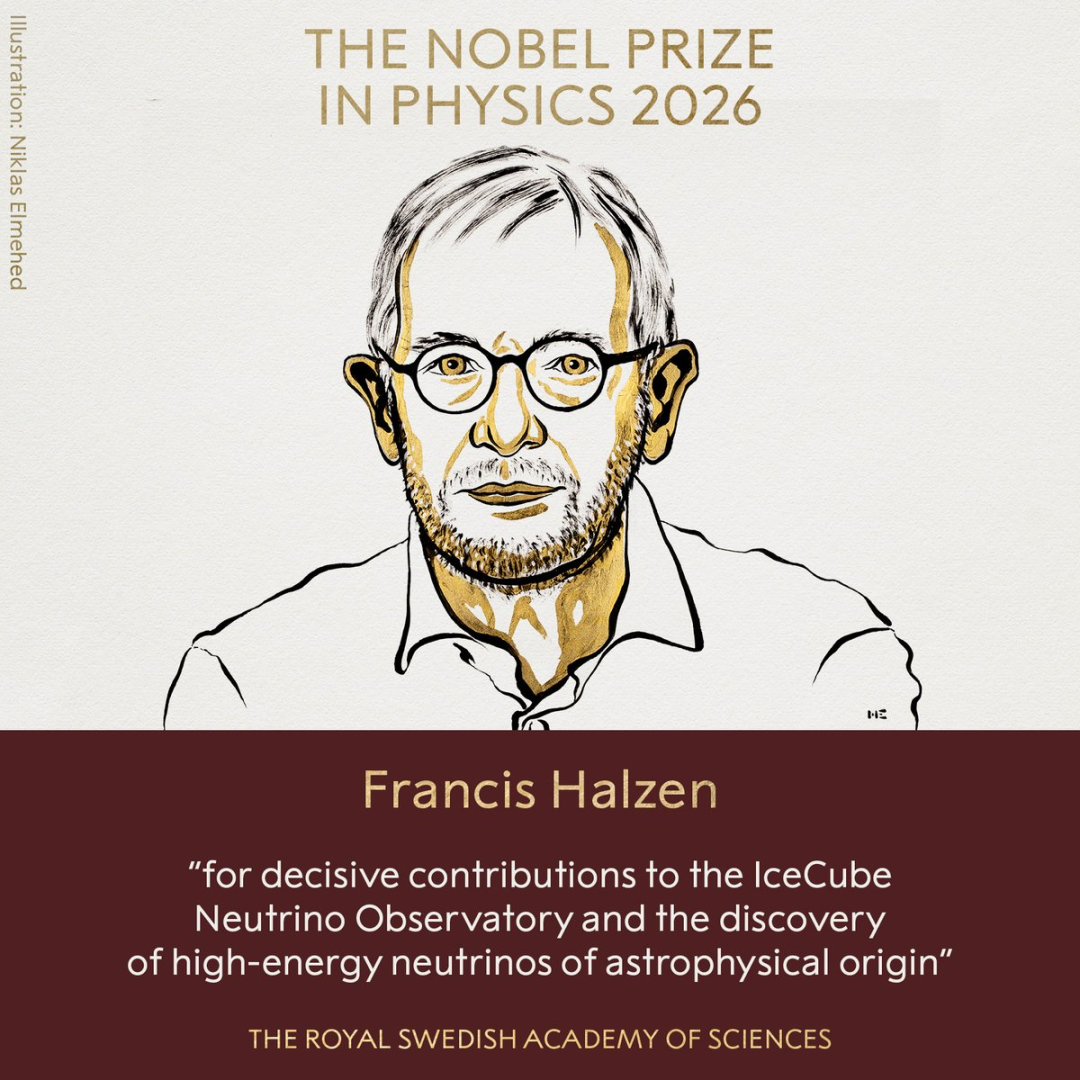
The 2026 Nobel Prize in Physics announced! Francis Halzen, a Belgian-born theoretical physicist and professor at the University of Wisconsin-Madison, holds the entire Nobel Prize trophy alone. The reason for the award was in recognition of his "decisive contribution to the IceCube Neutrino Observatory and the discovery of high-energy neutrinos from astrophysical sources." The 12 million Swedish krona prize money all belongs to him!
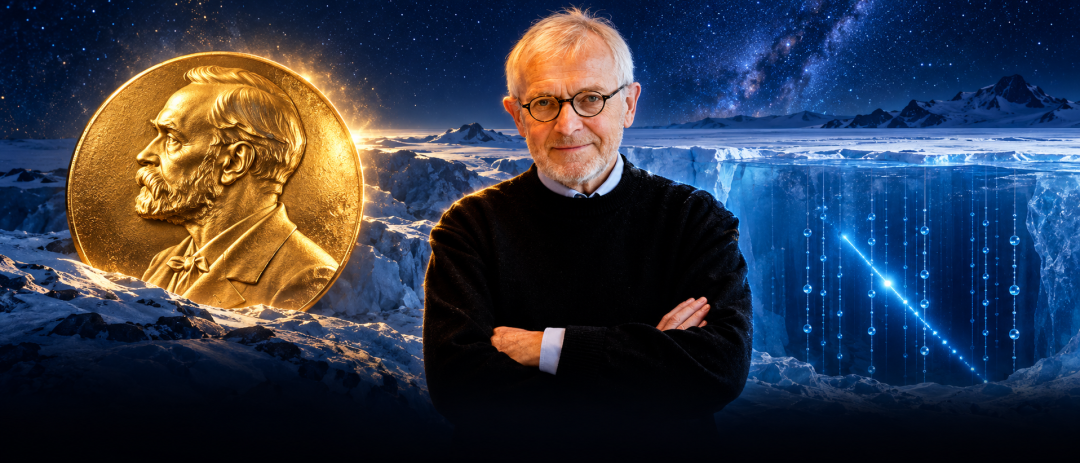
Chinese physicists Xue Qikun and Ye Jun, who had won two Nobel Prize winners before the game, failed to win this time.
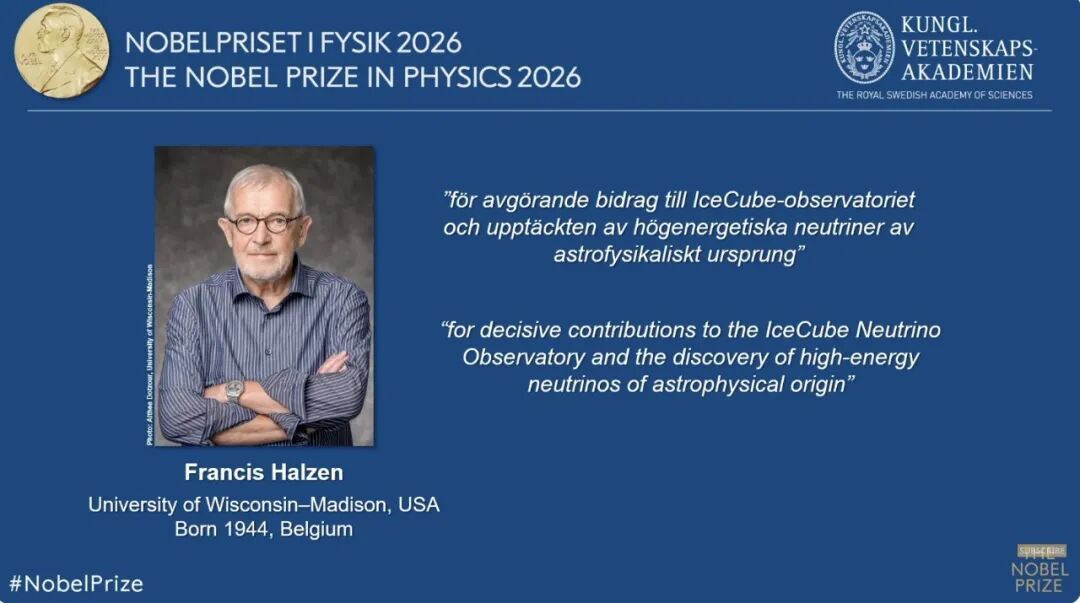
This award is fully awarded to a theoretical physicist who was once regarded as a "madman" by everyone.
The last time the physics prize was awarded to just one person was in 1992. There was a gap of 34 years.
Because 38 years ago, he proposed a crazy and incredible idea:
Go to the South Pole, the coldest and most desperate place on earth, and drill out an entire cubic kilometer of ten-thousand-year-old glacier, transforming it into a super telescope that captures mysterious particles deep in the universe!
He later recalled this past incident and said very frankly: "I guess others must have thought of the same idea and then gave up. If I didn't know nothing about the optical properties of natural ice at the time, I would probably give up too."
Today, this idea has not only changed the dimension of human observation of the universe, but has finally reached the highest glory of physics.
With this "Ice Cube" buried deep under the ice, mankind has confirmed for the first time:
There are high-energy neutrinos flying from far outside the solar system!
What’s even more interesting is that two years ago, the Nobel Prize in Physics was awarded to Hopfield and Hinton, who laid the foundation for machine learning.
And one of the most eye-catching discoveries of this under-ice telescope, the neutrino image of our Milky Way, was dug out from massive data using machine learning.
The "ghost" in the universe: neutrinos
First of all, we must first get to know today’s protagonist-the neutrino.
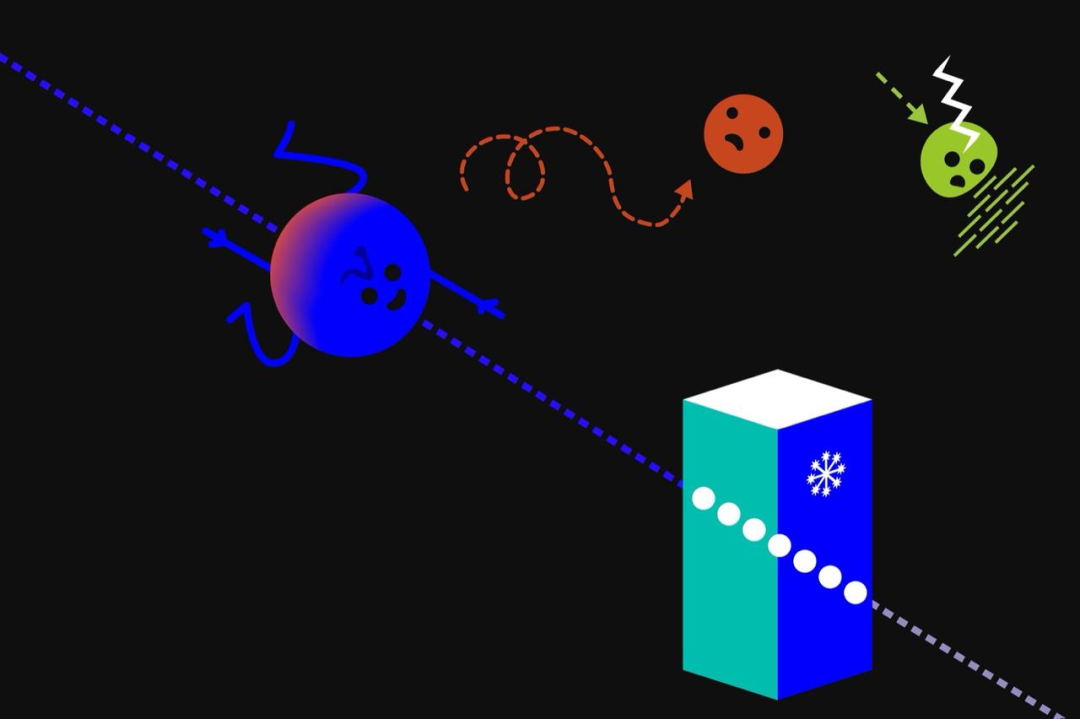
Official illustration of the Nobel Prize: Neutrinos flying in a straight line and penetrating the Antarctic ice
It has no electric charge, has almost zero mass, and hardly interacts with any matter. Known as the "Cosmic Ghost". At this moment, about 65 billion neutrinos from the sun are passing through your fingernails.
Why do scientists have to look for it? Because neutrinos are the most perfect "messengers" in the universe.
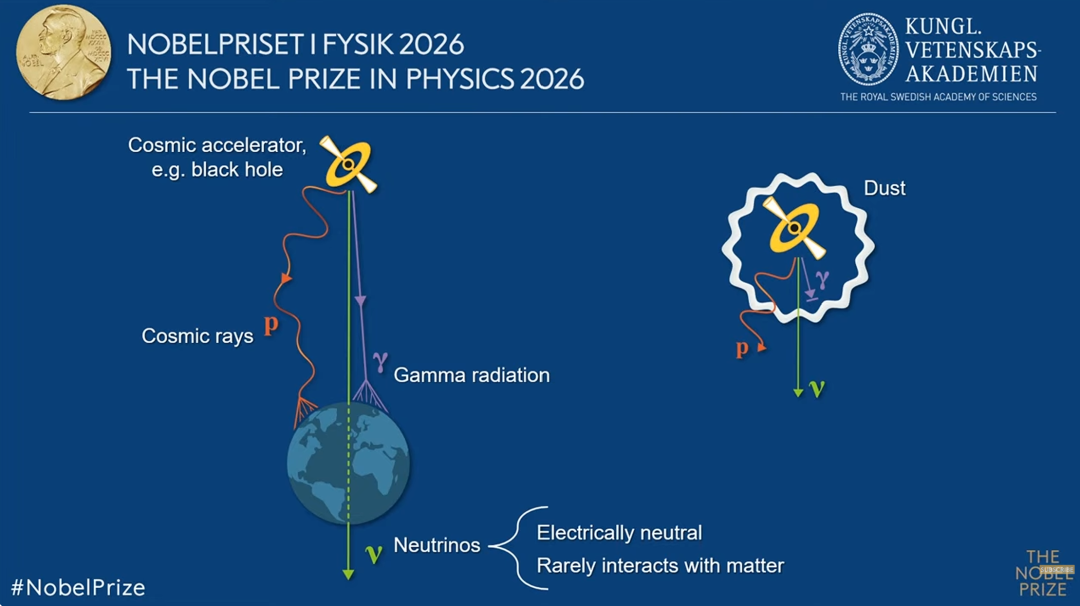
Unlike light and cosmic rays, it is not affected by magnetic fields and travels in an absolutely straight line; at the same time, it has extremely strong penetrating power and will not be blocked by any dust clouds or radiation.
Even at the edge of a supermassive black hole deep in the universe, as long as high-energy neutrinos are produced, they can fly in a straight line across hundreds of millions of light-years, "expressing" original information about extreme events in the universe to the earth.
If humans can capture these high-energy neutrinos, it will be equivalent to having a pair of "see-through eyes" that can see through the universe, allowing humans to perform "CT scans" of the universe.
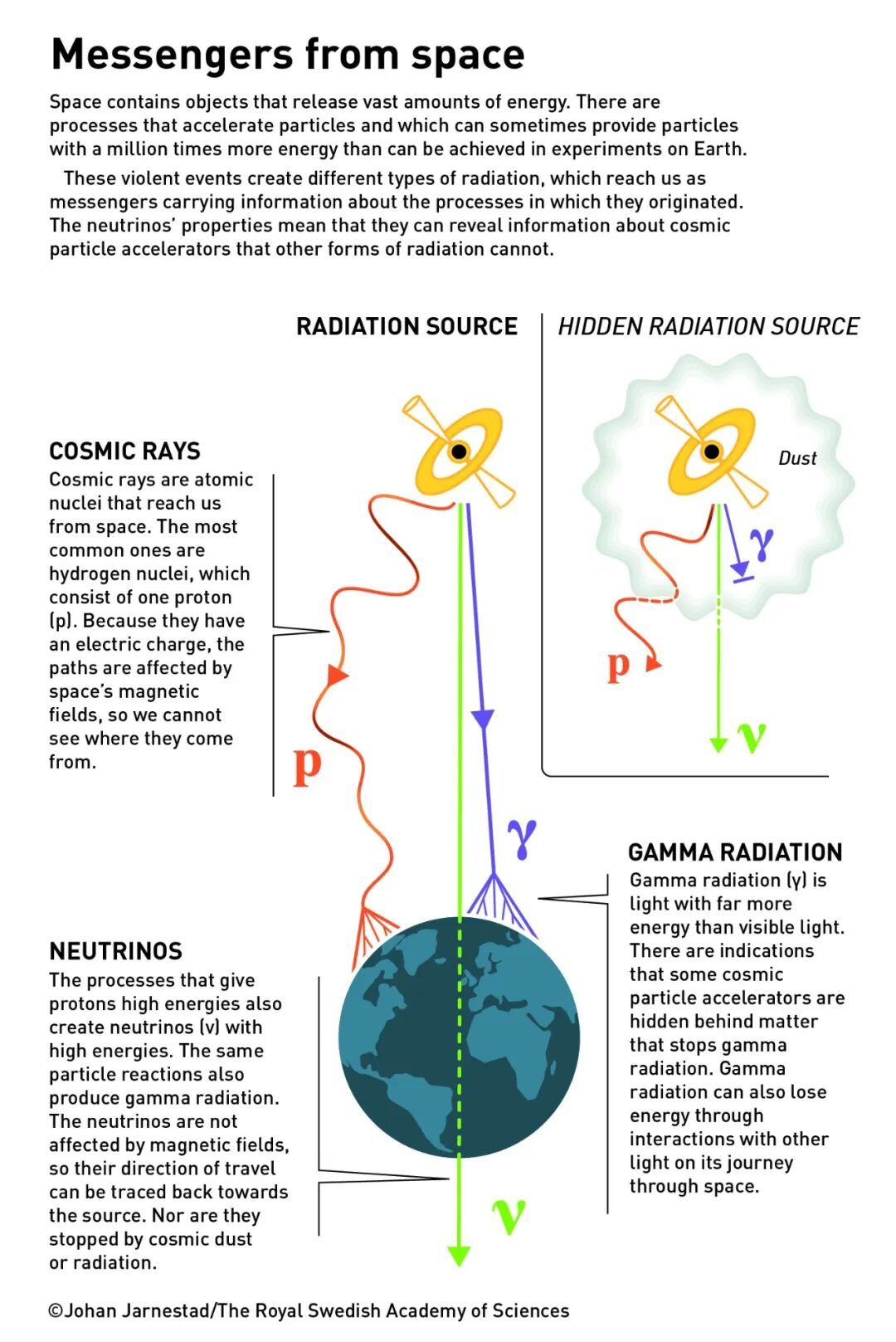
Cosmic rays are deflected by the magnetic field, gamma rays are blocked by dust, and neutrinos fly to the earth in a straight line
An extremely crazy idea - go to Antarctica to cut ice!
The trouble is, it's so hard to catch.
The vast majority of neutrinos pass directly through the detector. If the number of neutrinos is large enough, and the target (detection medium) we prepare is thick enough and numerous enough, there will always be a few neutrinos that will "hit" the target nucleus.
To have enough collisions like this, the detector would have to be ridiculously large.
When high-energy neutrinos collide violently in a medium, charged particles (such as muons) are produced.
The speed of these charged particles traveling through the medium will exceed the propagation speed of light in the medium, thus producing an optical phenomenon similar to a "sonic boom" - Cherenkov radiation, which emits a faint blue light.
As long as we place enough and sensitive optical sensors in an extremely dark environment to capture these blue lights, we can deduce the direction in which the neutrinos are flying.
At first, scientists wanted to use seawater as the medium. But deep-sea bioluminescence (such as jellyfish) and natural radioactive materials can produce a lot of noise.
At this time, Francis Halzen appeared.

Francis Halzen, 82 years old this year
In the 1980s, while studying cosmic rays, he heard news that Soviet scientists were planning to use radio receivers to capture neutrino signals in Antarctica.
A wonderful inspiration suddenly flashed in Halzen’s mind: Why do we go to the sea? Why not just use Antarctic ice?
The Antarctic ice sheet has unique advantages:
Big enough
: There are endless natural ice layers, which fully meet the needs of building super detectors.Dark enough and pure enough
: There is absolute darkness deep in the ice, with no luminous creatures and no interference from complex ocean currents.Absolute stability of solid state
: Freeze the sensors in ice and they will remain absolutely still forever, which is crucial for accurately calculating particle trajectories.In 1988, Halzen and his colleague John G. Learned formally proposed the idea of building a neutrino observatory under the Antarctic ice.
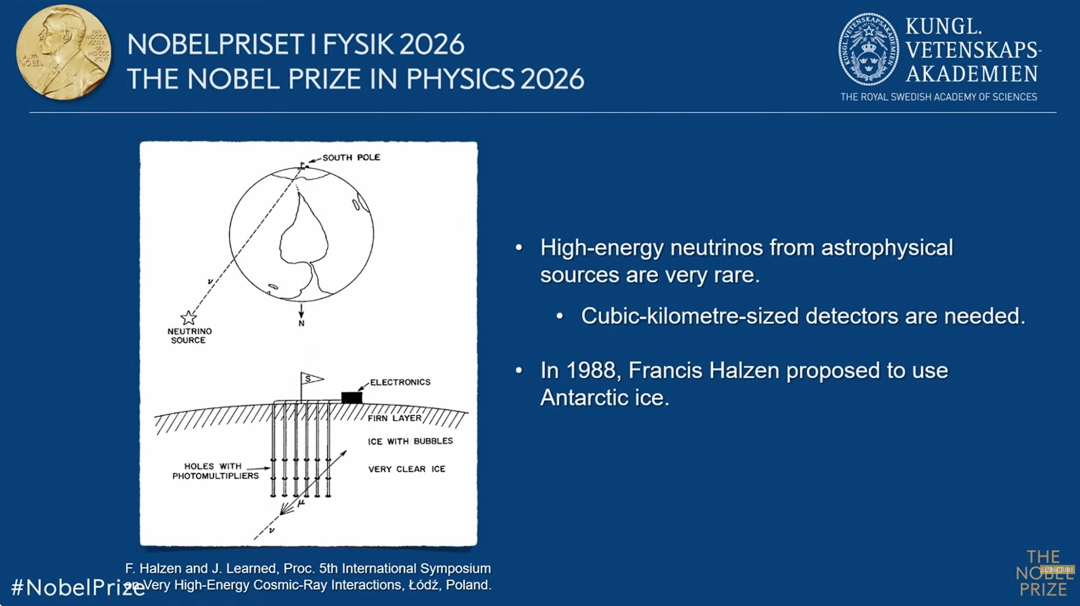
At first, the idea sounded like science fiction. But Harzen lobbied everywhere and finally pulled together a team and began the most hard-core "polar contractor" years in human history.
One cubic kilometer of "Ice Cube" and reverse light bulb
Building an observatory in Antarctica is by no means as simple as setting up a tent.
In 1993, Halzen's team started a preliminary attempt in Antarctica (AMANDA project).
At first they encountered huge setbacks: the shallow ice was filled with bubbles, and light could not transmit at all. But they didn't give up, and glaciologists pointed out that the deeper they dug, the intense pressure would squeeze the bubbles into the ice's crystal lattice.
Sure enough, when they drilled below 1,400 meters, a miracle happened - the ice here was extremely pure and transparent. The blue flash produced by the collision of neutrinos can penetrate hundreds of meters of ice without any hindrance!
With support from the National Science Foundation (NSF), the construction of IceCube was officially launched in 2004. It's an engineering marvel.
Engineers used high-pressure hot water drills to melt vertical wells more than two kilometers deep in the extremely cold Antarctic ice sheet.
Every time a well is drilled, they must race against time to sink an extra-long cable filled with advanced optical sensors to the bottom of the well before the water freezes again.
They laid down a total of 86 such cables; there were as many as 5,160 spherical sensors hanging on the cables.
Harzen once humorously described these sensors as "light bulbs working in reverse" - these sensors capture weak photons, convert them into electrical signals, and transmit them back to the surface.
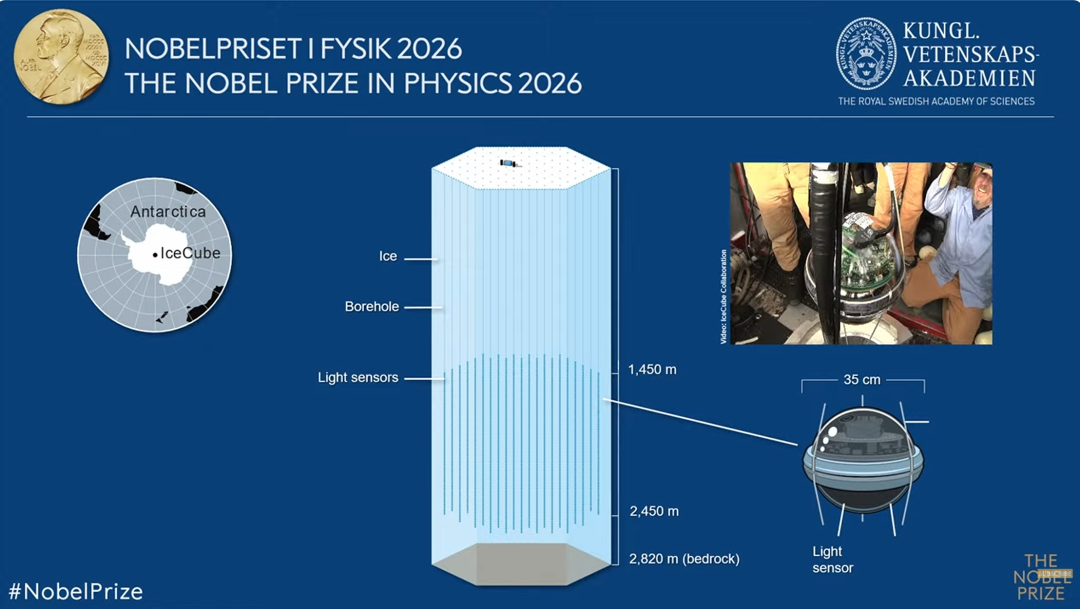
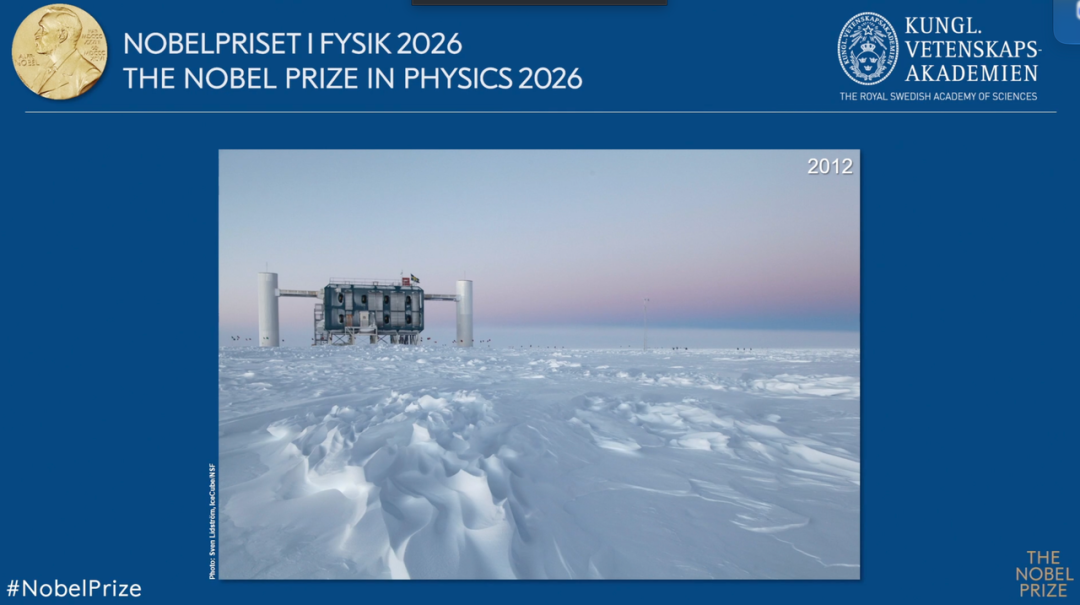
The cables are arranged in a huge hexagonal array, covering ice at a depth of 1,450 to 2,450 meters. In this way, scientists circled an entire piece of pure ice with a volume of one cubic kilometer and a weight of one billion tons inside the Antarctic ice sheet. This is the "Ice Cube".
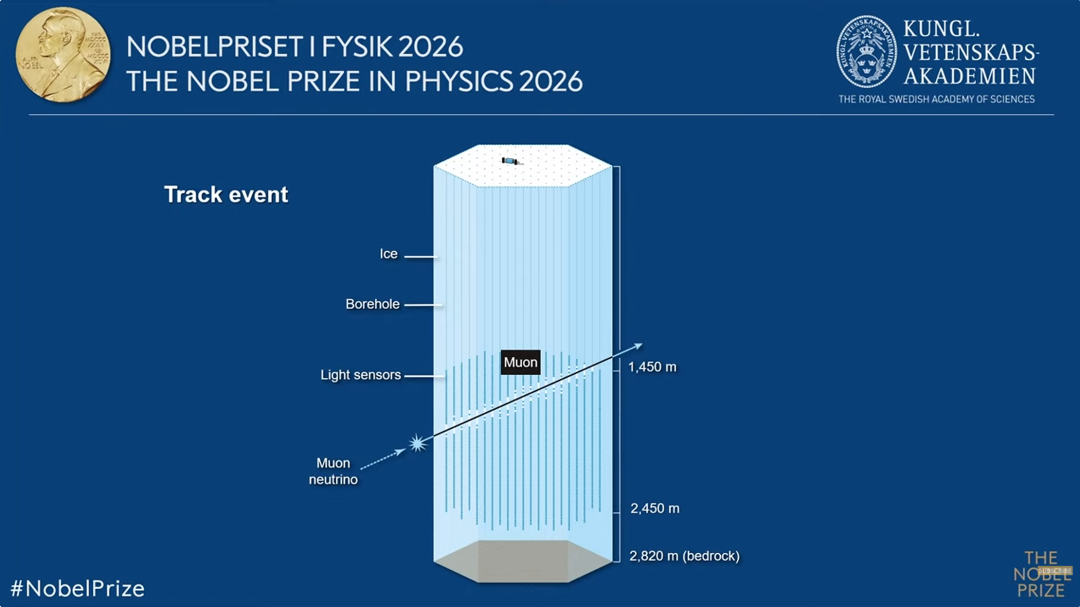
In 2011, with the last cable in place, the largest "telescope" on earth was officially completed.
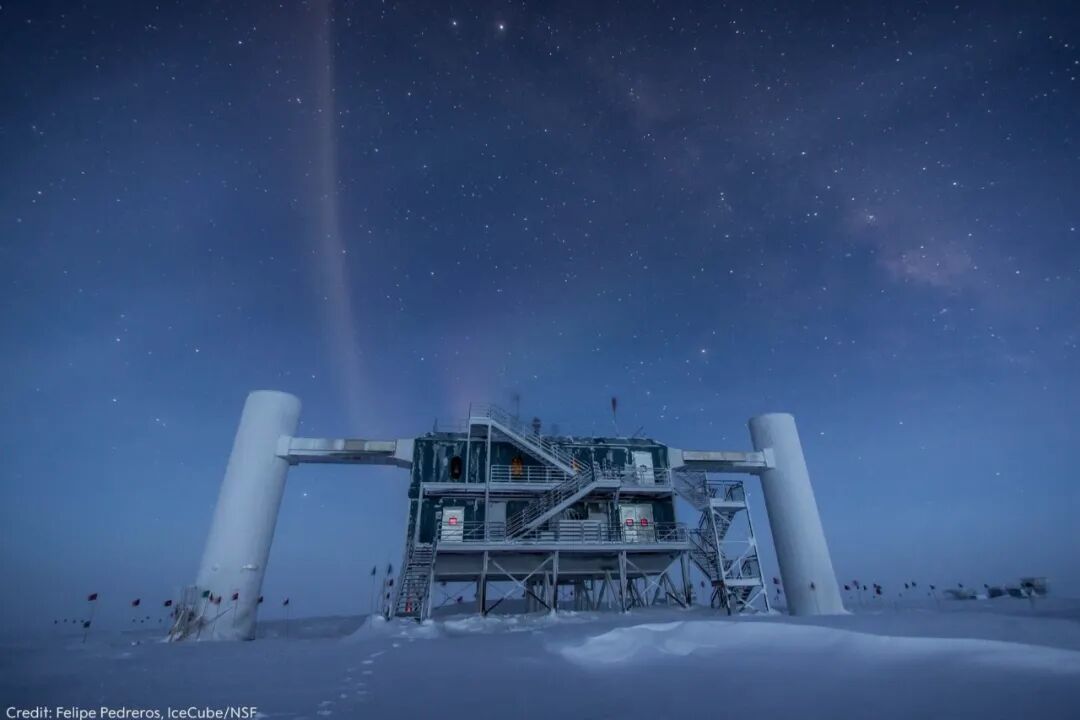
In the Ice Cube laboratory at the South Pole, signals from under the ice are collected here and then transmitted out via satellites
It does not look at the starry sky, but is buried deep underground; it does not collect visible light, but listens for the footsteps of cosmic ghosts day and night.
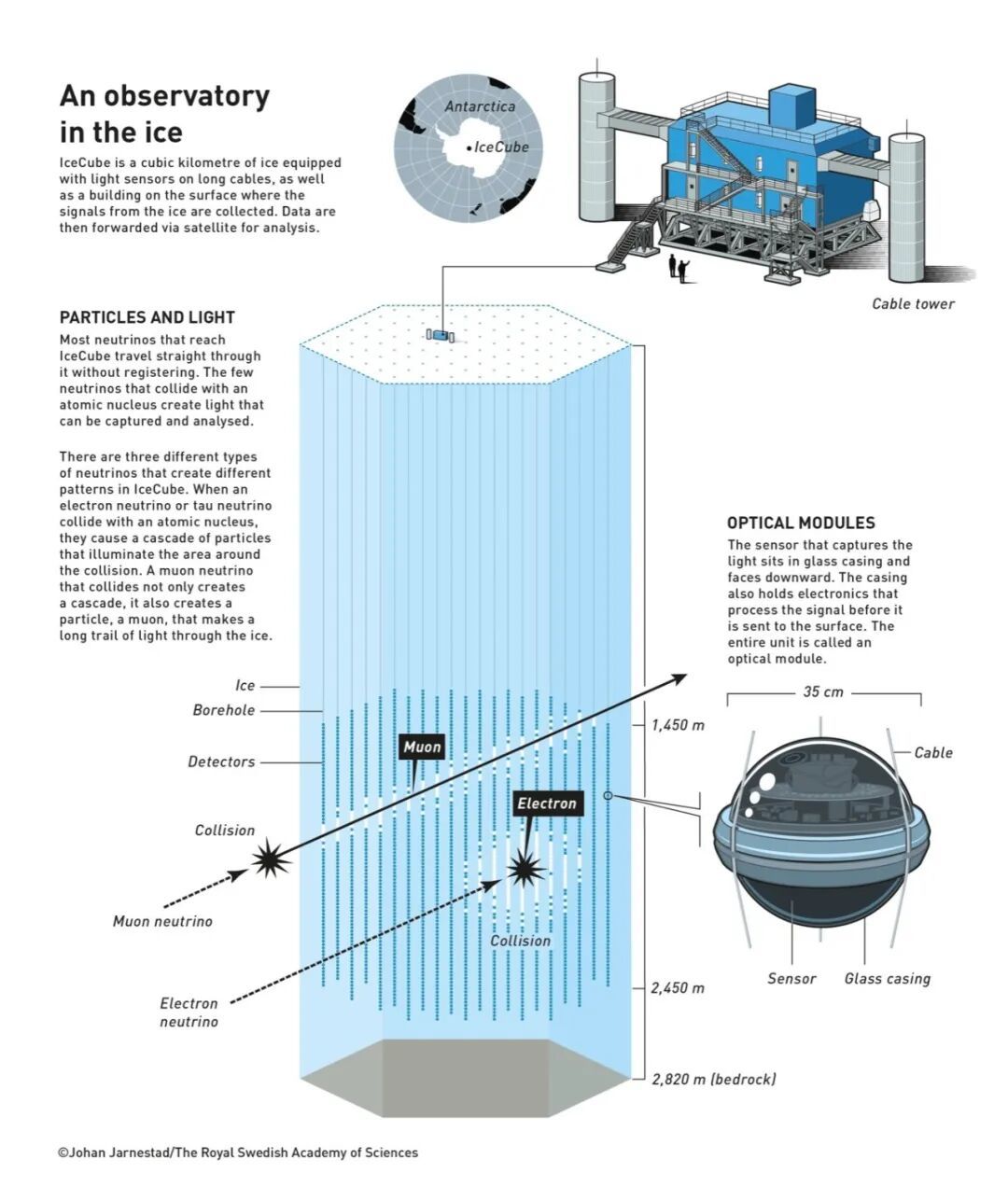
Ice Cube diagram: neutrinos hit atomic nuclei in the ice, and the flash of light is recorded by a series of sensors
From 100 million false signals every day, 100 are true
Building a telescope is only the beginning. The real difficulty is to identify cosmic neutrinos from the data.
Cosmic rays penetrate the atmosphere above the Antarctic, and more than 100 million particles penetrate into the ice every day and are recorded by sensors.
Neuttrinos are also generated in the atmosphere. IceCube records about 100,000 neutrinos every year, and most of them are produced in the Earth's atmosphere.
According to theoretical expectations, there are only about 100 that really come from the depths of the universe a year.

In 2013, a historic breakthrough came!
In 2013, the team searched for a higher energy type of neutrinos in two years of data, and encountered two events with energies exceeding 1 PeV, namely 1.04 PeV and 1.14 PeV. This is the first confirmed discovery of high-energy astrophysical neutrinos from outside the solar system.
This interstellar hunt that has lasted for decades has finally come to fruition.
Adjusting the analysis method along these two events, the team found 28 high-energy cosmic neutrinos in the same batch of data. In 2014, statistical significance reached 5.7σ, and explanations of purely atmospheric sources were ruled out.
On September 22, 2017, IceCube captured a neutrino of about 290TeV. Within a minute, an alert was sent to the world.
Telescopes around the world immediately focused on that coordinate, and the result was hair-raising: there was a blazar (TXS 0506+056) that was exploding crazily—an active galaxy with a supermassive black hole at its center!
This is the first time that humans have linked high-energy neutrinos to an exact cosmic source.
In 2022, IceCube found 79 neutrinos from the direction of the active galaxy NGC 1068. The supermassive black hole there is wrapped in thick gas and dust, and the measured gamma rays are very weak, but neutrinos come out.
In 2023, IceCube saw our own Milky Way in neutrinos for the first time.
What made the difference this time was machine learning. IceCube's collaborators at the Technical University of Dortmund in Germany developed a machine learning method to single out the "cascade" of events produced by neutrino impacts while reconstructing their direction and energy.
After using the new method, more than an order of magnitude more neutrino events were retained, and the search sensitivity was increased to three times the original. The team used about 60,000 neutrinos from 10 years of data to piece together what the Milky Way looks like.
Halzen said at the time:
Interestingly, unlike any wavelength of light, in neutrinos the distant universe is brighter than nearby sources in our galaxy.
Earlier this year, IceCube used 12 years of data to push the Milky Way's signal to 5.7σ. The Milky Way has thus become the first high-energy neutrino source to cross the 5σ discovery threshold.
Just before the announcement of this Nobel Prize in 2026, the IceCube team released a blockbuster result: they finally clearly saw the high-energy neutrino glow emitted by the Milky Way itself! This means that we are finally using neutrinos as a paintbrush to paint a new look at the Milky Way.
Single-handedly open a new era of "multi-messenger"
Now, this stubborn old man who has been obsessed with catching ghosts with ice since the 1980s has finally ushered in his coronation moment.
Mark Pearce, Chairman of the Nobel Prize Committee in Physics, commented——
The international team led by Francis Halzen has provided us with a wonderful instrument. His tenacity and scientific vision paved the way for a completely new kind of astronomy.
Yes, this is the dawn of the era of "multi-messenger astronomy."
Looking up at the starry sky today, we can not only "see" with light and "hear" with gravitational waves, but we can also use high-energy neutrinos captured by IceCube to directly "see through" the most violent dark core in the universe.
Currently, "Ice Cube-Gen2", which has been expanded eight times in size, is under planning.
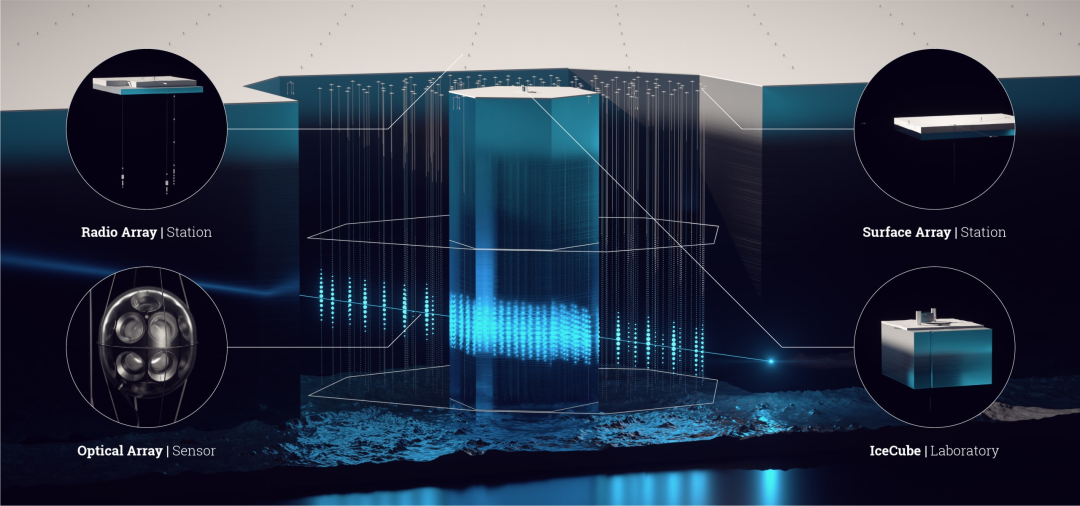
A global neutrino capture network is slowly opening up in the Mediterranean Sea, the Pacific Ocean, and China’s “TRIDENT” project in the South China Sea.
At this moment, the 65 billion neutrinos that are passing through your fingernails have traveled through the endless void, gone through vicissitudes of life, and rushed straight to the earth.
At the southernmost point of the earth, there is a group of romantic and crazy earthlings, in a cubic kilometer of dark pure ice, with their eyes wide open, just waiting for this stunning glimpse that spans hundreds of millions of years.
This may be the most extreme romance of human exploration of the universe.
Let us pay tribute to the 2026 Nobel Prize winner in Physics, Francis Hartzen!
Comments