
Abstract:
A new analysis shows that on any given night, on average, more than 700 satellites fly over a mid-latitude town at any given moment. In many areas, this number exceeds the number of stars that can be seen with the naked eye, indicating that artificial satellites are profoundly changing the way humans look up at the night sky.
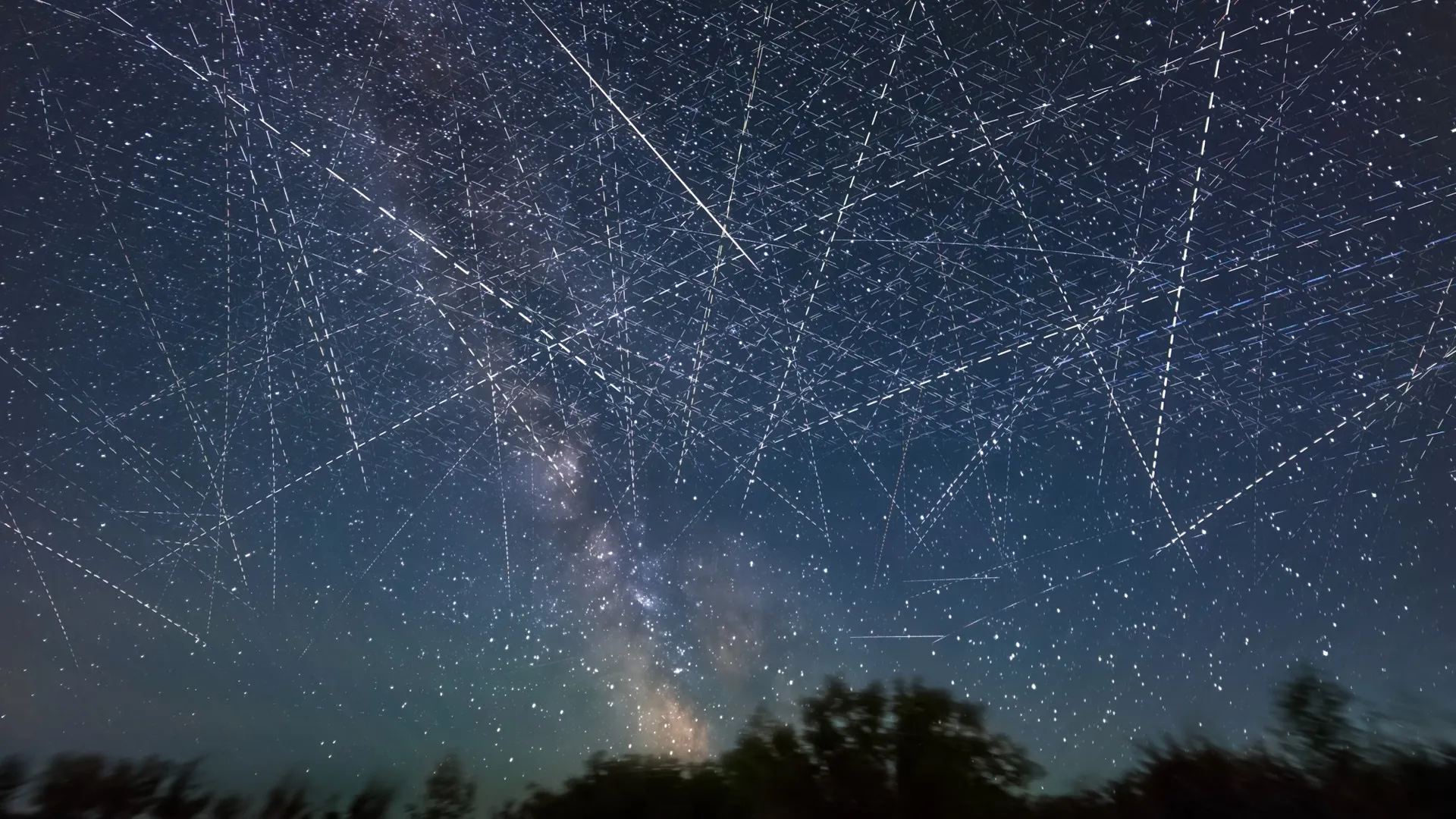
The study, which has not yet been peer-reviewed and was conducted by engineering firm Accu Components, analyzed the trajectories of 15,833 active satellites currently operating in low Earth orbit within 2,000 kilometers of the ground. The researchers selected data from October 12 and October 18 this year, and the calculation results showed that, with a completely unobstructed view, there were 710 satellites crossing the sky over an ordinary British town at all times.
The study focused mainly on the UK, but researchers believe that the skies over Europe, the United States and other mid-latitude areas are also subject to intensive satellite traffic, especially between 40 and 50 degrees north or south latitude. An Accu Components spokesperson explained that the orbital inclination of most Starlink satellites is about 53 degrees relative to the equator, so they tend to appear concentrated in mid-latitudes. The above global figures are estimates based on global grid data for one day. The sky near the equator is relatively quiet, with about 490 satellites passing by at the same time.
However, not all satellites are visible to the naked eye. Satellites themselves do not emit light. They must be illuminated by the sun and the ground has entered darkness before they can be observed. The study estimates that of the 710 satellites mentioned above, an average of about 105 are illuminated by sunlight as they fly overhead, bright enough to be detected by the naked eye like stars.
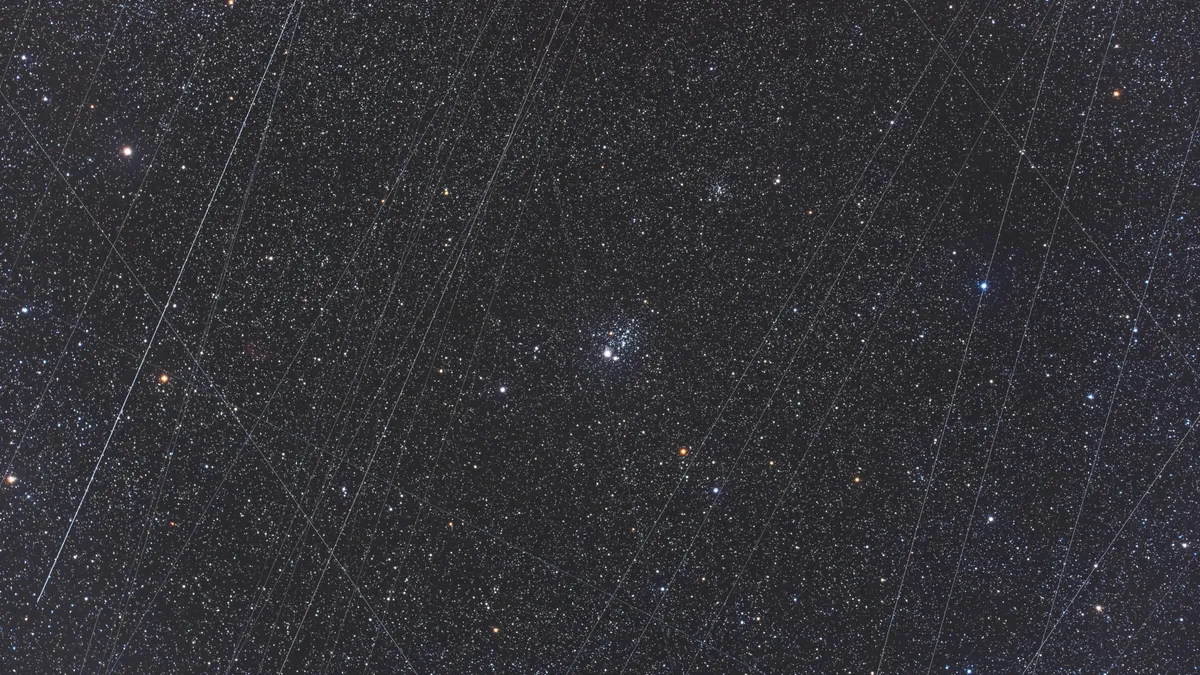
The number of visible satellites changes significantly overnight. The spokesman said that during the post-dawn and pre-dawn periods, significantly more satellites can be illuminated by the sun; while late at night, most satellites are no longer in orbital positions illuminated by the sun. For a typical British town, around 300 satellites are reflecting sunlight in the first hour or so after dark; by around midnight, this number drops to less than 20; then it rises back up to around 300 before dawn.
For comparison, in large cities with serious light pollution such as London and New York, there may be only a few dozen stars visible to the naked eye late at night; in suburbs and smaller towns, the number of visible stars can increase to hundreds; only in remote rural areas or isolated mountainous areas, people may see thousands of stars.
In the past decade, the number of satellites orbiting the Earth has increased dramatically, especially after Musk's SpaceX began deploying the "Starlink" constellation that provides Internet services. Satellite companies also plan to launch hundreds of thousands or even millions of satellites in the coming decades. If these plans come true, the number of transiting satellites from almost anywhere in the world will far exceed the number of visible stars.
Astronomers are particularly worried about this trend. As satellites pass through the field of view of ground-based telescopes, they leave trails of light in astronomical images and increase the overall brightness of the night sky by reflecting sunlight. Over time, even the most powerful telescopes may find it increasingly difficult to observe distant stars and galaxies that can help humans answer key questions about the origin and evolution of the universe.
The study also found that a total of 12,891 different satellites flew over an average British town overnight. As low-Earth orbit becomes increasingly crowded, how to strike a balance between expanding satellite Internet services and protecting astronomical observations and dark-sky environments is becoming an urgent issue around the world.
Comments