
Abstract:
The international astronomical community recently announced an attention-grabbing new discovery. Researchers used the European Southern Observatory's (ESO's) Very Large Telescope (VLT) in Chile's Atacama Desert to discover a rare double-layered ring structure of planetary debris around a dead star. This system not only shows the complex scene after the destruction of the planetary system, but may also reveal the future evolution of the solar system to mankind in advance.
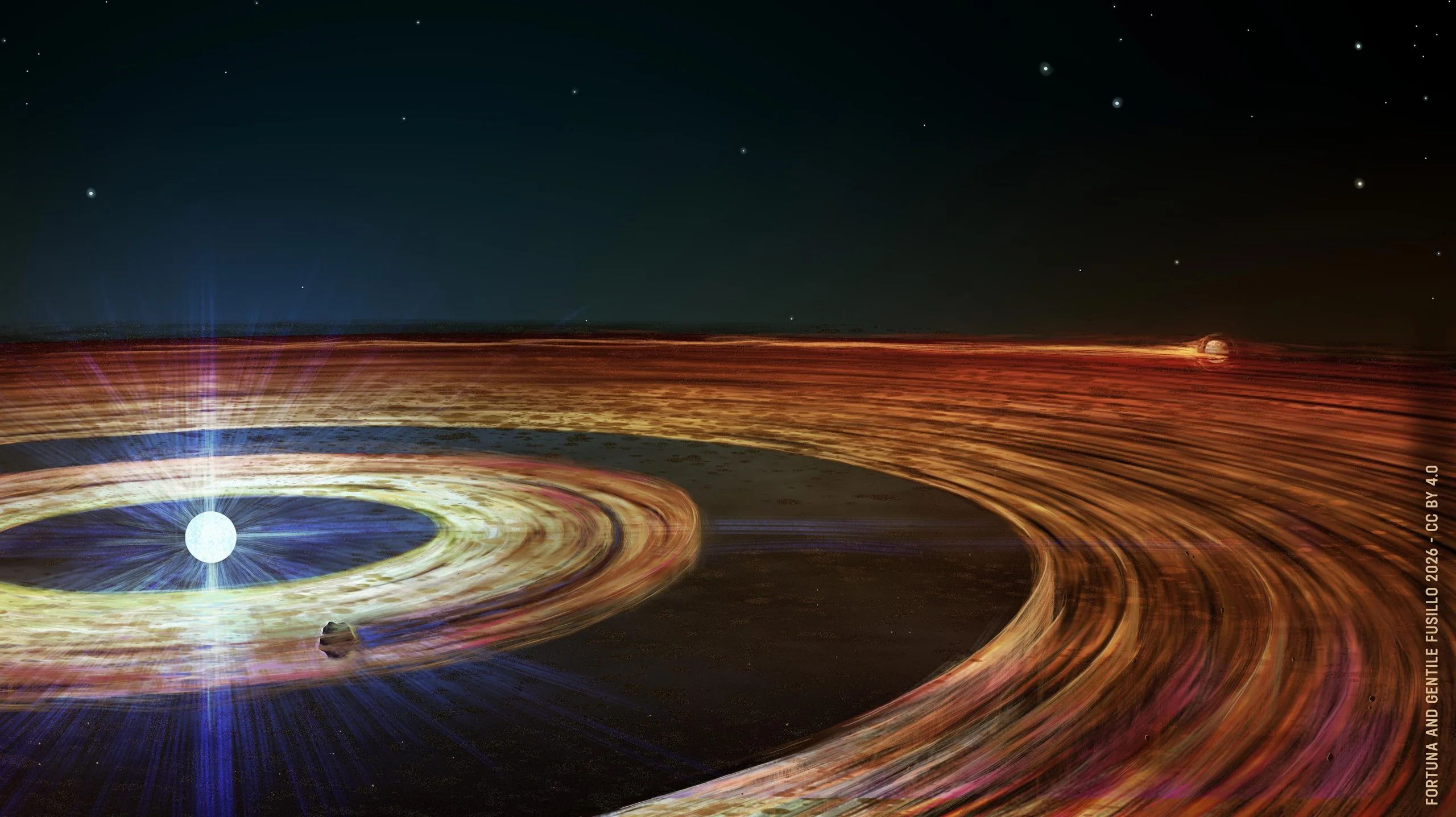
The research object is a white dwarf star numbered J1328-1450. White dwarfs are the dense remnants of stars like our sun that have exhausted their nuclear fuel. Scientists have long discovered that there are debris disks formed from destroyed planetary material around some white dwarfs, but J1328−1450 exhibits unprecedented characteristics. Unlike ordinary single-layer debris disks, there are two concentric rings of gas around this white dwarf, with a clear and stable gap in between.
The leader of the research team, Italian astronomer Nicola Gentile Fuccillo, said that the scientific community has long known that some planets can survive the death of their parent stars, but this is the first time that a dual debris disk structure has been discovered at the same time, and there may be a complex system in which two surviving celestial bodies jointly shape the environment.
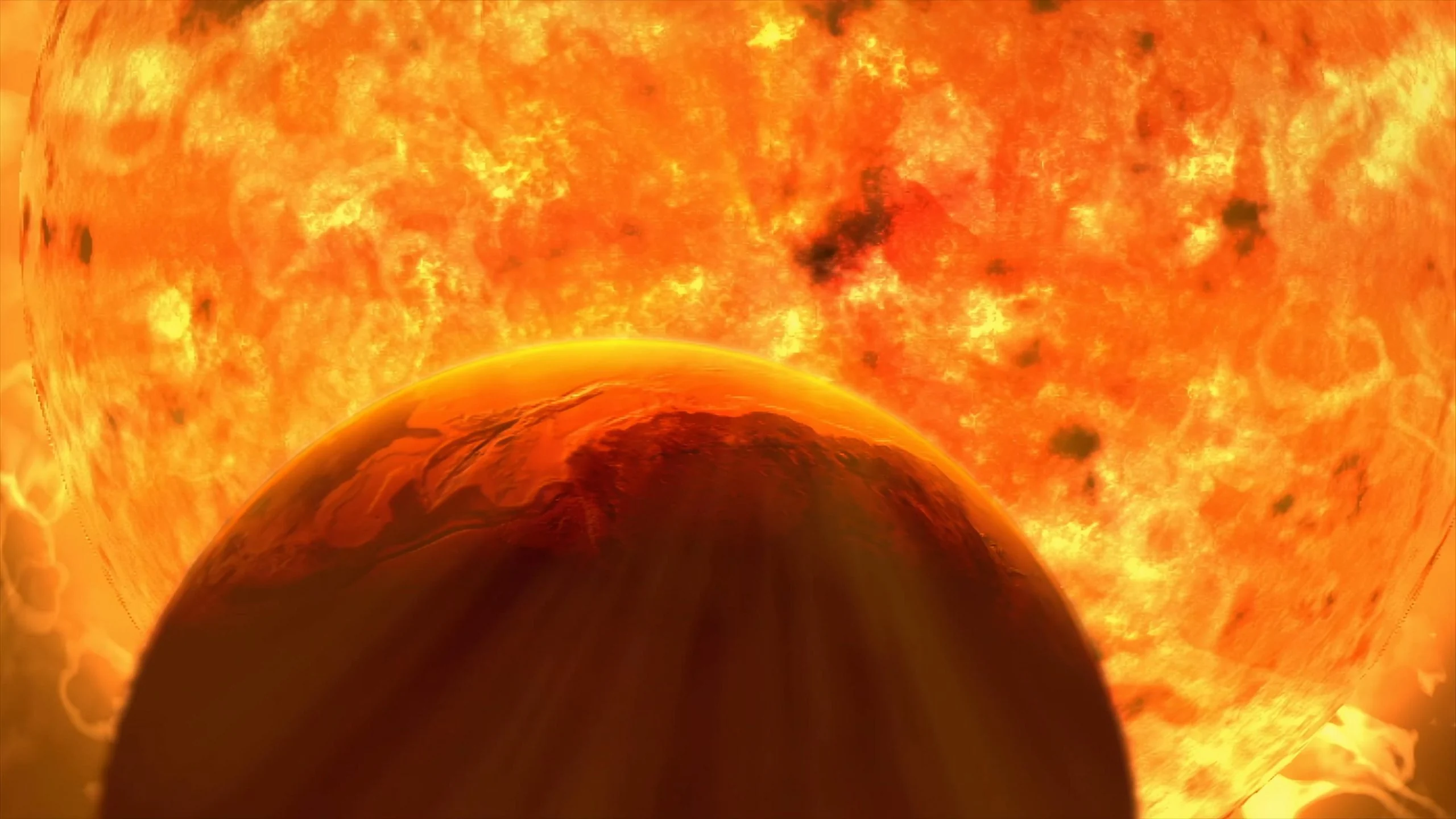
According to the theory of stellar evolution, stars similar to the sun will expand violently at the end of their lives, and their outer layers will be ejected into space, and nearby planets may be directly swallowed and destroyed. Some more distant rocky objects may survive temporarily, but may later be torn apart and form debris disks orbiting the stellar remnants.
The researchers pointed out that the most surprising thing about J1328−1450 is the stability of its double-layer structure. Felipe Lagos-Vilches, a researcher at the University of Warwick in the United Kingdom and the Technical University of Federico Santa María in Chile, said that the two gas rings have remained separated for a long time, and the gap in the middle has always existed, indicating that there is a special gravitational control mechanism inside the system.
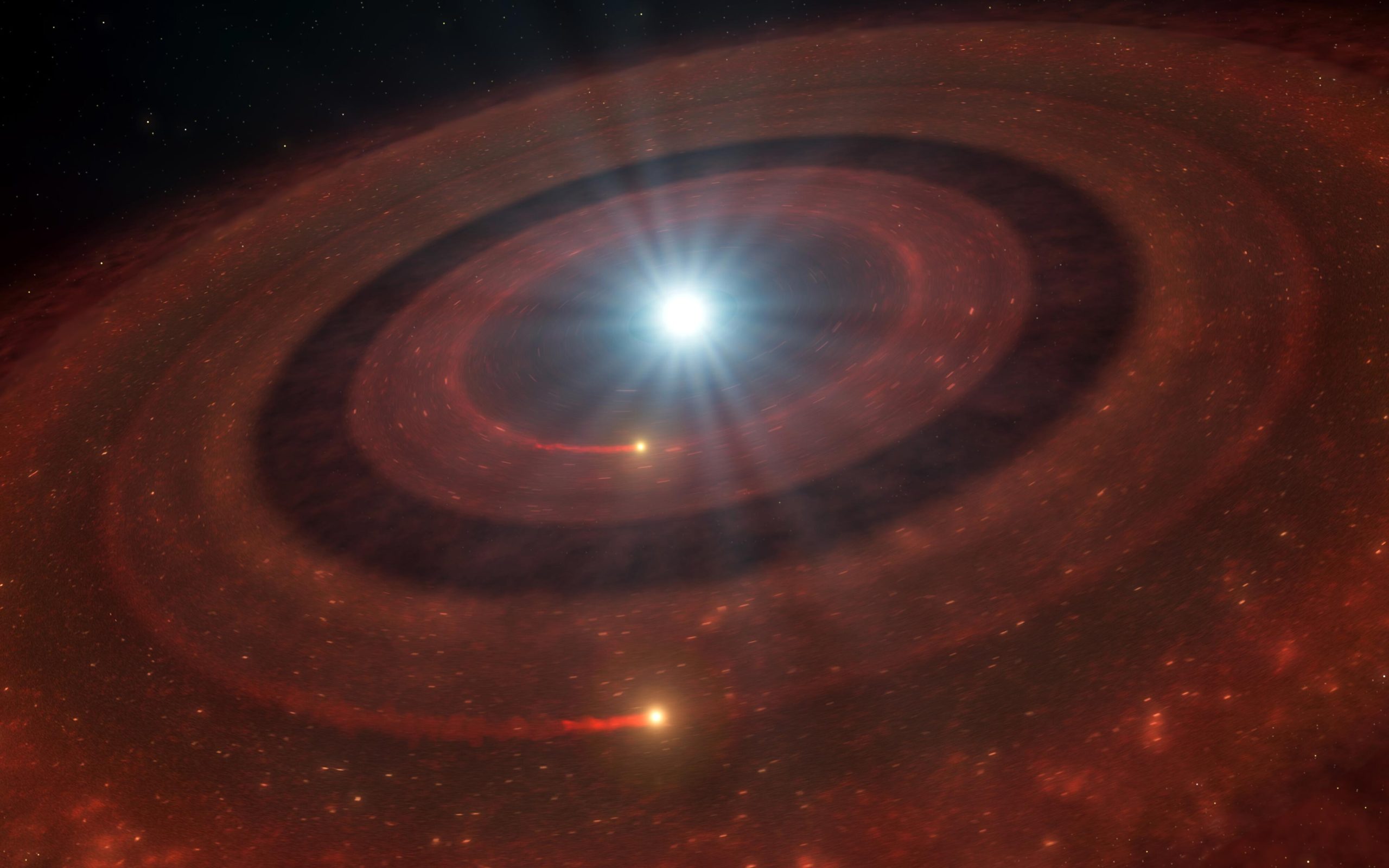
To explain this phenomenon, scientists speculate that two surviving planet-like objects are still orbiting the white dwarf star. Among them, the objects located near the inner ring may be only a few kilometers in size, comparable to ordinary asteroids; while the objects located in the outer ring area may reach the size of Pluto or even the moon. Although these objects have not yet been directly observed, their gravitational influence may well explain why the two rings have remained separated from each other for so long.
The research team used the X-Shooter spectrometer on the VLT to conduct detailed observations of the system, and for the first time obtained clear characteristic signals of the dual debris disks. This suggests that the structure of planetary debris around dead stars is far more complex than previously thought.
In addition, these ring structures hold important information about past planets. Observational data show that the two gas rings contain elements such as calcium, oxygen, magnesium and iron, which are common components of rocky planets and small celestial bodies in the solar system. However, further analysis revealed that the chemical compositions of the two layers of rings were different.
The inner ring is rich in magnesium, while the magnesium content in the outer ring is significantly lower. This difference means that the material making up the two rings may have come from two planets with different compositions. Another explanation is that these fragments may originate from the same destroyed celestial body, but from different internal levels, such as one part from the earth's crust and another part from the deeper core region.
Researchers believe that this discovery is of great significance to understanding the future of the solar system. Billions of years from now, the sun will undergo a similar process, expanding into a red giant and eventually a white dwarf. The Earth is likely to be swallowed up by then, but some planets, asteroids and other celestial bodies may survive, leaving a similar ring of debris around the sun's remnants.
Scientists say that what J1328−1450 shows is not a simple planetary cemetery, but a complex system that is still evolving. Even after catastrophic events such as star death and planetary destruction, some surviving objects may continue to shape their surroundings.
The research team concluded that this rare system provides humans with a window to observe the evolution of future planetary systems, and also allows astronomers to glimpse in advance the distant fate that a large number of star systems, including the solar system, will eventually usher in.
Comments