
Abstract:
As Apple continues to promote the "Liquid Glass" interface design, this controversial visual style since its launch is ushering in new adjustments. According to information discovered by developers in the latest iOS 27.3 developer beta code, Apple is testing a softer scrolling edge display effect in the hope of improving the user experience while retaining existing design concepts.
The report stated that although the vast majority of iPhone users may not understand the name "liquid glass" and will not pay special attention to related design details, for users and developers who have long paid attention to Apple's interface design, this visual style has been quite controversial since its launch. Although the discussion about whether Apple will abandon the liquid glass design has never stopped, the latest signs indicate that Apple has no intention of withdrawing this design direction, but is only optimizing details based on user feedback.
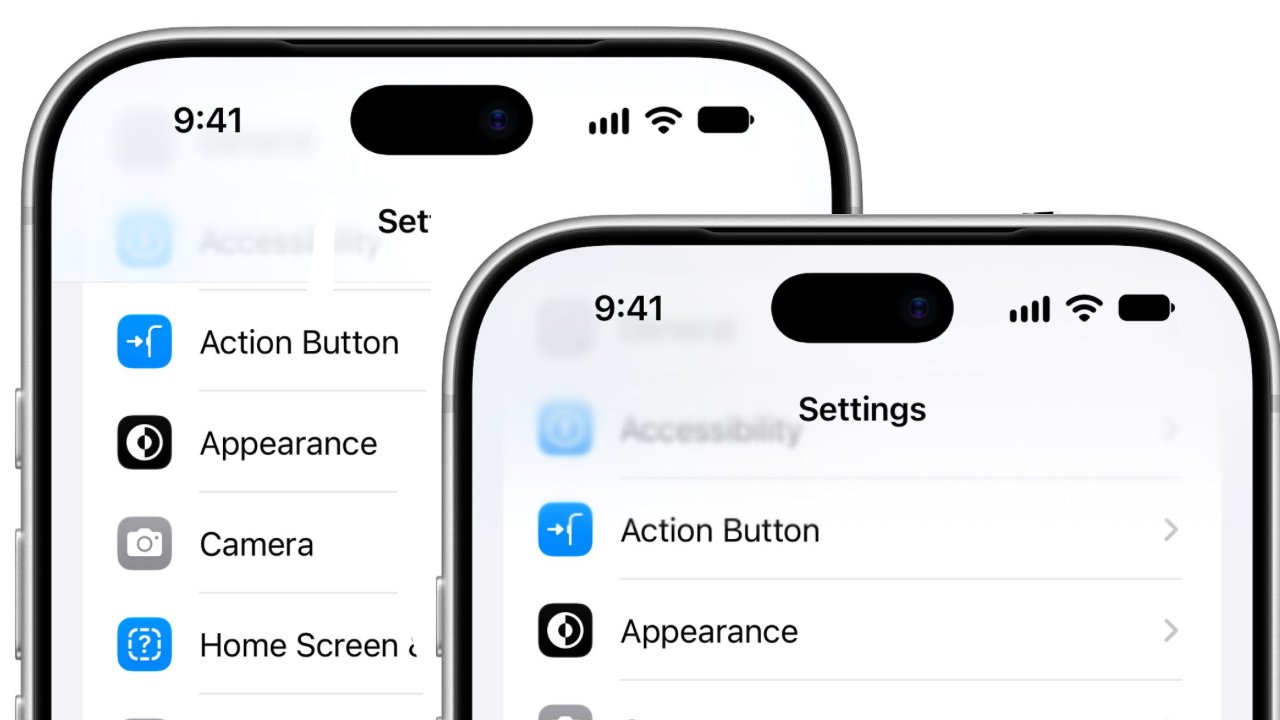
While analyzing the iOS 27.3 beta, code researcher pdfu discovered that Apple is testing the restoration of a soft scrolling edge effect similar to that of iOS 26. When Liquid Glass transparency is set to 25% or lower, the content transition at the top of the navigation bar becomes more natural. Relevant functions are currently hidden under the system's internal switches and are not enabled by default.
From the exposure comparison chart, the difference between the two effects is not obvious. In the current default solution, when the settings list scrolls up, the text will disappear more obviously near the top area, forming a relatively clear dividing line. Under the new test plan, the text will fade out in a softer and more gradual way, and the visual transition will appear more natural.
Although this change is subtle and requires careful observation to be noticed, it is closer in visual style to the softer effect of the early liquid glass design of iOS 26. This may be a welcome adjustment for users who prefer the visual presentation of earlier versions.
According to pdfu, this improvement is related to Apple’s new Liquid Glass customization feature in iOS 27. If Apple ultimately decides to enable this feature, this new soft transition effect will be automatically enabled when users reduce the intensity of the Liquid Glass effect below 25%.
However, this change will not affect all apps. As with other Liquid Glass design elements, only apps developed using Apple’s default interface framework and standard components will automatically receive this visual adjustment.
Industry insiders believe that although this is only a minimal interface optimization, it can be seen that Apple is still paying attention to external feedback and trying to improve users' acceptance of liquid glass design through detailed adjustments. Without changing the overall design direction, this progressive optimization may also become an important direction for the future evolution of the iOS interface.
Comments