
Abstract:
An international astronomical research team recently announced that a pair of unusually huge super black holes were discovered in the early stages of the universe, only about 900 million years after the Big Bang. Because they form and grow much faster than current theories predict, the discovery is challenging the scientific community's understanding of the origins of super black holes in the early universe.
The pair of super black holes were observed as quasars. Quasars are extremely bright objects produced by super black holes that are devouring surrounding matter at high speeds. The energy they release can even exceed the sum of all the stars in the entire host galaxy. The researchers found that one of the black holes was about 1.5 billion times the mass of the sun, and the other was about 400 million times the mass of the sun.
The research team designated this system J1602+4228AB and gave it the Hawaiian name "Nāpōwawāʻenakaulua". This is the most distant and oldest compact quasar binary system ever discovered. The two are about 18,100 light-years apart, which is only about one-fifth of the diameter of the Milky Way.
Sylvia Honorato, a postdoctoral researcher at the National Optical Infrared Astronomy Research Laboratory (NOIRLab) who led the international research, said that there is currently no clear theory that can explain why such a huge quasar appeared in such an early universe, let alone two at the same time. She pointed out that when researchers observed this system, the universe was only about one-third of its current age, but these two super black holes had already reached a size comparable to many super black holes in the universe today.
According to current theory, in the first billion years after the birth of the universe, galaxies formed rapidly as dark matter structures continued to accumulate. Astronomers believe that collisions and mergers between galaxies can transport large amounts of gas to the centers of galaxies, thereby providing fuel for the growth of black holes. However, even considering these mechanisms, it is still difficult to explain the cultivation of a super black hole with a mass of hundreds of millions or even billions of solar masses in such a short period of time.
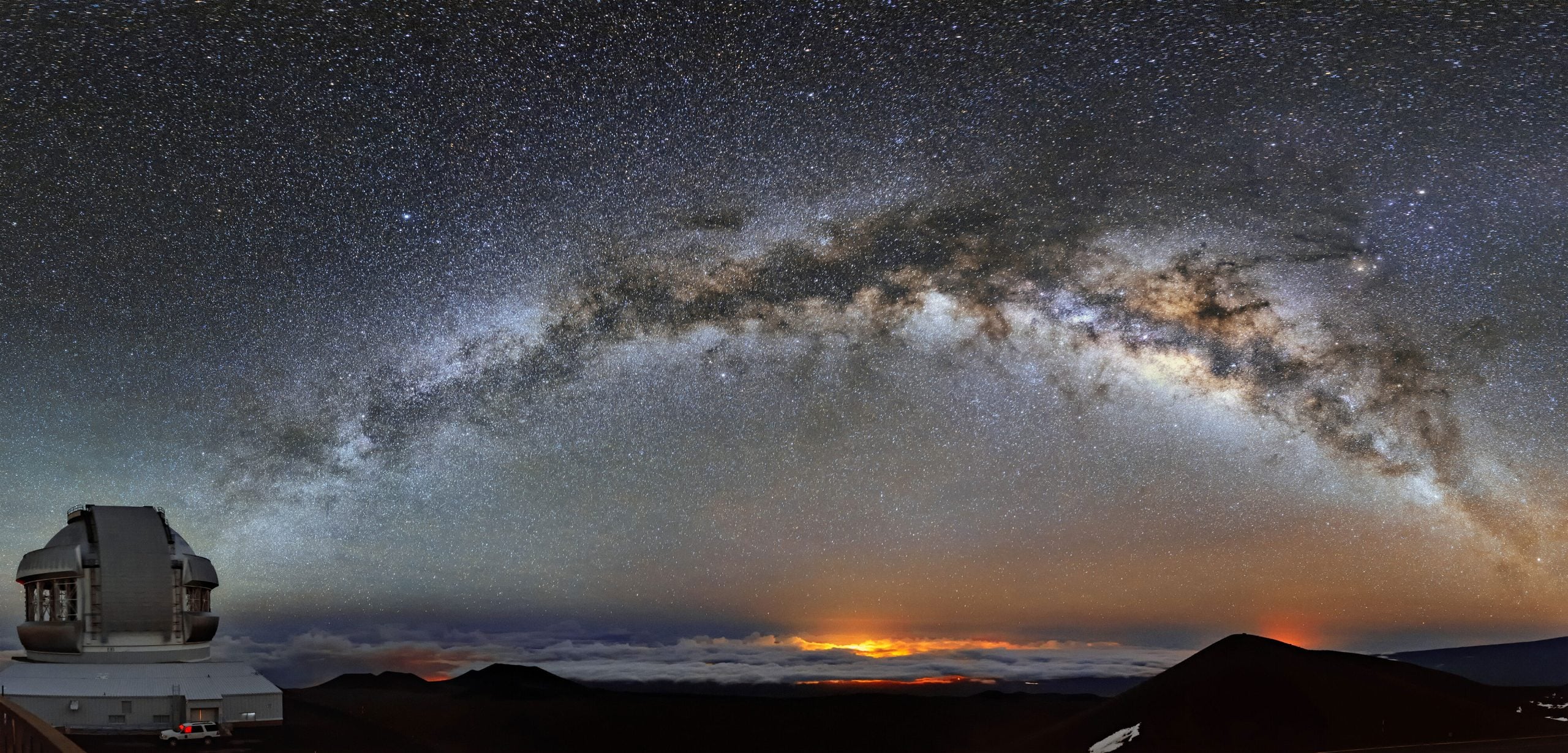
This discovery comes from the "Aether" sky survey project. The project uses the James Webb Space Telescope to observe the early universe, looking for signs of active black hole activity at the dawn of the universe. After the Webb Telescope discovered the candidate target, the research team further conducted follow-up observations using the Gemini North Telescope on Mauna Kea, Hawaii.
The researchers confirmed in just two observation nights that the system is indeed composed of two independent quasars, rather than an observation error caused by a single celestial body. This makes it one of the earliest and closest known quasar binary systems.
Scientists also pointed out that the two black holes may be located near a dense node in the large-scale structure of the universe. Rich gas flows from the "cosmic web" may have continuously transported material to them, thus promoting their rapid growth. But even so, the process by which they reached their current size remains difficult to fully explain with existing models.
In the future, as the James Webb Space Telescope and a new generation of large ground telescopes obtain more observational data, astronomers hope to further reveal how these "cosmic monsters" were rapidly formed in just a few hundred million years after the birth of the universe, and thereby improve humankind's understanding of the evolution history of super black holes and early galaxies.
This discovery shows that the early environment of the universe may be far more complex and active than scientists previously thought, and the birth mechanism of super black holes may still hide important secrets that have not yet been revealed.
Comments