
Abstract:
The classic shooting game "DOOM" once again welcomes an unexpected new operating platform. Aaron Christophel, a German embedded software developer and hardware hacker, successfully made this game, which was born in 1993, run on a 128GB USB flash drive. The way players control the game characters is also full of creativity: by copying or reading files to the USB flash drive to complete operations such as moving and firing.
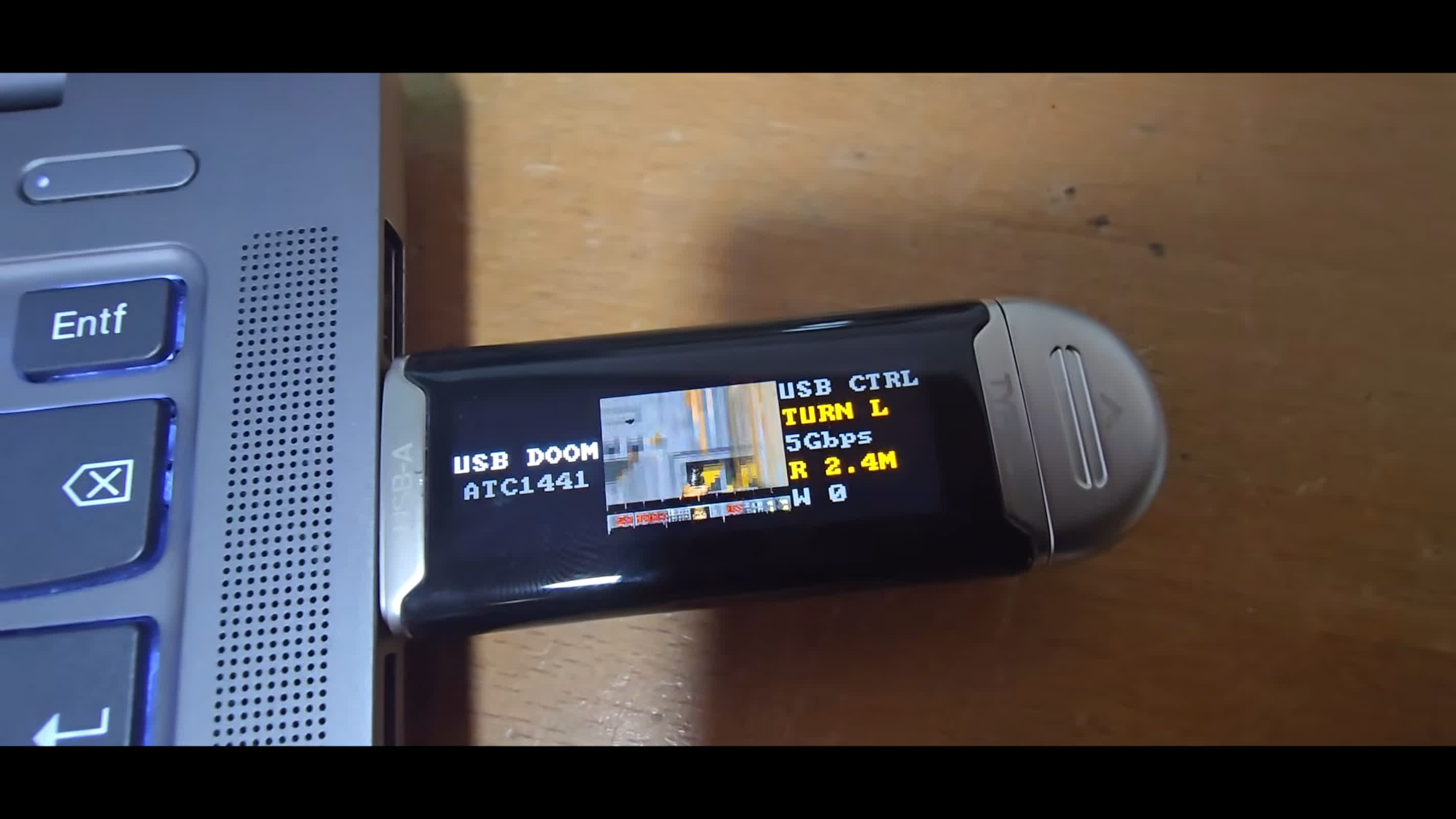
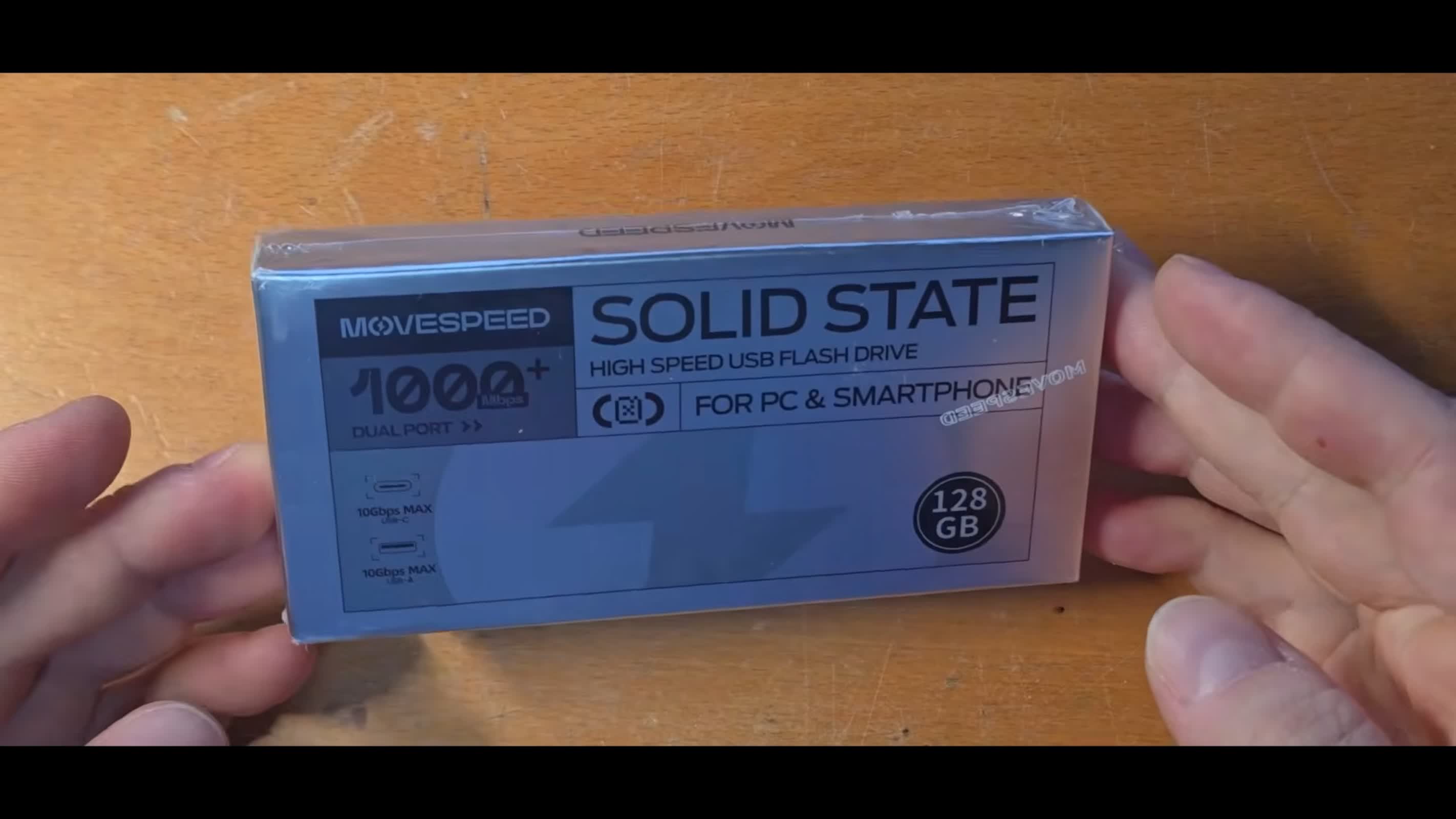
It is understood that this special USB flash drive has a small display screen built in, and the game actually runs entirely on the control chip responsible for driving the display screen. Kristofer was previously famous for porting "Doom" to devices such as electric toothbrushes, Xiaomi Band 10, and toy video intercoms, and now he is targeting ordinary USB flash drives.
In order to run games completely off the computer, developers need to overcome severe hardware limitations. In the end, he succeeded in making the display control chip inside the USB flash drive independently complete all tasks such as image rendering, input processing, archiving, and reading archives, while the computer connected to it only served as a platform for power supply and file operations.
According to the introduction, this microcontroller is only equipped with 128KB SRAM, 2MB flash memory and an operating frequency of about 40MHz. Among them, SRAM is responsible for saving the status data when the game is running, and flash memory needs to store both program code and game resources. Such limited specifications obviously cannot directly run the original DOS version of "Doom".
To do this, Kristofer used a streamlined ported version called DMC100-DOOM. This version was developed by Polish developer Artur Beniek and was originally used in a digital clamp-on ammeter. Since the clamp meter chip only has 32KB of memory, Beinek uses a segmented drawing method to run the game, thus greatly reducing memory requirements. This design exactly matches the hardware conditions of the USB flash drive display controller.
The most special thing about the entire project is the way it is controlled. Since the flash drive itself has no buttons, direction keys or joysticks, it appears to the computer as just an ordinary storage device, so developers turned the file system itself into an input interface. Each time a specific file is copied, deleted, or read, the system converts it into a corresponding game command, such as moving forward, turning, or shooting. In other words, the file manager acts as a game controller here.
Judging from the demo video released by the developer, the game can run at about 13 frames per second. While this frame rate is barely playable, it's clearly not the ideal way to experience Doom. According to the developers, the main purpose of this project is not to provide a better gaming experience, but to demonstrate the potential of modern low-cost hardware.
This experiment also reflects the huge improvements in chip performance over the past few decades. When Doom first came out in 1993, many home computers struggled to run the game smoothly. But now, a cheap chip that was originally only responsible for displaying status information on the small screen of a USB flash drive can now run the entire game independently. Christopher even joked that this situation fully demonstrates that modern hardware already has "excess computing power" for its original role.
It is worth mentioning that this is not the only platform he has recently challenged the extreme hardware of "Doom". Not long ago, he had just successfully run this game on Anker mobile power supply.
Doom has long been considered the "ultimate port test" for the hacker and developer community. Over the years, it has landed on keyboard button displays, encrypted wallets, McDonald's cash registers, self-service ordering machines, Playdate handheld consoles, "Minecraft", verification code systems, IKEA smart lights, motherboard BIOS, Lego bricks, John Deere combine harvesters, Windows Notepads, Atari ST computers, candy bars, neural computing chips, Commodore 64. Teletext systems, robotic lawn mowers, Fortnite, generative AI models, holographic displays, Nintendo Alarmo alarm clocks, PDF documents, Microsoft Word documents, satellites, Windows screen savers, headphones, biological computers made of living human neurons, TypeScript type systems, QR codes, DNS protocols, Microsoft Paint, and DSLR cameras, and other incredible platforms.
Now, with the successful launch of "Doom" on USB flash drives, a new member has been added to the ever-growing list of "everything can run DOOM". For the developer community, it may only be a matter of time before what the next incredible platform will be.
Comments