
Abstract:
Astronomers have used one of the world's most powerful supercomputers to build one of the largest and most sophisticated simulations of the early universe yet. This research project, called "Lumina", recreates the evolution of the first 2 billion years after the birth of the universe. The simulated area is about 1.5 billion light-years long on each side. It aims to help scientists understand how the first stars and galaxies formed, and how dark matter and radiation jointly shape today's universe.
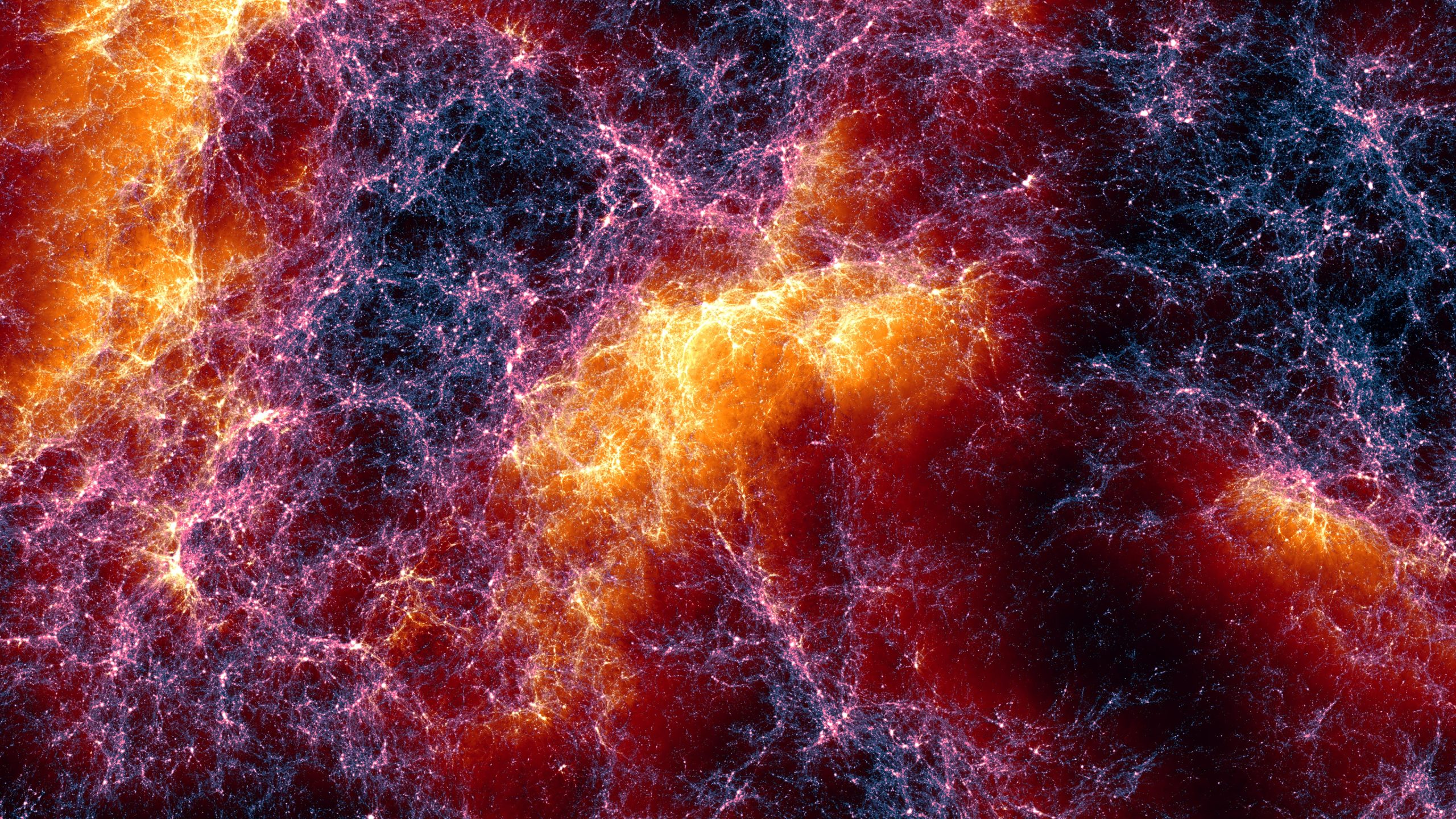
Lumina was developed by researchers at the Center for Astrophysics, a joint operation of Harvard University and the Smithsonian Institution. The research results were published in the "Monthly Notices of the Royal Astronomical Society" on October 26, 2026. The research team hopes to use this virtual universe to compare the theoretical model with data obtained by the James Webb Space Telescope and the Nancy Grace Roman Space Telescope that will soon be put into scientific observation, thereby testing whether existing cosmological theories can explain the true appearance of the early universe.
Modern astronomy has been able to observe galaxies extremely far away from the earth. The light from these objects takes billions of years to reach Earth, so telescopes can actually help humans look back into the early history of the universe. However, observations alone are not enough to fully explain how these galaxies formed. Scientists also need to use computer simulations to deduce how matter and energy change over billions of years, starting from the initial conditions of the universe and based on known physical laws.
This type of simulation is equivalent to setting up a virtual laboratory. Researchers can adjust different physical conditions, observe interactions between stars, galaxies, gas and dark matter, and compare simulation results with actual astronomical observations. If the two match, it means that the existing theory has received further support; if there are obvious differences, it may indicate that there are still gaps in scientists' understanding of the evolution of the universe.
Lumina's most striking feature is its scale. The entire simulation covers a cubic area with a side length of about 1.5 billion light-years, which is 100 times larger than previous similar simulations. Such a huge spatial scope allows researchers to simultaneously observe the formation of large-scale structures in the universe, as well as the physical processes occurring around individual galaxies, stars and even black holes.
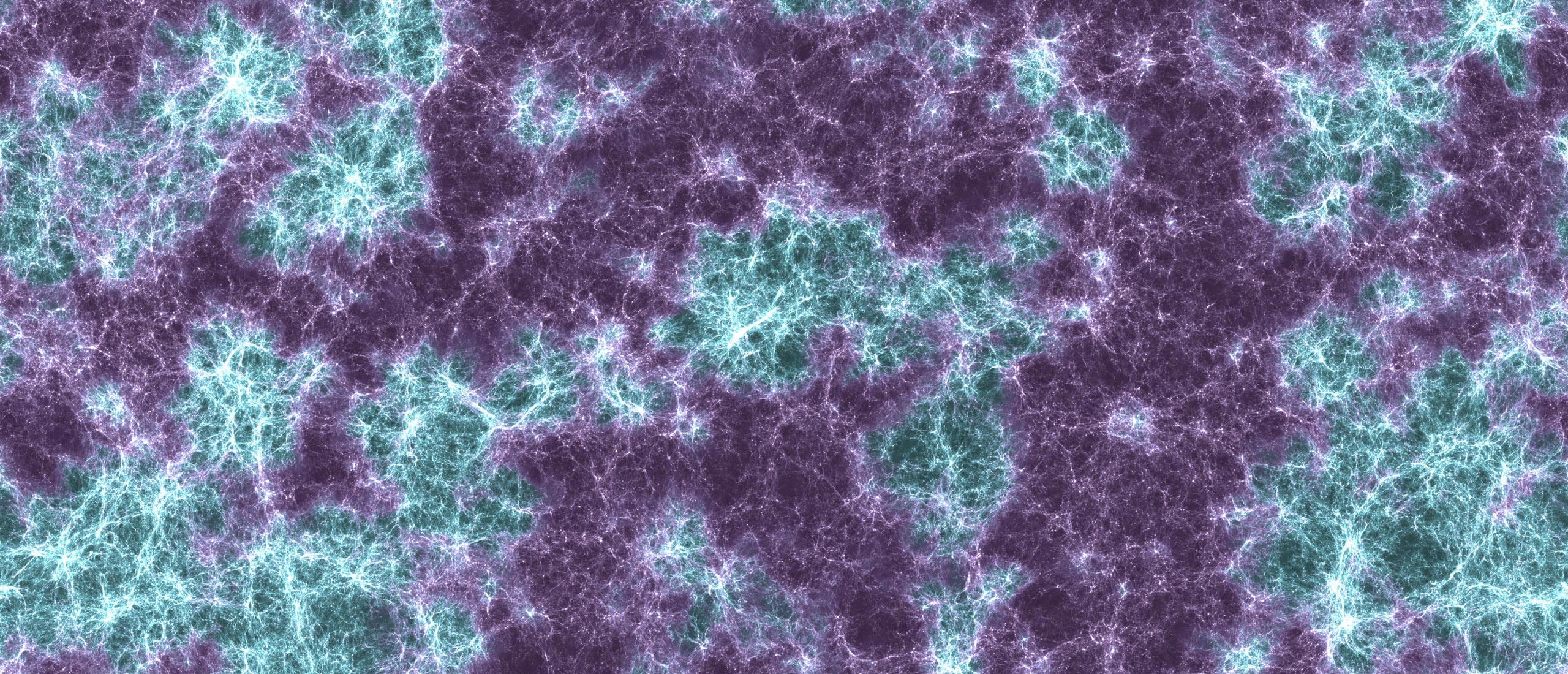
This research is part of a radiation hydrodynamics cosmic simulation. Unlike models that only track the distribution of matter, it also requires calculations of complex interactions between gas, dark matter and radiation. Although dark matter cannot be directly observed through light, it can affect the formation of galaxies and other cosmic structures through gravity; the radiation released by luminous objects such as stars will change the temperature and physical state of the surrounding gas, thereby affecting the subsequent evolution of the universe.
The research team paid special attention to an extremely important stage in the history of the universe - the reionization period. There was a large amount of hydrogen and helium gas in the early days of the universe. As the first stars and other luminous objects appeared, the high-energy radiation they released gradually stripped electrons from atoms, turning the surrounding gas into an ionized state. This process profoundly changed the properties of gas in the universe, and also created conditions for the subsequent evolution of galaxies and large-scale structures of the universe.
An important breakthrough of Lumina is that for the first time in a simulation of this scale, the helium reionization process can be dynamically tracked, and the changes caused by helium ionization can immediately affect other physical processes in the simulation. Previously, although researchers were able to study some related phenomena separately, it was difficult to simultaneously take into account the overall structure of the universe and the microscopic objects that drive these changes in such a huge spatial range.
Aaron Smith, an assistant professor of physics at the University of Texas at Dallas who participated in the study, said the research team is now able to track how hydrogen and helium gradually transformed into the states they are familiar with today across such a vast range of the universe, while still retaining sufficient resolution to observe the galaxies and other luminous objects driving this change.
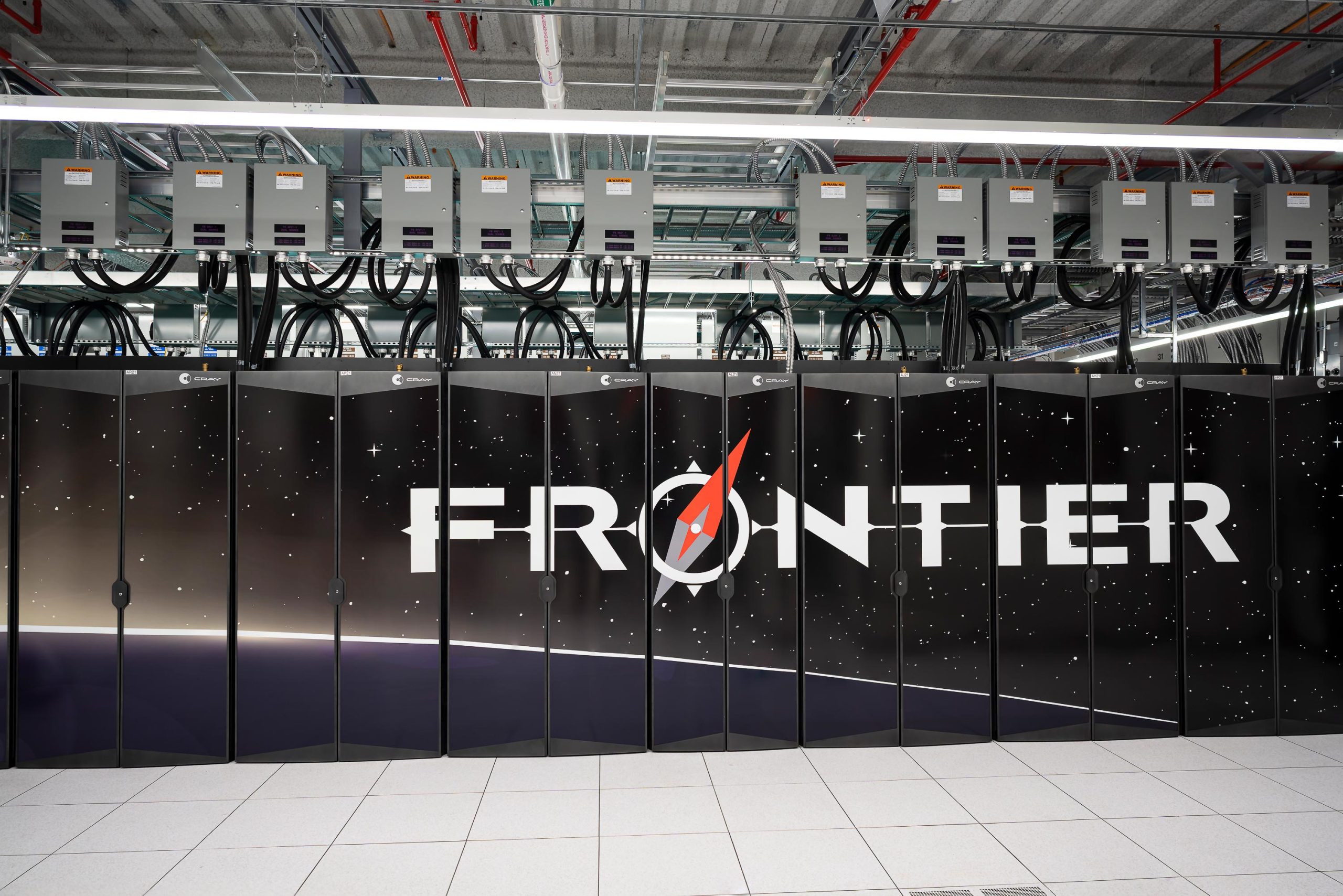
Completing such a complex simulation requires extremely large computing resources. The researchers used the Frontier supercomputer at Oak Ridge National Laboratory in the United States and used more than 15,000 graphics processors to complete the calculations. Frontier is one of the fastest supercomputers in the world, and its powerful parallel computing power allows the research team to expand the scope of simulations while retaining the details needed to study individual galaxies, stars and black holes.
Researchers say Lumina is not just about creating a visual demonstration of the evolution of the universe. Its more important value is to help scientists test different cosmological explanations and provide verifiable predictions for future telescopic observations. For example, the researchers will further analyze how gas flows between different galaxies, how radiation left over from the Big Bang affects the evolution of the universe, and how regions where particularly active star formation occurs and change.
As equipment such as the James Webb Space Telescope and the Roman Space Telescope continue to provide more detailed observation data of the distant universe, Lumina is expected to become an important tool connecting theoretical models and real observations. Scientists can compare the simulated universe with the actual universe, looking for phenomena that existing theories can explain, as well as those differences that still cannot be reasonably explained.
The research team hopes that this virtual universe spanning 1.5 billion light-years will eventually help humans understand more deeply what happened in the first 2 billion years after the Big Bang, and how the first galaxies were born from the matter and energy of the early universe.
Comments