
Abstract:
The Bennu asteroid samples brought back by NASA's "Osiris-Rex" exploration mission are changing the scientific community's understanding of the early formation history of the solar system. The latest research shows that this carbon-rich near-Earth asteroid may not have been born in the distant edge of the solar system as traditionally believed, but formed near the "water ice line" in the young solar system. Its formation process may also be significantly affected by the early evolution of Jupiter.
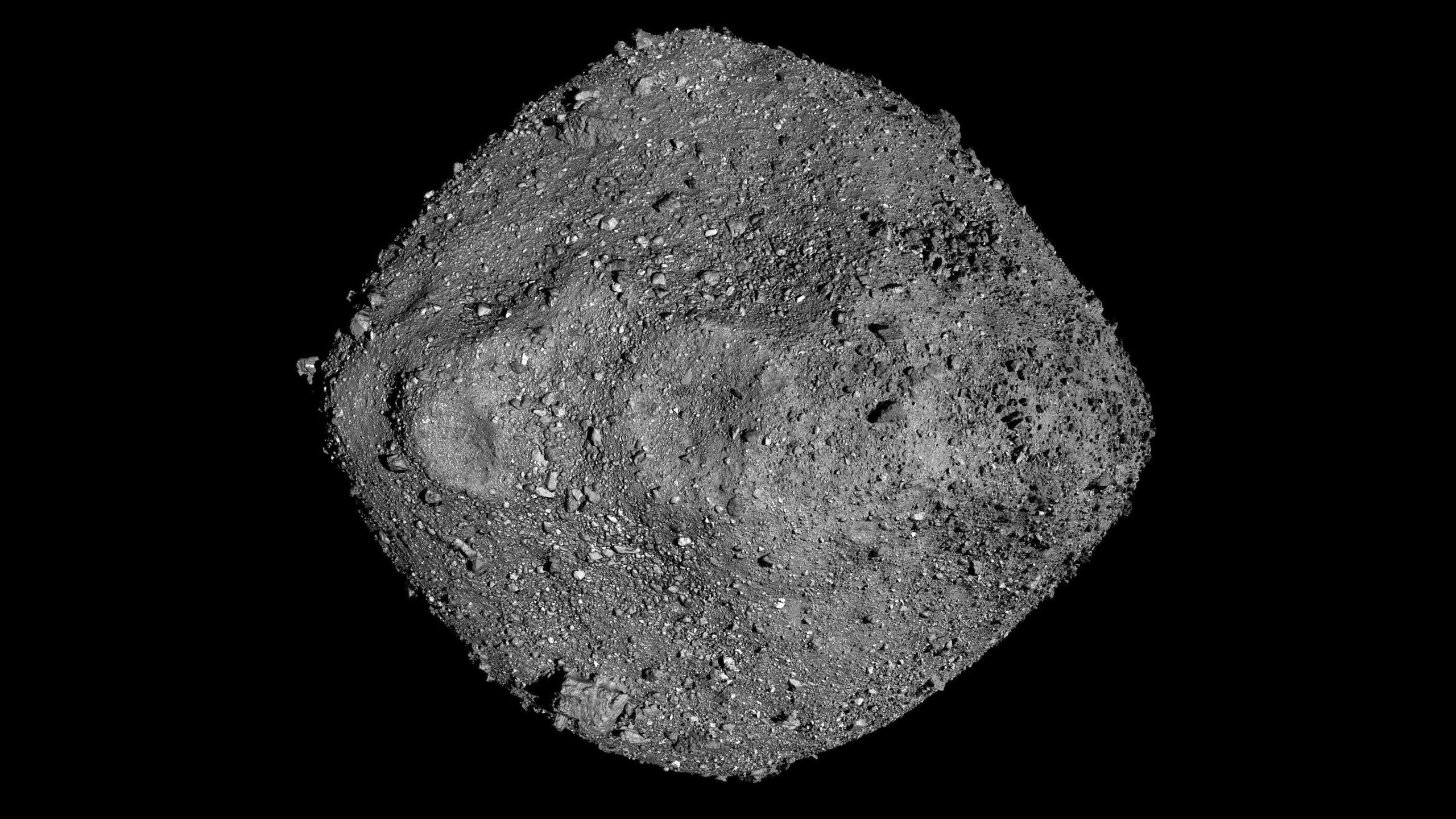
Bennu is believed to retain one of the most primitive materials from the early days of the solar system, making it an important target for studying the history of planet formation. In order to uncover the secrets of the formation of the solar system 4.5 billion years ago, scientists need to analyze ancient materials that have hardly changed since their birth, and Bennu is such a precious "time capsule."
Because Bennu orbits the sun every 1.2 years and approaches the Earth once every six years, with a distance of about 300,000 kilometers from the Earth at its closest point, it has become an ideal sampling target. In September 2023, NASA's "Osiris-Rex" probe returned about 120 grams of Bennu surface material to Earth, providing the scientific community with unprecedented research opportunities.
For a long time, astronomers have generally believed that carbon-rich asteroids such as Bennu formed relatively late, and were born in the outer reaches of the solar system, where comets originate. However, the latest analysis of returned samples paints a very different story.
Part of the sample was sent to the Swiss Federal Institute of Technology in Zurich. The research team measured iron, titanium and chromium isotopes on about 0.5 grams of the material. Isotope composition can record the chemical characteristics of the environment in which celestial bodies were formed, and is therefore regarded as an important tool for tracing the origin of celestial bodies.
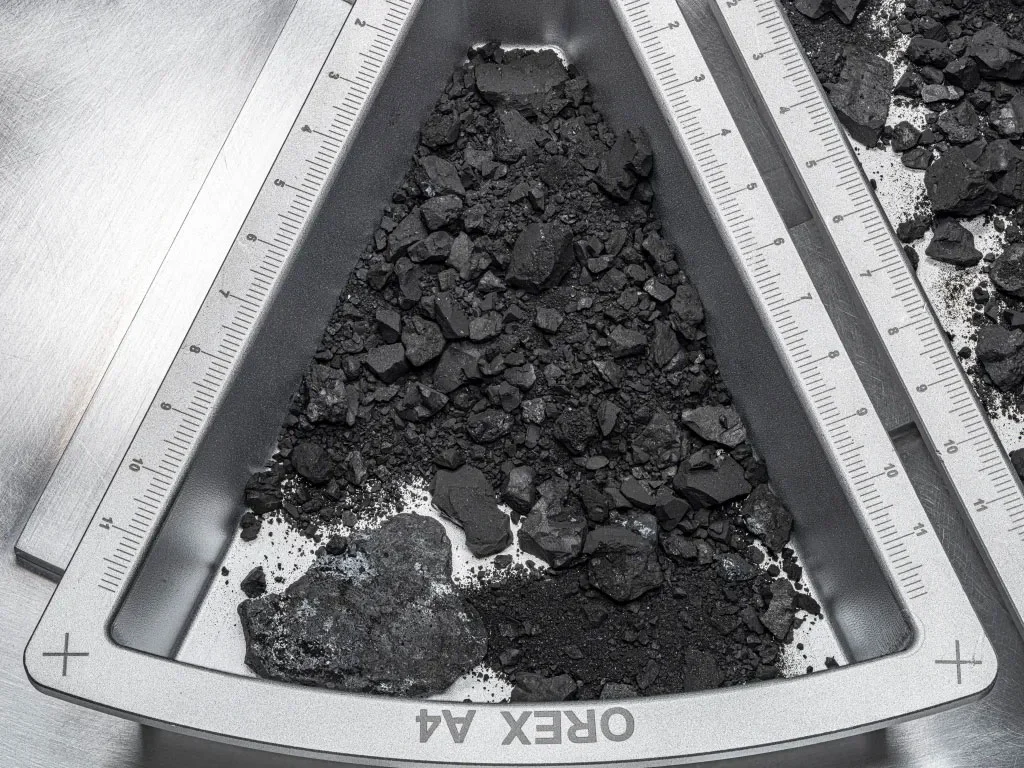
Research results show that the titanium and iron isotopes inside Bennu are very uniformly distributed, and also show chemical characteristics that are very close to those of the Ryugu asteroid and CI carbonaceous meteorites sampled by Japan's Hayabusa 2 probe. CI meteorites are a type of carbon-rich meteorite that is extremely rare on Earth and preserves the most original characteristics.
Scientists have discovered that Bennu, Ryugu and the parent CI meteorite have almost the same isotope "fingerprint", and this feature is significantly different from other asteroids, meteorite groups and planets known in the solar system. This means they likely originated from the same cosmic dust reservoir.
Further analysis showed that this common source is not located in the outer region far away from the sun, but is more likely to be located near the so-called "water ice line". The water-ice line is a key boundary in the disk of the young solar system, where water vapor can condense into ice.
About 4.5 billion years ago, the forming Sun was surrounded by a protoplanetary disk of gas, dust and ice. Scientists believe that near the water-ice line, material from the inner and outer solar system mixes. Ice acts as a natural glue in this process, binding tiny dust particles together to gradually form larger objects.
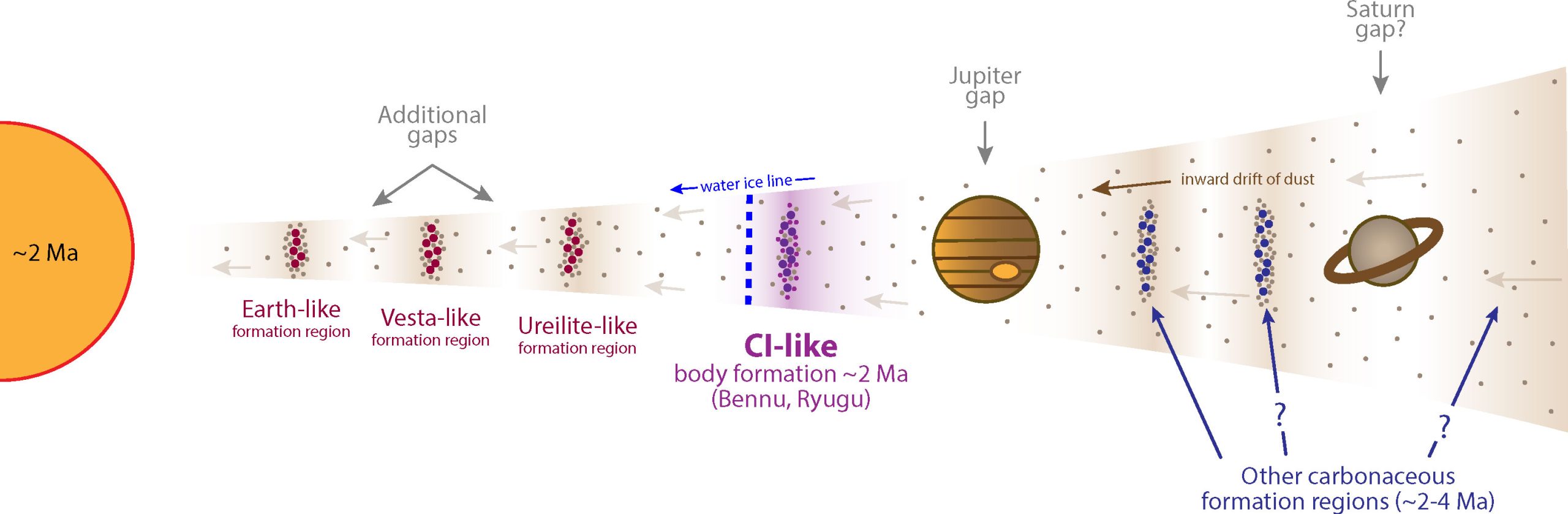
The research team believes that Bennu is actually a "hybrid". It is neither like a typical inner solar system object nor a typical outer solar system object, but retains the characteristics of the mixture of materials in the two regions.
Even more intriguing is the fact that Jupiter may have played a key role in this process. Researchers propose that Jupiter formed rapidly within about 1 million years after the birth of the sun. As the most massive planet in the solar system, Jupiter's strong gravity changes the trajectory of surrounding gas and dust, and affects the way material is transported and mixed in different regions.
Researchers believe that it was the early formation and migration behavior of Jupiter that allowed materials originally distributed in different regions of the solar system to gather and mix near the water ice line, ultimately giving birth to Bennu, Ryugu and their related parent objects.
This discovery not only changes the scientific community's understanding of the origin of Bennu, but also provides new clues for understanding the early evolution of the solar system. Research shows that the formation process of the solar system may be more complex than previously thought, with more frequent exchanges and mixing of materials in different regions than expected.
Scientists said that as the analysis of more Bennu samples progresses, this asteroid is expected to reveal more important secrets about the formation of planets, the evolution of primitive cosmic dust, and the birth history of the solar system in the future.
Comments