
Abstract:
The artificial intelligence giant OpenAI announced that it will cooperate with a number of top mathematicians to establish an independent "Advisory Group on Mathematics and Artificial Intelligence" (Advisory Group on Mathematics and Artificial Intelligence), which will be located at the Institute for Advanced Study (IAS) in Princeton.
Previously, OpenAI claimed that an internal undisclosed model it started training on August 28 this year not only solved one of the Millennium Prize problems, the Navier–Stokes existence and smoothness problem (Navier–Stokes problem), but also solved more than 100 long-standing open problems covering most fields of mathematics.
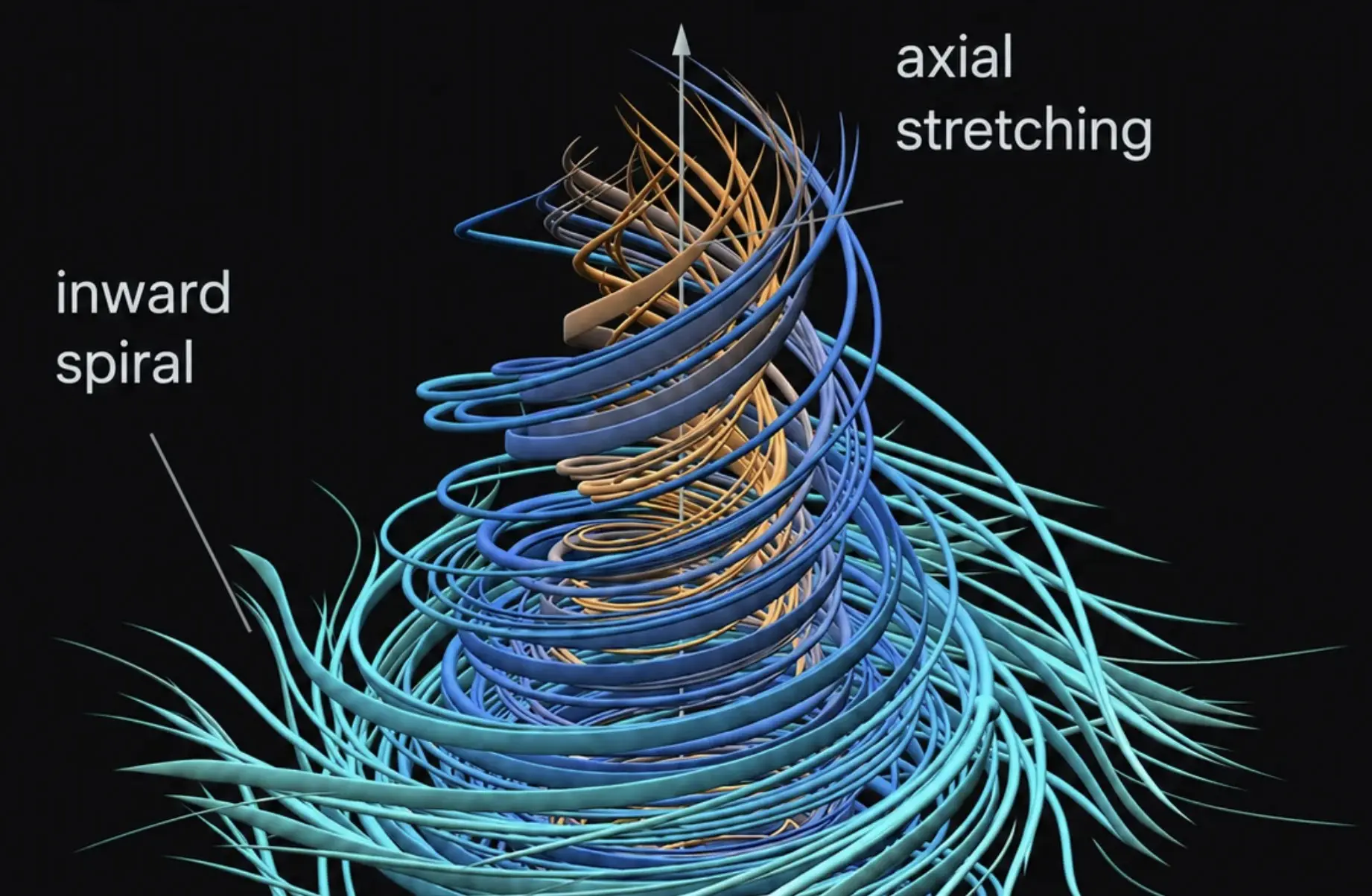
This breakthrough progress and its extremely fast pace of development even exceeded the expectations of OpenAI’s internal team of mathematicians. However, commercial AI companies' approach of treating historical mathematical conjectures as a competition for medals and rushing to publish results has also triggered a strong backlash in academia. Twenty-five well-known mathematicians, including Terence Tao, Yau Shing-tung, and multiple Fields Medal winners, previously published an open letter titled "The Serious Mismatch of Artificial Intelligence in the Field of Mathematics," accusing technology giants of blindly rushing ahead without peer review, lack of detailed reasoning processes, and failure to properly mark the contributions of predecessors. This not only undermines academic norms, but may also have a devastating impact on the healthy development of the mathematics discipline.
To ease tensions with academia, OpenAI facilitated the establishment of this independent advisory group. The list is as follows:
François Charles
Camillo De Lellis
Timothy Gowers
Martin Hairer
Nikhil Srivastava
Ulrike Tillmann
Ravi Vakil
Edward Witten
Melanie Matchett Wood
According to the official statement, the group will serve as a bridge between commercial AI institutions and the mathematics community and the public, assisting in assessing the academic value of machine-generated proofs, guiding the release process of results, and providing recommendations on the application of research specifications and teaching tools. In order to ensure the objectivity and independence of the evaluation, members of the advisory group will not accept any salary from OpenAI and have the power to decide on member changes, publicly express dissent and make independent comments.
However, this supervision mechanism still has clear power boundaries. Both OpenAI and the Institute for Advanced Study have clearly confirmed that the advisory group only has consulting and review functions and has no authority to interfere, delay or change the pace of OpenAI’s internal model development and mathematics projects. Although the mathematical community is still cautious about the rigor and originality of these machine proofs, this move marks the penetration of AI technology into pure basic science, forcing industry and traditional academia to establish a new trust and collaboration framework.
Comments