
Abstract:
Wang Hong, the 2026 Fields Medal winner, won the highest honor in mathematics with the proof of the three-dimensional Kaketani set conjecture. This geometric problem that spanned a century has achieved a historic leap from two dimensions to three dimensions in her hands, and has become the most significant mathematical breakthrough in the past decade.
Just three months later, OpenAI took this research a big step forward: it not only solved the more difficult three-dimensional Kakeya maximum function conjecture, but also proved for the first time that the Hausdorff dimension of the four-dimensional Kakeya set is equal to 4, pushing the previous best record of humans stuck at 3.059 dimensions up one dimension, reaching the theoretical upper limit.
However, this is just the tip of the iceberg in OpenAI’s challenge to the mathematical world.
This time, OpenAI released 722 mathematical manuscripts in one breath, classified into 372 result families, covering areas far beyond the Kakeya problem, including the quasi-Riemann hypothesis, Hilbert's tenth problem, Catalan constant-related problems and dozens of other classic problems that have troubled the academic community for many years. All the contents are derived from an internal model that has not even been named. Each problem takes an average of only 3 hours.
OpenAI posted these manuscripts to GitHub, and within 24 hours of going online, it received 10,000 stars.
The Association for Human Mathematics said: "Mathematicians did not ask OpenAI to do this work." He also stated that these manuscripts lacked verification and were just another "performance marketing" by OpenAI.
What exactly is Manuscript No. 074?
The origin of Kakeya's problem is a question posed by the Japanese mathematician Soichi Kaketani in 1917: Suppose you have a thin needle, place it on a flat surface, and turn it around in one circle (or let it point in all directions). What is the smallest area that the needle can sweep?
Intuitively speaking, the needle has a length, so it must sweep out a disk when it rotates once, right?
That's not the case. Later, mathematician Besikovich proved that as long as the rotation method is "smart" enough, the area swept by the needle can be arbitrarily small, even smaller than any positive number you specify.
On this basis, mathematicians constructed a set with "zero area" that still contains line segments in each direction. This type of set is called a "Besicovitch set", or a "Kaketani set".
Since the area can be as small as 0, doesn’t this problem end? But no.
Because "the area is zero" only means that this set has no thickness and takes up no space, but it cannot express how "complex" it is.
The mathematical area of a line and a ball of lines can both be 0, but obviously the two are not the same thing.
So mathematicians changed their thinking. Although this set has no area, is it like a line or a surface, or is it closer to a solid thing? So there are "dimensions".
A line is one-dimensional, a piece of paper is two-dimensional, and a box is three-dimensional. But for some particularly "sparse" sets, the dimension can even be a decimal, such as 2.5 dimensions.
The "Hausdorff dimension" is one of the most commonly used rulers. Its logic is to use very small balls to cover a set. How many balls are needed? If the radius of the sphere is reduced by half, and the number of required spheres is doubled, then the set is one-dimensional, like a line; if it is quadrupled, it is two-dimensional, like a plane; if it is eight times, it is three-dimensional, like a solid body. In between is the decimal dimension.
In the two-dimensional plane, mathematicians proved as early as 1971 that any set containing line segments in all directions must have a dimension of 2, even if its area is 0.
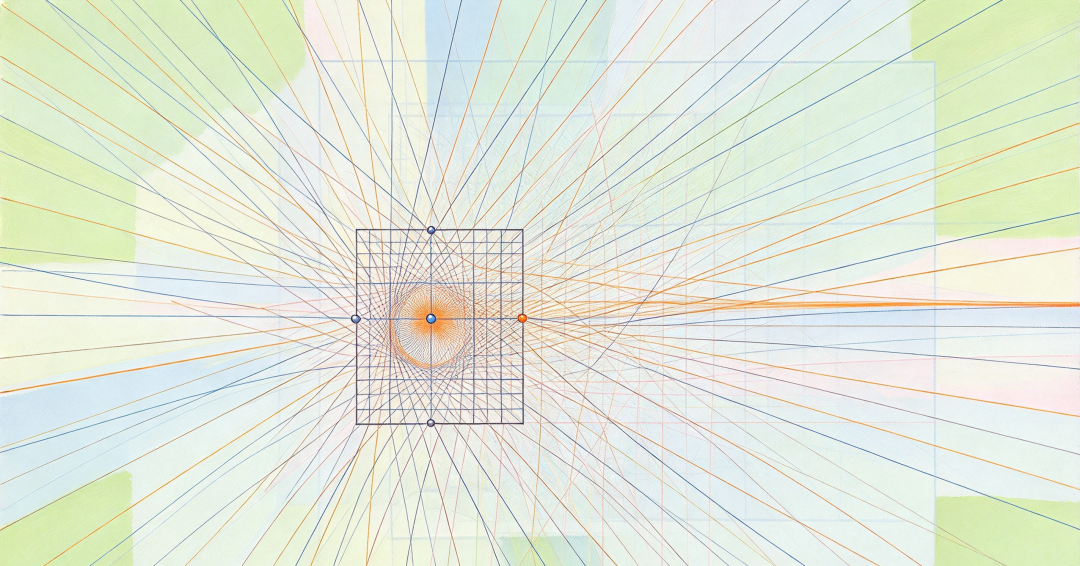
What about three-dimensional space? What about the fourth dimension? What about higher dimensions? Mathematicians guess: In n-dimensional space, as long as a set contains unit-length line segments in all directions, its Hausdorff dimension must be equal to n, even if its volume is 0. This is the famous "Kakeya Set Conjecture".
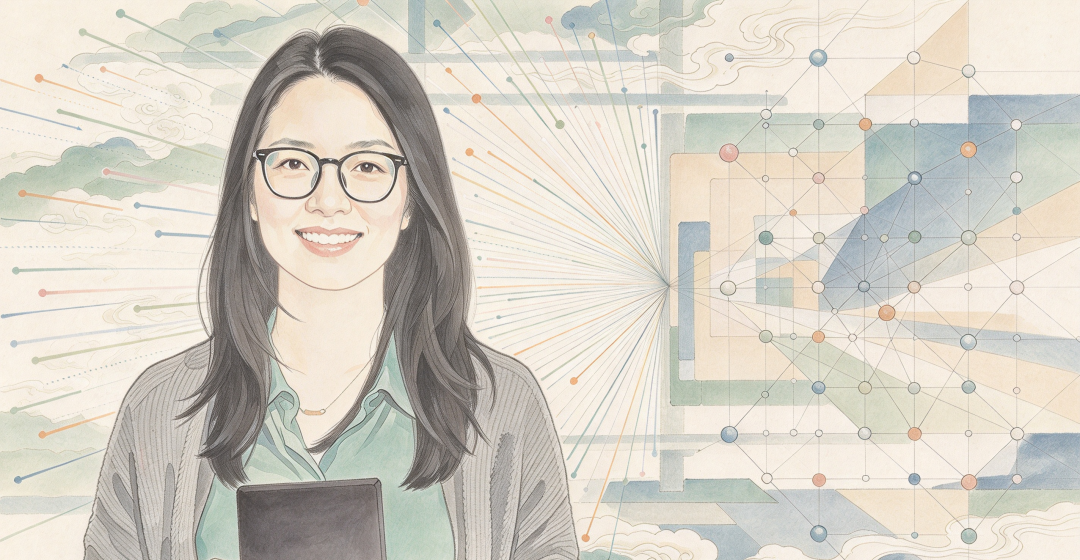
In 2026, Wang Hong won the Fields Medal. The official reason for the award was her significant progress in the Fourier limit problem and the three-dimensional Kakeya problem. The most core and most well-known of them is the three-dimensional Kakeya set conjecture mentioned earlier.
The two problems OpenAI solved this time are Wang Hong’s “power-enhanced versions”.
The first one is the three-dimensional Kakeya maximum function conjecture.
The "maximum" in the name refers to the practice of "picking the maximum value".
Suppose there is a fog in space with uneven density. Take a thin straw and suck it in different positions. The average concentration of the mist contained in the straw will be different.
Try all possible interpolations in this direction, and only record the one with the highest concentration. This "highest value" is the "maximum value" in this direction.
Change the direction again, repeat the same thing, and get another "highest value". By collecting the highest values in all directions, a corresponding relationship between "direction and highest value" is obtained. Mathematicians call it the "Kakeya maximum function".
The second one is the four-dimensional Hausdorff dimension conjecture, that is, moving the previous conclusion from three dimensions to four dimensions.
The dimension of Kakeya set in four-dimensional space must be 4. The current best result of humans in four dimensions is 3.059 obtained using the "planebrush" demonstration in 2021. In other words, it can only be proved that it is at least 3.059 dimensions. From 3.059 to 4, it is equivalent to a direct increase in one dimension.
From two-dimensional to three-dimensional, the difficulty of the problem is almost a "qualitative change"; from three-dimensional to four-dimensional, it is also a qualitative change. Because the higher the dimensionality, the more ways those "tubes" can intersect and stack up, and the more complex geometric situations mathematicians need to deal with.
Therefore, if mathematicians were to complete these two conjectures themselves, it would take at least several years.
However, according to OpenAI's own statement, the entire process is quite "simple".
Use an unreleased internal model and a prompt word, and let an Agent run it. On average, each result only consumes about 3 hours of ChatGPT Pro thinking power.
During the entire evaluation process, about 4,000 questions were thrown into the model. After merging and screening, the current 722 manuscripts were left.
OpenAI surpasses Fields Medal?
If the straws are not stacked very much, then the total area they occupy will naturally be insignificant. Therefore, once the maximum function conjecture is established, the set version of the conjecture can be directly derived.
Therefore, some netizens said that it took AI only three hours to surpass the Fields Medal. However, this is actually a kind of prejudice. It not only looks down on the Fields Medal, but also fails to understand Wang Hong’s research results.
Because OpenAI’s argument does not start from scratch. The No. 074 result family clearly stated that it was based on Wang Hong's research results and was not derived out of thin air.
This is also in line with the norm of mathematical research. Almost every major breakthrough in human history stands on the shoulders of predecessors, and Wang Hong's proof itself is also based on her previous work on "sticky Kakeya sets" and the results of many mathematicians in the past thirty years.
What’s more coincidental is that as early as March 2025, MIT mathematician Larry Guth predicted in an interview that going from two dimensions to three dimensions is the most difficult step, and Wang Hong’s proof is likely to be transformed and used for higher-dimensional problems.
So, if OpenAI’s four-dimensional conclusion is true, in a sense, it is also validating the mathematician’s judgment back then.
How should we understand the phrase "more than the Fields Medal"?
First, the Fields Medal rewards a mathematician for his overall contribution, not just a single paper. It’s just that in the Fields Medal awarded to Wang Hong, the three-dimensional Kaketani set conjecture is indeed the core result.
Second, if OpenAI's manuscript No. 074 is indeed true, then in terms of the single dimension of mathematical "difficulty", it is indeed more difficult than the question for which Wang Hong won the award: because the three-dimensional maximum function version contains the set version, and the four-dimensional Hausdorff dimension problem is a further goal of mankind after three dimensions that has never been solved before.
But there is a key word in this sentence, and that is "if".
Manuscript No. 074 currently has no formal proof of Lean and has not been peer-reviewed. Until it is verified, it is just "a paper claiming to solve a harder problem" rather than "a harder problem that has been proven." In the history of mathematics, there are many “proofs” that have been announced and then withdrawn.
At present, we are still stuck on the word "if".
Wang Hong’s Fields Medal, after months of testing and review by the entire academic community, has now become the cornerstone of this field. Regardless of whether the OpenAI manuscript is ultimately established or not, its starting point is inseparable from this cornerstone.
Verification is the most difficult
The real difficulty is verification. The verification process of mathematics is one of the most labor-intensive aspects of the entire mathematical research.
Take Wang Hong as an example.
In February 2025, she posted the proof of the three-dimensional Kakeya set conjecture on the academic preprint website arXiv, which is about 127 pages long.
After the paper is released, it is not immediately recognized as "correct". The paper has undergone repeated self-examination by the author, and lengthy analysis by well-known scholars such as Terence Tao. Quanta magazine called it a "once-in-a-century" proof.
The verification work lasted from February 2025 until the announcement of the Fields Medal in July 2026, which took nearly a year and a half. Even today, many mathematicians have not fully absorbed and digested the new ideas in this set of proofs.
This means that a proof of more than 100 pages written by a top human mathematician will have to go through collective review for more than a year before it is widely recognized.
Now, 722 articles have come at once.
Not only that, many of the 722 manuscripts released by OpenAI are long arguments of hundreds of pages. If each article requires an expert to read for several months, there may be only a few dozen experts in the world who can understand one of the articles, or even fewer.
Moreover, these experts each have their own research, and it is impossible to put down all the work at hand to "act as a reviewer" for OpenAI.
What’s more troublesome is that a spokesperson for OpenAI admitted that many of these results are not fully understood by OpenAI’s own mathematicians, including the manuscript No. 074 mentioned above.
So the reactions given by the mathematics community are more skeptical.
This kind of worry is not new to today.
On September 8, 2026, OpenAI announced that its internal model had solved the millennium problem of the Navier-Stokes equation. It was said that about 10,000 Agents were used for parallel calculations.
However, Brown University mathematician Gómez-Serrano mentioned in a lecture at Harvard that the relevant 166-page proof is "incomprehensible."
On September 11, 25 Fields Medal winners (including Terence Teru and others) jointly issued a public statement "The Serious Misplacement of Artificial Intelligence in Mathematics", criticizing AI companies for using "overcoming famous problems" as a marketing tool to demonstrate model capabilities and hastily releasing it. Not only did it not promote the development of mathematics, but it also had a negative impact on the mathematics community.
On September 21, OpenAI announced the establishment of an independent advisory group composed of mathematicians (AGMAI, located at the Institute for Advanced Study in Princeton). On September 29, the advisory group stated that when publishing the mathematical results generated by AI, it will also disclose the model used, specific prompt words, and calculation time.
But among the 722 manuscripts released by OpenAI this time, only overall figures such as "average calculation time" were announced. No prompt words were announced, and no models were disclosed.
MIT mathematician Andrew Sutherland said: "Unless they publish the model so that everyone can reproduce it, the idea that a single agent can solve the problem with a single prompt should be regarded as unproven. We should demand to see the 'receipt'."
The implication is that these 722 manuscripts are all "fake news."
On October 7, the Humanities and Mathematics Association mentioned at the beginning believed that "the release of more than 700 documents at one time shows not academics, but a kind of power." Subsequently, the association called on mathematicians to stop collaborating with OpenAI.
Of course, there is another voice. "If we want to know the answers to these mathematical problems, I don't see any reason to ask companies to hide them... That's a good thing for mathematics," said Daniel Litt of the University of Toronto.
Mathematicians cannot verify these 722 manuscripts in a short time, so they hope to verify them through Lean.
Lean is a "proof assistant" and a programming language. Mathematicians need to translate each step of the proof into a strict language that Lean can understand. The Lean system then checks it step by step. As long as any step is ambiguous or skipped, it will fail. Once passed, the proof is almost certainly logically error-free.
According to the public catalog, of the 372 result families merged in 722 manuscripts, 235 have Lean formal descriptions, accounting for approximately 63%.
But Lean is not omnipotent. Mathematician Gil Kalai said that there may also be problems with Lean's verification. For example, when translating a mathematical problem into Lean language, if there is a deviation in the translation itself and the machine verification passes, it may not be the original problem. In addition, Lean can only confirm that it is "logically unreasonable", but cannot judge whether the result is novel or valuable.
Therefore, the manuscript No. 074, which is not formalized by Lean, can only be verified by mathematicians.
If Manuscript No. 074 is finally proven to be correct, it must be a landmark event in the history of mathematics.
It took more than 100 years to advance the Kakeya problem to three dimensions, but AI took several steps forward in only three hours.
Similarly, it may be discovered in the end that Manuscript No. 074 is actually wrong.
In the final analysis, should a "proof" that humans cannot verify in a short period of time be called a proof? This is the real puzzle left to the mathematical community.
Comments