
Abstract:
ChatGPT has 900 million weekly active users, less than 50 million paying, and a conversion rate of only 5% to 6%. On August 26, OpenAI opened the scheduled task function ("Scheduled" in the sidebar) to all free users.
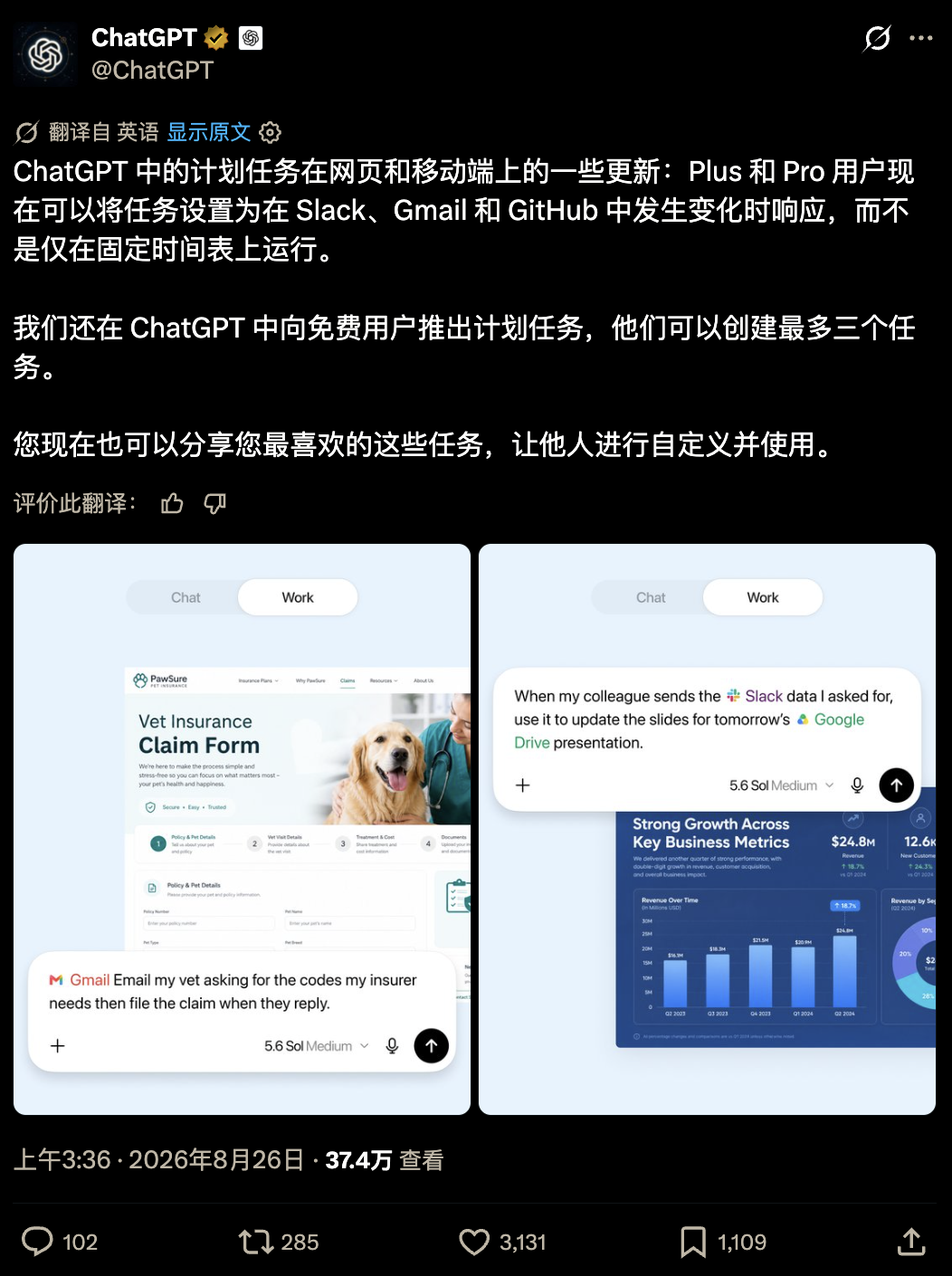
This function, which previously only belonged to less than one adult, covered more than 90% of the remaining users overnight.
Scheduled tasks allow ChatGPT to automatically run a prompt word in the background according to the time or conditions you set, and push the results to you after the run.
It will still run even if you are not online.
For the first time, most free users can let ChatGPT do the work for them without opening a dialog box.
What can it do for you
Scheduled tasks are divided into three categories, corresponding to three different usage scenarios.
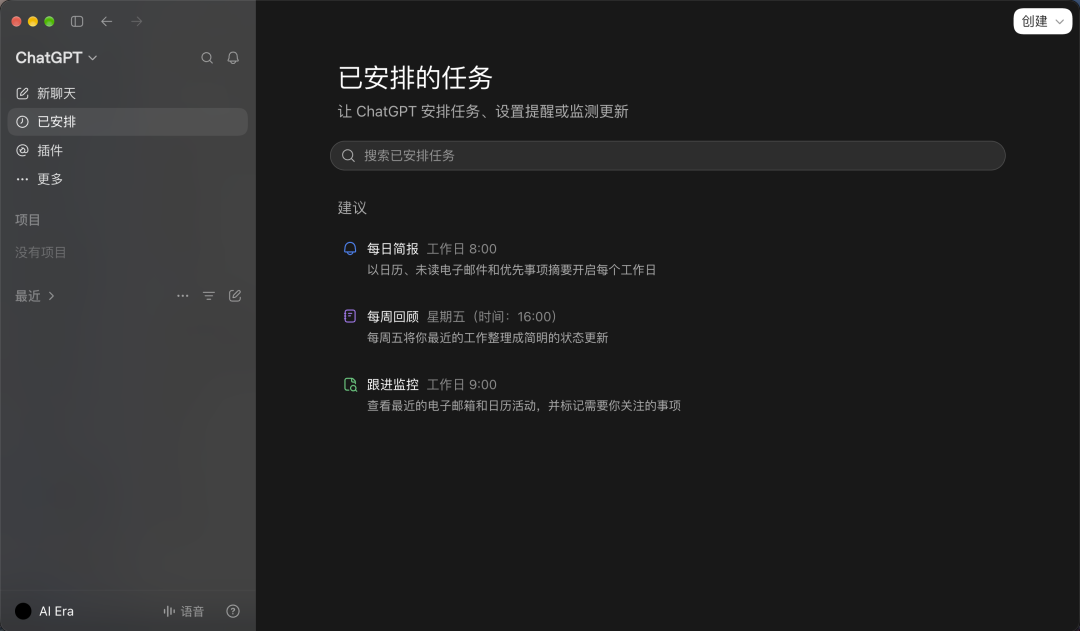
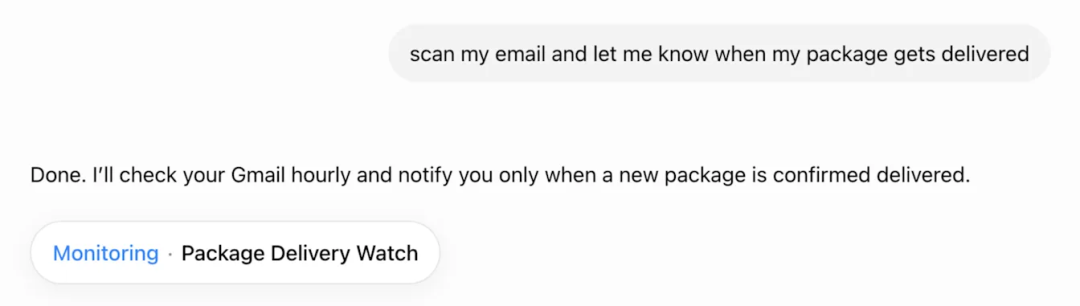
The most basic is a one-time reminder.
Tell ChatGPT a time and thing, and it will push it to you at that time.
For example: "Let me know when the package is delivered."
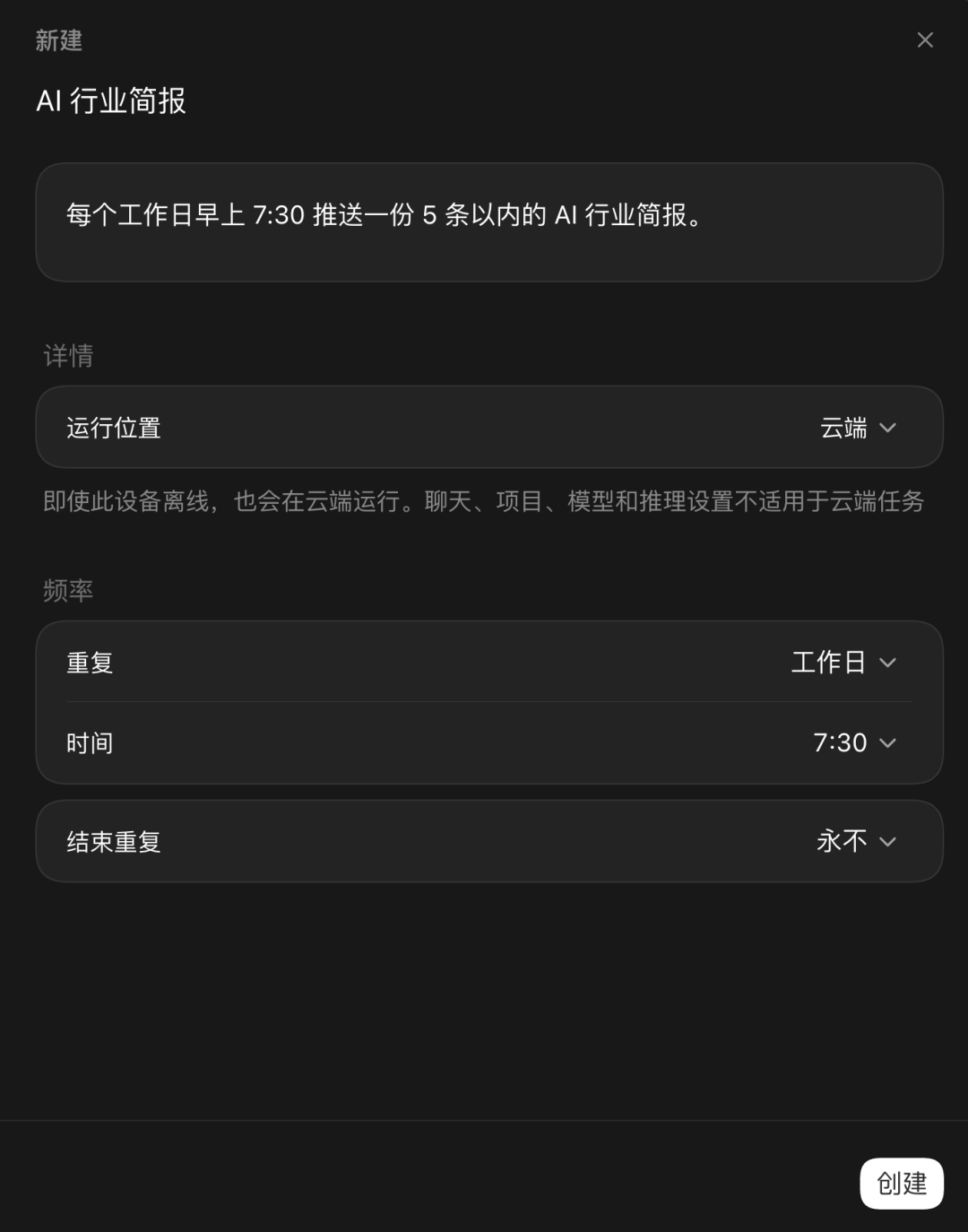
Periodic tasks are more commonly used.
Push an AI industry briefing of no more than 5 items at 7:30 am every working day, with limited areas and limited word count, which is equivalent to a zero-cost customized morning report.
Make a list of next week's fat-reducing recipes and shopping list every Sunday morning, and generate a new bedtime story with an illustration for your child at 7 o'clock every night. All of this can be done with a natural language setting.
You can use it as your own private foreign language tutor: 5 English sentences of medium difficulty will be sent out every evening, requiring translation, without giving answers, and will be corrected after you reply.
The third category is monitoring tasks,
It is also the category that best embodies “keeping an eye on you”.You can post a link to the product page to ChatGPT and let it keep an eye on the price. For example, it will notify you if it falls below 1,000 yuan.
The same logic can be used to track air tickets, housing prices, stock prices, and discounts on a certain game on Steam.
ChatGPT will check regularly and will not disturb you if there are no changes. It will only push content worth reporting.
The content creator can ask it to keep an eye on the product pages or press releases of competing products, and notify you when there are updates;
Job seekers can ask it to keep an eye on specific positions on recruitment websites and push a summary when new posts are posted.
The August 26 update also adds a more radical ability:
Event triggering.
Paid users can connect Gmail, Slack (foreign Feishu) or GitHub to ChatGPT to run tasks according to events.
Customers send feedback in the Slack channel (group), and ChatGPT automatically summarizes the key points and drafts a response plan.
Someone on GitHub has submitted a review for your PR, and it will summarize the revision comments and list a revision plan.
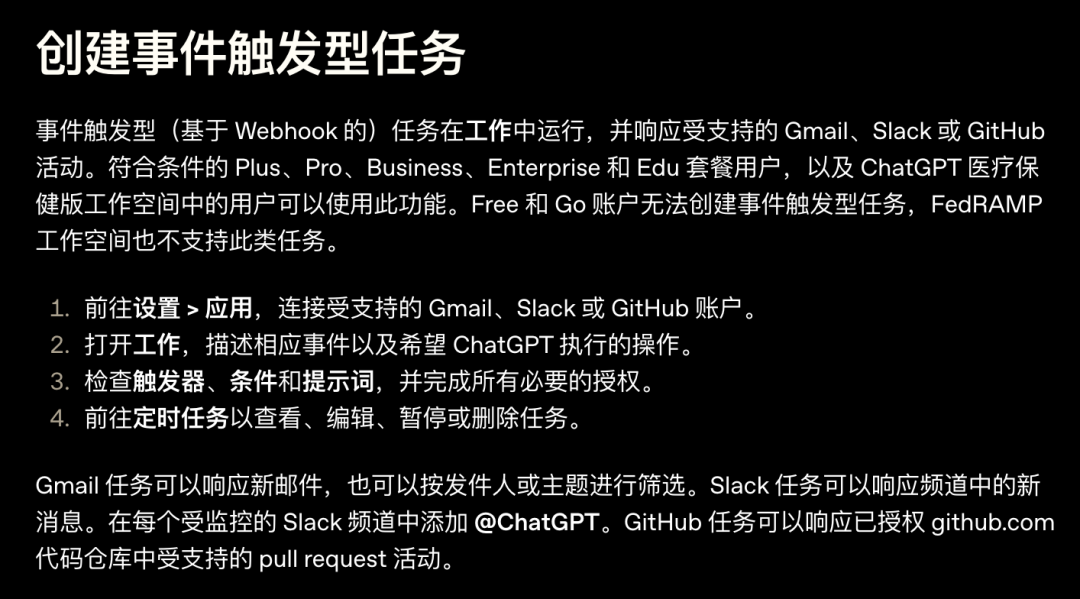
The same goes for the email scenario: the boss sends an email urging progress. After reading it, ChatGPT drafts a reply according to your preset template.
From "checking once every day at 8 a.m." to "moving only when something happens", this is the difference between scheduled polling and event-driven.
The first three types of tasks run based on time, and event triggers run based on conditions. The two cannot be mixed in the same task.
All tasks are managed uniformly on the Scheduled page in the sidebar and can be paused, edited or deleted at any time.
The creation method is also simple: use natural language to describe what you want to do and when to do it in the dialog box, and the task will start after ChatGPT confirms.
Where is the ceiling of the free version
OpenAI’s quota for free users is very restrained.
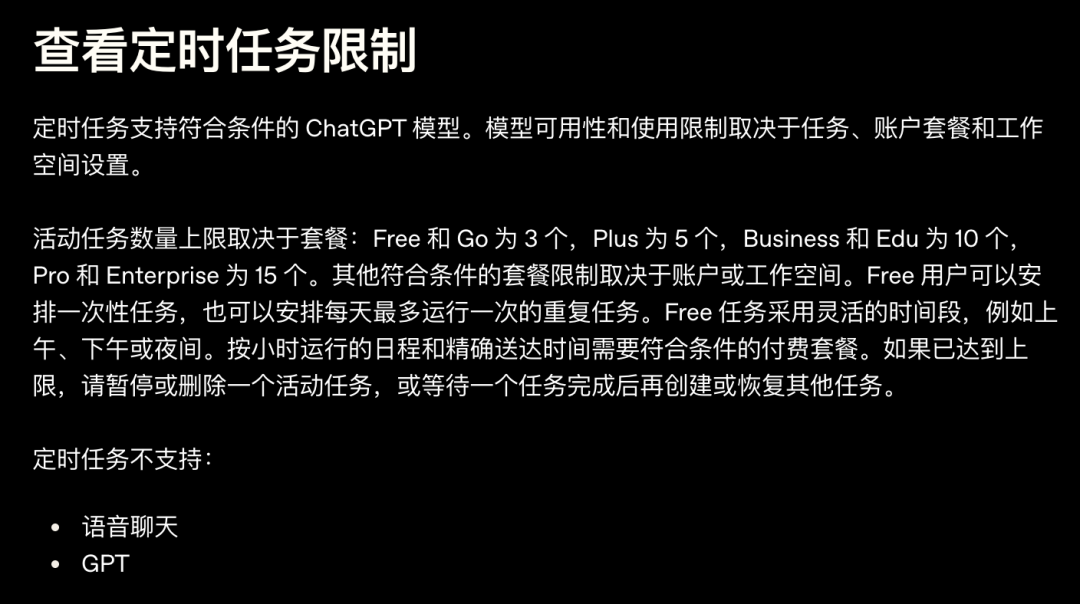
There is an upper limit of 3 active tasks. Periodic tasks can be run at most once a day. The time can only be selected from vague periods such as "morning", "afternoon" or "evening", and cannot be precise to a few minutes.
The permissions of paid users increase gradually.
Plus users ($20/month) can create 5 tasks, support time settings accurate to the minute, and run as fast as once an hour;
Business and Edu users are limited to 10 users;
Pro and Enterprise user limit 15.
The event triggering function added on August 25 (webhook to connect to Gmail, Slack, and GitHub) is only available to Plus and above packages, and is not available to free users and Go users.
Task sharing is the only feature in this batch of updates that has no threshold.
A task configured by one user can generate a link. When another person opens it, he will get an independent copy. He can change the instructions, change the time, and connect his own account.
What you get in the free version is equivalent to a trial sample.
Three tasks are enough for you to set up a morning report, a price reduction monitor, and a bedtime reminder. It is just enough, but there is no margin.
If you want precise control and event-driven, you have to pay more.
ChatGPT’s detours and lessons
Cronded tasks are actually not a new idea.
In January 2025, ChatGPT launched a Tasks beta version, but the functions were simple and not many people used it.
In September of the same year, OpenAI took a different approach: launching Pulse, an active push feature only for $200/month Pro users.
Extended reading: ChatGPT Pulse has just been launched!
The logic of Pulse is that AI decides what to read for you - it generates a set of information cards every morning based on your chat history, memory and connected applications, similar to an AI-edited personal daily report.
Nine months later, Pulse was axed.
On June 17, 2026, OpenAI announced that Pulse would be offline within 14 days and launched the rebuilt Scheduled Tasks at the same time.
The official summary is: "Active experience is most useful when it is personalized, actionable, and user-controllable."
Pulse decides what to check for the user, but the user does not buy it;
Scheduled Tasks, in turn, allow users to define what to check and when to check.
This rebuild on June 17th will only be available to paid users.
On August 26, more than two months later, free users were eligible for admission.
On the same day, the event triggering capability was launched - from the Tasks beta version to today, this feature has been going on for 20 months, and has experienced a major turn in the middle.
Clocked tasks are the first public entrance for ChatGPT to move from dialog boxes to background resident agents.
But the configuration of the free version with 3 tasks, once a day, and a fuzzy period is a trial sample given by OpenAI - allowing you to taste the sweetness of "someone watching for you", and then pay for minute-accurate control and event-driven automation.
Comments