
Abstract:
The T1 smartphone launched by Trump Mobile has once again become the focus of attention recently. Zach Nelson, the host of the well-known YouTube channel JerryRigEverything, conducted a disassembly test of this phone, and the results further confirmed the outside world’s previous speculation: The T1 is almost identical to the HTC U24 Pro launched in 2024 in terms of hardware design and internal structure. It is essentially a rebranded product with a redesigned appearance.
T1 was announced as early as June 2025, but it was not officially launched until June 2026. Compared with the originally announced product plan, this phone has undergone many design and specification adjustments, and its positioning and configuration have never reached the level of a true high-end flagship. At the same time, the price of the product has also increased significantly. The initially announced price was US$499, which rose to US$749 after it was launched.
Judging from the current selling price, T1 is equipped with a 6.78-inch AMOLED screen, supports 120Hz refresh rate, is equipped with Qualcomm Snapdragon 7 Gen 3 processor, and provides 512GB storage space. The imaging system includes a 50-megapixel main camera, an 8-megapixel ultra-wide-angle camera, and a 50-megapixel telephoto camera that supports 2x optical zoom. The front camera is also 50-megapixel. The battery capacity is 5000mAh.
Judging from the paper specifications, these configurations are not backward, but what really causes controversy is not the performance, but the almost identical hardware design between T1 and HTC U24 Pro. Previously, the appearance of T1 was already highly similar to this HTC mobile phone launched in 2024, and this disassembly further revealed the close relationship between the two in terms of internal structure.
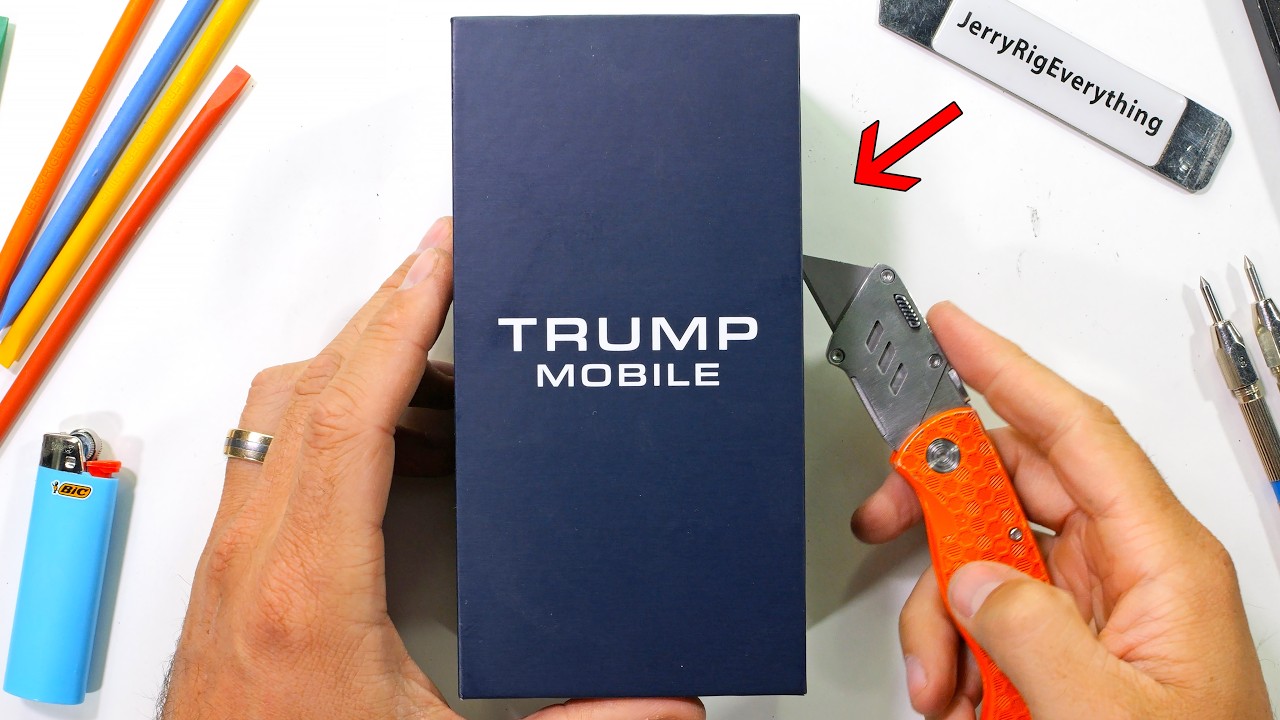
During the disassembly process, Nielsen found that not only the overall layout of the two mobile phones was the same, but the internal motherboards were also directly interchangeable. After installing the T1 motherboard into the HTC U24 Pro body, the phone can start and run normally; conversely, installing the HTC U24 Pro motherboard into the T1 body can also work normally. This test provides extremely intuitive evidence that the two devices use the same hardware platform.
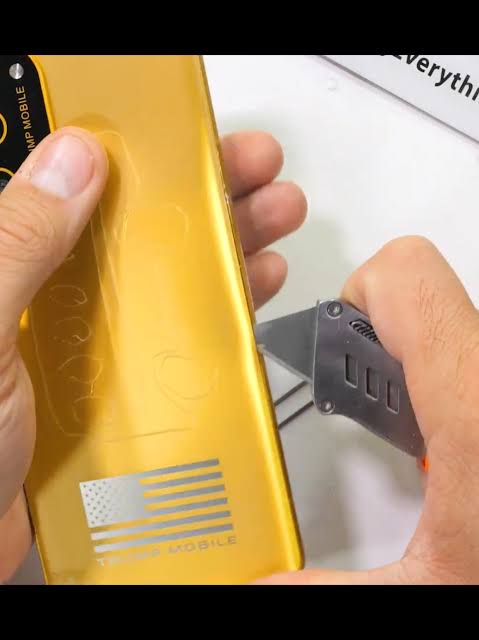
The main differences between the two phones focus on appearance details. T1 adopts a golden body and an adjusted camera area design, and some external structures have also been modified, but these changes have not changed the basic composition of its internal hardware. The American flag pattern on the fuselage also attracted attention. The number of stripes does not conform to the 13 stripes design usually used in the American flag.
It is worth mentioning that T1 performed reasonably well in the durability test. Despite being put through the usual scratch and bend tests, the phone remained intact with no obvious structural damage occurring during the bending process. This means that although the originality of its products has been questioned, at least in this test, the fuselage structure showed reliability similar to that of mature products.
Previously, the repair expert website iFixit also conducted a detailed disassembly of the T1, and through CT scans and component comparisons, it was found that the machine is highly consistent with the HTC U24 Pro in terms of motherboard layout, internal component locations, and screw configurations. The main differences between the two also include battery capacity and charging speed: the T1 is equipped with a 5000mAh battery and supports up to 30W charging, while the HTC U24 Pro has a 4600mAh battery capacity and supports up to 60W charging. In addition, some of the memory components of the two phones come from different suppliers, but this does not change the high similarity in the overall hardware design of the two phones.
The manufacturing background of T1 also deserves attention. Trump Mobile has previously vigorously promoted the American nature of this phone, but its high similarity to the HTC U24 Pro has raised questions about its actual design and manufacturing origins. It should be noted that hardware similarity cannot alone prove the specific production location of the mobile phone, nor can it be used to determine where the final assembly process occurred. Previous claims that the aircraft was assembled in the United States cannot be fully confirmed based on disassembly results alone.
From the perspective of the industry chain, one possible explanation is that the two mobile phones use solutions provided by the same design and manufacturing service provider. The original design manufacturer (ODM) model is common in the smartphone industry. Related companies can provide the same or similar hardware platforms to different brands, and then adjust the appearance, configuration and brand identity according to customer requirements. However, there is still insufficient evidence to make a definite judgment on which company provides design or manufacturing services for T1.
For the T1, which sells for $749, this discovery will undoubtedly intensify doubts about the rationality of its product positioning and pricing. What consumers buy is not only hardware configuration, but also brand promise, product design and differentiated value. If a new product is virtually indistinguishable from two years ago in terms of core hardware, it needs to prove its worth through price, service, or other tangible advantages.
In general, JerryRigEverything’s disassembly did not find any obvious original breakthroughs in the internal hardware of the T1. Instead, the motherboard swap test further proved its high correlation with the HTC U24 Pro. Although T1 passed the bending test, its product uniqueness and publicity surrounding its American-made attributes still face scrutiny from the outside world. For a smartphone whose price has risen to US$749, how to prove its actual value different from existing products may be more important than simply emphasizing the brand logo.
Comments