
Abstract:
Nvidia CEO Jensen Huang recently publicly opposed Anthropic CEO Dario Amodei’s proposal to completely ban the export of U.S. AI chips and semiconductor equipment to China. He said that American companies should maintain their technological leadership, but should not give up the global market because of this, but should expand market share and create economic value through competition.
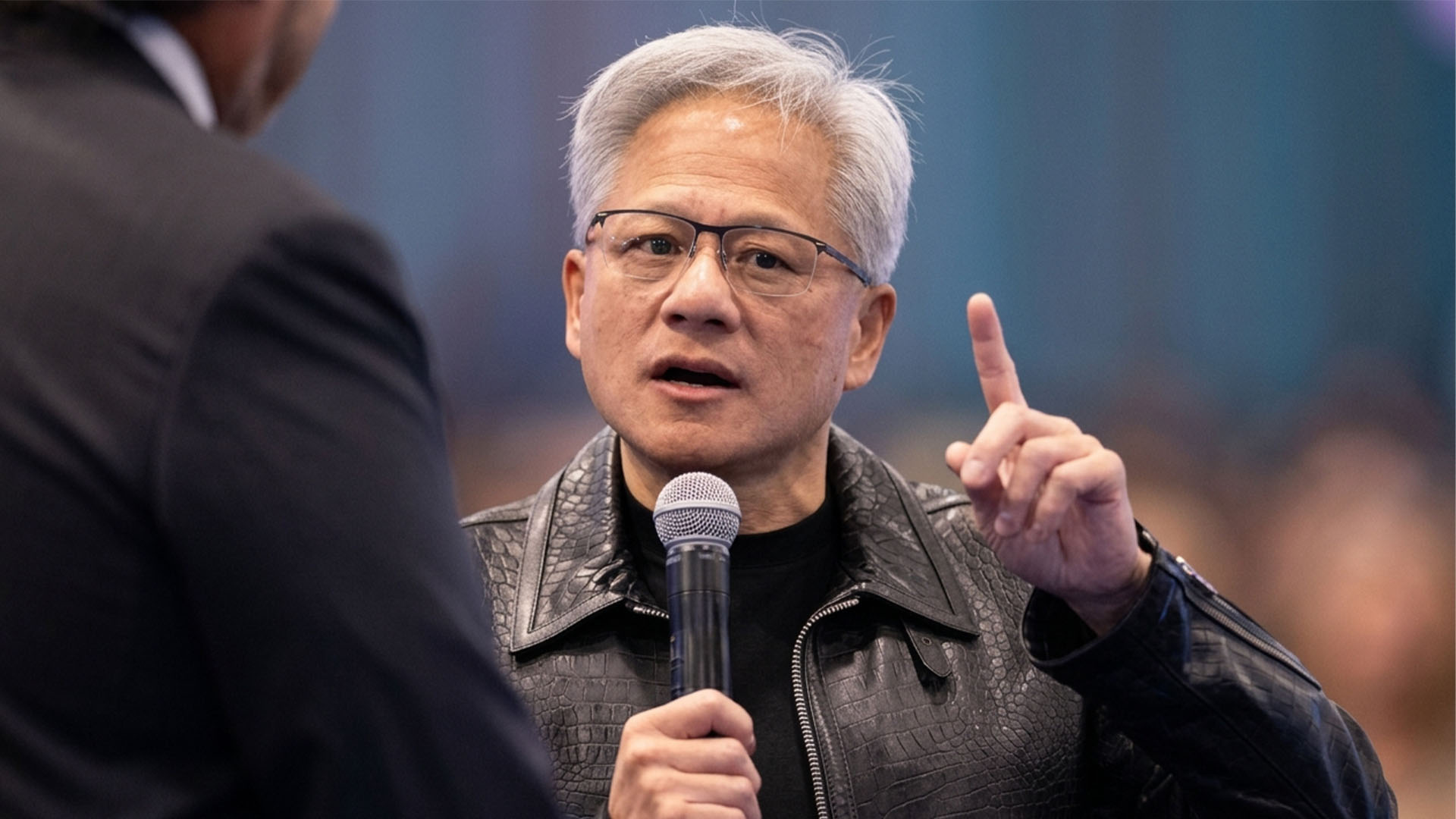
In an interview, Huang Renxun pointed out that the United States should first ensure that its own companies have priority in obtaining the most advanced technology, which he fully supports. But on this basis, all links in the U.S. artificial intelligence industry chain, including chip companies, model developers, and related technology companies, should actively participate in global competition. He believes that "the spirit of the United States lies in competition" rather than actively giving up the entire market.
When talking about technical advantages, Huang Renxun revealed that NVIDIA's new generation Vera Rubin architecture has entered the stage of large-scale mass production and has been provided to US scientific research institutions and US companies including OpenAI. He believes that the United States is still several years ahead of China in this field, so there is no need to give up the international market to maintain its advantage.
Huang Renxun also emphasized that the artificial intelligence industry is far more than the big model itself, but covers multiple levels such as energy, chips, models, data and applications. The United States needs to remain competitive across the board in these areas. He specifically mentioned that not only a few AI companies will benefit in the future, but traditional companies such as Wal-Mart and FedEx will also gradually transform into artificial intelligence companies. This is an important manifestation of AI's promotion of economic change.
He believes that if American companies lose their sources of income from overseas markets, the basic strength of the entire industrial chain may be weakened. Maintaining global market participation will help support chip research and development and the sustainable development of the industry.
The article also mentioned that although China is currently unable to legally obtain some of NVIDIA's most advanced AI accelerator products, research institutions have previously discovered that some GPUs affected by export controls have appeared in the deployment environment of Chinese enterprises. The report believes that this shows that the global market demand for advanced AI computing power is still strong. Even in the face of export restrictions, all parties will still find ways to obtain the most advanced artificial intelligence hardware.
Overall, Huang's views are in sharp contrast to those who advocate further strengthening export restrictions. He believes that the key for the United States to stay ahead is to continue to innovate and participate in global competition, rather than actively withdrawing from important international markets.
Comments