
Abstract:
Meta is facing new questions about its handling of evidence in youth safety lawsuits. A recently unsealed court filing revealed that the internal team responsible for launching Instagram's teen account feature ordered baseball caps emblazoned with "a/c priv," a common abbreviation for attorney-client privilege.
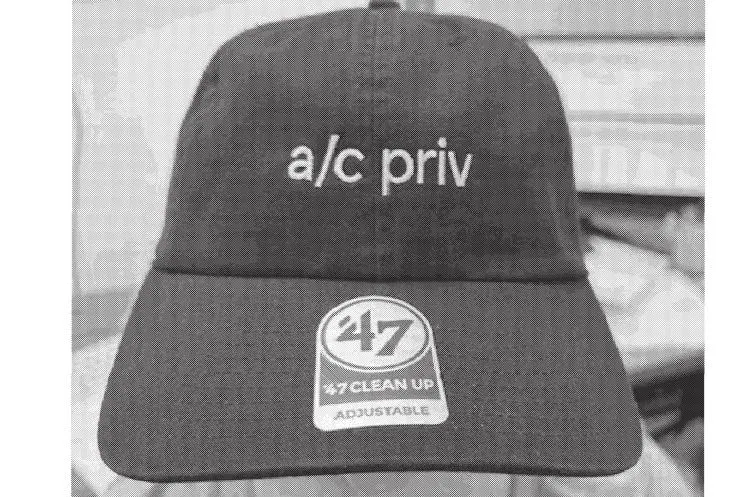
This detail quickly became a new focus of controversy surrounding Meta's legal strategy.
Meta is currently facing multiple lawsuits regarding the impact of social media on youth safety, mental health and addiction. During the trial of the case, Meta's legal team has been arguing that some internal documents should be kept confidential based on the attorney-client privilege principle and should not be disclosed to the public or the plaintiff.
However, the legal team representing the plaintiff believes that Meta’s use of this legal protection mechanism far exceeds reasonable limits. They pointed out that newly disclosed documents show that the team responsible for Instagram’s “teenage account” project customized hats with “a/c priv” printed on them for members, which was seen as a manifestation of a special culture within the company.
According to the plaintiff’s lawyer, the project team’s internal codename is “Project Nido.” They believe that such peripheral items bearing the words attorney's privilege reflect Meta's tendency to keep large amounts of internal research and discussions within the scope of legal confidentiality, and the purpose may be to prevent the results of internal research on the impact of youth on the platform from entering the public view.
This controversy is closely related to Meta's youth safety issues in the past few years. Since 2021, multiple leaked documents have drawn widespread attention to Instagram's impact on youth mental health, and Meta's internal handling of risk assessments and research results has continued to become an important subject of review by regulators and courts.
In fact, U.S. Federal District Judge Yvonne Gonzalez Rogers, who is responsible for hearing related cases, has previously criticized Meta’s partial confidentiality handling.
In a ruling last month, the judge said Meta's redactions, in part based on attorney-client privilege, were "wholly inappropriate." One of the cases involved employees discussing a presentation and whether to disclose some data.
Meta attempted to classify the relevant discussions as legal consultation to obtain confidentiality protection. However, after review, the court determined that, judging from the testimony and context, the relevant discussion was more like a company's consideration of the risks and business consequences of information leakage, rather than a communication seeking legal advice from a lawyer.
At the same time, Meta has previously lifted the confidentiality status of approximately 65,000 documents. The documents were originally classified as confidential or heavily redacted, but were later reviewed and allowed to be made public.
However, lawyers for the plaintiffs believe that the documents were released too slowly. Because the lifting of confidentiality occurred late in the evidence-gathering phase, they missed the opportunity to use the material during key witness interviews and evidence collection.
Meta is currently asking the court to allow the company to continue reviewing more documents that have been marked confidential before the end of this year. The plaintiff hopes that the court will appoint an independent third party to supervise the review work and require that the relevant costs be borne by Meta.
Meta has not publicly responded to the specific controversy surrounding the "a/c priv" hat. But the legal battle over internal research, youth safety and corporate transparency continues as courts continue to scrutinize companies' use of attorney-client privilege.
For the plaintiffs’ lawyers, a seemingly ordinary baseball cap is no longer just a souvenir around the company, but has become an important symbol in their attempt to prove Meta’s long-term over-reliance on legal confidentiality mechanisms. For Meta, how to prove that its confidentiality claim is legitimate legal protection and not a tool to cover up business decisions and internal research is becoming one of the key issues in the development of the case.
Comments