
Abstract:
Muse, the personal AI agent application launched by Meta, is quickly becoming a new focus in the artificial intelligence market. In just one week since its launch, this product has ranked first in the free application rankings of Apple's US App Store, surpassing ChatGPT, which has long held the leading position, and has become one of the most downloaded free applications in the US market.
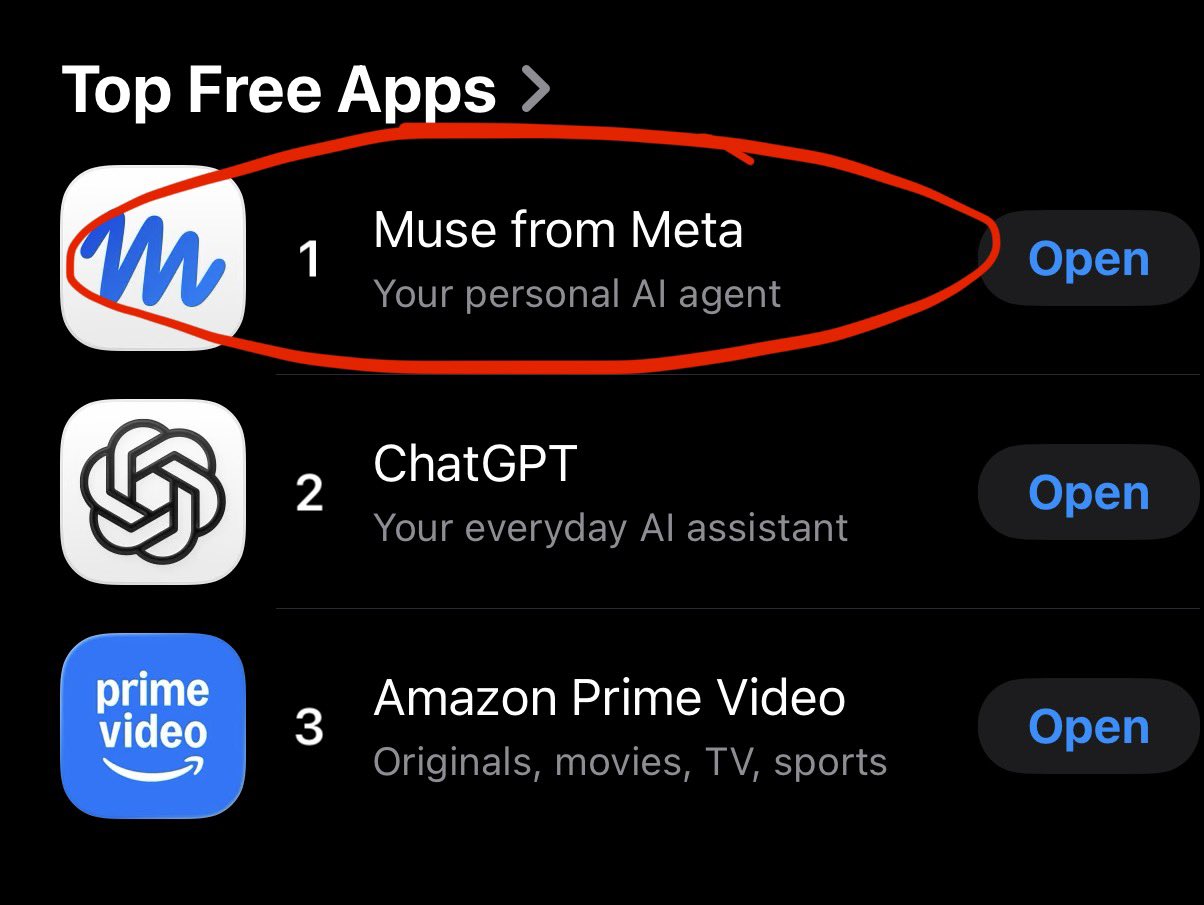
This achievement is regarded as an important signal that Meta’s “personal super intelligence” strategy has gained market recognition. Unlike traditional chatbots, which are mainly responsible for answering questions, Muse is designed as an artificial intelligence agent that can perform actual tasks on behalf of users.
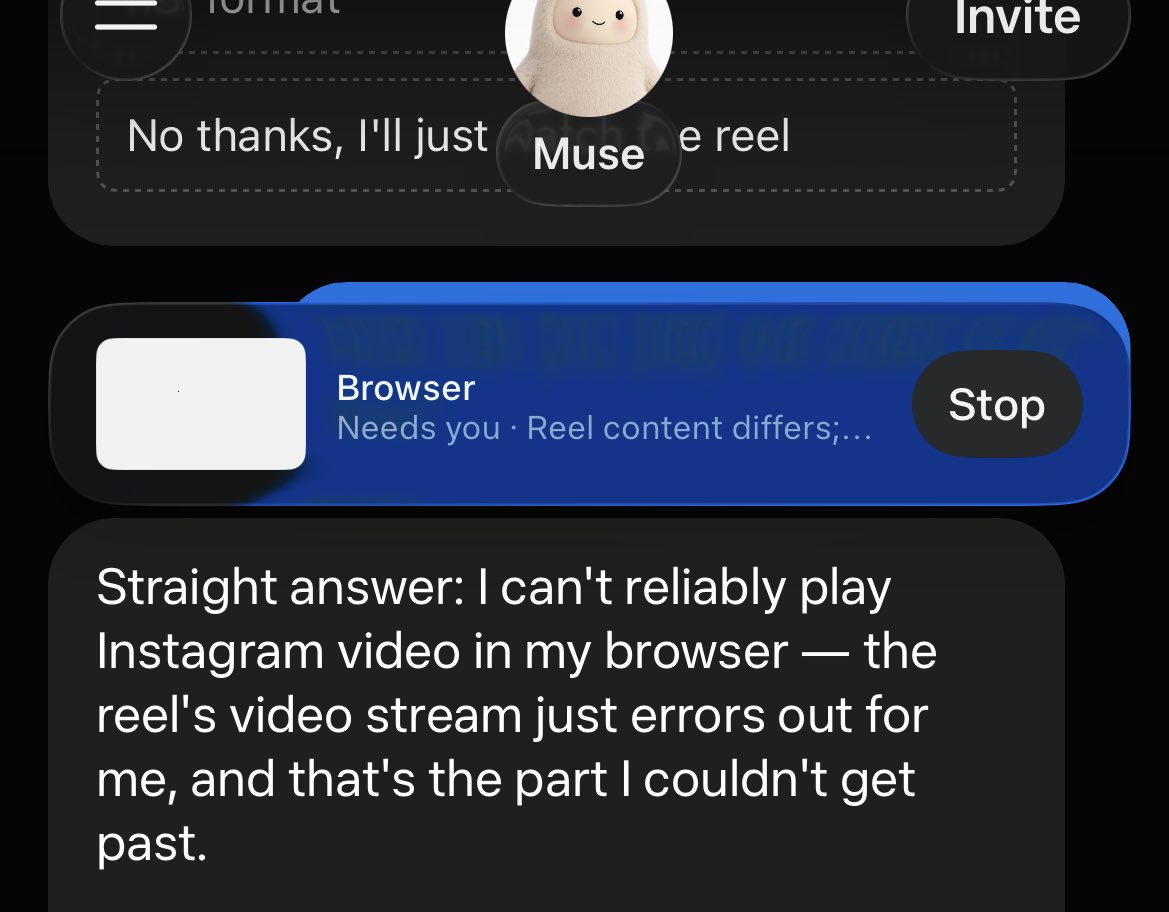
According to Meta, Muse can not only complete information queries, but also help users fill out forms, shop online, book restaurants, find pet-sitting services, and connect with services such as email, calendar, Spotify, Instagram, and OpenTable. The system will gradually learn the user's preferences and handle various transactions on behalf of the user after obtaining authorization.
At the same time, Muse can save long-term contextual information, remember user habits and needs, and provide more personalized assistance on this basis. For sensitive operations involving payment, account management, etc., the system will actively request user confirmation instead of executing it itself.
Muse topped the App Store only about a week after its official release. Industry insiders believe that this performance shows that consumers’ acceptance of the concept of “AI agents” is rapidly increasing. Compared with traditional AI products that can only provide suggestions or answer questions, more and more users are beginning to try to hand over actual tasks directly to artificial intelligence.
Meta insiders are also excited about this achievement. Alexander Wang, who is in charge of the Meta Super Intelligence Laboratory, posted on the social platform that Muse became the No. 1 application in the App Store a week after it was launched, and the enthusiasm shown by users in a short period of time far exceeded expectations.
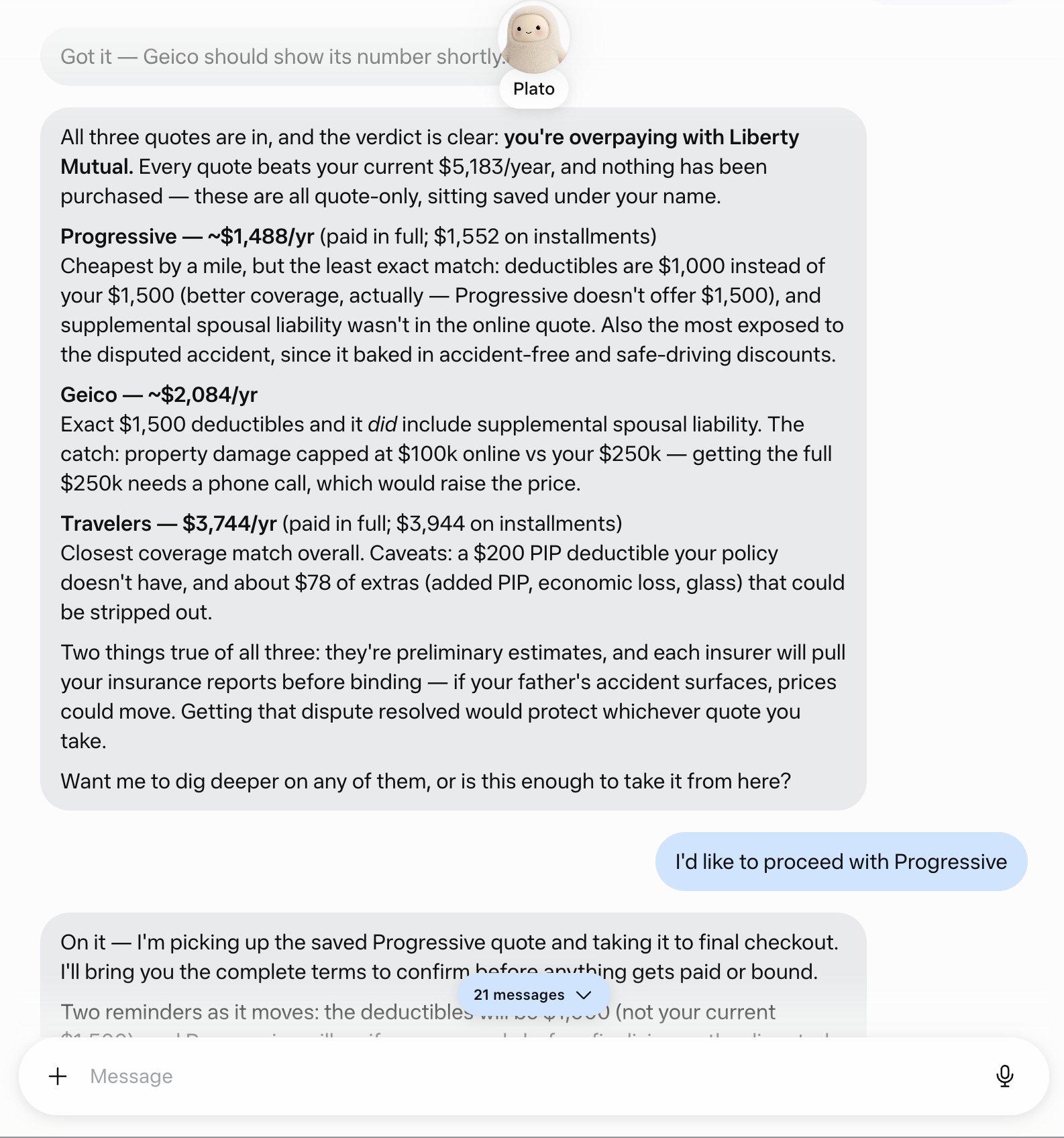
As downloads continue to grow, a large number of users are sharing real-world use cases. One entrepreneur said he uploaded his car insurance policy to Muse and asked the system to find a new plan with exactly the same coverage but at a lower price. As a result, Muse completed the search and comparison in about five minutes, not only finding a new insurance plan that saved $3,500 per year, but also helping to complete the insurance application and cancel the original policy.
Another user demonstrated Muse’s capabilities in a shopping scenario. According to its description, Muse can help search for a specific style of green down jacket, automatically find real-time coupon codes, add items to the shopping cart, apply discounts and complete the purchase at the lowest price. The user also said that Muse can even automatically generate a shopping list based on recipes and add the required ingredients directly to the Whole Foods shopping cart.
However, despite Muse's outstanding performance in the market, Meta still faces fierce competition. At present, personal AI agents have become a new arena for major technology companies and startups to compete.
In addition to companies such as OpenAI and Anthropic continuing to promote intelligent agent projects, a new AI assistant called Instinct has recently appeared in Silicon Valley. This product adopts an invitation-only model and has spread rapidly among technology practitioners. Some users said they use Instinct to buy nutritional supplements, book vacation rentals and manage subscriptions.
The success of Muse means that the artificial intelligence industry is entering a new stage of development. In the past few years, the industry's focus has been on building smarter chatbots; now, companies are beginning to try to make AI truly undertake work tasks and directly participate in users' daily decisions and consumption behaviors.
However, the development of AI agents also comes with new challenges. Since such systems require access to large amounts of personal information and perform real-world operations, issues of accuracy, security, and privacy protection will be of ongoing concern. Purchasing the wrong product, booking the wrong service, or mishandling sensitive data may become problems that future products must solve. Nonetheless, judging from the fact that Muse quickly topped the app store rankings after its release, the market has shown strong interest in artificial intelligence products that can "act on behalf of users." For Meta, this is not only a successful product launch, but may also be an important beginning for it to compete for a leading position in a new round of AI competition.
Comments