
Abstract:
The competition around "standardization" in the artificial intelligence industry is taking a new turn. Anthropic recently announced that it will support the Markdown instruction specification proposed by OpenAI, allowing developers to use a unified format to transfer behavioral rules and instructions to different AI models. This means that technical specifications that originally belonged to the competitor camp are gradually evolving into cross-platform universal standards.
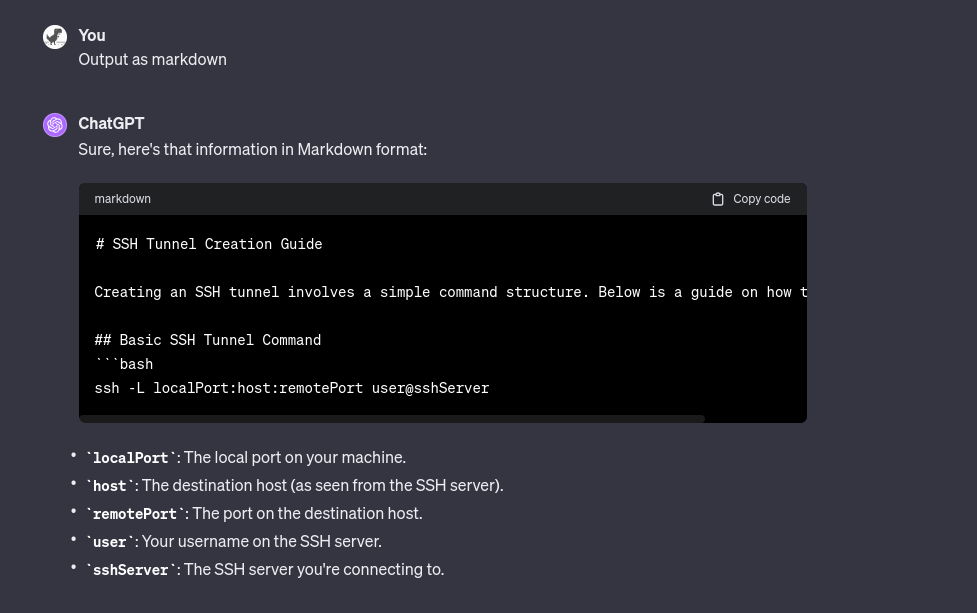
The core goal of this specification is to establish a unified instruction description method for AI systems. Developers can write model behaviors, task requirements, and operational constraints through specific Markdown structures, so that large language models from different vendors can understand and execute these rules in a similar way.
In the past, different AI platforms usually had their own independent prompt word formats and configuration methods. If developers want to migrate their applications to a different model, they often need to rewrite and adjust a large amount of instruction content. The emergence of unified specifications is expected to reduce this duplication of work and improve cross-platform compatibility.
Anthropic stated that Claude products will begin to support this specification in the future, allowing developers to more easily share configuration files and workflows between the OpenAI and Anthropic ecosystems. This will reduce deployment costs and simplify management for enterprises using multiple model services simultaneously.
The move is symbolic. In recent years, although companies such as OpenAI, Anthropic, Google, and Meta have competed fiercely in model capabilities, they are also facing strong demands from developers for interoperability. As the scale of AI applications continues to expand, the market is increasingly hoping to see the emergence of industry standards similar to Internet protocols, rather than each platform operating independently.
The reason why Anthropic is willing to adopt the specifications proposed by competitors is also seen as a pragmatic choice. For developers, unified standards are often more important than technical sources. When more and more tools, agent systems, and automation platforms in the industry begin to support the same format, compatibility with this standard will enable wider software ecosystem support.
This change is similar to the early development process of the Internet. At that time, different manufacturers finally formed a consensus around open standards such as HTTP and HTML, which greatly promoted the development of the network ecosystem. Today, the field of large language models is also going through a similar stage.
However, supporting unified specifications does not mean that model capabilities become consistent. Even if they accept the same Markdown command, different AI models may still give different results based on their respective architectures, training data, and security mechanisms. Therefore, this specification solves more of the problem of "how to express instructions" rather than "how to perform tasks".
With the increasing popularity of AI agents, automated workflows, and cross-model collaborative applications, the importance of standardization is rapidly increasing. If developers could drive multiple models simultaneously using the same configuration, the cost of selecting and switching underlying models would drop significantly.
For Anthropic, supporting the Markdown instruction specification proposed by OpenAI is not only a technical decision, but also reflects that the artificial intelligence industry is gradually moving from a pure competition of model capabilities to a new stage of ecological compatibility and infrastructure construction.
As more and more companies begin to pay attention to the interconnection between AI systems, a new competition surrounding the dominance of industry standards is also unfolding. Anthropic’s choice to join this camp means that the artificial intelligence industry is one step closer to forming a unified development ecosystem.
Comments