
Abstract:
Apple iPhone Air 2 is expected to be released in the spring of 2027. The new phone is expected to further reduce the thickness of the body while improving battery life and image performance. Recently, overseas whistleblower Sanju Choudhary exposed multiple configuration information of iPhone Air 2. According to reports,
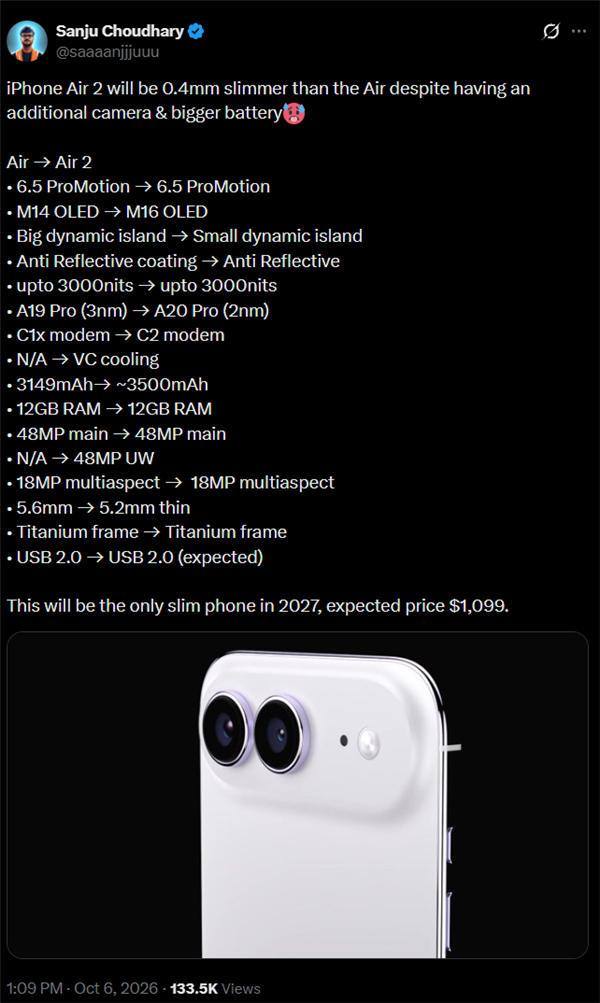
the body thickness of iPhone Air 2 will be reduced from 5.6mm in the current model to 5.2mm, which is 0.4mm thinner than the previous generation, but the battery capacity will not decrease but increase.
The battery capacity of the first generation iPhone Air is 3149mAh, while the iPhone Air 2 is expected to increase to about 3500mAh,
While the body is further thinned, the battery capacity can be increased.In terms of heat dissipation, the new phone is also expected to introduce a VC vapor chamber heat dissipation solution for the first time to improve the heat dissipation performance under the ultra-thin body.
In terms of performance, iPhone Air 2 is expected to be equipped with Apple's A20 Pro chip, using TSMC's 2nm process, which is further upgraded compared to the 3nm process of the current A19 Pro, and the memory will remain unchanged at 12GB.
At the same time, the new phone will also upgrade Apple’s self-developed C2 baseband to replace the current C1X baseband.
The image will also undergo a significant upgrade.
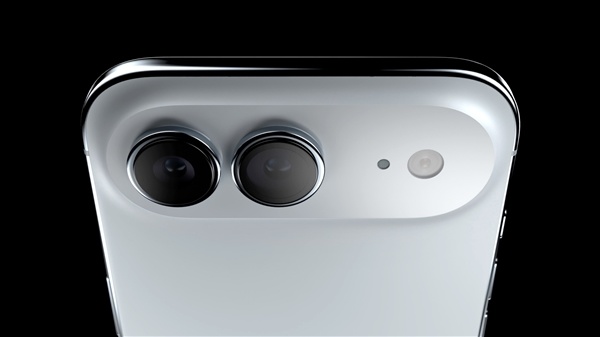
iPhone Air 2 will bid farewell to the rear single camera solution and upgrade to a 48-megapixel main camera + 48-megapixel ultra-wide-angle dual camera combination.
Further enrich the shooting scene.In terms of screen, the new phone is expected to continue the 6.5-inch ProMotion high refresh rate OLED screen, the panel will be upgraded from M14 to M16, and the smart island area will be further reduced.
Judging from the configurations currently exposed, the upgrade focus of iPhone Air 2 is no longer limited to the thin and light body, but attempts to achieve a better balance between ultra-thin design and practical experience, especially optimizing the shortcomings of the first-generation product in terms of battery life, heat dissipation, and imaging.
Comments