
Abstract:
According to reports from industry research organization TrendForce and the Seoul Economic Daily, the spot price of NAND flash memory has fallen by about 20% since late October, and this decline only took two weeks. Market analysts believe that Chinese traders’ concentrated selling of inventory, combined with weakening demand for consumer electronics terminals, are the main reasons for this rapid price drop.
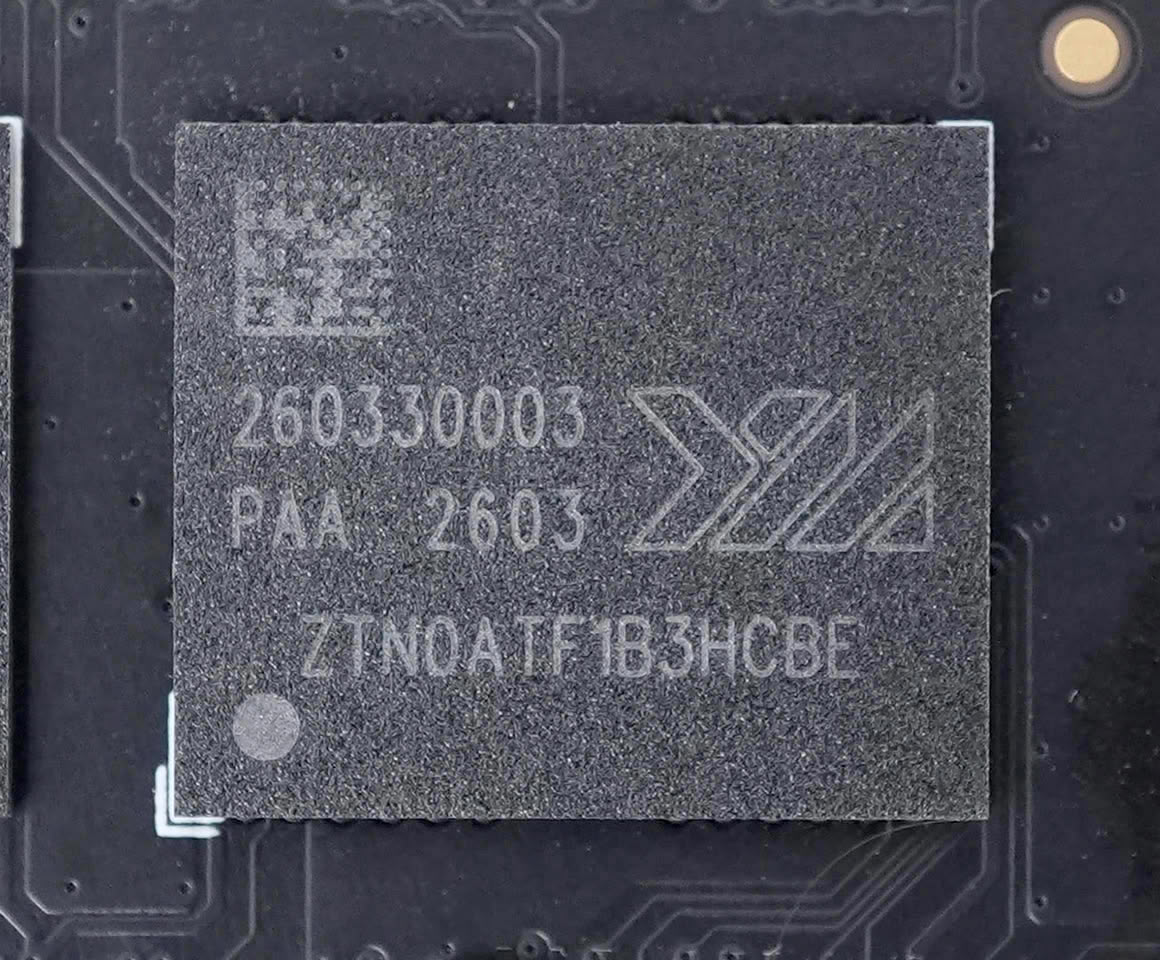
Currently, the spot price of 512 Gb NAND wafers is approximately US$14.30, a decrease of 32% from the previous quarter; the price of 1 Tb products has dropped to US$24.90, a decrease of 19%. The price drop reflects a clear turning point in the memory chip market, where supply constraints that were previously widely feared are gradually giving way to inventory pressure caused by insufficient demand.
Weak consumer demand is the core factor behind the price decline. Due to the previous high prices of storage products, many consumers have postponed upgrade plans for mobile phones, computers and other equipment. At the same time, mobile phone manufacturers began to reduce the storage capacity configuration of basic models, and PC manufacturers continued to clear existing inventory. Data show that global PC shipments fell by 20.1% year-on-year in the third quarter of 2026, with HP and Dell being particularly affected, which further exacerbated the oversupply of the NAND flash memory market.
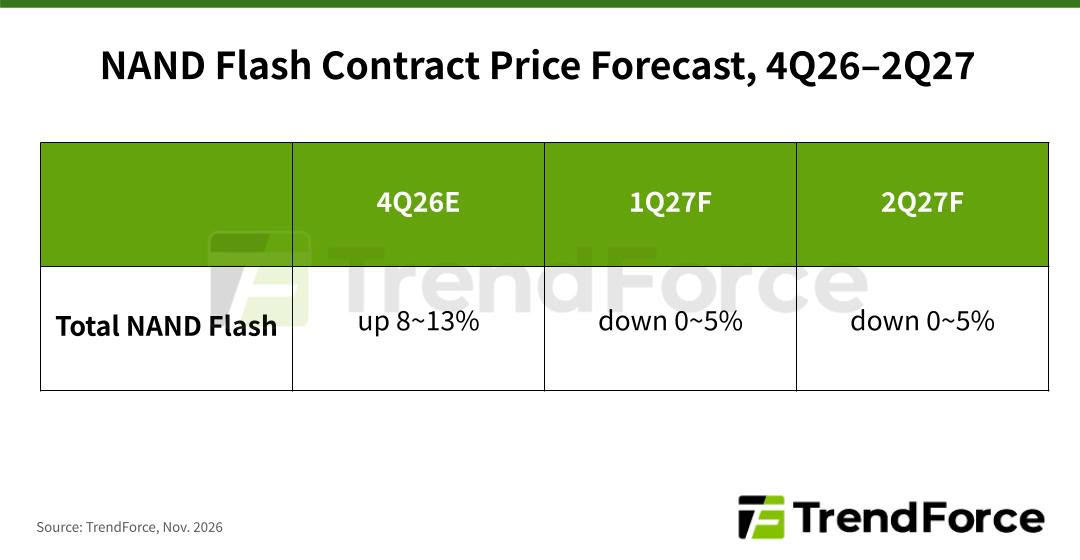
However, the sharp drop in spot prices has not yet been fully transmitted to the long-term contract market. NAND contract prices are usually determined by manufacturers and customers through long-term agreements, and the adjustment speed is relatively lagging. Bank of America predicts that in the first quarter of 2027, contract prices for NAND flash memory used in smartphones and PCs will fall by 5% to 10% quarter-on-quarter; while enterprise-level product prices are expected to remain stable or even rise slightly.
TrendForce also predicts that in the second quarter of 2027, the overall contract price of NAND flash memory will fall by 0% to 5%. This expectation means that the prices of storage products such as consumer-grade SSDs are expected to continue to slowly decline in 2027, bringing a certain degree of cost relief to end users.
It has been previously reported that Chinese NAND manufacturer Yangtze Memory expects the shortage of memory chips to continue for another three years. However, the current rapid decline in spot prices shows that the market supply and demand relationship is changing. Although enterprise-level storage demand remains relatively solid, the weakness in the consumer electronics market has been enough to push NAND prices into a downward channel, and a price reduction cycle for storage products may be coming.
Comments