
Abstract:
NASA announced that the Nancy Grace Roman Space Telescope has completed a critical pre-launch evaluation. Mission managers from NASA and SpaceX recently completed a flight readiness review at the Kennedy Space Center in Florida, confirming that the mission can enter the final stage of launch preparations.
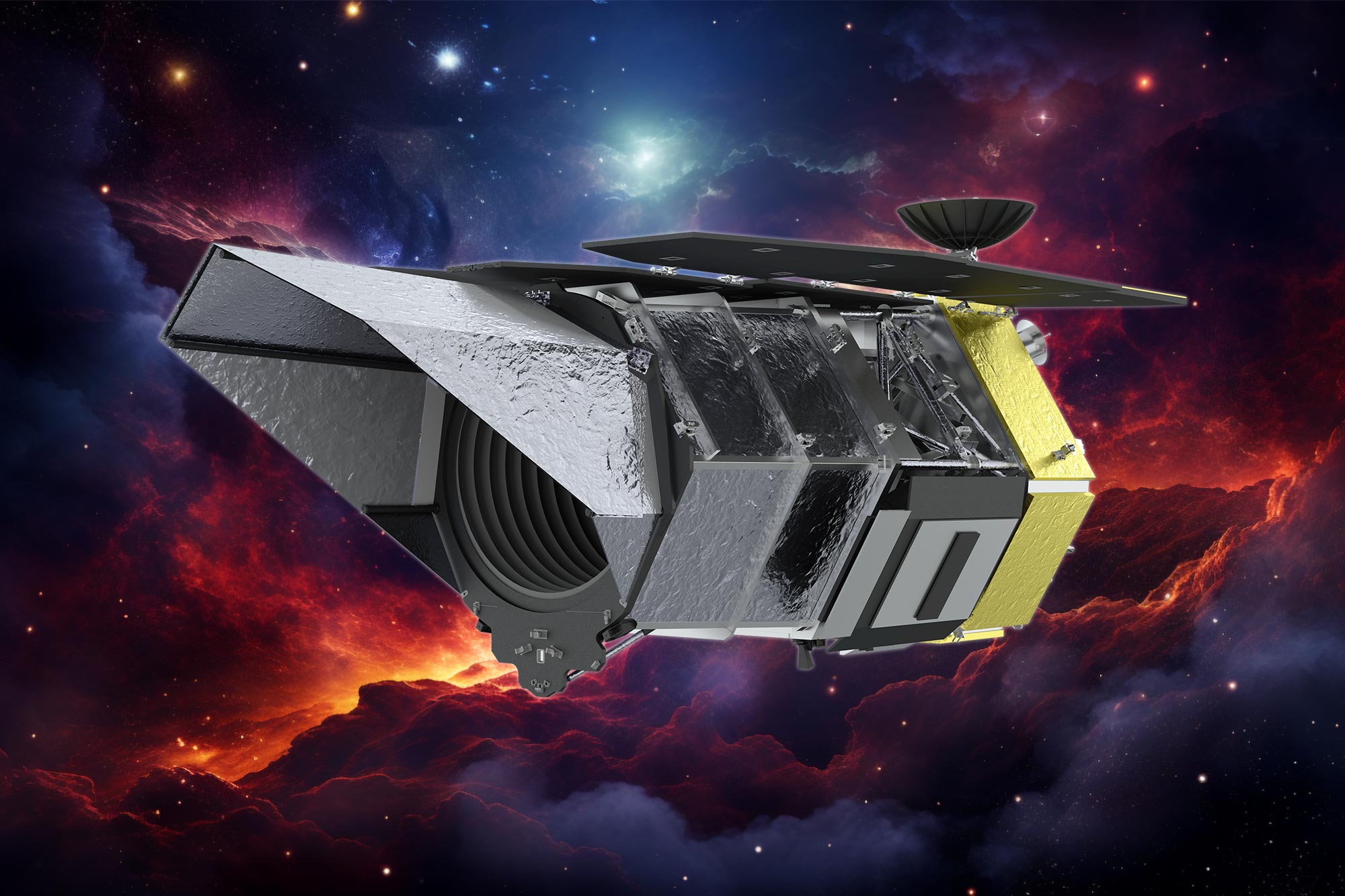
During the review, the relevant team conducted a comprehensive inspection of the spacecraft, launch vehicle, mission system and overall launch status. After listening to the progress reports of each link, the managers formally approved the Roman Space Telescope to proceed with the subsequent launch process.
NASA and SpaceX currently plan to launch the Roman Space Telescope no earlier than 7:26 a.m. Eastern Time on Sunday, August 30. At that time, the telescope will be launched from launch pad 39A of the Kennedy Space Center aboard a SpaceX Falcon Heavy rocket.
The flight readiness review is one of the last important verifications before a space mission takes off. Engineers and mission managers will use this to confirm that the spacecraft, launch vehicle, ground systems and related support teams are ready for the next phase of work.
In the next few days, the Roman Space Telescope will complete its transfer under the protection of the "Falcon Heavy" rocket fairing. The fairing is a protective structure that covers the spacecraft during launch. The packaged telescope will then be transported to the SpaceX hangar near launch pad 39A, where technicians will connect it to the Falcon Heavy rocket. After the relevant work is completed, the final assembly of the launch vehicle will be transferred to the launch pad for final preparations before take-off.
As NASA’s latest space telescope, the Roman Space Telescope aims to provide astronomers with a broader view of the universe. Its observation mission will help scientists study the evolution of the universe over billions of years and explore one of the most important mysteries of modern astronomy: what forces drive the accelerating expansion of the universe.
In addition to cosmological studies, the Roman Space Telescope will also observe exoplanets, planets orbiting stars outside our solar system. By surveying large areas of the sky, scientists hope to use the telescope to further understand the diversity of planetary systems in the Milky Way.
NASA stated that the capabilities of the Roman Space Telescope will provide the scientific community with new observation tools and research opportunities to study the large-scale evolution history of the universe and the many worlds distributed in distant interstellar space.
Comments