
Abstract:
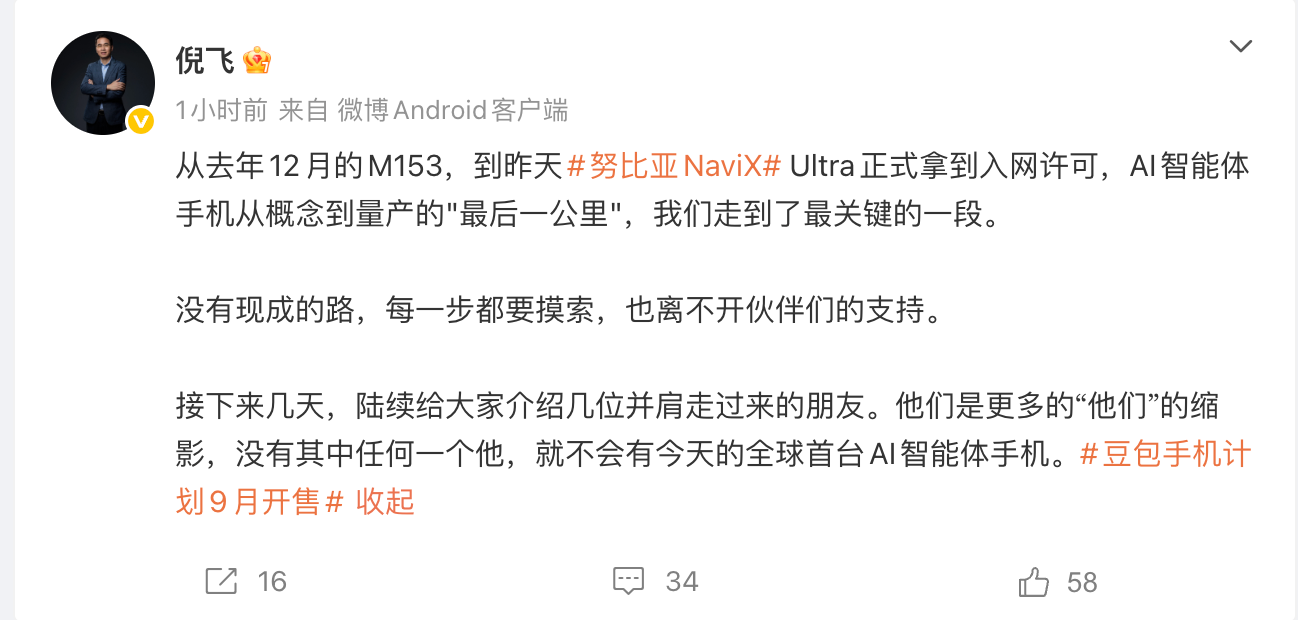
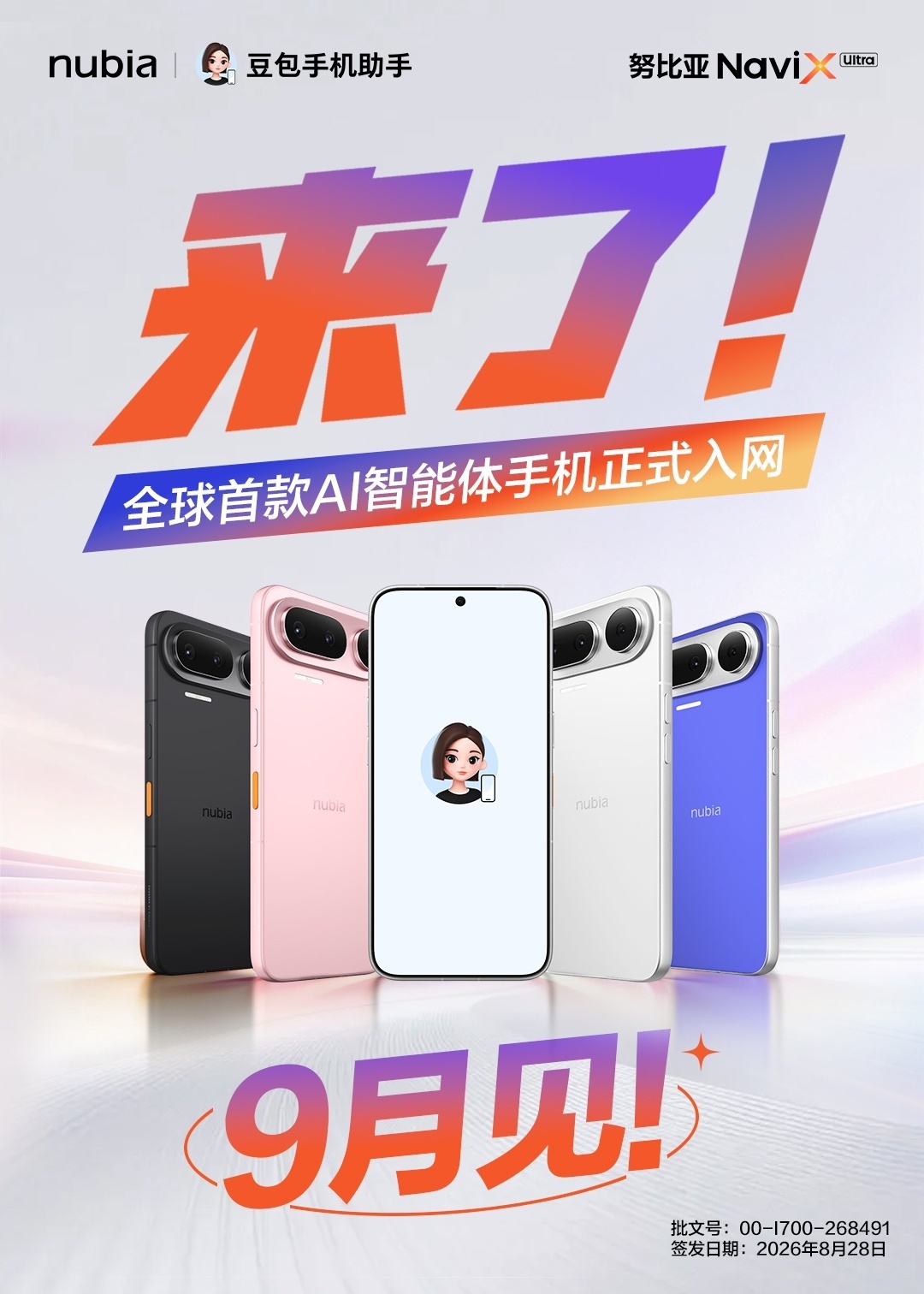
Nubia President Ni Fei announced that a new generation of Beanbag mobile phone will be officially released in September, named Nubia NaviX Ultra is positioned as the world’s first AI smartphone flagship. He said that from M153 in December last year to Nubia NaviX Ultra has officially obtained the network access license, and we have reached the most critical stage of the "last mile" from concept to mass production of AI smart phones.
Ni Fei said frankly that there is no ready-made path, and every step needs to be explored and cannot be separated from the support of partners. From large model registration to terminal network access, we took the lead in completing the compliance process for smart phones. Reassuring users is the prerequisite for technological innovation, and we sincerely thank relevant departments and industry partners for their support.
It is understood that the new generation of bean bag mobile phones are fundamentally different from the "mobile phones with AI functions" on the market. Traditional AI phones still have the operating system as the core, and AI is just an advanced application attached to it. The Doubao mobile phone is an AI-native mobile phone. The large-model agent is no longer an application at the same level as the App, but is embedded in the core engine of the underlying operating system.
This architecture gives Doubao mobile phones unique advantages. It can "read" the phone screen, recognize buttons and simulate clicks just like a real person. For example, the user only needs to say "Help me book the cheapest flight ticket to Shanghai tomorrow", and AI can automatically open the ticket booking app and complete a series of operations such as searching, comparing, and filling in information. It will not return control to the user for confirmation until payment is made. The entire process does not require manual intervention by the user, and AI executes it on its behalf.
During the 2026 World Artificial Intelligence Conference (WAIC), Ni Fei said in an interview with media including Phoenix Technology that the development of AI mobile phones has entered a new stage.
In the future, competition will shift from "AI functions" to "native intelligence". Mobile phones no longer just provide AI capabilities, but can actively understand needs, plan tasks and complete execution.
Ni Fei said that from the release of the M153 technology preview version in December last year to the NaviX Ultra that is about to be mass-produced and launched today, this journey has not been a "Demo track", but a true product, engineering and commercialization route.
He said that the goal of M153 when it was launched was not to demonstrate technology, but to hand over the intelligent capabilities to real users to verify the experience in real life scenarios. After several months of testing, the team focused on continuous iterations based on four types of user feedback, including "can it truly understand natural language?" "can it complete the entire thing in one sentence?" "can it remember user habits?" and "whether privacy and security are reliable enough."
Comments