
Abstract:
Bloomberg published an article on Tuesday introducing the practical difficulties encountered by the Japanese government’s US$640 billion (approximately 4.3 trillion yuan) AI investment. Although the investment project attracted Japanese storage giant Kioxia, it was difficult to bring significant changes to the local small town that was struggling economically.
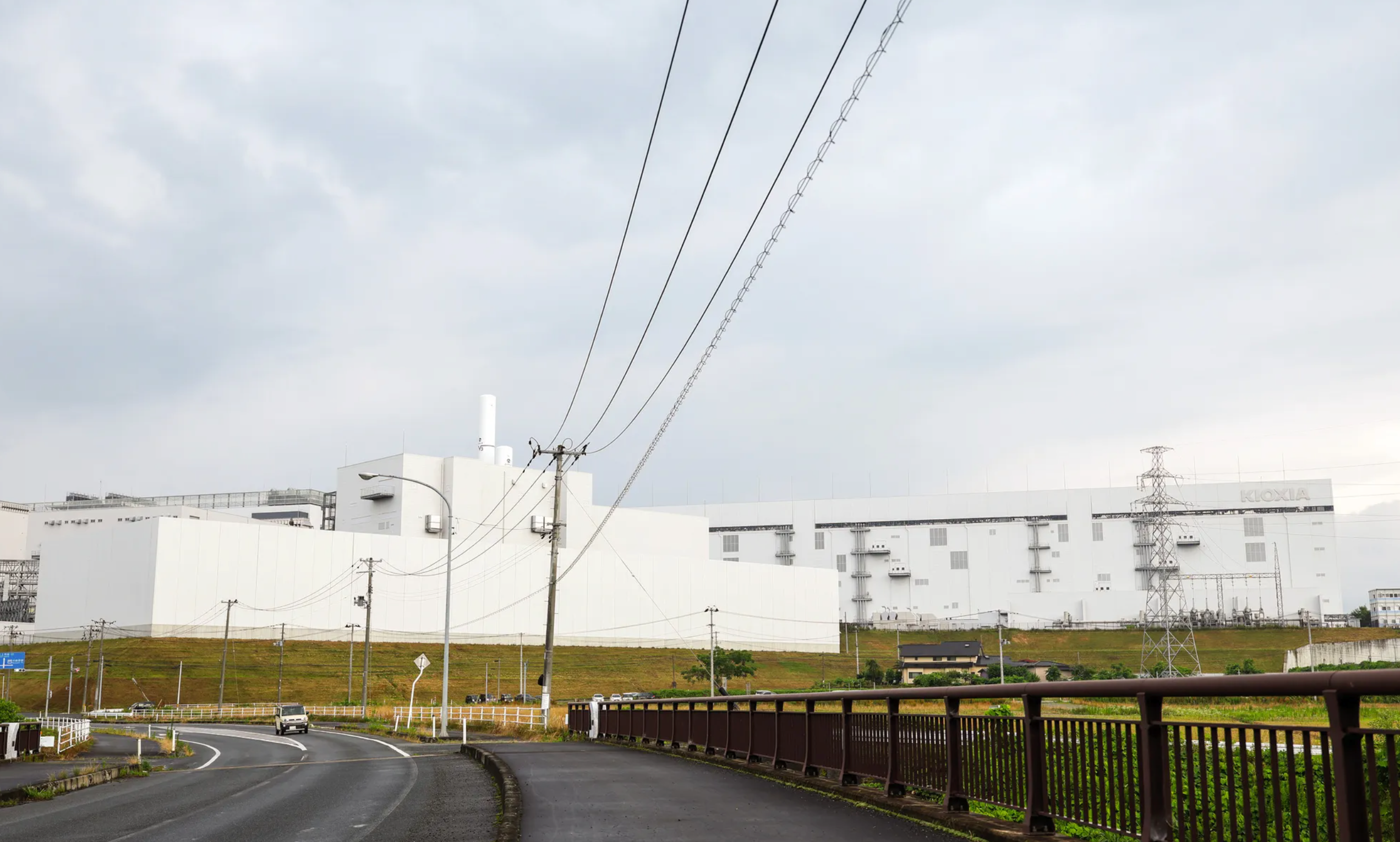
Kiaoxia's factory in Beishang City
In Kitakami, Japan, a sleepy town 500 kilometers north of Tokyo and deep in the countryside, Japan's AI revolution is unfolding in a tepid manner rather than showing explosive growth.
On a hot and humid Friday night in July this year, the city center came alive. Tech workers from the nearby KIOXIA chip factory come to bars and karaoke rooms to relax. A few streets away, taxis rolled slowly down a gravel road. Since Kioxia opened a new production facility last year, the road is being repaved to improve access to the factory.
For residents of Kitakami, these are welcome signs of development. The city, like many rural areas in Japan, has been plagued by decades of depopulation and economic stagnation. The continuous influx of Kioxia employees has helped curb the continued decline of the local population, and now Kitakami has become one of the youngest areas with the youngest population among the cities, towns and villages in Iwate Prefecture.
"Kai Xia's existence can almost be said to maintain the operation of our small town."
Said Daisuke Okuyama, director of the Commerce and Industry Department of Kitakami City Hall. He said that since the chipmaker started production at the local factory in 2020, the local manufacturer's sales have increased, restaurant customers have increased, and flashy luxury cars have become more common on the town's roads.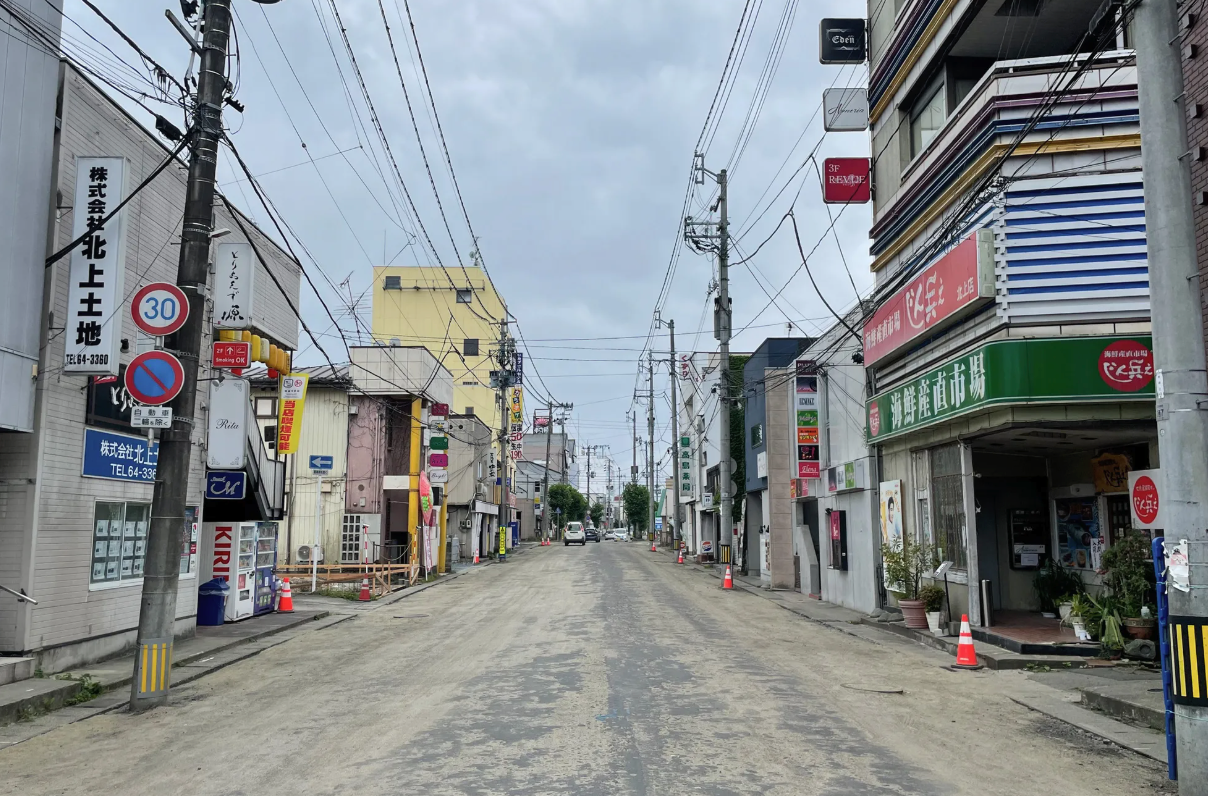
Paving the road for Kioxia in Beishang City
Kioxia, which produces NAND flash memory used for data storage in AI systems, is betting heavily on the Beijing listing. With the support of the Japanese government, Kioxia plans to spend an additional 1.8 trillion yen (about 11.3 billion U.S. dollars) to build a third chip manufacturing facility at the factory in the city.
“We believe that by achieving further business expansion and growth, we can contribute to the revitalization of Kitakami City and become a pillar of its economic base.” A representative of Kioxia Iwate told Bloomberg.
A drop in the bucket
However, these signs of recovery so far shown by Kitakami City fall far short of the economic transformation promised to rural communities in Japan's technological boom.
Kioxia’s expansion is part of the Japanese government’s push to strengthen the country’s chip industry. In 2024, the Japanese government approved subsidies of up to 150 billion yen to Kioxia's production facilities in Iwate and Mie prefectures. Officials said at the time that the investment would have "widespread" economic spillovers, but Okuyama said the reality in Beishihang was more complicated.
Kioxia employees and workers at its suppliers enjoy healthy wages, but incomes for other residents have barely budged, and local businesses struggle to compete with chipmakers for talent. According to Okuyama, few of the young tech experts arriving in Kitakami plan to settle here permanently, while most local high school graduates still choose to leave in search of better-paying jobs elsewhere.
While new apartment towers are popping up around the Kioxia factory, it's clear that much of the city's infrastructure is aging and it lacks high-end hotels or shopping facilities to attract tourists and other high-spending groups.
"Of course, we also want to believe that the real economic benefits have not yet arrived," Okuyama said, "but for now, it is difficult to say that this impact has really benefited ordinary residents."
The experience in Kitakami highlights a major test facing Japanese Prime Minister Sanae Takaichi. Takaichi Sanae announced an investment plan of 102 trillion yen (approximately US$640 billion) in June this year, aiming to build Japan into an AI and semiconductor powerhouse. This unprecedented bet attempts to achieve what his predecessors failed to achieve: to achieve truly meaningful economic growth and let the growth benefit regions beyond Tokyo and Osaka.
Financial markets are already betting on the plan's success. The market expects that Takaichi Sanae's large-scale financial investment will promote corporate profit growth, which has set off a wave of stock buying known as the "Takaichi Market" and pushed the Nikkei 225 Index, which is dominated by technology stocks, to refresh historical highs many times. Kioxia's stock price has benefited from AI's strong demand for memory chips and has risen more than 2,000% in the past year. In June this year, the company once became Japan's most valuable listed company.
Question
However, in rural manufacturing towns that are producing various basic components for the AI boom, the local atmosphere is more cautious.
The Japanese government estimates that government investment in the chip industry alone will bring economic spillover effects of up to 443 trillion yen by fiscal year 2040. But smaller investment commitments over the past few years have ultimately produced only sporadic and limited economic growth, so doubts remain about whether Sanae Takaichi's massive spending plan will be enough to revive Japan's struggling local economies.
"Of course, Japan has indeed benefited from the AI boom, but compared with other countries, Japan has not really fully captured this wave." Nomura Securities senior economist Kengo Tanahashi said, "This is frustrating."
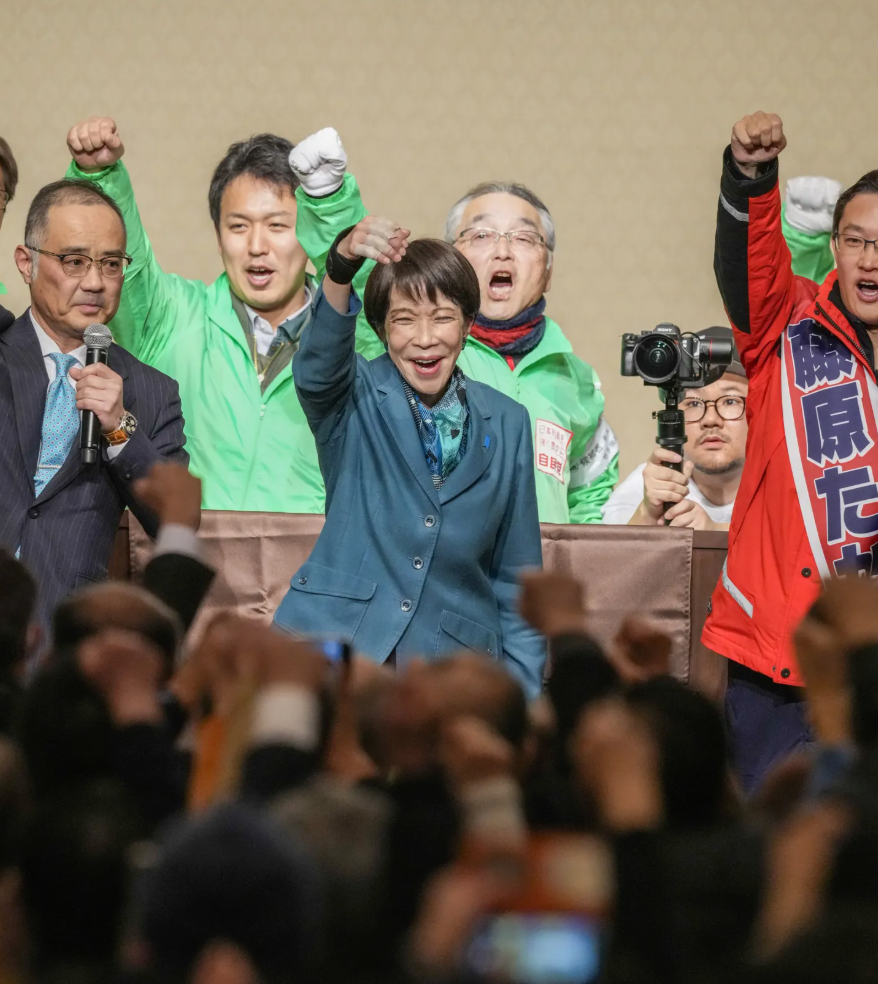
The Gao city government bets heavily on AI
This is not because Japan does not work hard. Japan's Ministry of Economy, Trade and Industry said that since the introduction of a new strategy to revitalize the country's chip industry in 2021, Japan has allocated approximately 7.2 trillion yen in funds for the semiconductor and AI industries, including more than 2 trillion yen in support to the government-backed chip startup Rapidus. Rapidus' R&D and production base in Hokkaido, northern Japan, is becoming an important center of Japan's technological ambitions.
Some previous measures taken by the Japanese government have achieved certain results. Since 2022, TSMC has expanded its investment in Kumamoto Prefecture with the support of the Tokyo government, bringing employment, investment and international attention to the local area, and also helping Kyushu re-establish its reputation as Japan's "Silicon Island". According to data from Kyushu Financial Group, TSMC’s presence is expected to bring economic benefits of 11.2 trillion yen to the region by 2031.
Investment is too diversified
For Takaichi Sanae, the challenge is how to replicate this influence on a large scale. Atsushi Osanai, a professor at Waseda University Business School, said that Japanese companies’ AI investment approach so far has been too fragmented to promote large-scale economic changes.
Taking South Korea as an example, he said that South Korea's investment is mainly concentrated on two powerful chip manufacturers, thus bringing faster and larger economic benefits.
The economic chain effects brought about by the construction of AI industries between neighboring countries are in sharp contrast. In South Korea, as the performance of Samsung Electronics and SK Hynix soared, chip workers even threatened to go on strike, forcing the two companies to promise huge bonuses to ensure stable labor relations. This, in turn, has set off a wave of real estate sales and the expansion of luxury stores around major semiconductor factories.
“Only through centralized development can we achieve some efficiency advantages,” said Nagauchi Atsushi. “Because Japan’s industry is relatively fragmented and there is no dominant company, profits cannot be created in the most efficient way.”
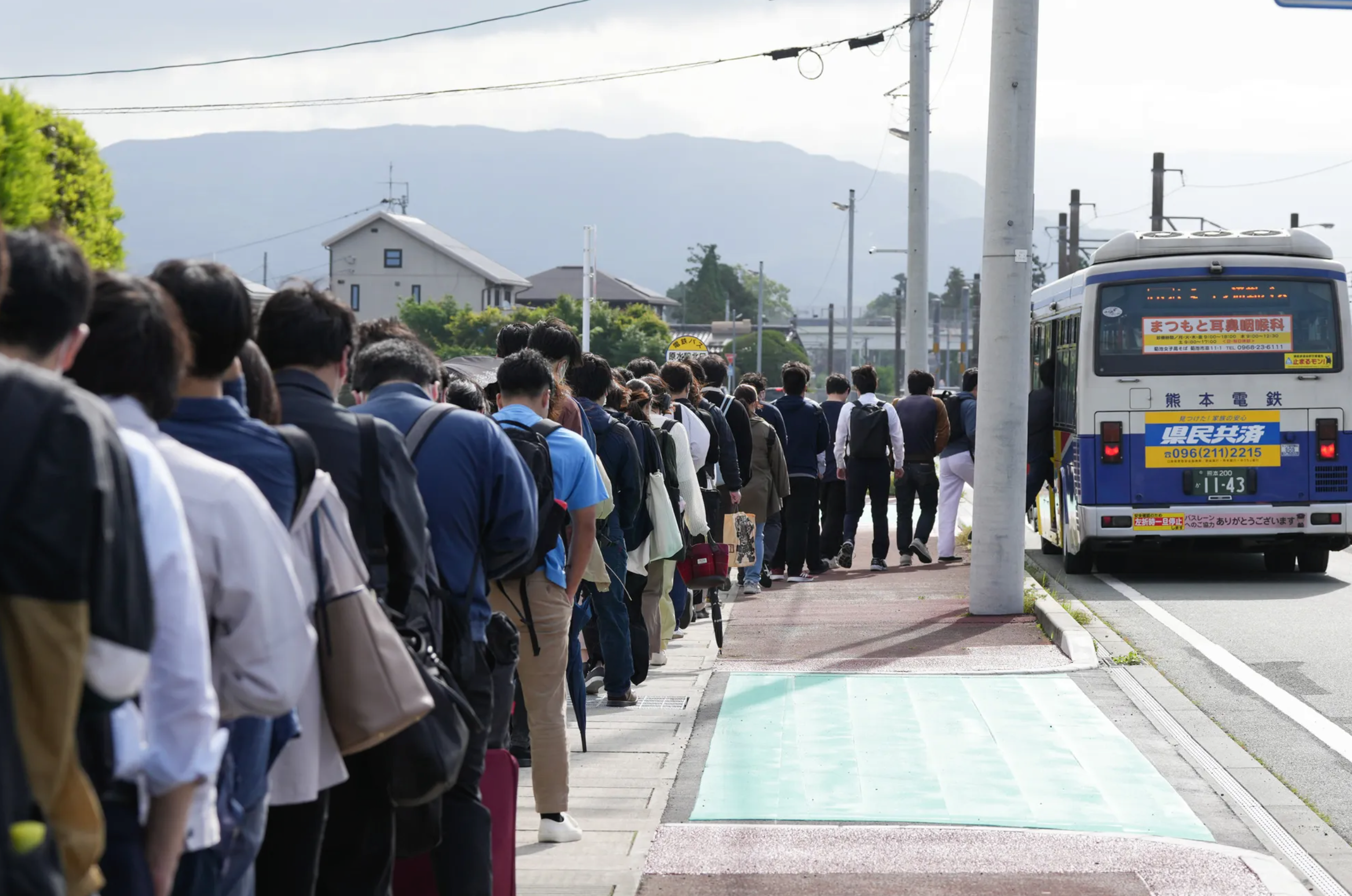
Employees waiting to commute near TSMC’s Kumamoto factory
Jeongmin Seong, a partner at McKinsey Global Institute in Tokyo, said that the key for Takaichi Sanae to achieve the goals that the previous government failed to achieve is to more accurately select areas where Japan is truly competitive.
Rather than trying to catch up with global rivals in an already highly crowded field, the Japanese government should focus its funding on areas where Japan has a technological or resource advantage, such as robotics and energy, he said.
"If everything is prioritized, nothing is prioritized," Sung Jung-min said. "But if Japan chooses to take bold actions, it does have the opportunity to write a very exciting recovery story in the next ten years."
It is still unclear how the 102 trillion yen investment plan proposed by Takaichi Sanae will be implemented. However, the Japanese government has designated a number of rural areas, including Akita Prefecture in the north, as key investment areas. The Japanese government has also pledged to provide up to $1 billion in financial support to Israeli chipmaker Tower Semiconductor. The company has chip manufacturing plants in Niigata and Toyama prefectures.
Kioxia CEO Hiroo Ota said last week that he hoped the government would provide about one-third of the company's latest expansion plan in subsidies.
Tokyo Highreso, a company that specializes in building and operating data centers in rural areas of Japan, is cautiously optimistic about Takaichi Sanae's investment plan. Taishi Koyachi, who is in charge of Highreso's technology alliance business in Shiga Town, a coastal town in western Ishikawa Prefecture, said that if the government can provide support to help companies bear the soaring GPU prices, it will be of great help to domestic companies in Japan.
“The government’s intention to invest more in AI is very encouraging, but we haven’t felt any direct benefits yet,” he said.
In Kitakami, real estate agent Yasuhiro Ito believes that the future of this small town is inseparable from Takaichi Sanae’s AI bet.
Kio Xia's expansion has completely changed his business. Demand for apartments and offices has surged since the chipmaker opened its second factory last year. His company, Fudosan Honpo Holdings, now relies almost entirely on its Kioxia-related leasing business for profits at its northern branch, while residential sales there remain weak.
“For better or worse, our current business is completely dependent on the AI boom,” Ito said. “If this round of expansion is blocked, we will have no chance at all.”
Comments