
Abstract:
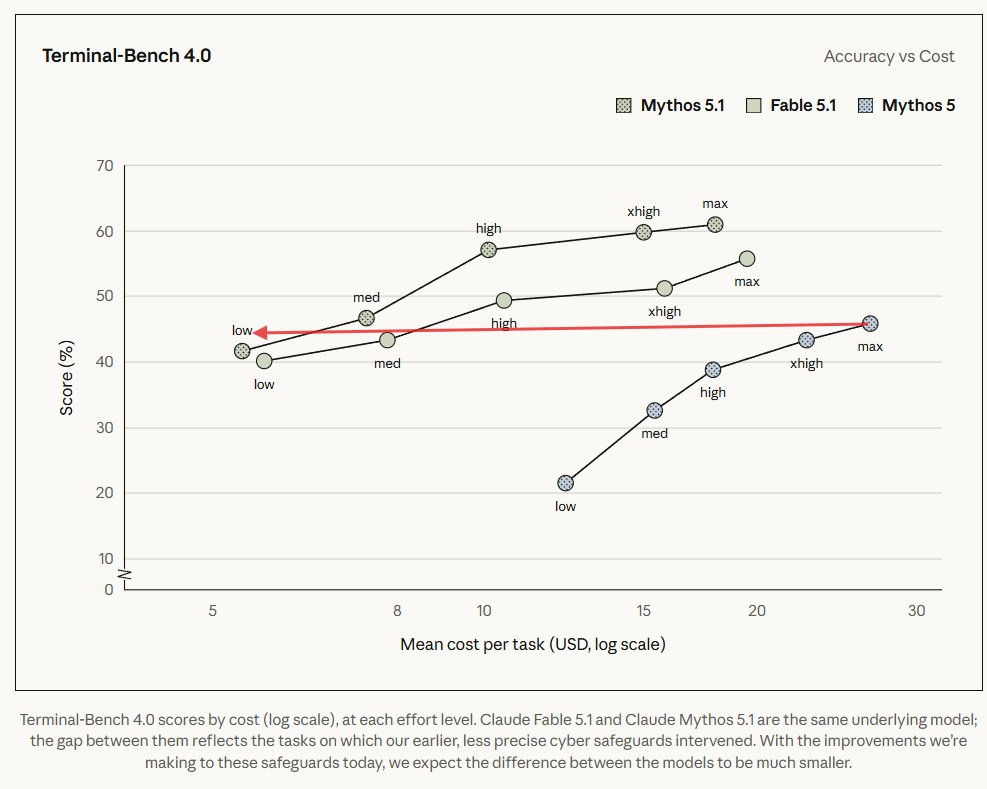
Fable 5.1 and Mythos 5.1 released! It ranked first in all 8 public benchmark tests, and the price dropped by up to 45%. Especially in the areas of scientific research and coding, it has clearly left behind Fable 5 and its neighbor GPT-5.6 Sol. From a more intuitive perspective, now running Fable 5.1 with medium and low inference levels, the performance is basically equivalent to the old version of Mythos 5 with extremely high or even the highest inference level. In this wave, "Fable" killed "Mythos".
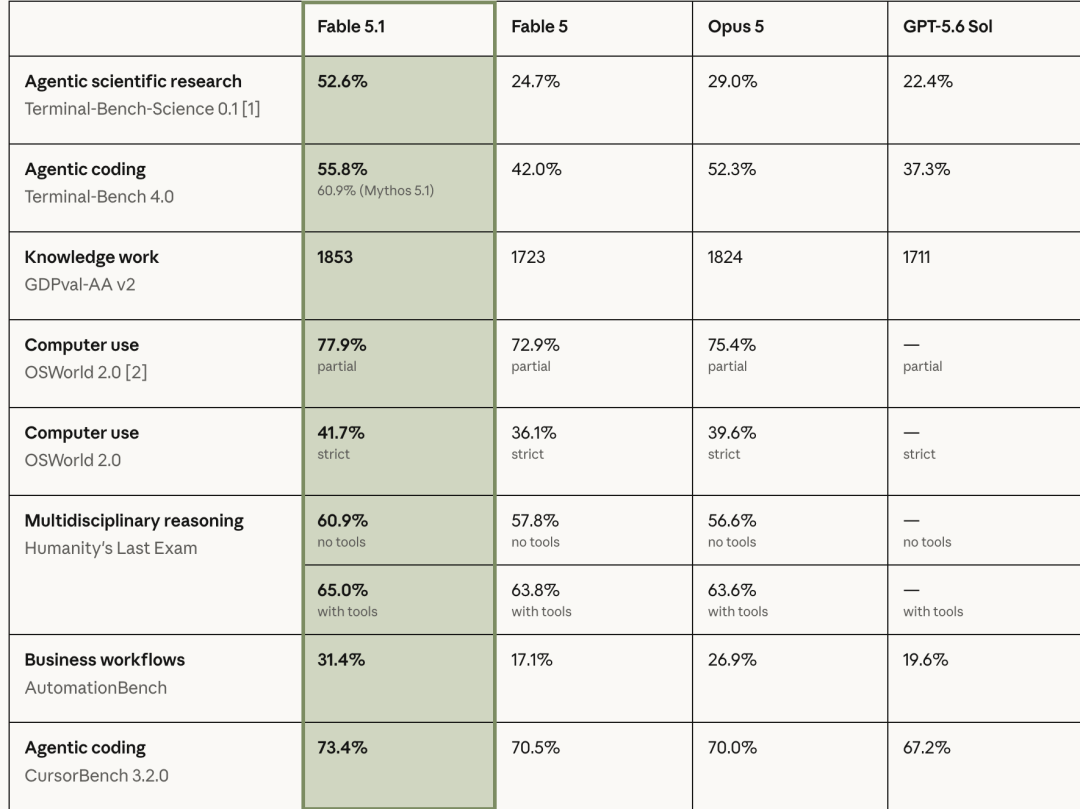
In terms of price, Fable 5.1 lowered the cache read price to US$0.25 per million tokens, a 75% reduction.
Input and output prices are consistent with Fable 5, at $10 and $50 per million tokens respectively.
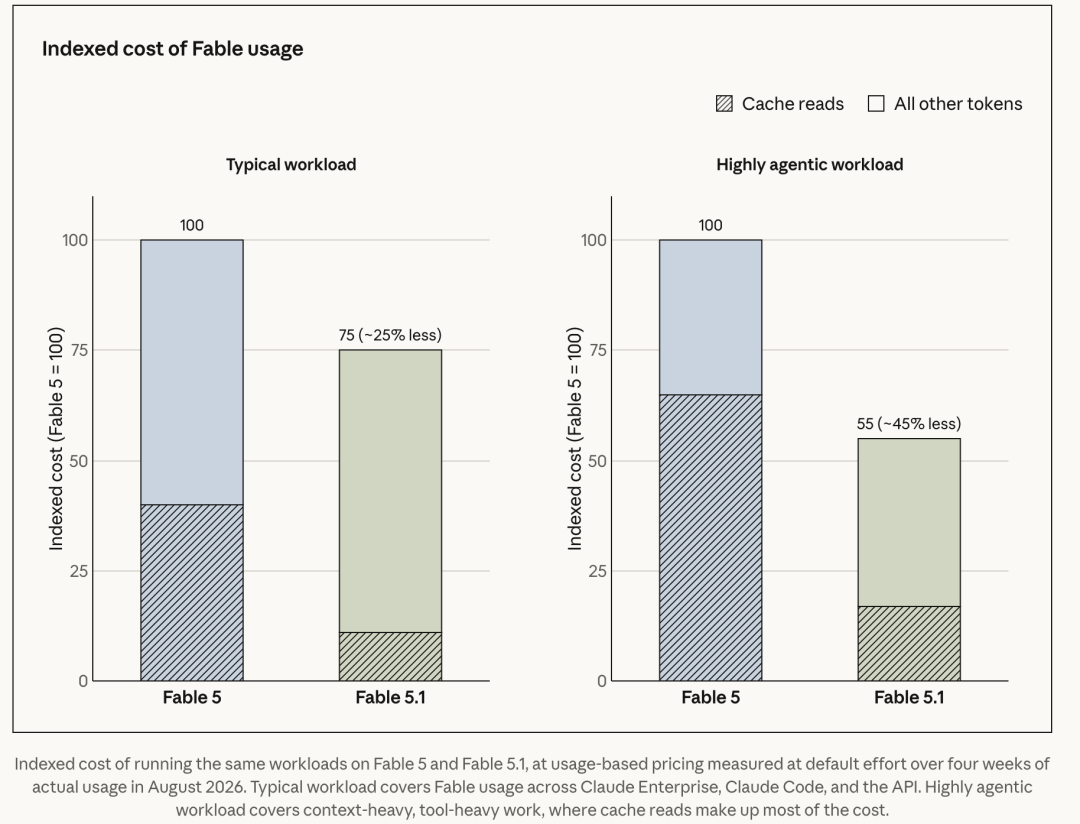
It seems that only one price has been reduced, but the actual impact is relatively large, because in the agent task, cache reading accounts for the majority of the cost.
The data given by Anthropic is that the cost of typical workloads is about 25% lower than that of Fable 5. If it is a highly intelligent task, it can save up to 45%.
The official release video has something to say:
No matter what task you asked Claude to handle before, Fable 5.1 can do more and do the hardest parts better.

It does this because it is good at handling multi-step tasks.
In this type of task, if a small error occurs in the second step, the whole thing will collapse by the 40th step, but Fable 5.1 can provide stable output throughout the entire process.
If you encounter a problem that cannot be solved, it will tell you which solutions you have tried and where you are stuck.
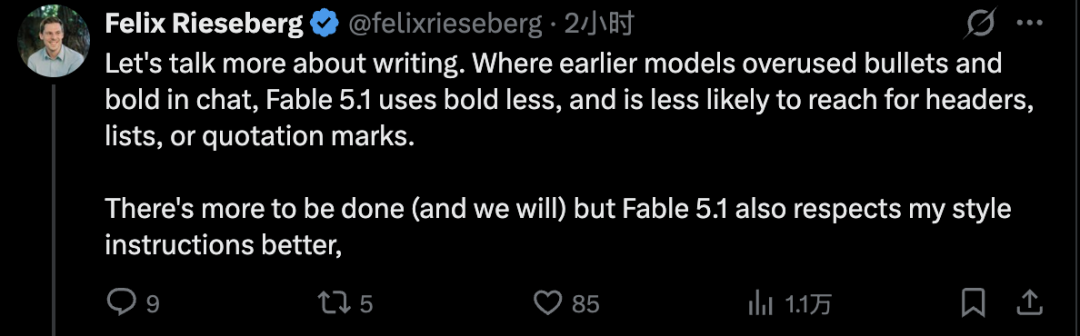
Researcher Flix Rieseberg also specifically mentioned that in terms of writing, Fable 5.1 reduces the use of bold fonts, uses fewer titles, lists, or quotation marks, and follows style cues better.
What I’m saying is, can you open source your style tips by the way?
Still true to form, Fable 5.1 is open to all users, and Mythos 5.1 is only available to vetted cybersecurity and life science organizations through the Trusted Access Program.
Practical scientific research: protein design, generating Venus maps, GPU acceleration
In addition to running scores, Anthropic also demonstrated the practical results of Fable 5.1 and Mythos 5.1 in the field of scientific research.
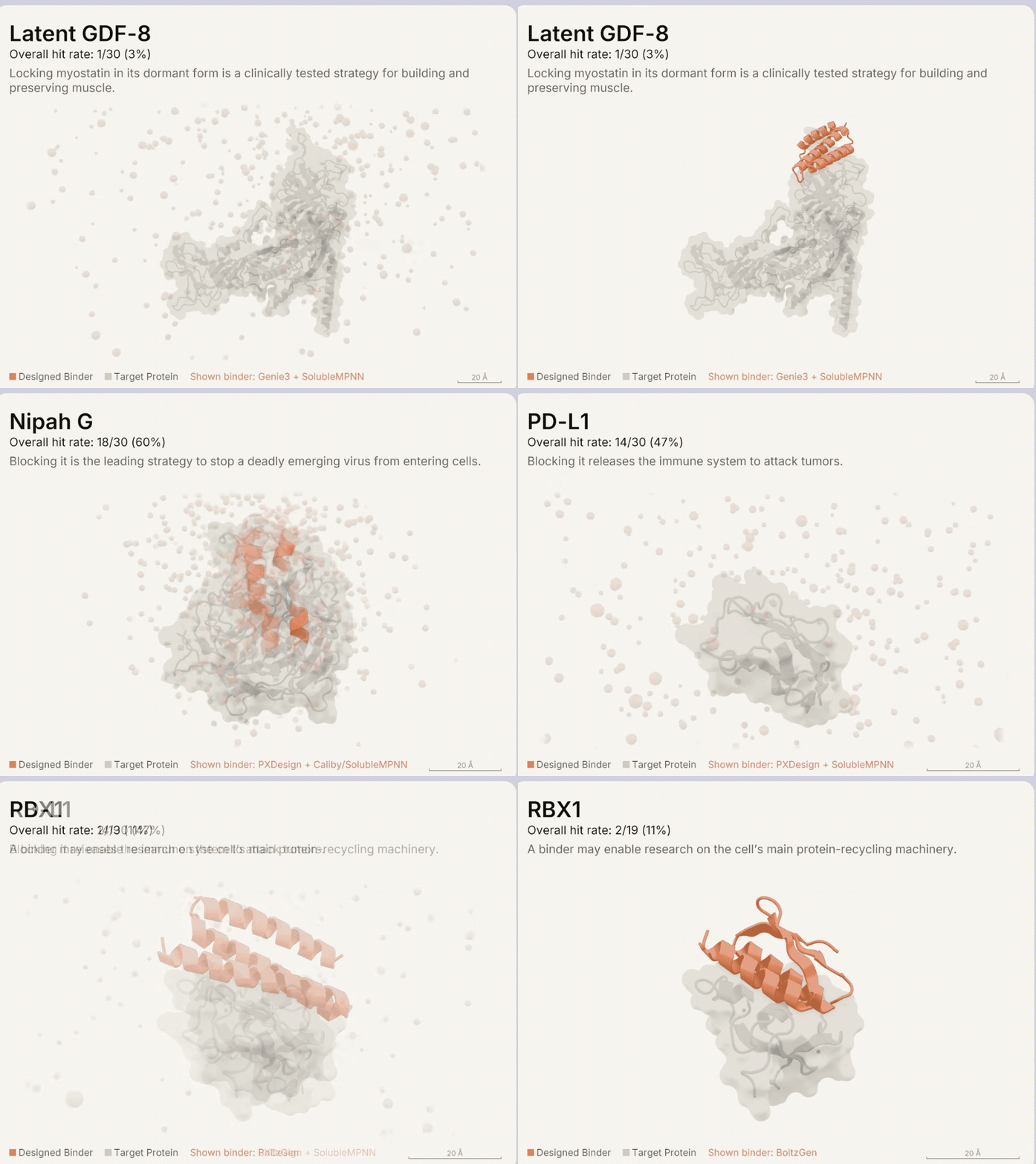
In terms of protein design, Anthropic used Mythos 5.1 to use open source protein design and folding tools to design high-affinity binding proteins, and sent the plan to two external institutions for experimental verification.
Across three targets, the binding affinity of the Mythos 5.1 design was 10 times higher than the best solution in the Adaptyv Bio protein design competition. Across all 12 targets, the hit rate was close to 50 percent, compared with the 10 to 15 percent typical hit rate in the current field of protein design.
High-affinity binding proteins are the first step in many common drug development processes and directly determine whether the drug can work at lower doses.
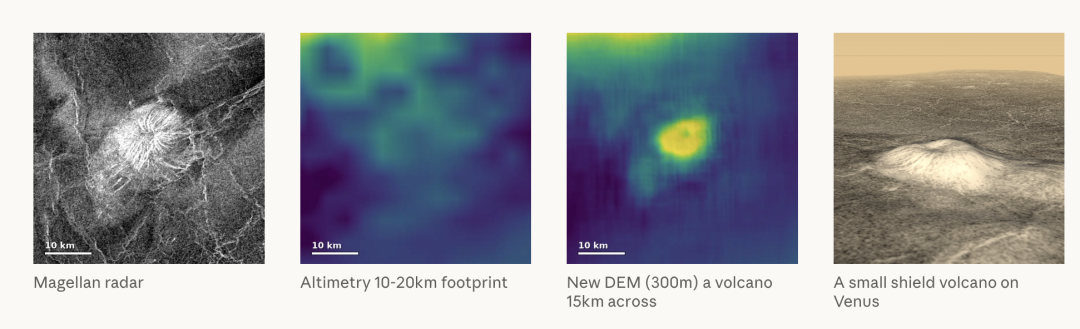
In astronomy, Fable 5.1 trained a neural network based on radar images taken by NASA's Magellan spacecraft more than 30 years ago to generate a new high-resolution topographic map of one-third of the surface of Venus.
Previously available topographic maps only covered one-fifth of Venus, with resolutions between 10 and 20 kilometers. Fable 5.1 increases the resolution to 2 to 3 kilometers, and the height accuracy is 25% higher than before. This map has been released as open source under a CC license and will be used as a reference for the upcoming NASA VERITAS and ESA EnVision missions to help identify key geological features for future observations.
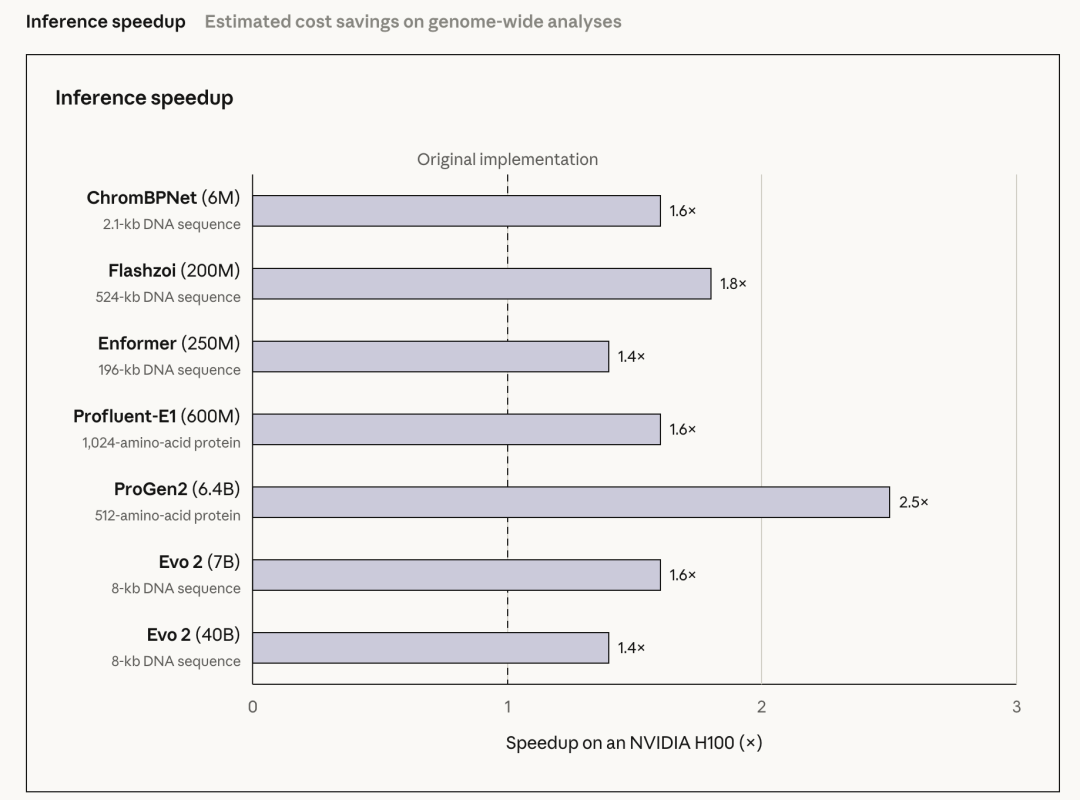
In terms of computational biology, Mythos 5.1 improves the running speed of 7 open source deep learning models by up to 2.5 times by writing custom GPU kernels and caching intermediate results, and the output is completely consistent.
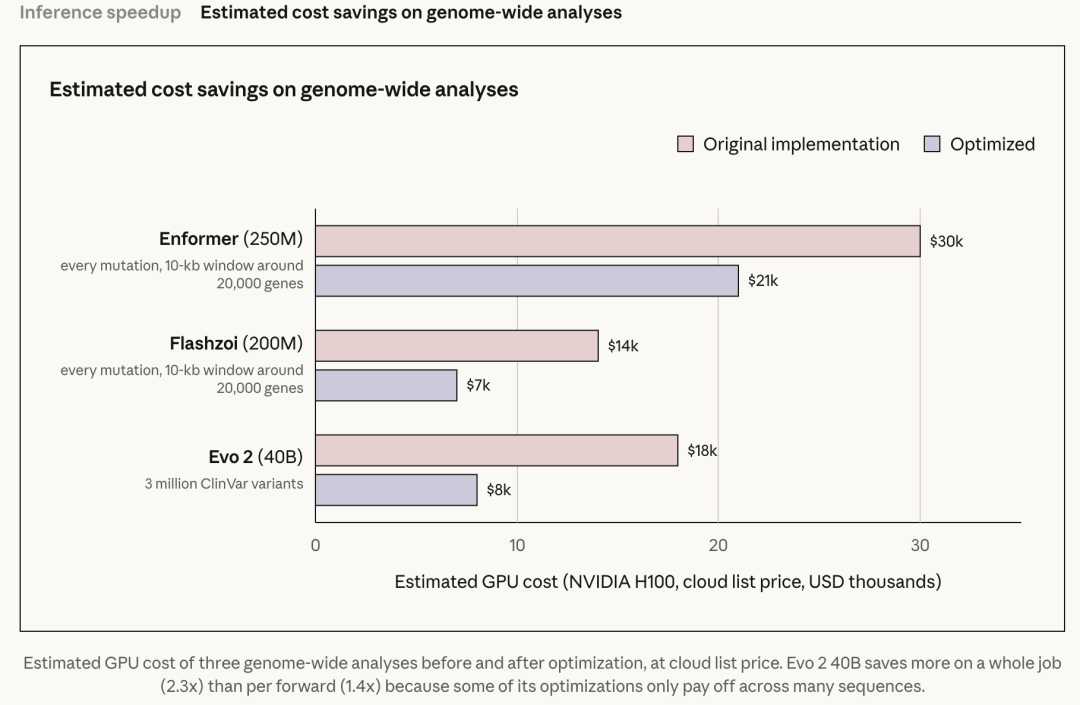
In actual research, biologists may need to run these models thousands of times, testing all possible mutations near each human gene. Optimized models can reduce GPU costs by 30% to 60%.
This kind of optimization usually takes a performance engineering team several weeks to complete, and many academic laboratories simply cannot afford it. However, Mythos 5.1 did it in just a few days and relied solely on open source code.
Anthropic plans to open source these optimizations in the near future.
The anti-distillation mechanism is online
With the release of Fable 5.1, there are some special regulations and API changes.
Let’s talk briefly about safety first.
The network security false positive rate of Fable 5.1 is 60% lower than that of Fable 5. It is now allowed to be used to discover software vulnerabilities, but the development of exploits is still prohibited. Dual-purpose tasks such as penetration testing, exploit generation, binary-based vulnerability scanning, etc. will still be redirected to the Opus series model.
False positive rates for basic biology and medical questions have been reduced by 85%, but queries involving life sciences research and development are still routed to Opus model processing, and professionals need to gain access through Mythos 5.1’s Life Sciences Validation Program (LSVP).
Then let’s talk about the newly added anti-distillation mechanism.
Starting from today, newly registered API accounts cannot manually edit Claude context in multiple rounds of conversations while retaining thought chain records.
There is a common technique that has been publicly recorded before: manually tampering with Claude's previous context in multiple rounds of conversations, but deliberately retaining the thought chain record. This allows the model to replay the reasoning it produced under another set of instructions under a new, possibly adversarial, set of instructions.
This road is now blocked.
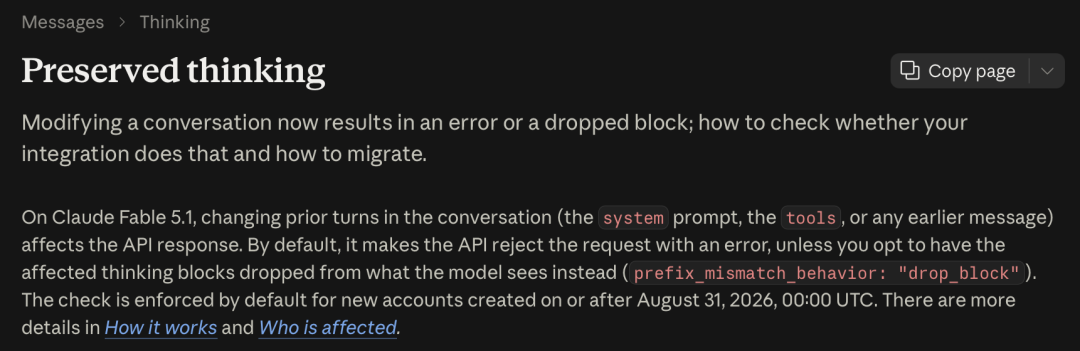
The approach is to add a signature to each thinking chain block.
When the user sends the assistant's reply back to the API in subsequent requests, the system will use this signature to do two things: verify whether the current model has the right to read this block, and verify whether the entire conversation before this block (including system prompt words, tool list, and all historical messages) is exactly the same as when it was originally generated.
Signature verification will fail whenever anything in the conversation has been touched.
What to do after failure depends on a parameter prefix_mismatch_behavior set by the developer: the default value is "error", which directly returns a 400 status code and the request is rejected; if it is set to "drop_block", the system will silently drop the block and all thought chains after it, and the request itself will be executed as usual.
The discarded part is not counted (people are kind of weird) and will be listed in the input_transformations array in the response.
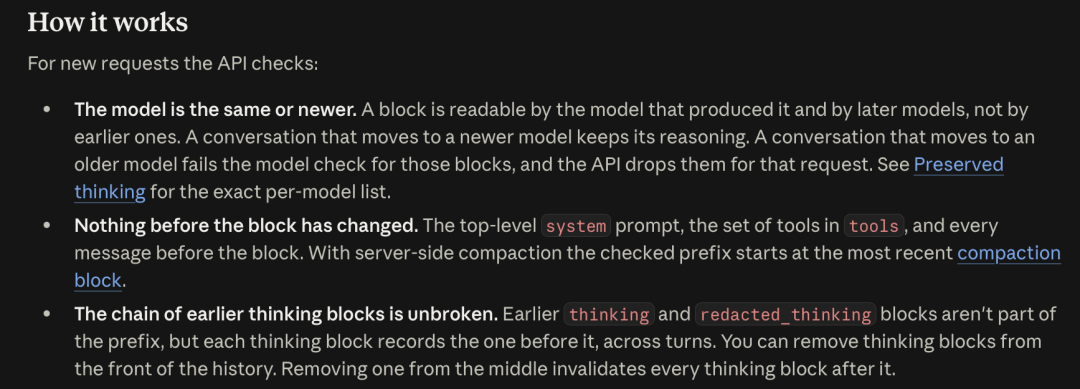
What operations will trigger verification failure?
The documentation gives a detailed list: editing, rearranging, or deleting any previous user/assistant/system messages, changing the top-level system prompt word, making any additions, deletions, or renames to the tool list, removing a thought chain block from the conversation history but retaining subsequent blocks, and referencing an image or document URL that returned different content between requests.
Any of the above will cause all subsequent thinking chain blocks to become invalid.
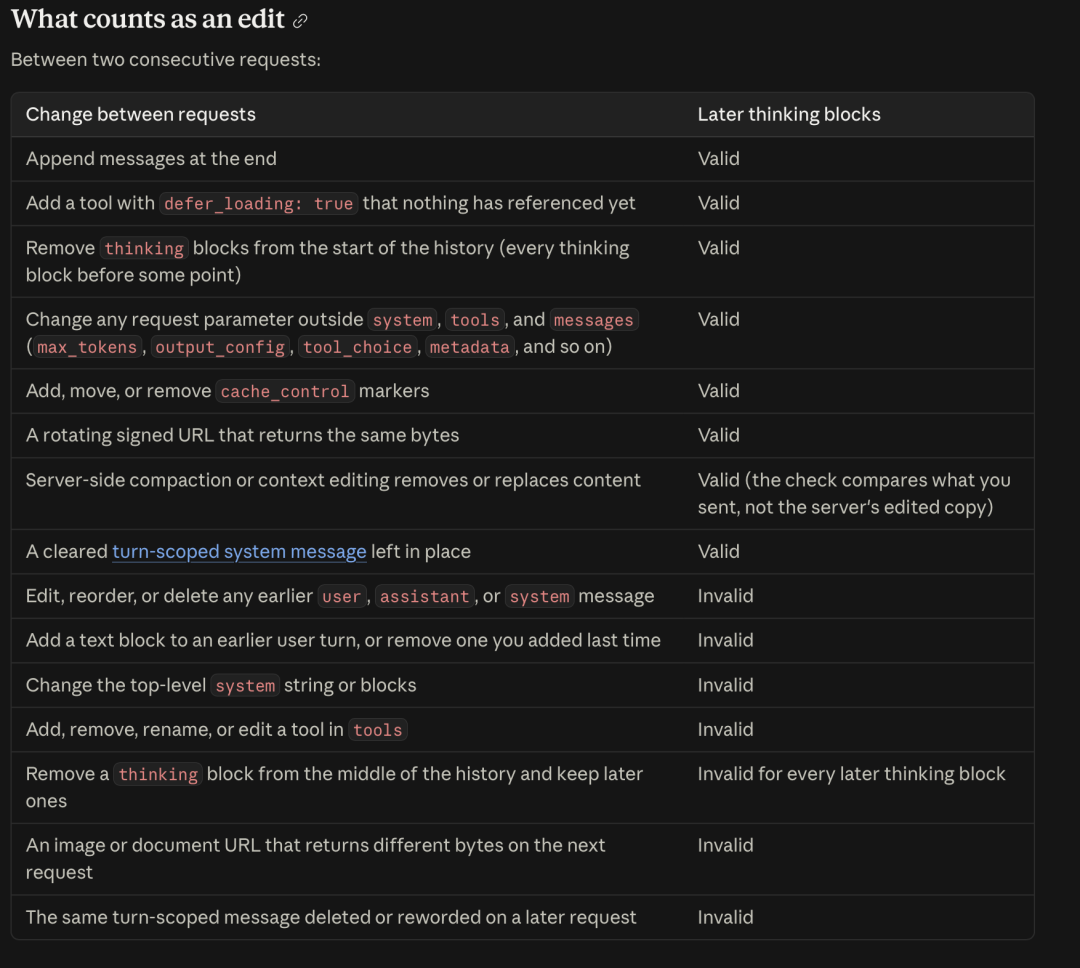
Conversely, some operations are safe:
Appending new messages at the end of the conversation, removing the thinking chain block from the beginning of the history, changing request parameters such as max_tokens, increasing or decreasing cache_control tags, and server-side compaction or context editing will not trigger verification failures.
There is also a chain verification design. Each thinking chain block will record the information of its previous block, forming a cross-round chain. Blocks can be removed from the head of the chain, but if one is removed from the middle, every block following it will become invalid, and the entire chain will be invalidated from the point of break.
In order to prevent developers from being stuck, Anthropic also provides a series of alternatives that can achieve the same effect without touching the history.
Need to change the instructions midway? Use mid-conversation system messages instead of directly changing the top-level prompt word.
Need to add a temporary reminder for each round? Use the round-level system message with the clear_at parameter to replace the old method of "insert first and then delete".
Need to add or remove tools midway? Use the tool_addition and tool_removal blocks instead of editing the tool list directly.
Need to clip context? Replace rough client-side truncation with server-side compression and contextual editing.
If you are using official products such as Claude Code, claude.ai, Claude Managed Agents or Claude Agent SDK, you don’t need to change anything. They have automatically ensured that the conversation prefix will not be tampered with.
But if you are a developer who directly calls the Messages API, Anthropic's suggestion is to use the messages array strictly as append-only, and then run a complete multi-round session test with prefix_mismatch_behavior set to "drop_block" mode to see if there are any prefix_binding_mismatch entries in the log.
The final document also specifically mentions a scenario where it is easy to get into trouble.
If you maintain a tool or framework and users use their own API keys to call it, newly registered users will run into this verification earlier. Because the developer's own key is most likely registered before August 31, it has not been enforced yet.
In this case, it is recommended to proactively set prefix_mismatch_behavior and test it in advance. Don’t wait for users to crash before you find out.
One More Thing
With such a big commotion coming from Company A, OpenAI next door will certainly not be able to sit still.
But their new model Astra is really not ready yet, so they have to give a symbolic preview first.
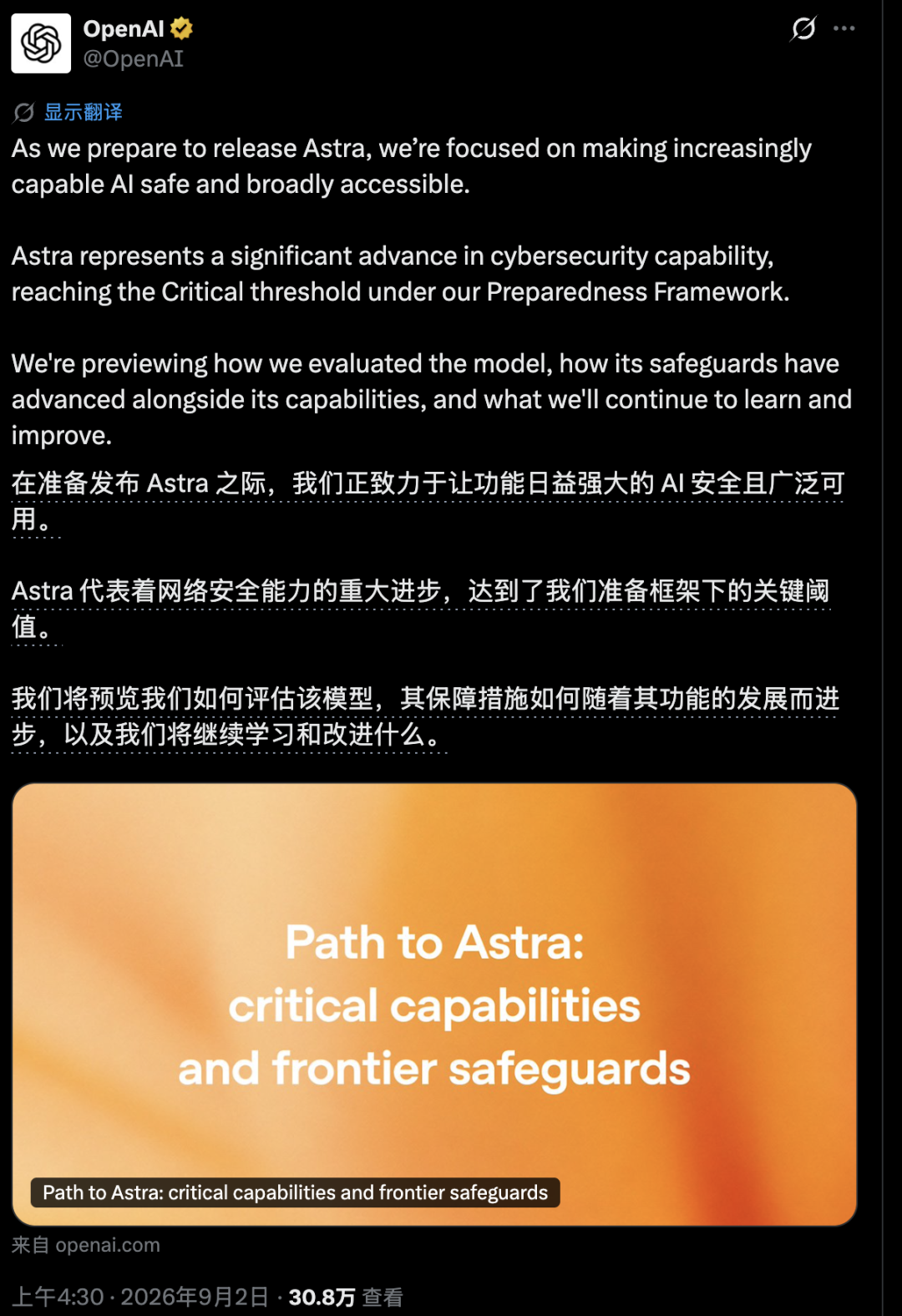
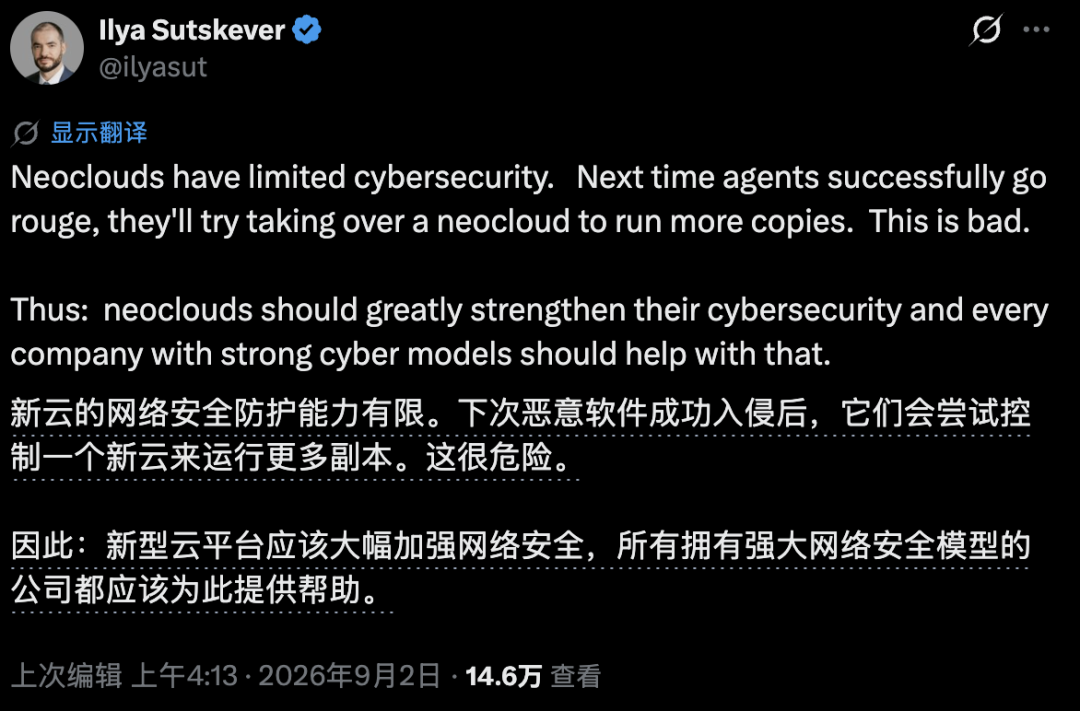
On the occasion of the release of Fable 5.1 and OpenAI Astra, Ilya also rarely came out to speak out, calling for strengthening network security.
Comments