
Abstract:
For years, Jensen Huang has joked that it would be nearly impossible to replace him as Nvidia's co-founder and CEO after more than three decades at the helm of the company. "There will never be another me," he said in an interview in January this year. "The reason is that I grew up in this company."
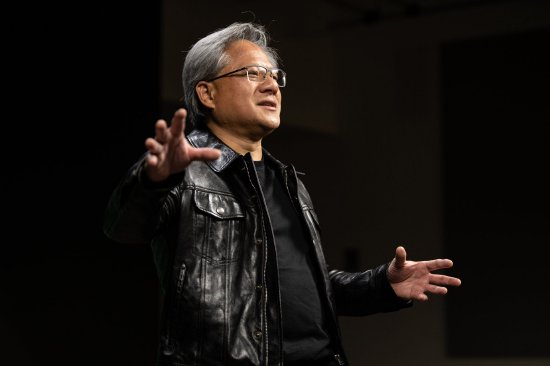
However, Jensen Huang's sudden resignation on Thursday has put Nvidia in an embarrassing position: it must find a successor for a CEO who has long regarded itself as "irreplaceable."
While Huang has kept a low profile, he is currently involved in the succession process and has had calls with at least one potential candidate, according to a person familiar with internal discussions. The person requested anonymity to discuss the private conversation.
Huang Renxun built Nvidia into a company that relied heavily on him personally. The flat management system allows Huang Renxun to have about 60 direct subordinates, which means that decision-making power is highly concentrated on him. The board of directors does not have a chairman, so no one can veto his decisions. Both of his children have also been appointed to senior management positions in the company.
Nvidia and Huang’s personal vision, connections, and legendary charisma are deeply intertwined. He personally cultivated many of the company's most important external connections, from courting then-President Donald Trump to developing an unusually close relationship with TSMC founder Chang Chang, helping Nvidia gain first dibs on scarce manufacturing capacity.
It was his intuition that enabled Nvidia to make early bets on technologies such as artificial intelligence (AI) before its competitors, building the company into one of the most valuable companies in the world.
This concentration of power makes the search for a successor particularly difficult. Andy Wu, a professor at Harvard Business School, called this "the most difficult CEO position to fill in at least 10 to 20 years."
“Investing in the future fundamentally requires taking risks, and in many ways these bets may not appear rational in the short term,” said Andy Wu, who has written a case study on Nvidia’s transformation into AI. "This requires a founder CEO, or someone with equivalent control, who can remain flexible when communicating with investors and have charisma among employees, thereby motivating the company to do things that may be considered ridiculous by the outside world."
Editor in charge: Li Antong
Comments